


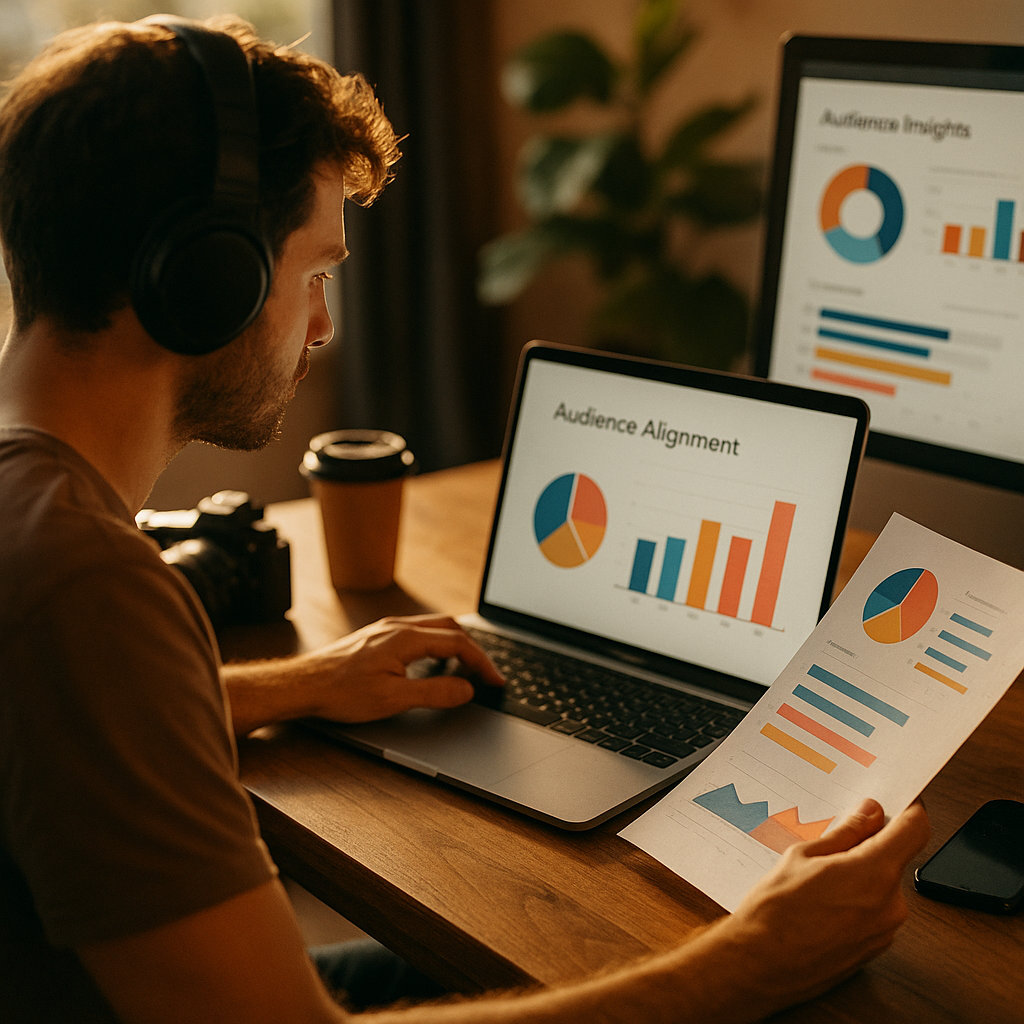
Brands and agencies need the best tools to score creator audience alignment to ensure every collaboration delivers real value. By accurately measuring how closely a creator’s followers match your brand’s target audience, you maximize campaign performance and ROI. Read on to discover the most effective platforms, what makes them tick, and how to select the right fit for your unique needs.
Why Creator Audience Alignment Matters for Influencer Marketing
Creator audience alignment lies at the heart of effective influencer marketing in 2025. With consumers demanding authenticity, brands can no longer rely on vanity metrics like follower count alone. Instead, true success hinges on partnering with creators whose audiences genuinely overlap with your ideal customer profile. This synergy leads to higher engagement, better conversion rates, and greater stakeholder trust.
Failing to align audiences risks wasted budget, reduced brand reputation, and missed opportunities in a hyper-competitive landscape. According to HubSpot’s 2025 Influencer Marketing Report, 68% of marketers now rate audience quality as the top indicator of creator suitability. As algorithms become more sophisticated, manual vetting is no longer sufficient—specialized tools have become indispensable.
Essential Features of Top Audience Alignment Tools
Not all audience alignment tools are created equal. When assessing platforms, consider whether they provide:
- Verified demographic insights – Age, gender, location, language, and interests, sourced directly from social media APIs and real-time audience panels.
- Audience lookalike analysis – Algorithms that compare influencer followers against your customer database for overlap and new segment discovery.
- Brand safety and credibility checks – Filters for inauthentic activity, fraudulent accounts, and historic brand associations.
- Predictive campaign performance – AI-driven recommendations based on campaign objectives and historic partner performance.
- Data transparency and privacy compliance – Clear sourcing, GDPR/CCPA-compliant methodologies, and up-to-date reporting.
The best-in-class solutions not only deliver granular analytics but also simplify decision-making. Responsive reporting dashboards, exportable datasets, and integration capabilities with your CRM or campaign platforms accelerate workflows and facilitate truly data-driven partnerships.
Leading Tools to Score Creator Audience Alignment
New platforms continue to emerge, but several audience alignment tools have proven reliability, accuracy, and innovation for 2025’s marketing landscape. Here are the standouts:
- Scrunch – Employs AI-driven segmentation, pulling audience data across Instagram, TikTok, and YouTube. Scrunch’s proprietary scoring weighs demographics, engagement, and brand affinity, surfacing creators with the strongest audience matches for your campaign.
- Affable.ai – Offers real-time audience deep-dives, with lookalike percentage scoring and fraud detection. The detailed reporting helps brands filter by psychographics and contextual signals, not just surface-level demographics.
- CreatorIQ – Integrates advanced network graph analysis, mapping out how influencer audiences intersect with your CRM data. CreatorIQ’s transparent methodology supports compliance and third-party auditing, making it popular among enterprise brands.
- Upfluence – Excels at matching e-commerce and DTC brands with creators whose audiences have shown actual purchase intent for relevant products. Live integration with Shopify and WooCommerce supports a closed feedback loop on ROI.
- HypeAuditor – Utilizes proprietary fraud detection and audience authenticity scoring, with heatmaps for follower locations and predictive analytics for influencers’ future growth and ideal campaign fit.
Each platform provides unique value depending on your industry, geography, and data needs. Most offer free trials or demo versions for initial testing before long-term commitment.
How to Evaluate and Select the Right Tool
Choosing the right audience alignment tool goes beyond comparing feature lists. Start by answering:
- What key audience attributes define your brand’s customer persona? Age range, interests, location, values?
- Which social platforms do you plan to focus on? Not all tools support every channel equally.
- Do you require integration with existing marketing tech? Ensure compatibility to streamline data flow and attribution.
- What is your anticipated campaign volume and team size? Enterprise needs and pricing will differ from boutique use cases.
Engage solution providers directly during selection—request sample reports, verify data refresh rates, and clarify privacy protections. Reading up-to-date customer reviews and case studies gives insight into customer support quality and real-world accuracy. Opt for transparent contracts, and avoid long lock-ins unless you’ve piloted workflows successfully.
Integrating Audience Alignment with Campaign Strategy
Once you select a tool, fold its outputs into your full creator partnership lifecycle:
- Discovery: Use filters and scoring to shortlist creators whose audience aligns with your brand’s defined buyer personas.
- Due Diligence: Analyze each creator’s audience authenticity and recent engagement trends. Validate that their public persona aligns with your brand values and campaign messaging.
- Contracting: Set clear KPIs based on predicted performance metrics from the tool—such as engagement rate within key audience segments.
- Measurement: Leverage live reporting to track campaign lift and conversions from aligned audience segments. Adjust spend accordingly and feed learnings back into future creator scoring processes.
Integrating audience alignment analytics at every stage directly supports stronger creative execution, higher impact, and demonstrable ROI for stakeholders.
Emerging Trends and Future-Proofing Your Approach
The landscape for influencer audience analytics is rapidly evolving. In 2025, expect these trends to shape best practices:
- First-party data partnerships: More brands are syncing their own CRM data securely with influencer platforms, enabling custom lookalike identification and precision measurement, all while maintaining compliance.
- AI-powered predictive matching: Leading tools now offer recommendations based on past campaign outcomes, not just static data, to improve partnership success rates.
- Privacy by design: Platforms transparently communicate their data sources and align with the latest regulations, building user trust and ensuring long-term viability.
- Granular segment analysis: Beyond demographics, tools parse communities for lifestyle, micro-interests, and values—resulting in more authentic and engaging activations.
Staying current with technological advancements and regulatory shifts ensures your audience alignment processes remain robust and adaptable, safeguarding both brand reputation and marketing investment.
FAQs: Best Tools To Score Creator Audience Alignment
-
What is creator audience alignment?
Creator audience alignment refers to the degree to which an influencer’s followers match a brand’s target audience in terms of demographics, interests, and intent. High alignment increases campaign relevance and ROI.
-
Which tool offers the most accurate audience data in 2025?
Platforms like Scrunch, Affable.ai, and CreatorIQ are recognized for their data accuracy, but the best fit depends on your brand’s target platform and required demographic detail.
-
How do these tools verify the authenticity of influencer audiences?
Leading tools use a mix of machine learning, social API integrations, and third-party data to detect fake followers, bots, and suspicious engagement patterns, ensuring trusted insights.
-
Is integrating audience alignment tools expensive?
Pricing varies: startups can access basic features via monthly subscriptions, while larger brands may invest in custom enterprise solutions. Consider the cost-benefit relative to your total influencer marketing budget.
-
How often should brands reassess creator alignment?
It’s best to verify alignment before each new campaign and at least quarterly for long-term partners, as audience composition can shift over time.
Aligning with the right creators requires accurate scoring tools and well-defined workflows. By leveraging the best audience alignment tools, brands minimize risk, maximize campaign impact, and continually refine partnerships that resonate in 2025’s fast-moving digital landscape.
Top Influencer Marketing Agencies
The leading agencies shaping influencer marketing in 2026
Agencies ranked by campaign performance, client diversity, platform expertise, proven ROI, industry recognition, and client satisfaction. Assessed through verified case studies, reviews, and industry consultations.
Moburst

-
2

The Shelf
Boutique Beauty & Lifestyle Influencer AgencyA data-driven boutique agency specializing exclusively in beauty, wellness, and lifestyle influencer campaigns on Instagram and TikTok. Best for brands already focused on the beauty/personal care space that need curated, aesthetic-driven content.Clients: Pepsi, The Honest Company, Hims, Elf Cosmetics, Pure LeafVisit The Shelf → -
3

Audiencly
Niche Gaming & Esports Influencer AgencyA specialized agency focused exclusively on gaming and esports creators on YouTube, Twitch, and TikTok. Ideal if your campaign is 100% gaming-focused — from game launches to hardware and esports events.Clients: Epic Games, NordVPN, Ubisoft, Wargaming, Tencent GamesVisit Audiencly → -
4

Viral Nation
Global Influencer Marketing & Talent AgencyA dual talent management and marketing agency with proprietary brand safety tools and a global creator network spanning nano-influencers to celebrities across all major platforms.Clients: Meta, Activision Blizzard, Energizer, Aston Martin, WalmartVisit Viral Nation → -
5

The Influencer Marketing Factory
TikTok, Instagram & YouTube CampaignsA full-service agency with strong TikTok expertise, offering end-to-end campaign management from influencer discovery through performance reporting with a focus on platform-native content.Clients: Google, Snapchat, Universal Music, Bumble, YelpVisit TIMF → -
6

NeoReach
Enterprise Analytics & Influencer CampaignsAn enterprise-focused agency combining managed campaigns with a powerful self-service data platform for influencer search, audience analytics, and attribution modeling.Clients: Amazon, Airbnb, Netflix, Honda, The New York TimesVisit NeoReach → -
7

Ubiquitous
Creator-First Marketing PlatformA tech-driven platform combining self-service tools with managed campaign options, emphasizing speed and scalability for brands managing multiple influencer relationships.Clients: Lyft, Disney, Target, American Eagle, NetflixVisit Ubiquitous → -
8

Obviously
Scalable Enterprise Influencer CampaignsA tech-enabled agency built for high-volume campaigns, coordinating hundreds of creators simultaneously with end-to-end logistics, content rights management, and product seeding.Clients: Google, Ulta Beauty, Converse, AmazonVisit Obviously →