


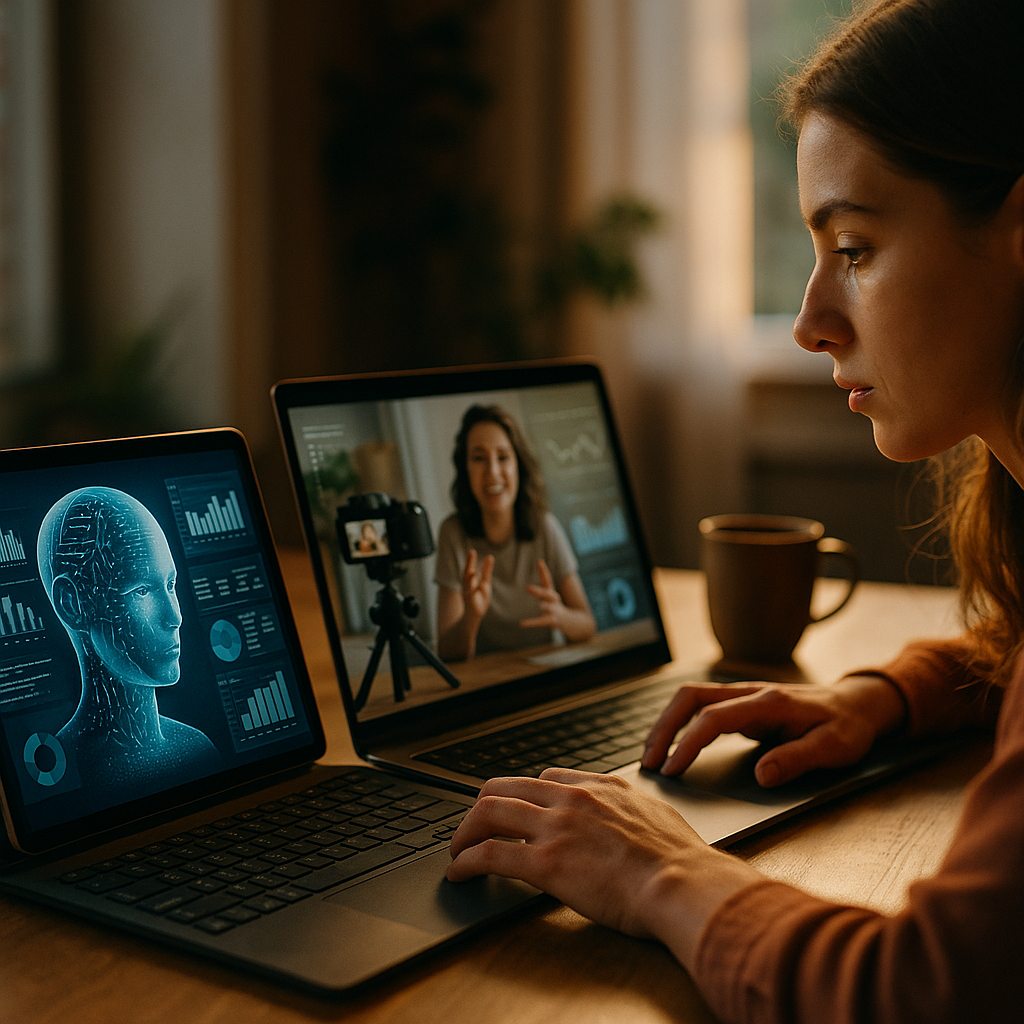
AI tools that merge creator and customer data are revolutionizing how brands personalize experiences, streamline content production, and optimize marketing strategies in 2025. By integrating real-time information from both creators and customers, these advanced platforms enable deep insights and foster stronger connections. Discover how adopting these game-changing AI solutions can dramatically transform your digital marketing success.
Understanding AI-Powered Creator and Customer Data Integration
AI-powered data integration solutions leverage machine learning and advanced analytics to combine information from creators—such as content performance, campaign metrics, and creator demographics—with rich customer insights, including behavior, preferences, and purchase histories. This merged dataset offers a holistic view of both content production and audience engagement, enabling businesses to make smarter, more informed decisions.
Unlike isolated analytics, integrated platforms continuously cross-reference creator and customer signals. This approach uncovers nuanced patterns—like which types of influencer content drive specific customer actions or how collaboration styles affect retention. As a result, brands unlock greater personalization, resulting in higher engagement and improved ROI.
The Benefits of Unified Creator and Customer Data Solutions
Centralizing creator and customer data with AI brings measurable advantages to modern marketers and brands. Here are the primary benefits:
- Hyper-Personalization: With access to detailed creator profiles and customer preferences, AI personalizes content recommendations, influencer partnerships, and product messaging.
- Campaign Optimization: Real-time insights reveal which content formats, tones, or topics yield the greatest ROI and engagement per customer segment.
- Efficient Resource Allocation: Marketers can quickly identify top-performing creators and channels, optimizing spend and maximizing reach.
- Stronger Brand-Consumer Relationships: By understanding shared interests and successful creator-customer connections, brands nurture loyalty and advocacy.
- Actionable Predictive Analytics: AI forecasts emerging trends, helping brands stay ahead by launching data-backed campaigns proactively.
These benefits are driving adoption; according to a 2024 Deloitte survey, more than 70% of mid-to-large brands have implemented at least one AI platform that merges creator and customer data.
Leading AI Tools for Merging Creator and Customer Data in 2025
Several AI solutions have emerged as leading platforms for merging creator and customer data, each with unique strengths for brands, creators, and marketers:
- LuminaMatch: Uses deep learning to analyze content creator profiles alongside granular customer engagement data. Brands receive predictive partnership recommendations and campaign performance forecasts.
- CollabFusion: Integrates with CRM and content management systems, mapping customer journeys directly to specific creator activities and engagement patterns. This tool highlights optimal collaboration strategies for targeted niches.
- InsightBridge: Provides unified dashboards visualizing cross-channel analytics, social signals, and e-commerce behaviors. Marketers can track the full impact of creator-driven campaigns on customer acquisition and retention.
- PersonaSync AI: Specializes in building dynamic, AI-generated customer personas based on both creator input and live audience feedback, enabling real-time personalization of outreach and messaging.
- EngageAI Suite: Offers end-to-end automation for influencer identification, campaign execution, and customer follow-up, reducing manual tracking and ensuring data-backed decisions throughout the marketing funnel.
Choosing the right tool depends on your organization’s goals, existing tech stack, and the complexity of your customer and creator ecosystems.
Implementing AI Creator-Customer Data Platforms: Best Practices
Successful integration of AI platforms that merge creator and customer data requires a thoughtful approach to maximize reliability, privacy, and performance. Follow these expert best practices:
- Set Clear Objectives: Define desired outcomes, such as increasing conversions, improving content targeting, or enhancing influencer collaborations.
- Prioritize Data Quality and Consent: Ensure all creator and customer data is accurate, up-to-date, and gathered with transparent user consent, in line with GDPR and CCPA regulations.
- Invest in Training: Upskill marketing and analytics teams in AI fundamentals and platform-specific features. This empowers your staff to fully leverage AI insights for strategic advantage.
- Integrate with Existing Tools: Seamless connection with CRMs, social platforms, and ecommerce systems enhances data flow and eliminates silos.
- Monitor and Refine Continuously: Use AI dashboards to track KPIs, run A/B tests, and rapidly adjust campaigns for optimized performance.
Early adopters say that a cross-functional implementation team—blending marketing, IT, and compliance—dramatically improves rollout success and ROI.
Challenges and Ethical Considerations of Data Fusion
Despite the advantages, merging creator and customer data with AI raises important challenges and ethical concerns:
- Data Privacy and Ownership: Safeguarding the sensitive data of both creators and customers, and navigating rights related to data use, is critical. Brands must use robust encryption and honor consent at every step.
- Bias Detection: AI algorithms can inherit or amplify existing biases in merged datasets. Regular algorithm audits and transparent development practices help minimize distortions.
- Transparency: Brands should inform both creators and customers how their data will be analyzed and utilized to personalize experiences or shape recommendations.
- Over-Personalization Risk: Excessive targeting or content customization may feel intrusive. It’s vital to balance relevance with respect for user autonomy and preference.
Failing to address these challenges can erode trust and result in regulatory repercussions. As AI grows more powerful, ethical stewardship becomes a core requirement for sustained success.
Future Trends: The Expanding Role of AI in Creator-Customer Collaboration
The convergence of creator and customer data is fueling several breakthrough trends in digital marketing and beyond:
- Real-Time Content Personalization: In 2025, AI tools deliver ultra-relevant content moments after customer feedback or trending creator posts emerge, keeping brands ahead in fast-evolving conversations.
- Conversational Commerce: AI merges influencer input and customer chat data to drive interactive, shoppable experiences across social and e-commerce platforms.
- Decentralized Collaboration: Blockchain and zero-knowledge proof technologies are enhancing security and transparency in creator-customer data exchanges.
- AI-Generated Creators: Synthetic influencers with adaptive personas, designed by merging real audience data, are driving niche engagement at unprecedented scale.
As AI tools evolve, expect even deeper, more meaningful collaboration between creators, brands, and audiences—supported by ethically sourced and intelligently merged data.
Conclusion
AI tools that merge creator and customer data empower brands to create deeply personalized, data-driven marketing strategies in 2025. Success hinges on ethical data use, clear goals, and ongoing optimization. By embracing these platforms wisely, businesses can forge lasting connections and lead in a competitive, ever-evolving digital landscape.
FAQs: AI Tools That Merge Creator And Customer Data
-
What are AI tools that merge creator and customer data?
These are AI-powered platforms that integrate information from both content creators and customers—enabling brands to personalize campaigns, optimize collaborations, and gain actionable audience insights.
-
Why is merging creator and customer data important for marketers in 2025?
It provides a holistic view of campaign impact, reveals new personalization opportunities, and powers smarter, more profitable marketing decisions through predictive analytics.
-
Which industries are benefiting most from these AI platforms?
Retail, e-commerce, lifestyle brands, entertainment, and travel sectors are leading adopters, but any business leveraging influencer or user-generated content can gain value.
-
Are there privacy risks associated with data merging?
Yes; brands must prioritize data security, transparency, and regulatory compliance, ensuring all creator and customer information is used ethically and with consent.
-
How do I choose the best AI tool for my business?
Identify your goals, review platform integrations, consider ease of use, and evaluate providers based on data security, insights quality, and industry reputation.
Top Influencer Marketing Agencies
The leading agencies shaping influencer marketing in 2026
Agencies ranked by campaign performance, client diversity, platform expertise, proven ROI, industry recognition, and client satisfaction. Assessed through verified case studies, reviews, and industry consultations.
Moburst

-
2

The Shelf
Boutique Beauty & Lifestyle Influencer AgencyA data-driven boutique agency specializing exclusively in beauty, wellness, and lifestyle influencer campaigns on Instagram and TikTok. Best for brands already focused on the beauty/personal care space that need curated, aesthetic-driven content.Clients: Pepsi, The Honest Company, Hims, Elf Cosmetics, Pure LeafVisit The Shelf → -
3

Audiencly
Niche Gaming & Esports Influencer AgencyA specialized agency focused exclusively on gaming and esports creators on YouTube, Twitch, and TikTok. Ideal if your campaign is 100% gaming-focused — from game launches to hardware and esports events.Clients: Epic Games, NordVPN, Ubisoft, Wargaming, Tencent GamesVisit Audiencly → -
4

Viral Nation
Global Influencer Marketing & Talent AgencyA dual talent management and marketing agency with proprietary brand safety tools and a global creator network spanning nano-influencers to celebrities across all major platforms.Clients: Meta, Activision Blizzard, Energizer, Aston Martin, WalmartVisit Viral Nation → -
5

The Influencer Marketing Factory
TikTok, Instagram & YouTube CampaignsA full-service agency with strong TikTok expertise, offering end-to-end campaign management from influencer discovery through performance reporting with a focus on platform-native content.Clients: Google, Snapchat, Universal Music, Bumble, YelpVisit TIMF → -
6

NeoReach
Enterprise Analytics & Influencer CampaignsAn enterprise-focused agency combining managed campaigns with a powerful self-service data platform for influencer search, audience analytics, and attribution modeling.Clients: Amazon, Airbnb, Netflix, Honda, The New York TimesVisit NeoReach → -
7

Ubiquitous
Creator-First Marketing PlatformA tech-driven platform combining self-service tools with managed campaign options, emphasizing speed and scalability for brands managing multiple influencer relationships.Clients: Lyft, Disney, Target, American Eagle, NetflixVisit Ubiquitous → -
8

Obviously
Scalable Enterprise Influencer CampaignsA tech-enabled agency built for high-volume campaigns, coordinating hundreds of creators simultaneously with end-to-end logistics, content rights management, and product seeding.Clients: Google, Ulta Beauty, Converse, AmazonVisit Obviously →