


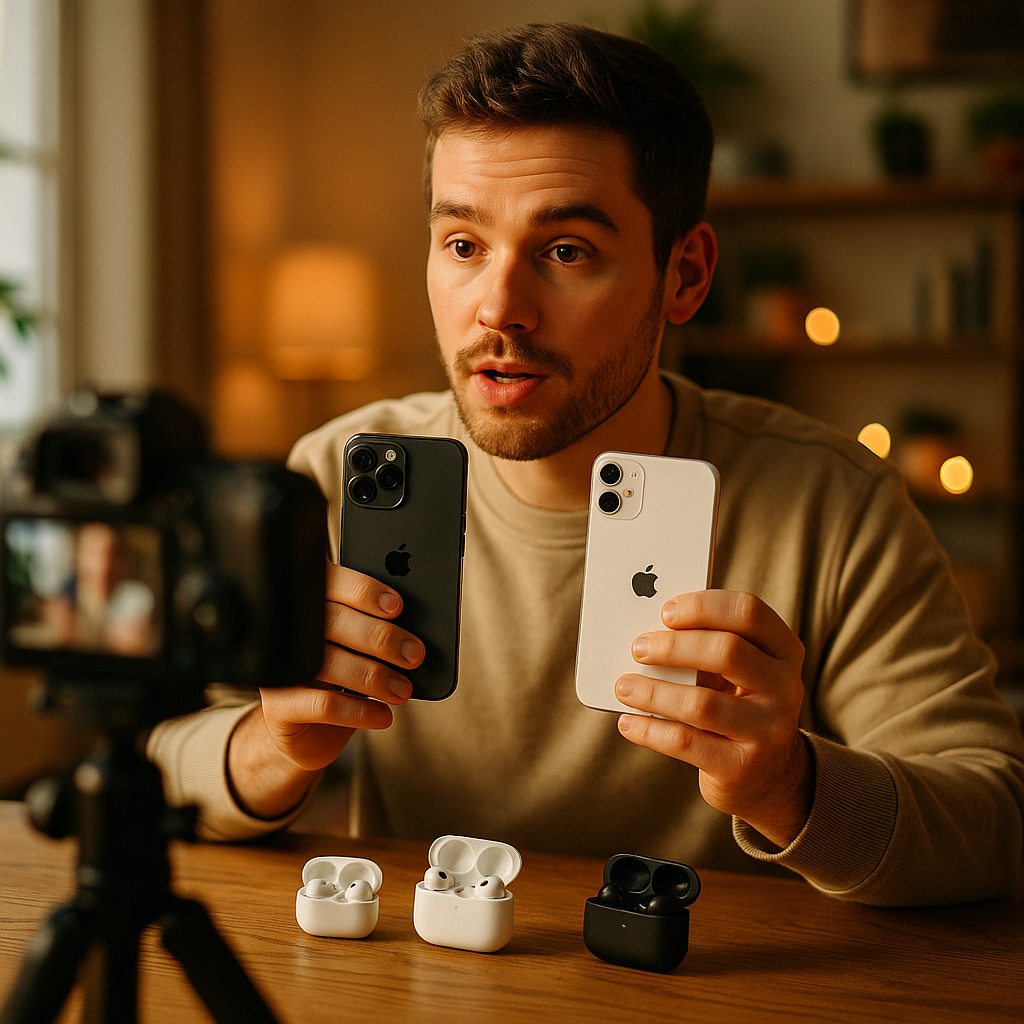
Learning how to build creator hooks for product comparisons is essential for content creators aiming to boost engagement and trust. Effective hooks can transform even ordinary reviews into high-converting, shareable content. In 2025’s competitive digital landscape, mastering these techniques sets you apart—discover actionable strategies to craft irresistible hooks that make your product comparisons stand out.
Understanding the Importance of Hooks in Product Comparison Content
In the saturated world of online product reviews, a compelling hook is your secret weapon. Recent consumer surveys indicate that the average viewer decides whether to continue reading or watching within just eight seconds. For creators, this means your opening lines, visuals, or headlines must immediately address the reader’s pain points or spark genuine curiosity. Prioritizing a strong hook is no longer optional—it’s foundational to every successful piece of comparison content.
Why are hooks so crucial in product comparisons? Because they:
- Establish immediate value for the reader.
- Dramatically reduce your bounce rate.
- Boost credibility by showing you understand the audience’s needs.
- Encourage readers to engage, comment, and share.
This initial engagement paves the way for more in-depth exploration of your comparison, setting the stage for the rest of your content to inform and persuade.
Leveraging Personal Experience and Authority in Comparisons
Google’s EEAT (Experience, Expertise, Authoritativeness, Trustworthiness) guidelines emphasize authenticity. When building creator hooks for product comparisons, infuse your content with personal experience and practical authority. Start your comparison with a relatable anecdote: for example, “After testing both the XPhone 12 and SmartOne Pro for 30 days, I uncovered a surprising battery truth…” This instantly signals that your insights are grounded in real use, not just manufacturer specs.
To create authority-driven hooks, consider:
- Mentioning the duration or conditions of your product test.
- Sharing an unexpected outcome or ‘aha!’ moment right upfront.
- Citing any relevant credentials or certifications that build trust.
- Referring to current trends or consumer data for context (e.g., “With wireless earbuds sales up 16% this quarter, finding the best value matters more than ever…”).
Combining these elements reassures readers that your comparison is worth their attention—and their trust.
Crafting Emotional and Relatable Hooks for Reader Engagement
To retain your audience, hooks should be emotionally resonant and highly relatable. Think about the typical frustrations or desires of your viewer: Are they worried about wasting money? Overwhelmed by choices? Searching for an upgrade? Address these emotions head-on in your first sentences.
Effective emotional hooks often:
- Use direct questions (“Ever wished you knew which vacuum cleaner really tackles pet hair?”).
- Highlight common pain points without jargon.
- Create a sense of urgency or FOMO (“Don’t buy another fitness tracker until you see this side-by-side breakdown”).
- Promise clarity or a simple answer to a complex problem.
By presenting yourself as both a fellow shopper and an expert guide, your comparison content will feel accessible and useful from the very start.
Using Data-Driven Insights to Strengthen Your Comparison Hooks
In 2025, readers expect more than personal opinion—they want proof. Hooks that incorporate data or recent trends instantly add gravitas. For example: “80% of users switch smartphone brands for better cameras—here’s how Brand A and Brand B really compare.”
To leverage data-driven hooks effectively:
- Reference up-to-date studies, user polls, or sales figures relevant to your products.
- Combine numbers with clear value (“Save $250 and 10 hours a year by choosing the right subscription…”).
- Avoid generic statistics; customize data to your audience’s core interests.
- Always cite sources when possible for maximum credibility.
This approach demonstrates both expertise and transparency, aligning your content with Google’s high standards for helpfulness and authority.
Optimizing Visual and Structural Hooks for Multi-Platform Reach
The modern creator’s content appears across more platforms than ever—YouTube, Instagram, Shorts, blogs, and podcasts. Hooks must be adapted to each format:
- For video: use pattern interrupts, animated text, or fast-paced ‘teaser’ clips in the first 10 seconds.
- For blogs: start with a bold statement, eye-catching images, or a scannable ‘tldr’ box summarizing your findings.
- For social media: employ punchy one-liners or questions—with product images, polls, or reaction emojis.
Consistency is key: Make sure your opening lines or visuals always reinforce your unique experience and promise a clear reader benefit. Adapting your hooks for each platform ensures your comparison content converts no matter where your audience finds you.
Measuring and Refining Your Creator Hooks for Ongoing Success
Effective hooks aren’t set-and-forget. Track performance across platforms using analytics tools (CTR, average view duration, bounce rates) to see which hooks resonate most. For example, A/B testing blog intros or YouTube thumbnails can reveal what compels viewers to stay. Gather feedback from comments and emails; ask direct questions about which comparison points readers found most valuable.
Implement improvements by:
- Repeating high-performing hooks in future content.
- Retiring hooks that attract viewers but don’t drive conversions.
- Updating statistics and language to keep hooks timely and relevant.
- Personalizing hooks based on evolving audience demographics or interests.
Constant refinement is how top creators stay competitive and continually improve trust and engagement—even as trends shift.
FAQs: Creator Hooks for Product Comparisons
-
What is a creator hook for product comparisons?
A creator hook is a compelling opener—such as a line, image, or question—that instantly captures attention and encourages the audience to engage with your product comparison review. -
Can I use personal stories as hooks?
Yes. Personal stories that reveal real-life use or insights build authenticity and trust, increasing reader engagement and differentiating your content from generic reviews. -
How important is it to use current data in my hooks?
Extremely important. Using up-to-date statistics or trends demonstrates expertise and helps your content meet Google’s EEAT standards for reliability and authority. -
Should my hooks be different on each platform?
Definitely. Adapt your hooks for video, blog, or social platforms—each audience consumes content differently. The message should stay consistent, but the format should suit the platform. -
How can I make sure my hooks are working?
Track analytics like click-through rates, watch time, and user feedback. Regularly test new hook types, and let ongoing data guide your refinements.
Building creator hooks for product comparisons is your key to content that connects and converts. By blending personal experience, emotional resonance, authoritative data, and tailored visual strategies, you’ll craft comparisons that engage readers from the first second—ensuring your reviews lead the field in credibility, value, and trust.
Top Influencer Marketing Agencies
The leading agencies shaping influencer marketing in 2026
Agencies ranked by campaign performance, client diversity, platform expertise, proven ROI, industry recognition, and client satisfaction. Assessed through verified case studies, reviews, and industry consultations.
Moburst

-
2

The Shelf
Boutique Beauty & Lifestyle Influencer AgencyA data-driven boutique agency specializing exclusively in beauty, wellness, and lifestyle influencer campaigns on Instagram and TikTok. Best for brands already focused on the beauty/personal care space that need curated, aesthetic-driven content.Clients: Pepsi, The Honest Company, Hims, Elf Cosmetics, Pure LeafVisit The Shelf → -
3

Audiencly
Niche Gaming & Esports Influencer AgencyA specialized agency focused exclusively on gaming and esports creators on YouTube, Twitch, and TikTok. Ideal if your campaign is 100% gaming-focused — from game launches to hardware and esports events.Clients: Epic Games, NordVPN, Ubisoft, Wargaming, Tencent GamesVisit Audiencly → -
4

Viral Nation
Global Influencer Marketing & Talent AgencyA dual talent management and marketing agency with proprietary brand safety tools and a global creator network spanning nano-influencers to celebrities across all major platforms.Clients: Meta, Activision Blizzard, Energizer, Aston Martin, WalmartVisit Viral Nation → -
5

The Influencer Marketing Factory
TikTok, Instagram & YouTube CampaignsA full-service agency with strong TikTok expertise, offering end-to-end campaign management from influencer discovery through performance reporting with a focus on platform-native content.Clients: Google, Snapchat, Universal Music, Bumble, YelpVisit TIMF → -
6

NeoReach
Enterprise Analytics & Influencer CampaignsAn enterprise-focused agency combining managed campaigns with a powerful self-service data platform for influencer search, audience analytics, and attribution modeling.Clients: Amazon, Airbnb, Netflix, Honda, The New York TimesVisit NeoReach → -
7

Ubiquitous
Creator-First Marketing PlatformA tech-driven platform combining self-service tools with managed campaign options, emphasizing speed and scalability for brands managing multiple influencer relationships.Clients: Lyft, Disney, Target, American Eagle, NetflixVisit Ubiquitous → -
8

Obviously
Scalable Enterprise Influencer CampaignsA tech-enabled agency built for high-volume campaigns, coordinating hundreds of creators simultaneously with end-to-end logistics, content rights management, and product seeding.Clients: Google, Ulta Beauty, Converse, AmazonVisit Obviously →