


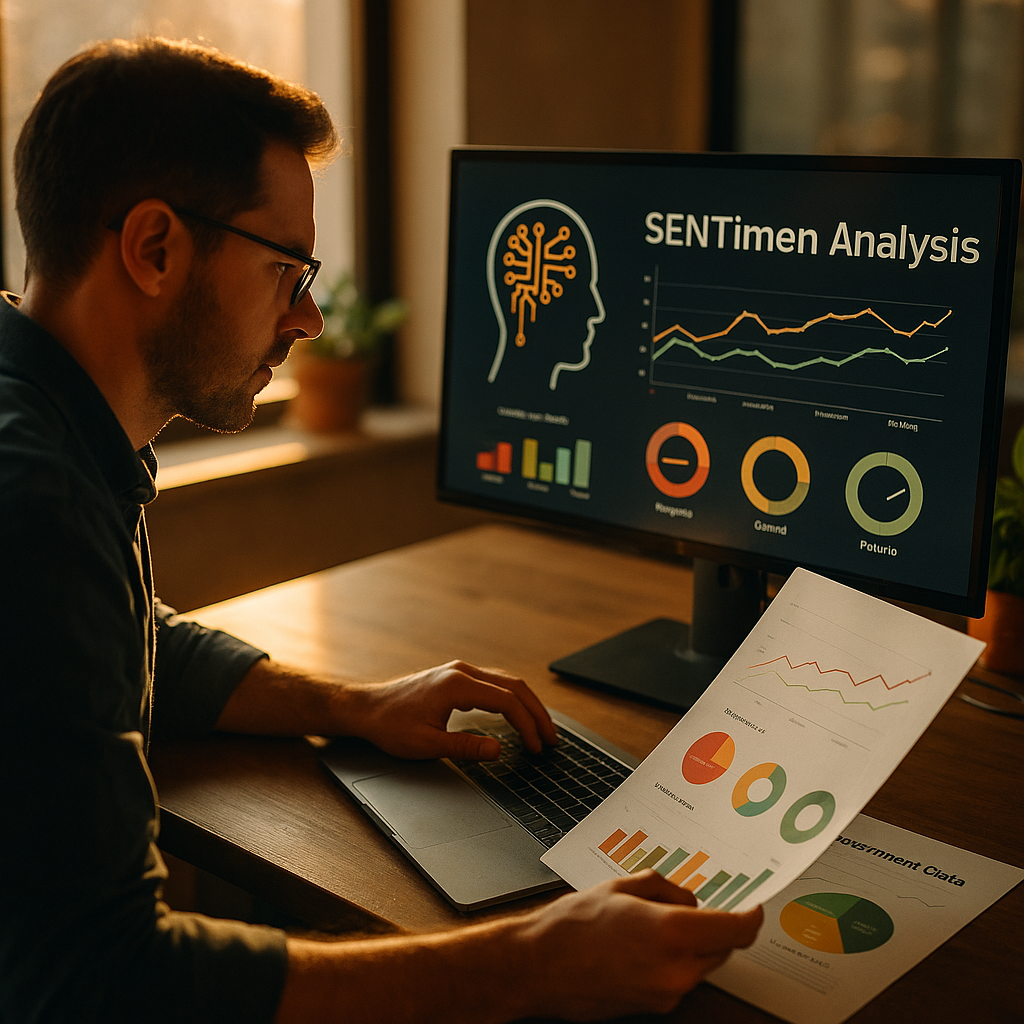
Analyzing audience sentiment with AI tools has transformed how brands understand their customers, enabling data-driven decisions that boost satisfaction and engagement. In 2025, leveraging artificial intelligence for sentiment analysis spells the difference between thriving brands and those left guessing. How exactly can you make the most of AI sentiment analysis in your strategy?
Understanding Sentiment Analysis in 2025: Trends and Capabilities
Sentiment analysis, also known as opinion mining, interprets and classifies emotions expressed in textual data. In 2025, AI-powered sentiment analysis tools harness deep learning and natural language processing to accurately gauge the attitudes, emotions, and intent behind every comment, post, or review. With accuracy rates topping 95% in recent Gartner research, these tools empower businesses to decipher not just positive or negative sentiment but also nuanced opinions and emerging trends.
Today, sentiment analysis goes beyond merely identifying words—it considers context, sarcasm, emojis, slang, and multimodal content like images with captions. This expanded capability means AI tools provide a more comprehensive picture of how audiences truly feel, leading to more meaningful engagement and informed decision-making.
Key Benefits of Audience Sentiment Analysis Using AI
Adopting AI-driven sentiment analysis tools delivers a range of business benefits that are especially impactful in hyper-competitive markets. Here’s how brands leverage these advantages:
- Real-time insights: Instantly detect shifts in customer mood around campaigns, product launches, or PR crises, enabling agile responses and reputation management.
- Increased accuracy and scalability: Analyze millions of data points from social media, reviews, and surveys with greater consistency than manual approaches.
- Objective measurement: Remove human bias from feedback interpretation, delivering more reliable audience sentiment insights.
- Customer-centric strategy: Use robust sentiment data to refine products, content, and customer service, improving loyalty and ROI.
- Competitor benchmarking: Compare how audiences perceive your brand versus competitors in your industry—an essential advantage for staying ahead.
These benefits combine to streamline the decision-making process and foster deeper, data-backed relationships with audiences.
Choosing the Right AI Sentiment Analysis Tools for Your Needs
Selecting an AI tool for sentiment analysis requires analysis of several critical factors. Leaders in 2025, such as Brandwatch, Sprout Social, and MonkeyLearn, offer cloud-based systems that cater to various business sizes and industries. Here’s what to consider when evaluating a sentiment analysis solution:
- Data compatibility: Confirm that your chosen tool accepts datasets from all channels you intend to analyze, including social platforms, CRM systems, and customer reviews.
- Granularity: Advanced AI sentiment tools now offer sentiment scoring on a scale or even emotion detection—far surpassing basic positive/negative outputs.
- Integration: Opt for platforms that connect seamlessly with your current analytics and CRM software, streamlining workflows and reporting.
- Language support: If you operate globally, multilingual sentiment analysis is no longer optional. Leading tools support more than 100 languages.
- Security & compliance: Choose providers with robust data privacy protocols, keeping in line with 2025’s evolving privacy regulations.
- Customizability: Ensure your tool can be trained on industry-specific jargon and tone, as generic models may miss nuanced feedback in specialized markets.
Evaluating these aspects will help tailor an AI sentiment analysis solution to your unique business objectives, audience types, and growth ambitions.
How to Implement AI Sentiment Analysis for Maximum Impact
Successful sentiment analysis requires more than just deploying a tool. To unlock its full value, follow these implementation strategies:
- Define clear objectives: Establish what you want to learn from the sentiment analysis—brand perception, campaign feedback, or customer service improvement.
- Integrate diverse data sources: Feed your AI consistent data from multiple touchpoints for a 360-degree view of audience sentiment.
- Set up automated alerts: Many platforms offer real-time notification of major sentiment swings, helping you act fast when needed.
- Continuously refine models: Regularly review and optimize your AI’s training sets for improved accuracy, especially as language evolves or your brand enters new markets.
- Combine with qualitative insights: Use human judgment to interpret particularly complex or ambiguous feedback to complement AI results.
Following these steps ensures AI-driven sentiment analysis becomes an ongoing asset in your customer intelligence toolkit rather than a one-off project.
Measuring ROI: Evaluating the Results of Audience Sentiment Analysis
To justify investments in sentiment analysis, businesses need to establish clear metrics and connect insights directly to organizational goals. In 2025, leading companies track:
- Changes in Net Promoter Score (NPS) or Customer Satisfaction (CSAT): Improvements here often reflect smarter, sentiment-led decision-making.
- Reduction in churn rate: Proactive responses to audience unhappiness help minimize revenue loss and boost retention.
- Engagement and conversion uplift: Timely tweaks to campaigns, informed by sentiment data, often result in higher click-throughs and sales.
- Faster crisis recovery: Monitoring recovery times following a PR incident or major brand mishap provides a tangible way to measure sentiment management success.
By benchmarking these outcomes, companies solidify the case for AI sentiment analysis—not as an experimental trend, but as a foundational pillar of audience intelligence.
Future Developments: The Evolution of AI Sentiment Analysis
Artificial intelligence continues to revolutionize sentiment analysis. In 2025, AI models draw on conversation context—using advancements in Transformer-based language models and multimodal AI to understand images, videos, and voice right alongside text. Emotion AI, capable of detecting complex feelings like frustration or excitement, now offers businesses previously unimaginable insight into subtle shifts in audience mood.
Additionally, growing focus on explainable AI allows businesses to understand why a particular sentiment rating was assigned, increasing trust and transparency. As AI further integrates with CRM, marketing automation, and even customer service bots, expect seamlessly personalized experiences that adapt in real time based on detected sentiment.
FAQs: Analyzing Audience Sentiment with AI Tools
-
What is audience sentiment analysis and why is it important in 2025?
Audience sentiment analysis uses AI to interpret emotions and attitudes in customer feedback. In 2025, it empowers brands to anticipate customer needs, improve experiences, and safeguard reputation in real time—giving leaders a distinctive competitive edge.
-
Can AI sentiment analysis detect sarcasm or nuance?
Modern AI sentiment tools can recognize sarcasm, slang, emojis, and context, making results highly accurate even for complex or ambiguous messages.
-
How frequently should businesses analyze audience sentiment?
Best practice is continuous monitoring, with real-time dashboards and alerting for rapid response. Scheduled in-depth reports (weekly or monthly) help identify long-term trends and areas for improvement.
-
What types of data can AI sentiment analysis handle?
AI sentiment tools in 2025 process text, images, videos, and voice inputs from sources like social media, customer reviews, live chat, and call center transcripts.
-
Is human review still necessary with AI sentiment analysis?
While AI delivers instant, large-scale insights, combining its findings with expert human review ensures nuanced interpretation—especially for strategic decisions or ambiguous feedback.
AI analysis of audience sentiment now delivers unrivaled accuracy and actionable insights. By choosing the right tools and strategies, you can turn real-time emotion tracking into powerful, customer-centric decisions—a must for any brand aiming to lead the market in 2025.
Top Influencer Marketing Agencies
The leading agencies shaping influencer marketing in 2026
Agencies ranked by campaign performance, client diversity, platform expertise, proven ROI, industry recognition, and client satisfaction. Assessed through verified case studies, reviews, and industry consultations.
Moburst

-
2

The Shelf
Boutique Beauty & Lifestyle Influencer AgencyA data-driven boutique agency specializing exclusively in beauty, wellness, and lifestyle influencer campaigns on Instagram and TikTok. Best for brands already focused on the beauty/personal care space that need curated, aesthetic-driven content.Clients: Pepsi, The Honest Company, Hims, Elf Cosmetics, Pure LeafVisit The Shelf → -
3

Audiencly
Niche Gaming & Esports Influencer AgencyA specialized agency focused exclusively on gaming and esports creators on YouTube, Twitch, and TikTok. Ideal if your campaign is 100% gaming-focused — from game launches to hardware and esports events.Clients: Epic Games, NordVPN, Ubisoft, Wargaming, Tencent GamesVisit Audiencly → -
4

Viral Nation
Global Influencer Marketing & Talent AgencyA dual talent management and marketing agency with proprietary brand safety tools and a global creator network spanning nano-influencers to celebrities across all major platforms.Clients: Meta, Activision Blizzard, Energizer, Aston Martin, WalmartVisit Viral Nation → -
5

The Influencer Marketing Factory
TikTok, Instagram & YouTube CampaignsA full-service agency with strong TikTok expertise, offering end-to-end campaign management from influencer discovery through performance reporting with a focus on platform-native content.Clients: Google, Snapchat, Universal Music, Bumble, YelpVisit TIMF → -
6

NeoReach
Enterprise Analytics & Influencer CampaignsAn enterprise-focused agency combining managed campaigns with a powerful self-service data platform for influencer search, audience analytics, and attribution modeling.Clients: Amazon, Airbnb, Netflix, Honda, The New York TimesVisit NeoReach → -
7

Ubiquitous
Creator-First Marketing PlatformA tech-driven platform combining self-service tools with managed campaign options, emphasizing speed and scalability for brands managing multiple influencer relationships.Clients: Lyft, Disney, Target, American Eagle, NetflixVisit Ubiquitous → -
8

Obviously
Scalable Enterprise Influencer CampaignsA tech-enabled agency built for high-volume campaigns, coordinating hundreds of creators simultaneously with end-to-end logistics, content rights management, and product seeding.Clients: Google, Ulta Beauty, Converse, AmazonVisit Obviously →