


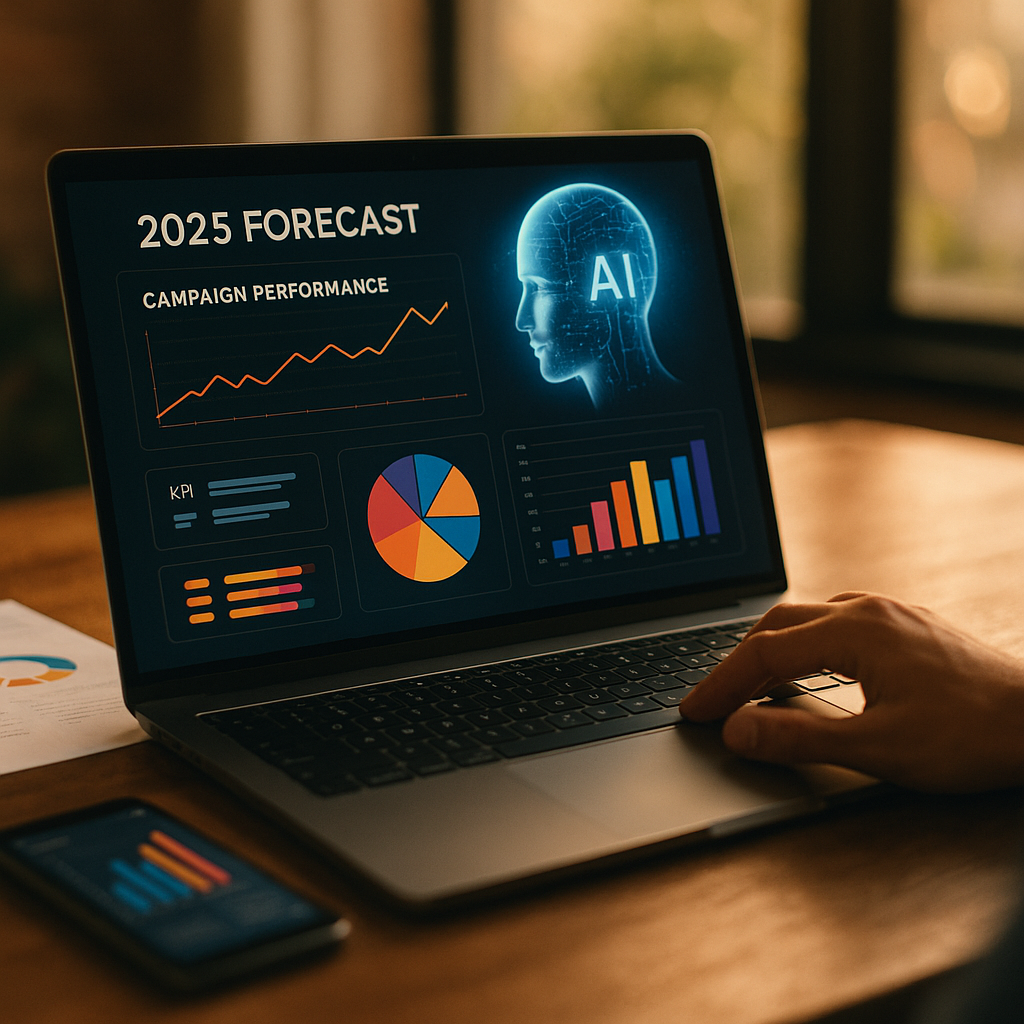
Using AI to predict campaign performance has rapidly shifted from a future-facing idea to an essential reality for marketers in 2025. Brands now demand measurable ROI, making campaign forecasting critical. As you explore harnessing artificial intelligence in your strategy, discover how the right AI tools can provide an unrivaled edge in your marketing results.
How Predictive Analytics Enhances Digital Marketing Campaigns
The integration of AI-driven predictive analytics into digital marketing empowers teams to anticipate, rather than react to, campaign outcomes. By leveraging large volumes of past and real-time data, these sophisticated AI systems can:
- Forecast conversion rates before a campaign even launches
- Identify potential high-performing segments and content types
- Recommend budget allocations based on calculated ROI probabilities
- Detect patterns behind audience engagement and drop-offs
According to a late 2024 Gartner survey, organizations using predictive analytics in campaigns reported a 32% improvement in their ROI accuracy over those relying on manual processes. This evidence underscores the transformative potential AI brings to digital marketing optimization.
The Role of Machine Learning Models in Campaign Performance Prediction
Machine learning models are at the heart of campaign performance prediction. These algorithms learn from historical data—impressions, clicks, audience demographics, engagement metrics—and build patterns that forecast future campaign results.
There are multiple types of machine learning models applied in marketing:
- Regression Models: Predict quantitative metrics, such as expected click-through rates or revenue.
- Classification Models: Identify if a campaign will meet predefined goals (e.g., pass/fail, high/low performance).
- Clustering Algorithms: Segment audiences by behaviors most likely to convert.
- Time Series Forecasting: Analyze seasonality and timing effects on campaigns.
In 2025, platforms such as Google’s Performance Max and Meta’s Advantage+ are expanding their embedded AI capabilities, making sophisticated machine learning accessible—even to smaller marketing teams.
Data Collection and Preparation: Building the Foundation for Accurate Forecasting
AI predictions are only as reliable as the underlying data. Ensuring data quality, completeness, and relevance is non-negotiable. Here’s how top marketing teams are preparing their datasets for AI-driven campaign forecasting:
- Integrate Data Sources: Merge CRM, social, web analytics, advertising, and sales data into a unified source.
- Cleanse Data: Remove duplicates, erroneous entries, or incomplete records to avoid inaccurate predictions.
- Ensure Real-Time Updates: Use APIs and automation to constantly refresh data, ensuring the AI always learns from the latest trends.
- Label and Map Outcomes: Annotate past campaign results clearly for the AI to distinguish success indicators.
Implementing clear data governance policies ensures the ethical and effective use of consumer information, directly supporting Google’s EEAT guidelines for trustworthy, expert content.
AI Tools and Platforms: Choosing the Right Tech for Marketers
The landscape of AI tools for predicting campaign performance in 2025 is broad, ranging from all-in-one cloud suites to custom model-building platforms. Key considerations for marketers include:
- Ease of Integration: Does the platform connect with existing analytics and advertising tools?
- Transparency: Does the AI explain which variables drive its predictions, ensuring actionable insights?
- Customization: Can you tailor the algorithms to reflect your brand’s unique needs?
- Compliance: Does the platform meet legal and ethical standards for data privacy in your markets?
Popular solutions in 2025 include Google’s AI-powered Analytics, Salesforce Einstein, and dedicated tools like Albert and Madgicx. Marketers should request live demos, test predictions against past campaigns, and seek platforms with ongoing support and educational resources.
Interpreting Predictions: From Insights to Actionable Optimization
The value of AI in predicting campaign performance is ultimately judged by its business impact. Interpreting these forecasts is crucial:
- Look beyond surface metrics; dissect which audiences, creative elements, and timeframes drive results.
- Use AI’s “what-if” scenario analysis to test potential campaign changes before committing budget.
- Integrate AI insights into ongoing A/B testing and multivariate strategies for continual improvement.
- Collaborate cross-functionally; share insights with creative, product, and sales teams to enhance alignment.
Research from Forrester indicates that teams who routinely act on AI predictions see up to 27% faster campaign optimizations versus those who rely on post-campaign analysis alone.
Challenges and Best Practices for AI-Driven Campaign Predictions
Despite its advantages, the use of AI in campaign forecasting presents challenges:
- Overfitting: AI may overly tailor predictions to past campaigns, making them less adaptable to new trends.
- Data Privacy: With evolving regulations in 2025, misuse of consumer data can undermine trust and result in penalties.
- Human Judgment: Sole reliance on AI may overlook creative or contextual factors not captured in data.
Address these hurdles with best practices:
- Continuously update AI models with new data and insights.
- Maintain transparency with stakeholders about how AI arrives at predictions.
- Blend AI recommendations with expert judgment for a balanced approach.
Staying informed of both technical upgrades and regulatory shifts will future-proof your AI-driven marketing strategy.
Conclusion: AI Empowers Marketers to Predict and Optimize with Precision
With robust AI systems predicting campaign performance, marketers in 2025 are equipped to minimize guesswork and maximize results. By preparing high-quality data, choosing the right tools, and translating predictions into action, teams unlock a new era of agile, insights-driven campaigns that elevate both brand impact and ROI.
Frequently Asked Questions
-
How accurate are AI-based campaign performance predictions in 2025?
With quality data and the right models, current AI platforms can achieve 80-92% accuracy under typical conditions, though results may vary by industry and available data volume.
-
Which types of campaigns benefit most from AI prediction?
Digital campaigns with measurable outcomes—such as e-commerce, paid search, social ads, and email marketing—see the most immediate benefits due to rich, structured data streams.
-
How can small businesses use AI for campaign forecasting?
Many cloud-based tools now offer accessible, plug-and-play AI prediction modules with easy onboarding, making it feasible even for teams with limited technical resources.
-
What data is needed for effective AI-powered campaign prediction?
Essential data includes historical campaign metrics (impressions, clicks, conversions), audience information, spend, timing, and any factors that may influence performance trends.
-
Does AI replace human marketers in campaign forecasting?
No—AI augments human decision-makers. Marketers are still essential for interpreting nuanced insights, setting strategic direction, and responding to context outside the data.
Top Influencer Marketing Agencies
The leading agencies shaping influencer marketing in 2026
Agencies ranked by campaign performance, client diversity, platform expertise, proven ROI, industry recognition, and client satisfaction. Assessed through verified case studies, reviews, and industry consultations.
Moburst

-
2

The Shelf
Boutique Beauty & Lifestyle Influencer AgencyA data-driven boutique agency specializing exclusively in beauty, wellness, and lifestyle influencer campaigns on Instagram and TikTok. Best for brands already focused on the beauty/personal care space that need curated, aesthetic-driven content.Clients: Pepsi, The Honest Company, Hims, Elf Cosmetics, Pure LeafVisit The Shelf → -
3

Audiencly
Niche Gaming & Esports Influencer AgencyA specialized agency focused exclusively on gaming and esports creators on YouTube, Twitch, and TikTok. Ideal if your campaign is 100% gaming-focused — from game launches to hardware and esports events.Clients: Epic Games, NordVPN, Ubisoft, Wargaming, Tencent GamesVisit Audiencly → -
4

Viral Nation
Global Influencer Marketing & Talent AgencyA dual talent management and marketing agency with proprietary brand safety tools and a global creator network spanning nano-influencers to celebrities across all major platforms.Clients: Meta, Activision Blizzard, Energizer, Aston Martin, WalmartVisit Viral Nation → -
5

The Influencer Marketing Factory
TikTok, Instagram & YouTube CampaignsA full-service agency with strong TikTok expertise, offering end-to-end campaign management from influencer discovery through performance reporting with a focus on platform-native content.Clients: Google, Snapchat, Universal Music, Bumble, YelpVisit TIMF → -
6

NeoReach
Enterprise Analytics & Influencer CampaignsAn enterprise-focused agency combining managed campaigns with a powerful self-service data platform for influencer search, audience analytics, and attribution modeling.Clients: Amazon, Airbnb, Netflix, Honda, The New York TimesVisit NeoReach → -
7

Ubiquitous
Creator-First Marketing PlatformA tech-driven platform combining self-service tools with managed campaign options, emphasizing speed and scalability for brands managing multiple influencer relationships.Clients: Lyft, Disney, Target, American Eagle, NetflixVisit Ubiquitous → -
8

Obviously
Scalable Enterprise Influencer CampaignsA tech-enabled agency built for high-volume campaigns, coordinating hundreds of creators simultaneously with end-to-end logistics, content rights management, and product seeding.Clients: Google, Ulta Beauty, Converse, AmazonVisit Obviously →