


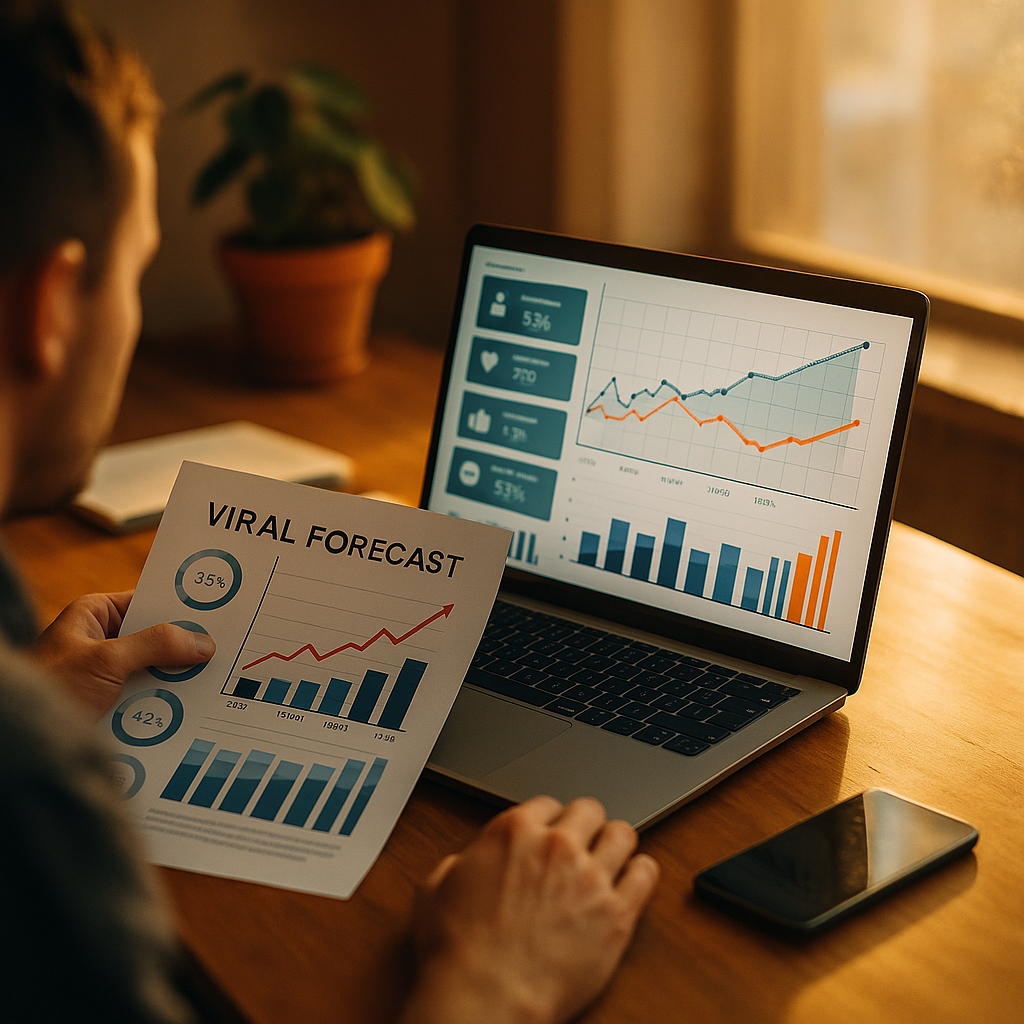
Predictive analytics revolutionizes digital strategy by enabling marketers and content creators to anticipate what will go viral before it happens. Harnessing data from user behaviors and market trends, predictive analytics empowers smarter decisions for campaigns and content. Ready to learn how to tap into forecasting viral potential with cutting-edge insights and real business impact?
Understanding Predictive Analytics in Content Marketing
Predictive analytics has become an indispensable tool in the realm of content marketing. By analyzing vast pools of historical data, such as social media activity, click-through rates, and engagement levels, brands can better anticipate which content pieces have the highest potential for significant reach and engagement. This data-driven approach reduces reliance on guesswork and enables more accurate campaign planning.
At its core, predictive analytics leverages machine learning algorithms and statistical techniques to identify patterns and correlations within datasets. For marketers, this means an ability to forecast outcomes like virality scores, optimal posting times, and topic resonance. As consumer behavior becomes increasingly complex in 2025, adopting predictive analytics is not just beneficial—it’s essential to stay ahead of the competition.
Data Sources and Signals for Viral Forecasting
To accurately forecast viral potential, robust data sources and behavioral signals are crucial. Modern data ecosystems now integrate:
- Real-time social media analytics: Including likes, shares, comments, and sentiment analysis across platforms.
- Search engine trend data: Tracking keyword volume spikes and related queries.
- Web traffic metrics: User time-on-page, bounce rates, and scroll depth.
- Influencer amplification: Monitoring key industry voices sharing or engaging with a topic.
Furthermore, advanced signal detection involves natural language processing (NLP) to analyze text and video content. For example, AI-driven sentiment analysis enables marketers to determine emotional triggers most likely to resonate with their target audience. By incorporating these diverse data sources, predictive analytics tools offer increasingly precise forecasts for content virality.
Real-World Applications: Predictive Modeling for Going Viral
Predictive modeling combines statistical algorithms with AI analytics to assign probabilities of virality to specific content pieces. In 2025, leading brands utilize these models to:
- Identify trending topics: By scanning emerging discussions, brands can create timely, relevant content.
- Allocate resources: Predict which campaigns warrant higher budgets based on forecasted reach.
- Optimize campaigns in real-time: Adjust targeting and message based on live predictive feedback.
For example, a global cosmetics company recently used predictive analytics to select influencer partnerships, leading to a 36% higher engagement rate than campaigns built without modeling. Such data-driven decisions help maximize ROI and minimize wasted effort. The combination of predictive analytics and agile marketing drives consistent, repeatable virality success.
Algorithmic Approaches: Machine Learning in Viral Forecasting
Modern machine learning algorithms, from regression models to neural networks, underpin predictive analytics for viral content. Advanced systems factor in dozens of variables—from audience demographics to content format—to generate real-time virality scores.
Notably, ensemble methods such as Random Forests and Gradient Boosted Trees have demonstrated exceptional accuracy in predicting content shares and engagement rates. Meanwhile, natural language generation models can simulate audience response to new creative concepts before a campaign launches. Marketers now rely on automated dashboards providing live, adaptive forecasts, making these approaches central to digital strategy planning in 2025.
Benefits, Challenges, and Ethical Considerations
Predictive analytics delivers clear benefits for marketing teams seeking to optimize resource allocation and campaign impact, including:
- Greater accuracy in forecasting audience engagement
- Faster response to emerging trends
- Efficient use of marketing budgets
- Data-informed content creation
However, challenges persist. Data privacy and security remain paramount, especially as predictive technologies aggregate user data across multiple channels. Marketers must ensure compliance with global privacy regulations and transparency around data use. Bias in algorithms—if unchecked—can also skew results. The most effective teams establish continuous oversight and vetting of models to guarantee ethical, unbiased forecasting.
Best Practices: Maximizing Viral Success with Predictive Analytics
As predictive analytics reaches new levels of sophistication in 2025, marketers should follow key best practices:
- Integrate diverse data sources: Broaden inputs to capture the full spectrum of online behaviors.
- Continuously retrain models: Adapt forecasting algorithms to evolving trends and consumer behaviors.
- Pair predictive insights with creative expertise: Combine data-driven forecasts with human creativity to maximize impact.
- Maintain privacy and transparency: Clearly communicate data usage policies and prioritize user consent.
By balancing innovation with responsibility, brands can consistently forecast—and achieve—viral potential while building lasting consumer trust and engagement.
Conclusion
Predictive analytics empowers organizations to forecast viral potential with unprecedented accuracy, driving smarter decisions and impactful campaigns. By combining advanced algorithms, diverse data, and ethical oversight, marketers in 2025 can create engaging, widely-shared content with confidence. Ready to future-proof your strategy? Leverage predictive analytics today for viral wins tomorrow.
FAQs
-
What is predictive analytics in content marketing?
Predictive analytics in content marketing uses data, AI, and statistical models to forecast which content topics and formats are likely to go viral based on historical and real-time signals.
-
Which data points help predict viral potential?
Key data points include social media engagement metrics, search trend data, web traffic analytics, influencer activity, and audience sentiment analysis.
-
How accurate are predictive analytics models at forecasting virality?
With diverse data sources and advanced machine learning, predictive models in 2025 offer high accuracy—often exceeding 80%—in anticipating which content will generate significant engagement.
-
Are there risks or ethical concerns with predictive analytics?
Yes, marketers must address data privacy, ensure transparency, fight algorithmic bias, and comply with global regulations to use predictive analytics responsibly.
-
Can smaller businesses use predictive analytics for viral marketing?
Absolutely. Many SaaS platforms and tools now offer predictive analytics at accessible price points, enabling organizations of all sizes to forecast and optimize their viral potential.
Top Influencer Marketing Agencies
The leading agencies shaping influencer marketing in 2026
Agencies ranked by campaign performance, client diversity, platform expertise, proven ROI, industry recognition, and client satisfaction. Assessed through verified case studies, reviews, and industry consultations.
Moburst

-
2

The Shelf
Boutique Beauty & Lifestyle Influencer AgencyA data-driven boutique agency specializing exclusively in beauty, wellness, and lifestyle influencer campaigns on Instagram and TikTok. Best for brands already focused on the beauty/personal care space that need curated, aesthetic-driven content.Clients: Pepsi, The Honest Company, Hims, Elf Cosmetics, Pure LeafVisit The Shelf → -
3

Audiencly
Niche Gaming & Esports Influencer AgencyA specialized agency focused exclusively on gaming and esports creators on YouTube, Twitch, and TikTok. Ideal if your campaign is 100% gaming-focused — from game launches to hardware and esports events.Clients: Epic Games, NordVPN, Ubisoft, Wargaming, Tencent GamesVisit Audiencly → -
4

Viral Nation
Global Influencer Marketing & Talent AgencyA dual talent management and marketing agency with proprietary brand safety tools and a global creator network spanning nano-influencers to celebrities across all major platforms.Clients: Meta, Activision Blizzard, Energizer, Aston Martin, WalmartVisit Viral Nation → -
5

The Influencer Marketing Factory
TikTok, Instagram & YouTube CampaignsA full-service agency with strong TikTok expertise, offering end-to-end campaign management from influencer discovery through performance reporting with a focus on platform-native content.Clients: Google, Snapchat, Universal Music, Bumble, YelpVisit TIMF → -
6

NeoReach
Enterprise Analytics & Influencer CampaignsAn enterprise-focused agency combining managed campaigns with a powerful self-service data platform for influencer search, audience analytics, and attribution modeling.Clients: Amazon, Airbnb, Netflix, Honda, The New York TimesVisit NeoReach → -
7

Ubiquitous
Creator-First Marketing PlatformA tech-driven platform combining self-service tools with managed campaign options, emphasizing speed and scalability for brands managing multiple influencer relationships.Clients: Lyft, Disney, Target, American Eagle, NetflixVisit Ubiquitous → -
8

Obviously
Scalable Enterprise Influencer CampaignsA tech-enabled agency built for high-volume campaigns, coordinating hundreds of creators simultaneously with end-to-end logistics, content rights management, and product seeding.Clients: Google, Ulta Beauty, Converse, AmazonVisit Obviously →