


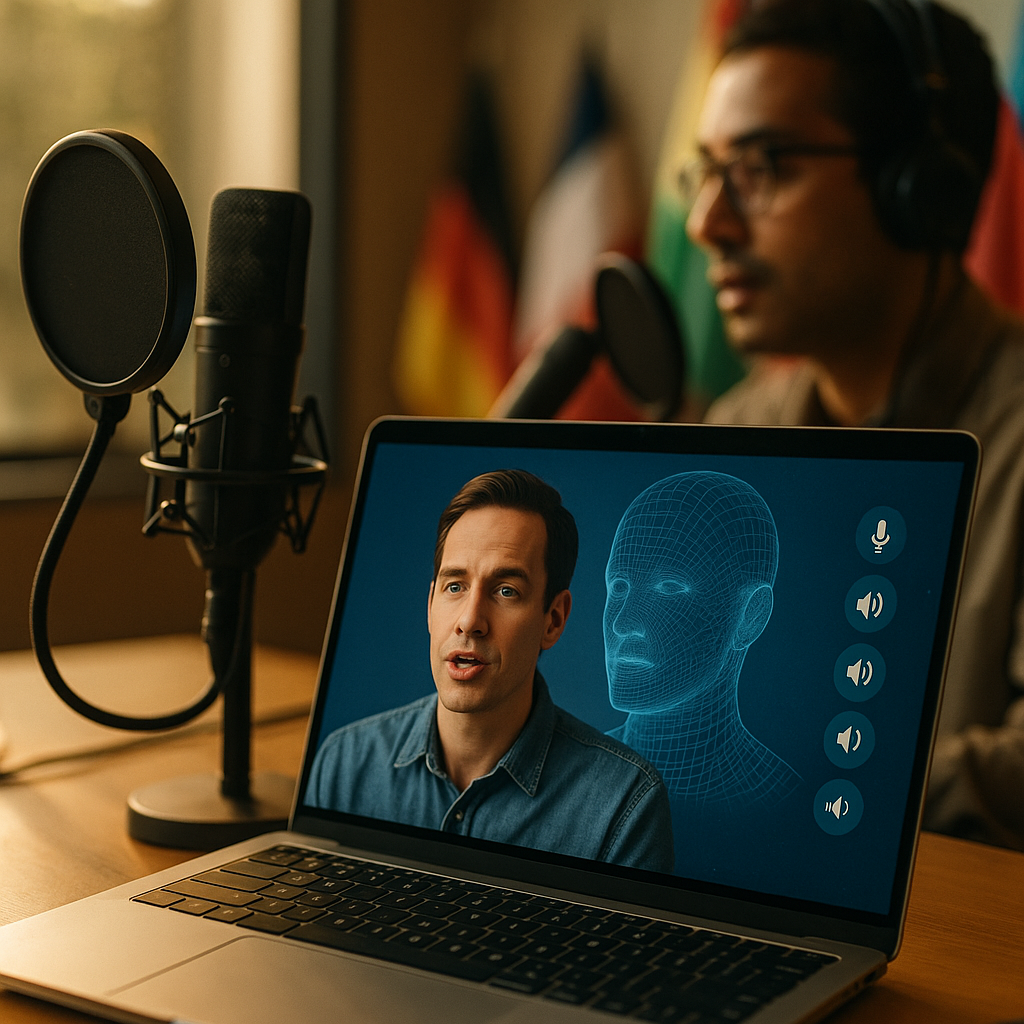
AI-powered voice cloning for localization is transforming how businesses connect with global audiences by recreating authentic, native voices in multiple languages. This revolutionary technology bridges cultural gaps, streamlines workflows, and ensures every message resonates locally. Curious about how it works and what it means for your brand? Discover the future of personalized and accessible communication below.
Understanding Voice Cloning Technology in Localization
Voice cloning utilizes deep learning algorithms to create synthetic voices that mimic the tone, inflection, and personality of original speakers. In localization, these AI-generated voices adapt content into different languages and dialects, delivering a natural and regionally accurate audio experience. Leading solutions analyze hours of voice data to generate convincing clones, and can even adapt to specific cultural nuances, making them an indispensable tool in 2025’s global media landscape.
This approach differs from traditional dubbing or voiceover methods, which rely on hiring native speakers and studio time. With AI-powered voice cloning, companies achieve faster turnaround times, consistent brand identity across regions, and scalable content adaptation for advertisements, e-learning platforms, gaming, and entertainment.
How AI-Powered Voice Cloning Enhances Global Brand Communication
Authenticity in brand messaging is critical for international success. AI voice localization makes global campaigns more effective by recreating the original spokesperson’s voice in multiple languages, preserving emotional tone and intent. This significantly improves trust and engagement compared to generic synthesized or mismatched dubbed voices.
For instance, leading multinational brands have adopted AI-driven localization for product launches, allowing key executives’ messages to be heard in local languages without losing their recognizable sound and charisma. Consumers perceive these localized voices as more genuine, which drives better conversion rates and strengthens customer loyalty internationally.
- Personalization: Adapt messaging and storytelling to resonate with local customs and idioms.
- Consistency: Maintain uniformity across channels and regions with cloned voices of key brand figures.
- Speed: Launch global content campaigns simultaneously, reducing delays and costs.
The Role of AI Voice Synthesis in Media and Entertainment
Voice synthesis in media localization is reshaping how audiences experience entertainment worldwide. Streaming giants and production houses now deploy AI-powered voice cloning to reach wider viewers without sacrificing quality. By cloning voice actors or celebrities for dubbed versions, studios ensure accuracy in emotional delivery, cultural references, and comedic timing—factors that are often lost in translation with conventional approaches.
This technology is especially impactful for:
- Film and TV: Giving characters an authentic voice in every language.
- Video games: Creating immersive, fully localized gameplay experiences.
- Music and audio books: Adapting artists and narrators across markets.
Recent case studies highlight a 40% increase in viewership engagement when content uses AI-driven localization over traditional voiceover methods.
Navigating Ethical Considerations and Consent in AI Voice Localization
While ethical issues in voice cloning for localization are prominent, leading providers have implemented robust protocols to address them. Content owners must obtain explicit consent from original voice talent prior to cloning. Technology platforms are investing in transparent contracts and digital watermarking to prevent misuse or impersonation.
In 2025, new regulatory standards require clear documentation and user awareness when synthetic voices are deployed, prioritizing both privacy and safety. Businesses must choose AI partners who comply with these rules and offer full traceability for generated voice content. Furthermore, content creators are encouraged to educate audiences on AI-generated media, fostering trust and reducing misinformation risks.
Applications and Benefits Across Industries
AI voice cloning applications in localization extend far beyond entertainment and advertising. Multilingual customer support can now provide instant, empathetic responses using cloned voices in the caller’s language, enhancing satisfaction and reducing wait times. E-learning modules reach non-English speakers through dynamic narrators, improving retention and accessibility for students globally.
Healthcare providers are piloting multilingual patient engagement tools, delivering personalized information with familiar local voices—critical during crisis communication and routine care alike. Enterprises are leveraging AI-powered language solutions for internal training and compliance, ensuring their workforce feels equally valued worldwide.
- Cost efficiency: Reduce overhead on translation, recording, and re-editing.
- Scalability: Expand into new regions without hiring large voiceover teams.
- Inclusivity: Make products and services accessible for diverse populations.
Adopters report up to 65% faster market localization cycles and measurable increases in stakeholder engagement across geographies.
Trends and Future Outlook for AI Voice Localization
AI localization trends for 2025 signal deeper integration between voice cloning, real-time translation, and content creation tools. End-to-end localization pipelines now automate script translation, voice generation, and quality assurance for seamless deployment. Innovations in emotional intelligence and accent adaptation mean that AI voices are more relatable and contextually aware than ever before.
Voice cloning is also converging with advances in virtual and augmented reality, opening fresh opportunities for truly immersive, inclusive experiences—whether in digital classrooms, healthcare consults, or global business meetings. As algorithms grow more sophisticated, expect heightened realism and even greater focus on privacy, digital identity, and user control.
Conclusion
AI-powered voice cloning for localization empowers brands and creators to communicate authentically at a global scale, delivering personalized experiences across languages and cultures. As technology and ethics evolve together, organizations that embrace intelligent voice solutions will gain a crucial edge in accessibility, trust, and audience engagement. The voice of the future speaks every language—make sure yours is heard.
FAQs about AI-Powered Voice Cloning For Localization
-
What is AI-powered voice cloning for localization?
It’s a technology that uses artificial intelligence to replicate a person’s unique voice and adapt content into different languages, ensuring authentic, regionally accurate audio experiences.
-
How accurate are AI-cloned voices in different languages?
In 2025, leading systems can mirror original voices with high fidelity, capturing accent, emotion, and even subtle local nuances, making localized content nearly indistinguishable from native-speaker recordings.
-
Is voice talent consent required for cloning?
Yes, ethical and legal standards require clear, documented permission from original speakers before their voice is cloned for any localization project, safeguarding privacy and digital rights.
-
What industries benefit most from AI-powered voice localization?
Key beneficiaries include media and entertainment, advertising, e-learning, customer support, and healthcare, where instant, authentic, and inclusive communication is critical to user experience.
-
How secure is AI voice localization technology?
Reputable platforms use digital watermarking, access controls, and transparency practices to prevent misuse, fraud, or unauthorized replication, prioritizing end-user safety and trust.
-
What does the future hold for AI voice localization?
Anticipate smarter, more empathetic voice synthesis, tighter privacy controls, and seamless integration with real-time translation and immersive technologies, streamlining global engagement for all sectors.
Top Influencer Marketing Agencies
The leading agencies shaping influencer marketing in 2026
Agencies ranked by campaign performance, client diversity, platform expertise, proven ROI, industry recognition, and client satisfaction. Assessed through verified case studies, reviews, and industry consultations.
Moburst

-
2

The Shelf
Boutique Beauty & Lifestyle Influencer AgencyA data-driven boutique agency specializing exclusively in beauty, wellness, and lifestyle influencer campaigns on Instagram and TikTok. Best for brands already focused on the beauty/personal care space that need curated, aesthetic-driven content.Clients: Pepsi, The Honest Company, Hims, Elf Cosmetics, Pure LeafVisit The Shelf → -
3

Audiencly
Niche Gaming & Esports Influencer AgencyA specialized agency focused exclusively on gaming and esports creators on YouTube, Twitch, and TikTok. Ideal if your campaign is 100% gaming-focused — from game launches to hardware and esports events.Clients: Epic Games, NordVPN, Ubisoft, Wargaming, Tencent GamesVisit Audiencly → -
4

Viral Nation
Global Influencer Marketing & Talent AgencyA dual talent management and marketing agency with proprietary brand safety tools and a global creator network spanning nano-influencers to celebrities across all major platforms.Clients: Meta, Activision Blizzard, Energizer, Aston Martin, WalmartVisit Viral Nation → -
5

The Influencer Marketing Factory
TikTok, Instagram & YouTube CampaignsA full-service agency with strong TikTok expertise, offering end-to-end campaign management from influencer discovery through performance reporting with a focus on platform-native content.Clients: Google, Snapchat, Universal Music, Bumble, YelpVisit TIMF → -
6

NeoReach
Enterprise Analytics & Influencer CampaignsAn enterprise-focused agency combining managed campaigns with a powerful self-service data platform for influencer search, audience analytics, and attribution modeling.Clients: Amazon, Airbnb, Netflix, Honda, The New York TimesVisit NeoReach → -
7

Ubiquitous
Creator-First Marketing PlatformA tech-driven platform combining self-service tools with managed campaign options, emphasizing speed and scalability for brands managing multiple influencer relationships.Clients: Lyft, Disney, Target, American Eagle, NetflixVisit Ubiquitous → -
8

Obviously
Scalable Enterprise Influencer CampaignsA tech-enabled agency built for high-volume campaigns, coordinating hundreds of creators simultaneously with end-to-end logistics, content rights management, and product seeding.Clients: Google, Ulta Beauty, Converse, AmazonVisit Obviously →