


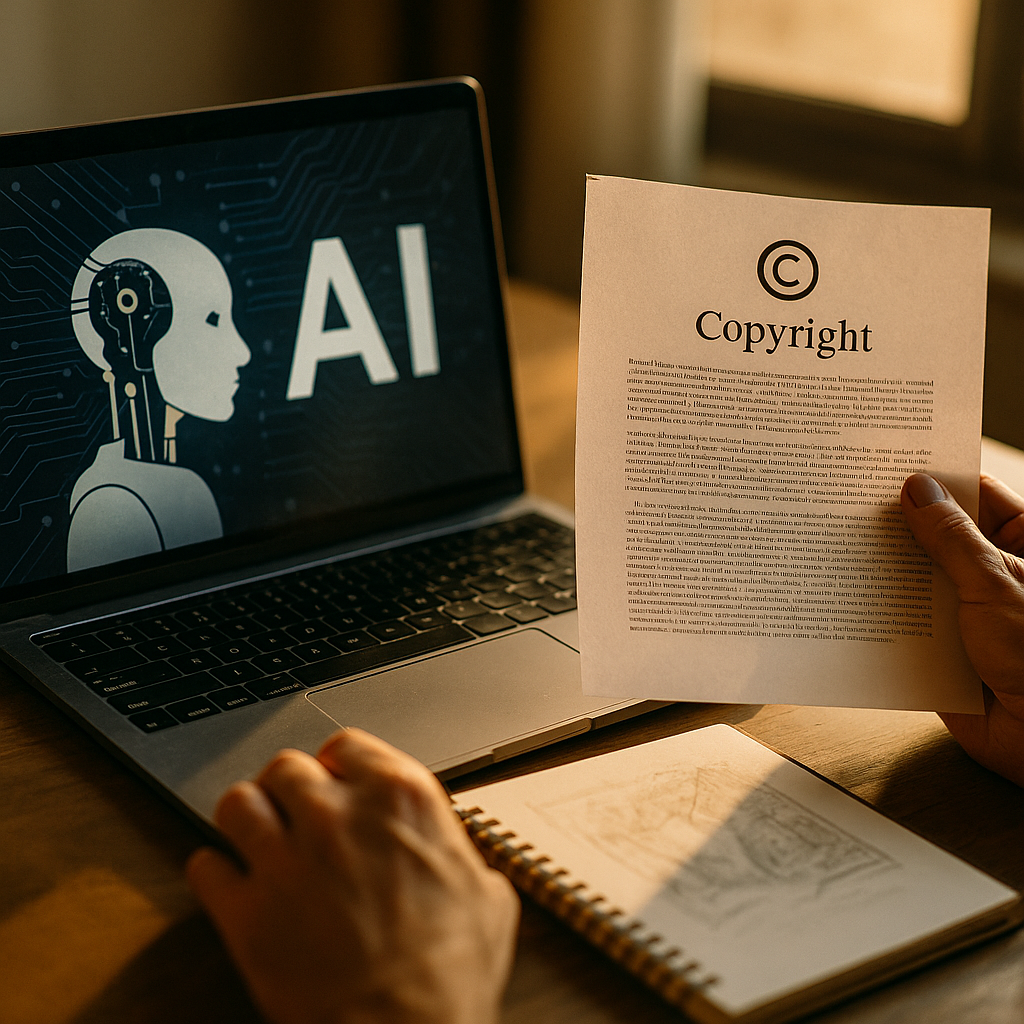
As artificial intelligence sweeps across industries, the ethical issues of training AI on creator content provoke heated debate. Artists, writers, and musicians face unprecedented challenges as their works are repurposed for machine learning. What rights should creators retain in an era where AI learns from their labor? Let’s unravel the complex morality at stake in today’s AI-powered world.
Copyright Concerns When Using Creator Content for AI Training
Copyright law was designed to protect creators’ original works—from books and music to photographs and digital art. Yet, the emergence of generative AI raises questions about whether utilizing this content for AI training constitutes copyright infringement. Machine learning models often source millions of images, texts, and sounds to learn patterns, sometimes without explicit consent from rights holders.
Recent legal actions highlight this tension. In 2025, ongoing lawsuits challenge whether scraping copyrighted content for AI datasets qualifies as “fair use” or crosses into unlawful exploitation. Many creators argue that their intellectual property is being used to generate derivative works—without compensation or attribution. The core debate centers around:
- Fair use interpretation: Does training AI constitute transformative use, or is it repurposing original content unlawfully?
- Scope of data collection: How do platforms ensure that only public domain or licensed content enters AI datasets?
- International inconsistencies: Copyright laws differ worldwide, further muddying enforcement and protection.
The fluid nature of AI technology strains traditional copyright frameworks, demanding adaptive, future-minded legislation.
Consent and Transparency in AI Data Sourcing
The principle of informed consent is central to ethical AI development. Content creators demand clarity about how, when, and where their work is used. However, many AI models are trained on massive datasets compiled from web crawls, social media feeds, and stock repositories. In 2025, increased scrutiny surrounds whether creators are ever adequately notified or offered the chance to opt out.
Transparency initiatives have emerged to mitigate this gap, including:
- Dataset disclosure: Leading AI labs now publish dataset origins and sampling methods.
- Opt-out tools: Creators may flag works for exclusion from AI training—though effectiveness and awareness remain concerns.
- Licensing platforms: Some organizations broker deals where creators can actively license their content for ethical AI use.
Nevertheless, the complexity and scale of data collection often outpace these safeguards, leaving creators uncertain about their participation in AI’s knowledge base.
Attribution and Compensation for Original Creators
Paying and crediting content creators lies at the heart of creative ecosystems. If AI systems profit from learned styles, voices, or compositions, should originating artists share in the value? In 2025, many creators advocate for algorithmic transparency and royalty models mirroring those in music or streaming platforms.
Current proposals to address attribution and compensation include:
- Royalty systems: Allocation of a percentage of AI-generated content profits to the original creators whose works influenced the system.
- Digital provenance: Watermarking and tracking technology to trace AI outputs back to source inspiration.
- Clear credits: Mandating visible acknowledgment of creators when AI-generated works substantially reflect their styles or content.
Despite technical and logistical hurdles, prioritizing fair attribution and rewards strengthens trust in the AI ecosystem and encourages future creativity.
Cultural and Social Impacts of AI on Creative Industries
Using creator content irresponsibly for AI training can ripple beyond individual rights into broader cultural trends. With algorithms capable of mimicking renowned artists or generating “new” books in classic authors’ voices, artistic authenticity faces dilution. Small creators, in particular, risk losing recognition as the digital landscape prioritizes scalable machine outputs over human nuance.
This phenomenon, often dubbed data gentrification, can consolidate creative power in the hands of tech giants and marginalize diverse voices. In 2025, communities warn:
- Homogenization of styles: AI models may inadvertently favor mainstream, well-represented works, sidelining niche or emerging creators.
- Loss of originality: Widespread distribution of synthetic art derived from copyrighted material can diminish the significance of human creativity.
- Historical erasure: Content from underrepresented cultures is particularly vulnerable to being abstracted or misrepresented in AI’s output.
Ensuring equitable, responsible AI development safeguards creative diversity and cultural legacy for the future.
Legal and Policy Approaches to Ethical AI Training
To address the ethical issues of AI training on creator content, regulators and industry leaders are collaborating on multifaceted policies. In 2025, significant measures under active development include:
- Mandatory data audits: Requiring AI firms to document and verify the lawful acquisition of all training materials.
- Creator opt-out registries: Establishing national and international databases where artists can prohibit or allow AI use of their content.
- Standardized licensing frameworks: Streamlining agreements between creators and AI developers to ensure fair use and compensation.
- AI-generated content disclosure: Enforcing transparency when works are made or influenced by artificial intelligence.
Staying informed about legislative updates empowers both creators and consumers to advocate for ethical standards as the legal landscape evolves.
Best Practices for Ethical AI Development with Creator Content
To bridge technology and ethics, leading AI firms are designing methods that honor individual rights and collective interests. Recommended best practices in 2025 include:
- Minimalist data sampling: Using the least possible amount of copyrighted content and preferring open or licensed works.
- Ethical disclosure: Publicly listing data sources and proactively seeking consent from rights holders.
- Collaborative design: Consulting artists, authors, and musicians throughout the AI development process.
- Continuous review: Regularly updating practices based on feedback, technological advancements, and ethical insights.
These steps create a more inclusive digital ecosystem and foster innovation grounded in mutual respect.
Ultimately, the ethical issues of training AI on creator content demand cooperation, clarity, and respect for creators’ rights. By combining policy with industry best practices, society can ensure AI advances without compromising the value of human imagination.
FAQs
-
Is it illegal to train AI on copyrighted content?
Not always. The legality depends on copyright laws, fair use interpretations, and whether creators have given consent. Many cases are under review in 2025, and new regulations may soon clarify boundaries for AI training datasets.
-
How can creators protect their work from unauthorized AI training?
Creators can use opt-out tools, apply digital watermarks, and register with content registries. Staying informed about contracts and AI policies helps safeguard their intellectual property rights.
-
Will AI-generated content replace human creators?
AI can generate impressive works, but the human touch remains irreplaceable in originality and context. Many experts predict a collaborative future, where AI assists rather than replaces human creativity.
-
What is being done to ensure ethical AI development?
In 2025, industry groups, legal bodies, and creators are shaping new standards for transparency, consent, fair compensation, and content sourcing. Ongoing policy reforms are expected to offer further protections.
-
Can creators earn money when AI uses their content?
Emerging royalty and licensing models aim to compensate creators whose work is used for AI training. While not yet universal, the trend toward fair payment is gaining momentum as ethical standards evolve.
Top Influencer Marketing Agencies
The leading agencies shaping influencer marketing in 2026
Agencies ranked by campaign performance, client diversity, platform expertise, proven ROI, industry recognition, and client satisfaction. Assessed through verified case studies, reviews, and industry consultations.
Moburst

-
2

The Shelf
Boutique Beauty & Lifestyle Influencer AgencyA data-driven boutique agency specializing exclusively in beauty, wellness, and lifestyle influencer campaigns on Instagram and TikTok. Best for brands already focused on the beauty/personal care space that need curated, aesthetic-driven content.Clients: Pepsi, The Honest Company, Hims, Elf Cosmetics, Pure LeafVisit The Shelf → -
3

Audiencly
Niche Gaming & Esports Influencer AgencyA specialized agency focused exclusively on gaming and esports creators on YouTube, Twitch, and TikTok. Ideal if your campaign is 100% gaming-focused — from game launches to hardware and esports events.Clients: Epic Games, NordVPN, Ubisoft, Wargaming, Tencent GamesVisit Audiencly → -
4

Viral Nation
Global Influencer Marketing & Talent AgencyA dual talent management and marketing agency with proprietary brand safety tools and a global creator network spanning nano-influencers to celebrities across all major platforms.Clients: Meta, Activision Blizzard, Energizer, Aston Martin, WalmartVisit Viral Nation → -
5

The Influencer Marketing Factory
TikTok, Instagram & YouTube CampaignsA full-service agency with strong TikTok expertise, offering end-to-end campaign management from influencer discovery through performance reporting with a focus on platform-native content.Clients: Google, Snapchat, Universal Music, Bumble, YelpVisit TIMF → -
6

NeoReach
Enterprise Analytics & Influencer CampaignsAn enterprise-focused agency combining managed campaigns with a powerful self-service data platform for influencer search, audience analytics, and attribution modeling.Clients: Amazon, Airbnb, Netflix, Honda, The New York TimesVisit NeoReach → -
7

Ubiquitous
Creator-First Marketing PlatformA tech-driven platform combining self-service tools with managed campaign options, emphasizing speed and scalability for brands managing multiple influencer relationships.Clients: Lyft, Disney, Target, American Eagle, NetflixVisit Ubiquitous → -
8

Obviously
Scalable Enterprise Influencer CampaignsA tech-enabled agency built for high-volume campaigns, coordinating hundreds of creators simultaneously with end-to-end logistics, content rights management, and product seeding.Clients: Google, Ulta Beauty, Converse, AmazonVisit Obviously →