


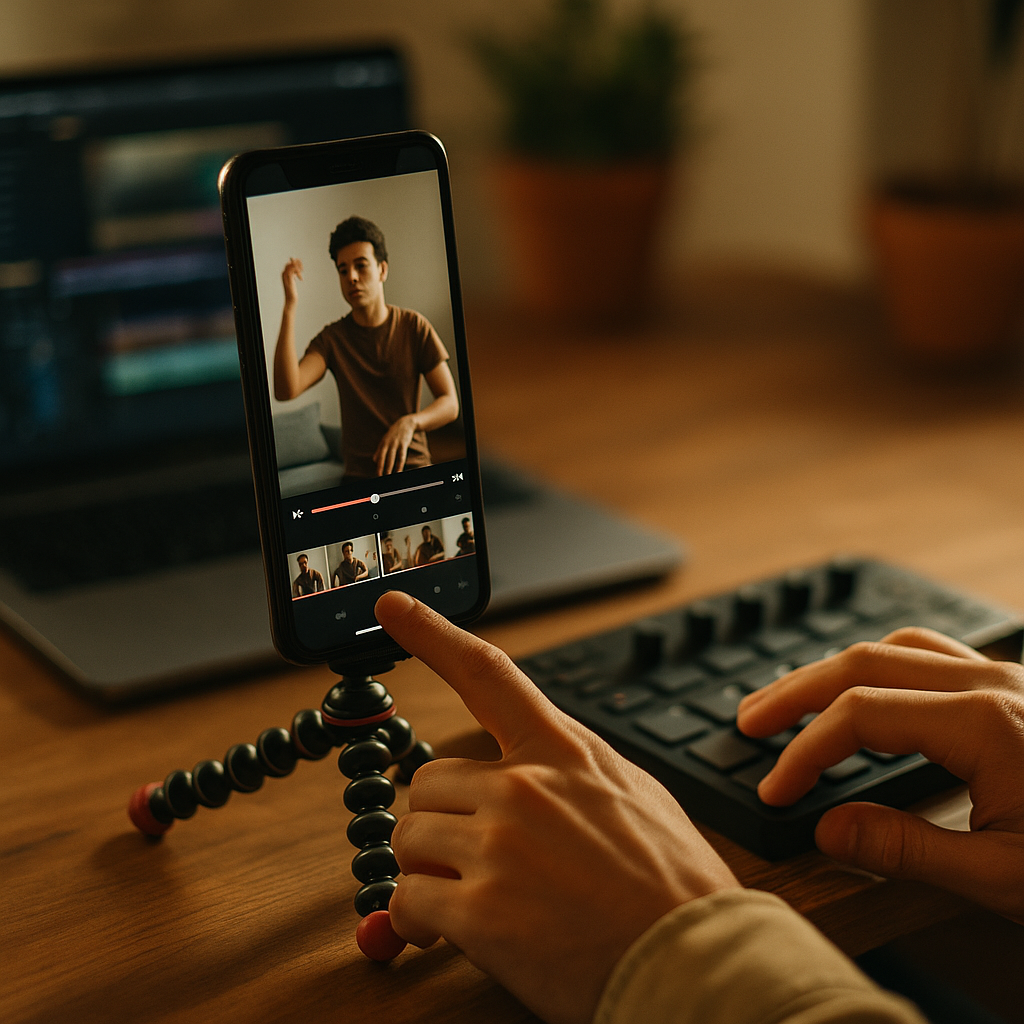
Pacing and rhythm in short-form video editing are essential for captivating audiences and increasing engagement in today’s fast-scrolling digital landscape. Understanding how to craft visually compelling sequences ensures your content stands out. Ready to master this vital editing skill and boost your video’s performance? Let’s explore expert strategies for achieving impactful pacing and rhythmic flow in your short-form edits.
Understanding Pacing in Short-Form Video
Pacing techniques in editing define how quickly or slowly a sequence unfolds. In short-form videos—such as those found on TikTok, Instagram Reels, or YouTube Shorts—audiences expect immediacy and clarity. Successful creators balance rapid visual delivery with moments for emotional impact. This artful management of time keeps viewers attentive and encourages them to watch until the end.
The right pacing involves carefully considering:
- Cut frequency: How often shots change
- Shot duration: How long each clip appears on screen
- Scene transitions: Using hard cuts, fades, or dynamic effects
Research from major short-form platforms in 2025 indicates that the average viewer has an attention span of less than nine seconds per piece of content. Editors who align their video pacing with this behavior consistently see higher retention and share rates.
Crafting a Consistent Visual Rhythm
Rhythm in editing refers to the patterned flow of visuals, audio, and story beats. In short-form video editing, rhythmic consistency helps maintain audience interest while guiding viewers through the content without confusion. Think of rhythm as a form of storytelling using timing rather than words.
Professional editors often:
- Match visual cuts to music beats or natural speech cadence
- Use repetitive visual motifs or recurring on-screen elements
- Balance quick cuts with brief pauses for comedic or emotional effect
For example, a how-to cooking reels clip might use a fast-paced montage for chopping ingredients, then slow down during the reveal of the final dish—drawing viewers in and emphasizing the payoff. Such rhythmic shifts drive emotional engagement and make videos more memorable.
The Role of Music and Sound in Dynamic Editing
Sound-driven editing has become a cornerstone in popular short-form content. Syncing visual edits to music or sound effects not only increases entertainment value but also clarifies tempo and mood. Numerous viral trends in 2025 use custom soundtracks or remixed audio paired with snappy video cuts to achieve maximum views.
Tips for leveraging music and sound in your edits:
- Select tracks with clear, rhythmic beats to anchor your visual transitions
- Align important action moments (like reveals or jokes) with audio cues
- Remain mindful of copyright: use platforms’ licensed music libraries when possible
Sound adds structure to your video. According to a 2025 survey by VideoInsider, over 82% of users watch short-form videos with the sound on, underscoring the role of audio in viewer retention and recall.
Pacing for Different Short-Form Video Genres
Genre-specific pacing is an advanced technique allowing editors to tailor rhythm and speed to the type of content they create. Each short-form video genre—comedy, tutorial, review, or lifestyle—has unique pacing conventions that shape audience expectations and boost effectiveness.
- Comedy and skits: Quick-fire pacing, frequent jump cuts, and sharp timing for punchlines maintain high energy and comedic timing.
- Tutorials: Balanced pacing, alternating between rapid demonstration and slow, explanatory moments to ensure clarity.
- Product reviews: Moderate speed with visual callouts or text overlays, helping viewers absorb key details without losing interest.
- Lifestyle and vlogs: Smooth, rhythmic editing relying on B-roll and ambient sound to mirror real-world experiences.
The best editors sample viral content in their niche, analyzing what pacing conventions resonate most with their intended audience. Continual testing and refinement further align your video’s rhythm with evolving viewer preferences throughout 2025.
Practical Tools and Techniques for Mastering Rhythm
Editing tools for short-form videos play a significant role in achieving professional pacing and rhythm. Today’s editing apps and software, from CapCut to Adobe Premiere Rush, provide creators with intuitive timelines, beat markers, and preset transition effects designed for rapid content creation.
Essential techniques include:
- Using markers: Tag musical beats or dialogue cues for precise cut points.
- Automated beat sync: Enable AI features that auto-align cuts with soundtrack rhythms.
- Motion pacing graphs: Visualize speed changes and maintain consistent energy flow.
- Loop playback: Preview sequences to assess and refine feel before finalizing.
By mastering these tools, editors deliver polished videos that feel both natural and impactful, increasing the likelihood of shares and follows.
Measuring and Improving Video Pacing Performance
Analytics for pacing in short videos help creators optimize and refine their methods over time. In 2025, most social platforms offer detailed audience retention graphs, average watch duration, and engagement heatmaps. These metrics reveal where viewers lose interest—or replay specific moments—providing actionable feedback for future edits.
Top strategies for data-driven pacing improvement include:
- Tracking drop-off points to identify overly slow or confusing segments
- A/B testing different pacing approaches within the same genre
- Soliciting viewer feedback via comments or polls on pacing preferences
Applying these insights ensures your short-form edits not only look and feel right but also deliver measurable results. Consistent iteration is key as audience tastes evolve.
FAQs: Pacing and Rhythm in Short-Form Video Editing
- What is the ideal video length for short-form content in 2025?
The sweet spot is 15-45 seconds, though some platforms allow up to 90 seconds. The main goal is to deliver value quickly to match viewer attention spans.
- How do I know if my pacing is too fast or too slow?
Review audience retention analytics; high early drop-off means you may be too slow. If viewers seem confused or miss important points, try slowing your edits down.
- Can I use copyrighted music in my short-form videos?
Always use platform-approved or royalty-free tracks to avoid takedowns. Most popular platforms offer extensive licensed libraries specifically for creators in 2025.
- Do pacing and rhythm really impact engagement?
Absolutely. Well-paced, rhythmic videos result in higher watch time, shares, and repeat views according to recent video marketing reports.
Effective pacing and rhythm in short-form video editing are essential for keeping viewers engaged and increasing content impact. By mastering genre-specific pacing, leveraging sound, and continuously analyzing performance, you position your videos for standout results in 2025’s competitive digital landscape.
Top Influencer Marketing Agencies
The leading agencies shaping influencer marketing in 2026
Agencies ranked by campaign performance, client diversity, platform expertise, proven ROI, industry recognition, and client satisfaction. Assessed through verified case studies, reviews, and industry consultations.
Moburst

-
2

The Shelf
Boutique Beauty & Lifestyle Influencer AgencyA data-driven boutique agency specializing exclusively in beauty, wellness, and lifestyle influencer campaigns on Instagram and TikTok. Best for brands already focused on the beauty/personal care space that need curated, aesthetic-driven content.Clients: Pepsi, The Honest Company, Hims, Elf Cosmetics, Pure LeafVisit The Shelf → -
3

Audiencly
Niche Gaming & Esports Influencer AgencyA specialized agency focused exclusively on gaming and esports creators on YouTube, Twitch, and TikTok. Ideal if your campaign is 100% gaming-focused — from game launches to hardware and esports events.Clients: Epic Games, NordVPN, Ubisoft, Wargaming, Tencent GamesVisit Audiencly → -
4

Viral Nation
Global Influencer Marketing & Talent AgencyA dual talent management and marketing agency with proprietary brand safety tools and a global creator network spanning nano-influencers to celebrities across all major platforms.Clients: Meta, Activision Blizzard, Energizer, Aston Martin, WalmartVisit Viral Nation → -
5

The Influencer Marketing Factory
TikTok, Instagram & YouTube CampaignsA full-service agency with strong TikTok expertise, offering end-to-end campaign management from influencer discovery through performance reporting with a focus on platform-native content.Clients: Google, Snapchat, Universal Music, Bumble, YelpVisit TIMF → -
6

NeoReach
Enterprise Analytics & Influencer CampaignsAn enterprise-focused agency combining managed campaigns with a powerful self-service data platform for influencer search, audience analytics, and attribution modeling.Clients: Amazon, Airbnb, Netflix, Honda, The New York TimesVisit NeoReach → -
7

Ubiquitous
Creator-First Marketing PlatformA tech-driven platform combining self-service tools with managed campaign options, emphasizing speed and scalability for brands managing multiple influencer relationships.Clients: Lyft, Disney, Target, American Eagle, NetflixVisit Ubiquitous → -
8

Obviously
Scalable Enterprise Influencer CampaignsA tech-enabled agency built for high-volume campaigns, coordinating hundreds of creators simultaneously with end-to-end logistics, content rights management, and product seeding.Clients: Google, Ulta Beauty, Converse, AmazonVisit Obviously →