


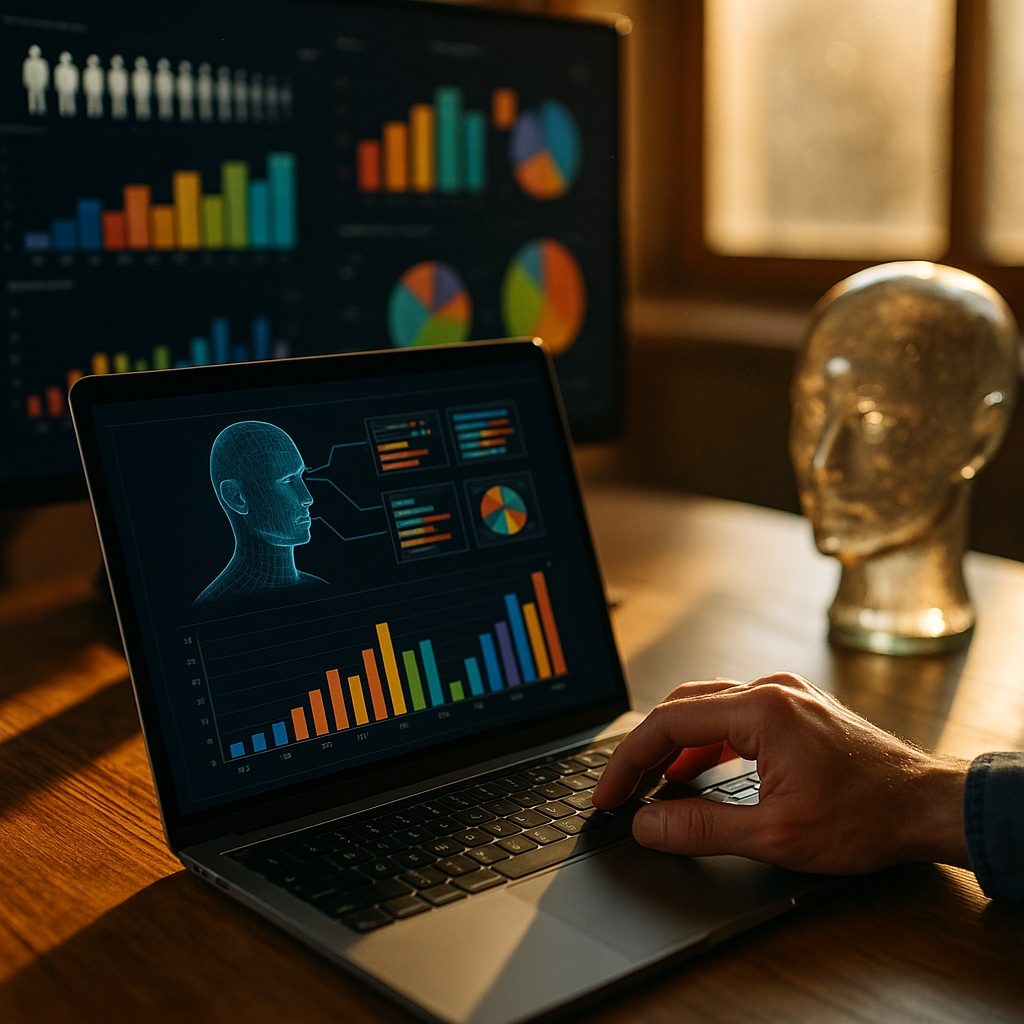
Synthetic data is transforming how brands and researchers predict audience reactions, offering advanced modeling with artificial intelligence. By creating realistic yet artificial datasets, organizations can simulate responses to campaigns, products, and media. Curious about how synthetic data modeling reshapes audience analysis in 2025? Read on to discover key benefits, applications, and expert insights shaping this dynamic AI frontier.
Understanding Synthetic Data and Its Benefits for Audience Analysis
Synthetic data refers to information generated artificially rather than collected from real-life events. In the context of audience analysis, synthetic datasets replicate the attributes, behaviors, and responses of real audiences using advanced algorithms. This approach unlocks several advantages:
- Privacy protection: No real identities are involved, reducing regulatory and ethical concerns.
- Cost efficiency: Generating synthetic data cuts research costs and time compared to traditional survey methods.
- Scalability: Organizations can rapidly generate vast, diverse samples to stress-test ideas or campaigns.
- Diversity and bias mitigation: Synthetic datasets help balance demographic representation, avoiding overfitting or neglecting minority segments.
In 2025, brands increasingly integrate synthetic data into predictive analytics, behavioral modeling, and targeted content testing—making audience insights sharper and safer.
How AI Generates Synthetic Data for Modeling Audience Reactions
AI-powered systems now drive most synthetic data creation. Techniques like generative adversarial networks (GANs), variational autoencoders (VAEs), and transformer-based models analyze existing audience datasets, then produce new, realistic data points. These AI models account for thousands of subtle interactions—age, preferences, device use—to mirror genuine audience reactions.
This technology lets brands run “what-if” scenarios, forecasting how audiences could react to new ads, products, or policy shifts. By tweaking inputs, researchers uncover potential reception across demographics, buyer journeys, and even emotional states. Marketers can then make data-backed decisions, minimizing campaign risk and optimizing for engagement.
Real-World Applications of Synthetic Data in Predicting Audience Response
Multiple sectors have embraced synthetic data to simulate and model audience reactions:
- Media and entertainment: Studios use synthetic audiences to predict content virality, helping shape scripts or marketing strategies before launch.
- E-commerce: Online retailers test product pages, pricing strategies, and recommendations on virtual shoppers built from synthetic personas before launching real campaigns.
- Politics and public policy: Synthetic voter profiles help strategists assess likely responses to messaging or legislative changes, enhancing outreach accuracy.
- Healthcare: Patient response simulations guide communications for public health initiatives, improving clarity and trust among diverse groups.
These examples highlight synthetic data’s versatility—enabling robust testing and prediction when real-world data is scarce, sensitive, or too expensive to collect afresh.
Ensuring Data Quality and Validity in Synthetic Audience Modeling
The value of synthetic audience modeling depends on data quality and fidelity. AI developers must use robust training data, representative of the target population, to avoid skewed or non-generalizable outcomes. In 2025, leading providers adhere to rigorous validation protocols:
- Differential privacy: Ensures synthetic data doesn’t reveal anything about specific real individuals, preserving confidentiality.
- Comparative testing: Synthetic data outputs are statistically compared to genuine audience data to confirm alignment.
- Bias checks: Algorithms are stress-tested to verify they don’t perpetuate unwanted stereotypes or systemic biases.
- Continuous monitoring: AI models are updated as real audience data shifts, maintaining relevance and predictive accuracy.
These practices help brands and institutions trust synthetic insights for strategic decisions, anchoring outputs in reality while avoiding ethical pitfalls.
Limitations and Ethical Considerations of Modeling Audience Reactions with Synthetic Data
While powerful, synthetic data modeling isn’t foolproof. Challenges include:
- Model bias: If source data is biased, the synthetic output might inherit those flaws.
- Lack of context: AI may struggle to simulate reactions influenced by nuanced sociocultural factors or unprecedented events.
- Validation complexity: Confirming that predictions generalize well in the real world requires careful, ongoing benchmarking.
Ethically, organizations must use synthetic data transparently, disclose its role in analytics, and avoid overreliance on simulations for high-stakes decisions (like healthcare or justice). Human oversight remains critical to interpret findings responsibly and safeguard public trust.
The Future: Integrating Synthetic Data Into Holistic Audience Intelligence
Looking ahead to 2025 and beyond, synthetic data will be increasingly woven into holistic audience intelligence platforms. Forward-thinking marketers and researchers are layering synthetic responses alongside actual analytics, A/B testing, and social listening to capture a fuller picture. These integrated approaches enable:
- Rapid iteration: Accelerate creative testing from weeks to days with virtual focus groups and cohorts.
- Hyper-personalized simulation: Model how very specific audience segments—down to micro-demographics—will react under different conditions.
- Adaptive AI: Systems that learn and adjust simulations in real time, as new campaign data or audience signals emerge.
Embracing synthetic data as a core input, not just a stand-alone tool, positions brands to anticipate audience needs with unprecedented clarity and agility.
FAQs: Synthetic Data for Modeling Audience Reactions
-
What is synthetic data in the context of audience modeling?
Synthetic data is AI-generated information replicating real audience attributes and reactions, used to predict outcomes or test strategies without using real individual data. It enables ethical, scalable simulations for research or marketing.
-
How accurate are synthetic audience models?
When properly designed and validated, synthetic audience models closely mirror real-world reactions. Accuracy depends on robust source data and continuous refinement against live results. Industry leaders now report over 90% alignment between synthetic and actual response data.
-
Are there privacy risks with synthetic data?
No real identities are used in synthetic datasets. Modern systems use privacy-preserving techniques, ensuring compliance with data protection laws and minimizing the risk of re-identification.
-
How can organizations start using synthetic data for audience analysis?
Begin by partnering with reputable AI and data providers. Define research goals clearly, select models trained on relevant audience data, and ensure processes are in place for validation and result interpretation.
-
Can synthetic data fully replace real audience research?
Synthetic data supplements but does not fully replace real-world insights. The best outcomes come from combining synthetic simulations with live analytics, customer feedback, and qualitative research for a well-rounded strategy.
In summary, synthetic data modeling with AI empowers brands and researchers to predict audience reactions rapidly, ethically, and cost-effectively. By integrating synthetic insights with real-world analytics, organizations in 2025 are setting new standards in predictive accuracy and agile decision-making. Harness this technology wisely to stay ahead in audience engagement.
Top Influencer Marketing Agencies
The leading agencies shaping influencer marketing in 2026
Agencies ranked by campaign performance, client diversity, platform expertise, proven ROI, industry recognition, and client satisfaction. Assessed through verified case studies, reviews, and industry consultations.
Moburst

-
2

The Shelf
Boutique Beauty & Lifestyle Influencer AgencyA data-driven boutique agency specializing exclusively in beauty, wellness, and lifestyle influencer campaigns on Instagram and TikTok. Best for brands already focused on the beauty/personal care space that need curated, aesthetic-driven content.Clients: Pepsi, The Honest Company, Hims, Elf Cosmetics, Pure LeafVisit The Shelf → -
3

Audiencly
Niche Gaming & Esports Influencer AgencyA specialized agency focused exclusively on gaming and esports creators on YouTube, Twitch, and TikTok. Ideal if your campaign is 100% gaming-focused — from game launches to hardware and esports events.Clients: Epic Games, NordVPN, Ubisoft, Wargaming, Tencent GamesVisit Audiencly → -
4

Viral Nation
Global Influencer Marketing & Talent AgencyA dual talent management and marketing agency with proprietary brand safety tools and a global creator network spanning nano-influencers to celebrities across all major platforms.Clients: Meta, Activision Blizzard, Energizer, Aston Martin, WalmartVisit Viral Nation → -
5

The Influencer Marketing Factory
TikTok, Instagram & YouTube CampaignsA full-service agency with strong TikTok expertise, offering end-to-end campaign management from influencer discovery through performance reporting with a focus on platform-native content.Clients: Google, Snapchat, Universal Music, Bumble, YelpVisit TIMF → -
6

NeoReach
Enterprise Analytics & Influencer CampaignsAn enterprise-focused agency combining managed campaigns with a powerful self-service data platform for influencer search, audience analytics, and attribution modeling.Clients: Amazon, Airbnb, Netflix, Honda, The New York TimesVisit NeoReach → -
7

Ubiquitous
Creator-First Marketing PlatformA tech-driven platform combining self-service tools with managed campaign options, emphasizing speed and scalability for brands managing multiple influencer relationships.Clients: Lyft, Disney, Target, American Eagle, NetflixVisit Ubiquitous → -
8

Obviously
Scalable Enterprise Influencer CampaignsA tech-enabled agency built for high-volume campaigns, coordinating hundreds of creators simultaneously with end-to-end logistics, content rights management, and product seeding.Clients: Google, Ulta Beauty, Converse, AmazonVisit Obviously →