


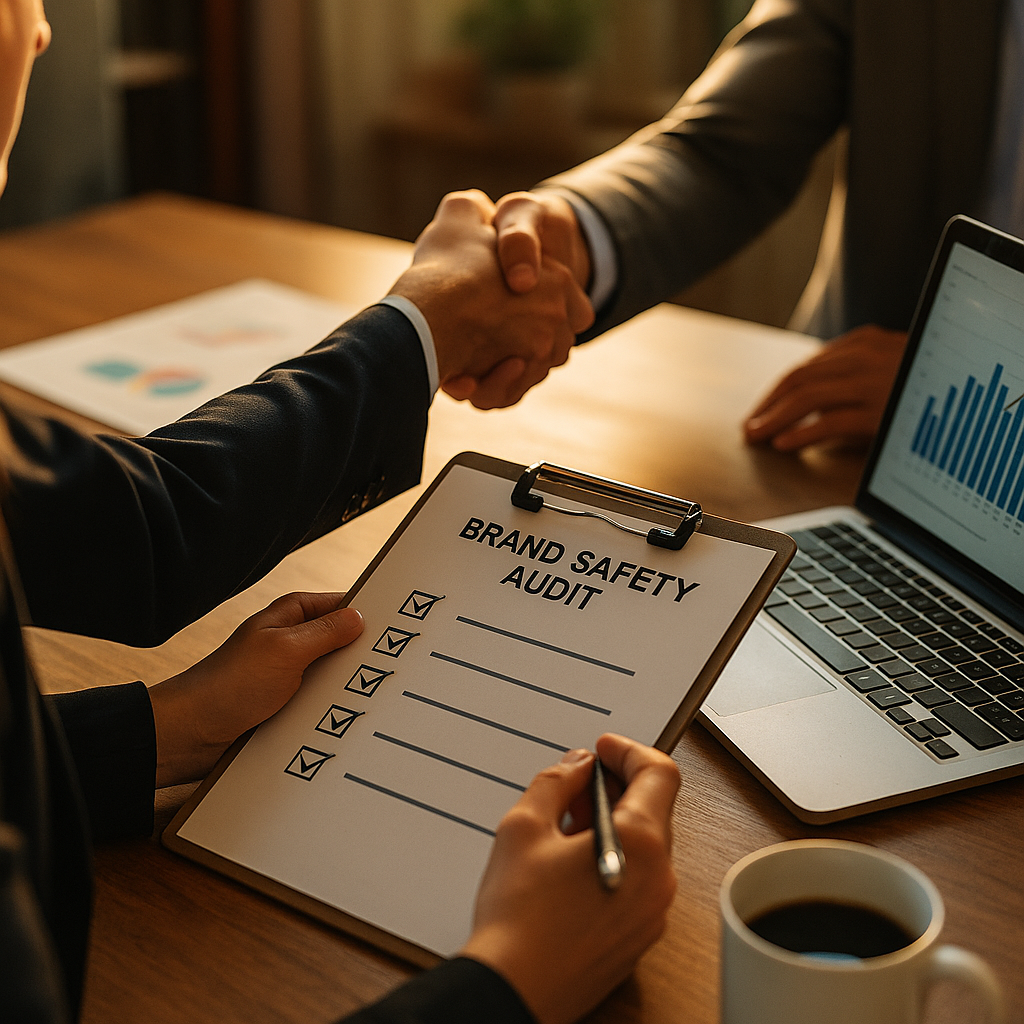
Ensuring your brand’s reputation stays intact is crucial in today’s digital world. Conducting a brand safety audit on potential partners helps proactively manage risks and protect your business from reputational harm. In this guide, learn practical strategies to evaluate partnerships for brand safety, letting you build trust-filled collaborations with confidence.
Understanding Brand Safety Audit: Why It Matters for Partner Selection
Brand safety audit means systematically assessing whether a potential partner aligns with your brand’s values, risk appetite, and public expectations. As digital collaborations and influencer partnerships proliferate, ensuring that any third-party content or conduct will not jeopardize your reputation is more important than ever.
A 2024 Gartner survey found that over 88% of businesses consider brand safety a “critical” factor in partnership decisions. Misaligned values, questionable content placements, or association with controversial figures can quickly harm a brand’s image. Ensuring rigorous vetting processes are in place is the first step toward safeguarding your brand and building stakeholder trust.
Partnering without proper auditing exposes you to:
- Placement near inappropriate or offensive content
- Association with misinformation, hate speech, or illegal activities
- Compliance and legal vulnerabilities
- Customer distrust and erosion of brand equity
Key Elements of an Effective Brand Risk Assessment Framework
Building a solid risk assessment framework strengthens your brand’s defenses. This framework should be aligned with your core values and business objectives while being adaptable to evolving threats and media environments.
To implement an effective assessment, consider these essential components:
- Partner Screening: Evaluate the partner’s history, values, and public perception through thorough digital audits and media monitoring.
- Content Analysis: Scrutinize their owned media, social profiles, and associated advertisements for risks such as hate speech, misinformation, or regulatory violations.
- Audience Alignment: Ensure their audience profile is compatible with your own, avoiding conflicts that could alienate your customer base.
- Reputation Management: Investigate the partner’s previous controversies or crisis management capabilities, using recent news and analytics tools.
- Technology & Data Privacy: Assess how the partner handles consumer data, compliance (like GDPR), and technological capabilities related to brand safety controls.
These foundational steps let you confidently screen potential partners for red flags while also uncovering strengths that could enhance your brand’s credibility.
Best Practices: Evaluating Potential Partners for Brand Reputation Alignment
Brand reputation alignment involves more than avoiding scandals. It’s about seeking partners who authentically share your brand’s mission and ethics. Modern consumers expect transparency and accountability at every stage of the partnership life cycle.
Deploy these best practices to ensure robust alignment:
- Define Non-Negotiables: Establish clear “red lines”—such as zero tolerance for hate speech, adult content, or misinformation—before beginning your evaluation.
- Stakeholder Consultation: Involve internal and external stakeholders (legal, compliance, marketing) in your decision-making process for diverse perspectives.
- Audit Trail Documentation: Document every assessment as part of your due diligence, providing transparency for future reference and audits.
- Periodic Reviews: Conduct ongoing monitoring and periodic audits to address any emerging issues as partnerships evolve.
Recent International Association for the Measurement and Evaluation of Communication (AMEC) findings highlight that brands investing in ongoing reputation management enjoy 24% higher consumer trust. Strategic, documented alignment protects your brand today and strengthens future resilience.
Brand Safety Tools and Technologies to Streamline the Audit
Leveraging advanced technology can make or break your brand safety audit’s efficiency. Today’s most trusted brands rely on a suite of solutions that automate and deepen the vetting process while reducing human error.
Some leading tools for brand safety include:
- AI-driven Content Scanners: These analyze text, imagery, and video content for unsafe or non-compliant elements at scale.
- Social Listening Platforms: Robust platforms (such as Brandwatch or Sprout Social) monitor real-time sentiments and track both positive and negative mentions.
- Ad Verification Suites: Companies like Integral Ad Science and DoubleVerify authenticate ad placements and flag proximity to unsafe content.
- Automated Risk Monitoring: Solutions that use machine learning to detect anomalous digital behavior or policy violations within your partner’s ecosystem.
When choosing tools, prioritize platforms with transparent methodologies, strong data protection policies, and a proven record of accuracy. Combining automation with manual audit steps guarantees thoroughness while saving time.
Building and Maintaining a Trustworthy Partnership Policy
A clear partnership policy underpins lasting brand safety. Document detailed guidelines specifying your risk appetite, audit methodology, and escalation routes for suspected breaches. Make this policy available both internally and, where appropriate, to existing and potential partners to set clear expectations.
Key aspects to include in your partnership policy:
- Mandatory Compliance Clauses: Require contractual agreements that outline permissible conduct and the consequences of violations.
- Continuous Training: Equip your teams with regular education on digital safety, risk indicators, and crisis management protocols.
- Transparent Communication Channels: Maintain open lines for reporting, discussing, and addressing partnership concerns in real time.
- Exit Strategies: Plan and document a clear process for terminating collaborations if a partner’s actions threaten your reputation.
Consistent enforcement of your partnership policy signals your commitment to stakeholders and provides a roadmap for navigating complex digital relationships while minimizing reputational risks.
Brand Safety Audit Success Stories: Lessons from Industry Leaders
Learning from those excelling in brand safety offers actionable insight. Leading brands, from global retailers to rapidly scaling D2C startups, report fewer crises and faster recovery rates thanks to thorough audits and rigorously enforced policies.
Take, for example, a 2024 case where a well-known e-commerce company immediately terminated a high-profile partnership after AI-powered screening detected hate speech associated with the influencer’s historic content. Transparent public communication and swift action preserved customer trust and even enhanced brand favorability in follow-up metrics.
Key success patterns include:
- Applying a tech-enabled, data-driven risk assessment model
- Communicating policy expectations and consequences proactively
- Maintaining agility to quickly adapt or exit if risks materialize
Established leaders prove that robust brand safety audits don’t just protect organizations—they create competitive advantage through trust, transparency, and resilience against digital unpredictabilities.
Frequently Asked Questions: Brand Safety Audits for Partnerships
-
What aspects should I prioritize during a brand safety audit?
Focus on alignment with your values and audience, content risk analysis, compliance history, use of safe technologies, and previous crisis management behavior. These layers collectively reduce potential threats.
-
How often should we re-audit existing partners?
Conduct a brand safety audit at onboarding and at least annually thereafter, or in response to changes in a partner’s public perception or operational practices.
-
Should SMEs invest in brand safety audits?
Absolutely. Brand safety issues impact businesses of all sizes. Well-documented audits protect small and mid-sized enterprises from disproportionate reputational harm, contract disputes, and legal consequences.
-
Is manual vetting enough, or should we use technology?
Combine both. Manual vetting captures context and nuance, while automation ensures scalability, consistency, and real-time threat detection, creating a comprehensive safety net.
-
What happens if a partner fails the brand safety audit?
Do not pursue or continue the partnership. For existing collaborations, follow contractual exit procedures. Always document decisions for transparency.
In conclusion, conducting a thorough brand safety audit on potential partners is a strategic imperative in the digital age. By prioritizing risk assessment, clear policies, and ongoing vigilance, you safeguard your brand’s reputation and unlock the benefits of trust-based collaborations.
Top Influencer Marketing Agencies
The leading agencies shaping influencer marketing in 2026
Agencies ranked by campaign performance, client diversity, platform expertise, proven ROI, industry recognition, and client satisfaction. Assessed through verified case studies, reviews, and industry consultations.
Moburst

-
2

The Shelf
Boutique Beauty & Lifestyle Influencer AgencyA data-driven boutique agency specializing exclusively in beauty, wellness, and lifestyle influencer campaigns on Instagram and TikTok. Best for brands already focused on the beauty/personal care space that need curated, aesthetic-driven content.Clients: Pepsi, The Honest Company, Hims, Elf Cosmetics, Pure LeafVisit The Shelf → -
3

Audiencly
Niche Gaming & Esports Influencer AgencyA specialized agency focused exclusively on gaming and esports creators on YouTube, Twitch, and TikTok. Ideal if your campaign is 100% gaming-focused — from game launches to hardware and esports events.Clients: Epic Games, NordVPN, Ubisoft, Wargaming, Tencent GamesVisit Audiencly → -
4

Viral Nation
Global Influencer Marketing & Talent AgencyA dual talent management and marketing agency with proprietary brand safety tools and a global creator network spanning nano-influencers to celebrities across all major platforms.Clients: Meta, Activision Blizzard, Energizer, Aston Martin, WalmartVisit Viral Nation → -
5

The Influencer Marketing Factory
TikTok, Instagram & YouTube CampaignsA full-service agency with strong TikTok expertise, offering end-to-end campaign management from influencer discovery through performance reporting with a focus on platform-native content.Clients: Google, Snapchat, Universal Music, Bumble, YelpVisit TIMF → -
6

NeoReach
Enterprise Analytics & Influencer CampaignsAn enterprise-focused agency combining managed campaigns with a powerful self-service data platform for influencer search, audience analytics, and attribution modeling.Clients: Amazon, Airbnb, Netflix, Honda, The New York TimesVisit NeoReach → -
7

Ubiquitous
Creator-First Marketing PlatformA tech-driven platform combining self-service tools with managed campaign options, emphasizing speed and scalability for brands managing multiple influencer relationships.Clients: Lyft, Disney, Target, American Eagle, NetflixVisit Ubiquitous → -
8

Obviously
Scalable Enterprise Influencer CampaignsA tech-enabled agency built for high-volume campaigns, coordinating hundreds of creators simultaneously with end-to-end logistics, content rights management, and product seeding.Clients: Google, Ulta Beauty, Converse, AmazonVisit Obviously →