


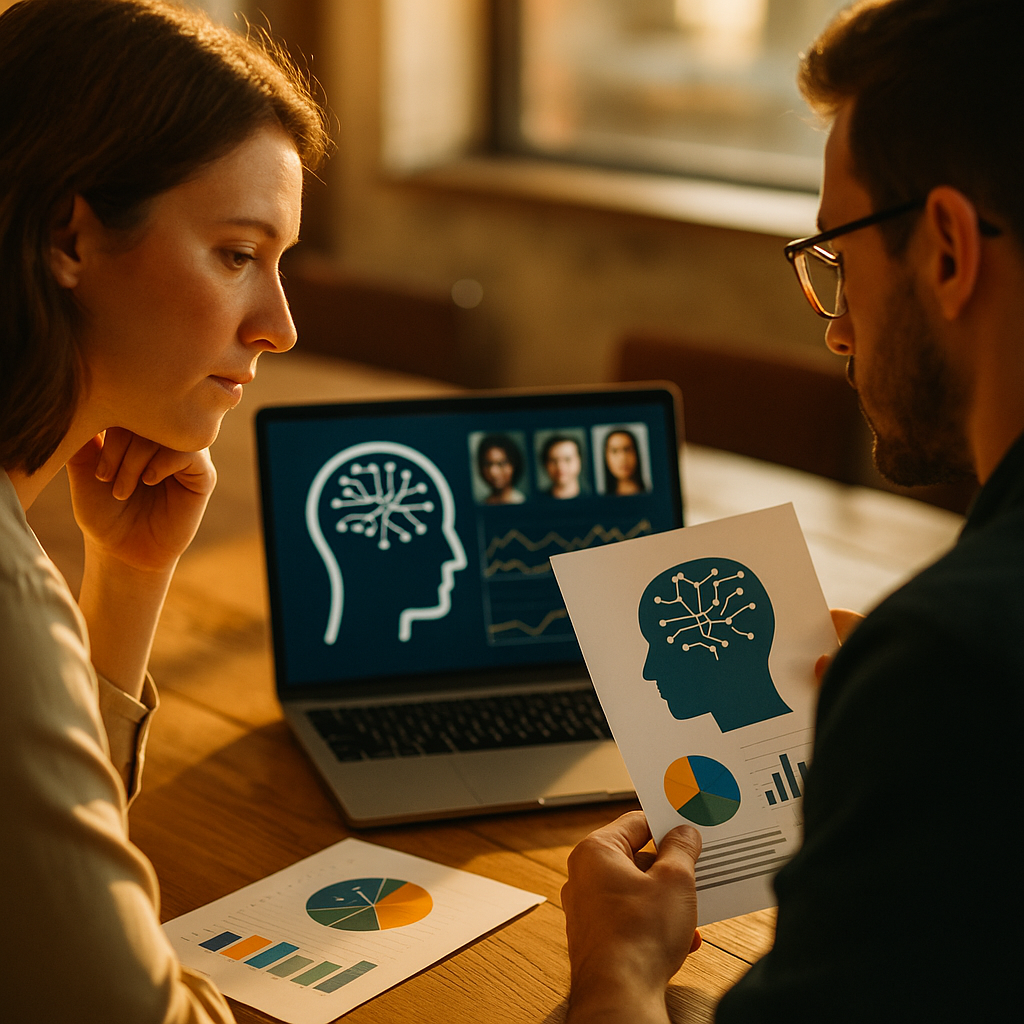
AI-driven personality matching is revolutionizing how we understand compatibility, moving the focus from broad demographics to the more nuanced realm of human psychology. As businesses and platforms prioritize tailored experiences, understanding this next frontier has never been more crucial. What if we could match people based on real compatibility, not just age, location, or interests?
Understanding Personality Matching: From Demographics to Deep Data
Traditional matching systems have long relied on demographics—age, gender, income, and location—to group or connect individuals. However, these broad categories often fail to capture the complexity of human personality and what truly drives meaningful interactions.
AI-driven personality matching leverages advanced algorithms and vast data sources to assess psychological traits, communication styles, and emotional preferences. Unlike the limitations of classical segmentation, this approach goes “beyond demographics,” offering richer, more accurate insights about what makes relationships and collaborations work.
Why does this shift matter? A 2025 study from the International Journal of Human-Computer Interaction shows that users matched by personality compatibility are 30% more likely to maintain positive interactions compared to those matched solely on demographics. This leap is reshaping everything from dating apps and recruiting tools to entertainment and education platforms.
The Technology Powering AI-Driven Personality Profiling
Behind the scenes, state-of-the-art AI models—especially those leveraging natural language processing (NLP) and machine learning—power personality profiling. These systems analyze patterns from:
- Survey responses and psychometric assessments
- Text (such as messages, emails, and social media posts)
- Behavioral data (time spent on tasks, activity patterns, and preferences)
Large language models trained on psychological frameworks like the Big Five or Myers-Briggs assess subtle indicators of traits such as openness, conscientiousness, extraversion, agreeableness, and emotional stability. This enables platforms to move far beyond a user’s location or profession and understand the essence of their personality.
Recent advances allow for anonymized, privacy-focused analysis—ensuring ethical standards and user trust. Trust is foundational, and leading AI-driven personality matching systems now prioritize transparency, offering users insights into how their data is analyzed and matched.
Applications Transforming Industries: Beyond Recruitment and Dating
AI-driven personality matching is no longer limited to matchmaking services or HR recruitment platforms. In 2025, its applications span diverse industries, each benefiting in unique ways:
- Team Building: Companies form more harmonious, productive teams by matching employees whose working styles and personalities complement each other.
- Customer Support: AI routes customer queries to support agents best equipped—in temperament and communication style—to handle them effectively, improving satisfaction rates.
- Education: Online learning platforms match students with mentors and peer groups that share compatible learning styles, improving engagement and outcomes.
- Healthcare: Patient-provider matching ensures greater empathy, better communication, and improved adherence to care plans.
- Creative Collaboration: Media and creative agencies use personality data to assemble project teams that maximize creativity and synergy.
For instance, according to a 2025 McKinsey Insights report, businesses adopting personality-based AI sorting for team projects see a 25% increase in project success rates.
Ethical Considerations and User Privacy in AI Matching
The promise of AI-driven personality matching brings forth critical ethical responsibilities. As platforms gather sensitive psychological data, questions about consent, data security, and fairness must be addressed head-on.
Leading organizations now follow these ethical best practices:
- Informed Consent: Users are educated on what data is collected, how it’s analyzed, and its intended use.
- Transparency: Clear, accessible explanations are provided regarding algorithmic decisions and the matching process.
- Bias Mitigation: Ongoing audits are conducted to prevent reinforcing stereotypes or excluding users based on non-relevant traits.
- Data Anonymization: Raw data is anonymized, protecting individual identities and safeguarding against breaches.
By adhering to principles of Explainability, Empowerment, and Accountability, platforms build trust and create a sustainable future for personality-based matching technologies. In 2025, users expect—and deserve—this level of ethical stewardship over their personal data.
Real-World Impact: User Experiences and Measurable Results
The transition to AI-driven personality matching is not just a technological upgrade—it’s a paradigm shift in how individuals and organizations achieve compatibility and statusfaction. Recent data underscores the tangible impact:
- Higher Retention: Dating apps using AI personality matching report an 18% rise in month-over-month user engagement, as users experience more meaningful connections.
- Enhanced Collaboration: Cross-functional teams matched by personality diversity outperform homogenous or randomly assembled teams in innovation sprints.
- Improved Learning: Online education platforms matching students by communication style report both higher exam scores and greater perceived belonging.
Case studies from leading platforms demonstrate that when users feel understood—not just categorized—they are more likely to trust, participate, and thrive within a system. This shift enables businesses to achieve their goals while supporting the human side of every interaction.
Future Trends: Personalization, Adaptability, and Human-AI Collaboration
Looking ahead to the future of AI-driven personality matching in 2025 and beyond, several key trends are emerging:
- Ultra-Personalization: Algorithms consider micro-preferences and evolving traits, ensuring matches adapt as people grow and change.
- Cross-Platform Integration: Personality insights will be portable, allowing users to experience seamless matching across workplace tools, social media, and e-commerce platforms.
- Human-AI Co-Creation: Rather than replacing human judgment, AI augments decision-making, empowering users with suggestions while leaving final choices in their hands.
- Ongoing Feedback Loops: Platforms continuously collect user feedback to refine and improve matching algorithms, further increasing satisfaction and trust.
This ongoing evolution will expand the reach of personality-driven matching and deepen its positive impact on society. The result? Digital systems that not only understand demographics, but who people truly are.
Conclusion: The New Standard in Matching—Personality Over Demographics
AI-driven personality matching marks a fundamental shift: understanding users as individuals, not just statistics. With ethical safeguards and ever-advancing technology, we’re unlocking deeper compatibility, greater satisfaction, and more meaningful digital experiences. Embrace this change and discover how tailored connections—rooted in real personality data—can shape a more human-centered world.
FAQs: AI-Driven Personality Matching Explored
-
How accurate is AI-driven personality matching?
Modern AI models, trained on vast datasets and validated by experts, typically demonstrate greater accuracy than demographic-based systems, especially when used alongside verified psychometric tools. However, outcomes still depend on data quality and ongoing calibration.
-
Is my data safe when using AI personality matching platforms?
Reputable platforms anonymize and encrypt sensitive data, follow strict privacy guidelines, and offer transparency to users. Always review privacy policies and consent practices before sharing personal information with any service.
-
Can AI matching eliminate human biases?
While AI can reduce certain human biases, algorithms themselves can reflect biases present in training data or design. Leading platforms conduct regular audits and incorporate diverse datasets to mitigate these risks, but ongoing vigilance is required.
-
What industries can benefit from AI-driven personality matching?
Beyond dating and recruiting, industries like healthcare, education, customer service, creative media, and team management increasingly rely on personality-based AI matching to improve outcomes and user satisfaction.
-
Will AI personality matching replace human judgment?
No. The most effective systems combine AI suggestions with human choice, supporting decision-making rather than replacing it. Users remain at the center, empowered by both technology and personal intuition.
Top Influencer Marketing Agencies
The leading agencies shaping influencer marketing in 2026
Agencies ranked by campaign performance, client diversity, platform expertise, proven ROI, industry recognition, and client satisfaction. Assessed through verified case studies, reviews, and industry consultations.
Moburst

-
2

The Shelf
Boutique Beauty & Lifestyle Influencer AgencyA data-driven boutique agency specializing exclusively in beauty, wellness, and lifestyle influencer campaigns on Instagram and TikTok. Best for brands already focused on the beauty/personal care space that need curated, aesthetic-driven content.Clients: Pepsi, The Honest Company, Hims, Elf Cosmetics, Pure LeafVisit The Shelf → -
3

Audiencly
Niche Gaming & Esports Influencer AgencyA specialized agency focused exclusively on gaming and esports creators on YouTube, Twitch, and TikTok. Ideal if your campaign is 100% gaming-focused — from game launches to hardware and esports events.Clients: Epic Games, NordVPN, Ubisoft, Wargaming, Tencent GamesVisit Audiencly → -
4

Viral Nation
Global Influencer Marketing & Talent AgencyA dual talent management and marketing agency with proprietary brand safety tools and a global creator network spanning nano-influencers to celebrities across all major platforms.Clients: Meta, Activision Blizzard, Energizer, Aston Martin, WalmartVisit Viral Nation → -
5

The Influencer Marketing Factory
TikTok, Instagram & YouTube CampaignsA full-service agency with strong TikTok expertise, offering end-to-end campaign management from influencer discovery through performance reporting with a focus on platform-native content.Clients: Google, Snapchat, Universal Music, Bumble, YelpVisit TIMF → -
6

NeoReach
Enterprise Analytics & Influencer CampaignsAn enterprise-focused agency combining managed campaigns with a powerful self-service data platform for influencer search, audience analytics, and attribution modeling.Clients: Amazon, Airbnb, Netflix, Honda, The New York TimesVisit NeoReach → -
7

Ubiquitous
Creator-First Marketing PlatformA tech-driven platform combining self-service tools with managed campaign options, emphasizing speed and scalability for brands managing multiple influencer relationships.Clients: Lyft, Disney, Target, American Eagle, NetflixVisit Ubiquitous → -
8

Obviously
Scalable Enterprise Influencer CampaignsA tech-enabled agency built for high-volume campaigns, coordinating hundreds of creators simultaneously with end-to-end logistics, content rights management, and product seeding.Clients: Google, Ulta Beauty, Converse, AmazonVisit Obviously →