


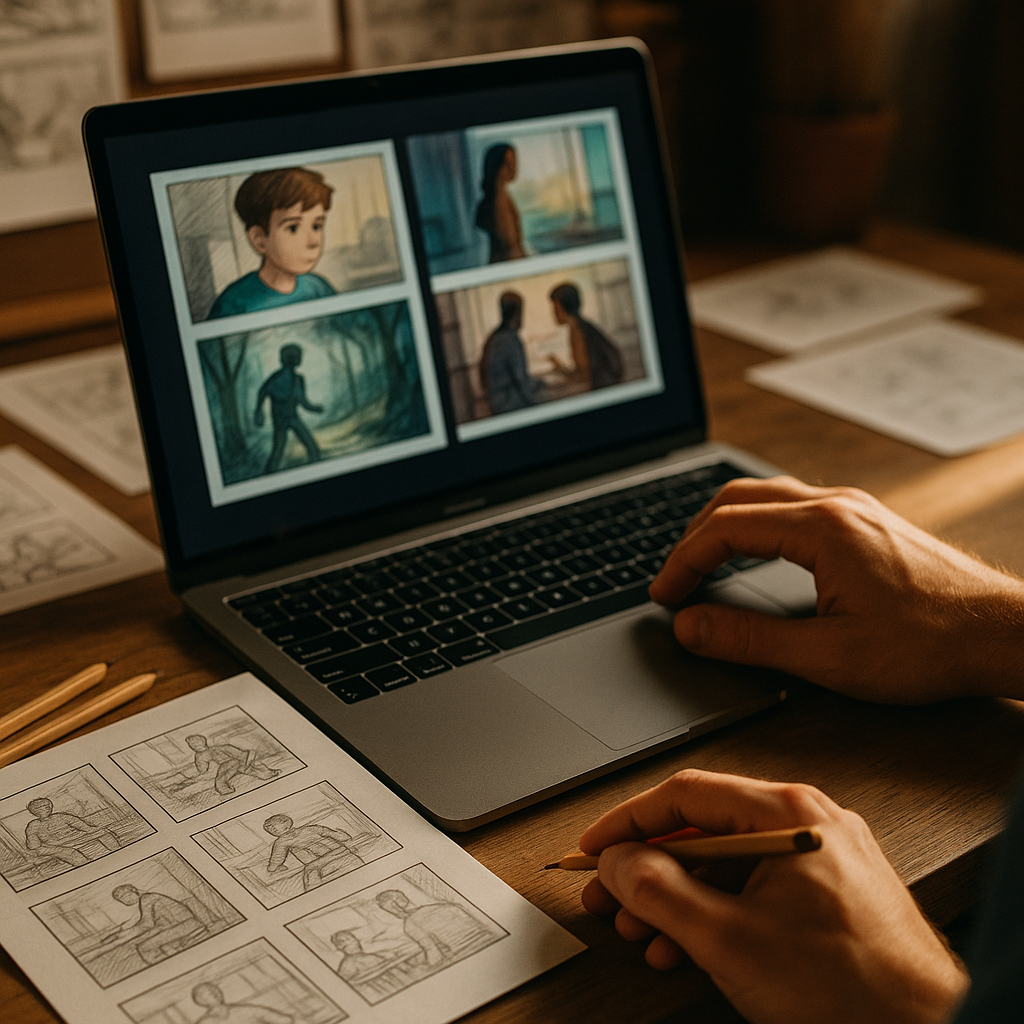
Generative AI for creating storyboards from briefs is reshaping how creative teams visualize concepts, transforming basic ideas into detailed visual narratives effortlessly. As AI-driven tools become smarter and more accessible, production timelines shrink and creative possibilities expand. Discover how generative AI is revolutionizing storyboard creation and what this means for brands, agencies, and content creators ready to make their mark.
How Generative AI Streamlines Storyboard Creation
Generative AI storyboard tools use natural language processing (NLP) and image synthesis to turn written briefs into rich visual sequences. By analyzing a script, mood board, or outline, these platforms generate frames that reflect scene progression, camera angles, and style references—saving hours of manual illustration or tedious stock image sourcing.
For instance, when a creative director uploads a commercial script, modern AI can instantly interpret the action and translate it into a sequence of storyboard panels. The AI considers emotional tone, scene direction, and even branding cues, providing a solid foundation for further refinement. This streamlined process accelerates pre-production, enabling teams to focus more on ideation and less on repetitive tasks.
Enhancing Collaboration in Storyboard Production with AI
Generative AI doesn’t just automate visuals—it enhances collaboration between writers, art directors, marketers, and clients. By quickly producing an initial visual draft, AI gives all stakeholders a shared point of reference. This unified starting point reduces misunderstandings and fosters more focused feedback loops.
Tools offering real-time editing and styling options further empower creative teams. Instead of sending paper sketches back and forth or waiting days for revisions, decision-makers can adjust lighting, character expressions, or settings directly within the digital storyboard platform. Some solutions even allow team members to leave in-line comments or toggles for alternative scene versions, ensuring that every stakeholder’s vision is captured efficiently.
Leveraging AI to Visualize Complex or Abstract Briefs
Many creative briefs lack concrete visual detail, challenging artists to translate abstract ideas, moods, or conceptual narratives. Generative AI excels here by referencing vast libraries of visual styles and narrative motifs. It can fill in gaps, interpret ambiguous references, and suggest creative alternatives based on prompt analysis and learned storytelling patterns.
For example, a brief describing a “futuristic cityscape with a hopeful morning vibe” would yield instant visuals with appropriate architecture, color palettes, and character placement—details that might otherwise take hours of artistic brainstorming. The AI’s ability to understand context, genre, and tone ensures accurately tailored outputs, even for the most conceptual projects.
Improving Quality and Consistency in Brand Storyboards
For agencies and brands, maintaining visual consistency across campaigns is vital. Generative AI for storyboard creation brings data-driven control to the process. By referencing style guides, previous campaigns, and brand assets, AI ensures every rendered storyboard aligns with specified color schemes, logo placement, and character design standards.
Additionally, AI can track changes and provide version histories. If a client requests a pivot in visual tone or revisits a previous campaign’s look, the AI can quickly adapt or recall relevant scenes. This consistency produces stronger brand storytelling and improves client satisfaction by minimizing the risk of off-brand visuals slipping through early-stage drafts.
Cutting Costs and Timelines in the Creative Pipeline
The adoption of generative AI tools in storyboard workflows delivers measurable cost and time savings. According to recent industry surveys, creative teams leveraging AI for previsualization report up to a 60% reduction in initial storyboard turnaround times. Smaller teams can now deliver agency-level output, while large agencies scale content production without ballooning overheads.
Freelancers and independent content creators also benefit by using AI-generated visuals to pitch more concepts in less time. This democratization of rapid storyboarding helps level the playing field, increasing opportunity and fostering more diverse creative output across the industry.
Choosing the Right Generative AI Storyboard Platform
Not all AI storyboard generators are created equal. When selecting a platform, evaluate these key criteria:
- Input Flexibility: Does the tool handle scripts, outlines, references, and scanned sketches?
- Styling Options: Can you specify art style, camera movement, or scene mood?
- Collaboration Features: Does the platform support multi-user editing and comments?
- Brand Controls: Are there options for integrating brand guidelines and assets?
- Export Capabilities: How easily can you export panels to animation, video, or presentation formats?
- Privacy & Security: Does the service meet your organization’s data requirements?
Reading independent reviews, trialing multiple solutions, and considering integration with your existing creative software will ensure your chosen tool accelerates—not hinders—your workflow.
Future Trends: Where Generative AI for Storyboarding Is Headed
In 2025, generative AI for creating storyboards from briefs continues advancing. Next-generation tools deploy multimodal AI, combining text, imagery, and even audio to produce interactive storyboards. As models learn from more complex data sets—like user feedback, motion capture, and narrative pacing—they’re expected to generate more nuanced previsualizations, including animatics and virtual reality experiences.
Expect tighter integration with production pipelines: AI-generated boards will seamlessly transition into animation, live-action shot planning, and asset management platforms. As AI transparency improves, creatives can better understand and guide how storyboards are generated, ensuring vision alignment every step of the way.
Used wisely, generative AI for creating storyboards from briefs unlocks unprecedented agility, collaboration, and creative freedom. As technology evolves, its role will only grow—empowering creatives to visualize ideas faster, smarter, and more consistently than ever before.
FAQs: Generative AI for Creating Storyboards from Briefs
-
How does generative AI interpret creative briefs for storyboarding?
AI analyzes text, references, and style guides from a brief, using NLP and visual synthesis models to create storyboard panels that reflect intended narrative, mood, and branding.
-
Can AI-generated storyboards be customized after creation?
Yes. Most tools allow manual refinements, editing, and exporting to preferred file types, supporting flexible workflow integration and final touches by artists or directors.
-
Will AI replace storyboard artists?
AI complements rather than replaces artists, handling routine rendering and allowing creatives to focus on ideation, refinement, and unique visual storytelling.
-
How secure are AI storyboard platforms with sensitive content?
Leading platforms emphasize robust data privacy and encryption. Always review terms and compliance certifications before uploading proprietary briefs.
-
What’s next for generative AI in storyboarding?
The future includes multimodal inputs, deeper collaboration features, real-time feedback, and seamless animation integration—making previsualization even smarter and more interactive.
Top Influencer Marketing Agencies
The leading agencies shaping influencer marketing in 2026
Agencies ranked by campaign performance, client diversity, platform expertise, proven ROI, industry recognition, and client satisfaction. Assessed through verified case studies, reviews, and industry consultations.
Moburst

-
2

The Shelf
Boutique Beauty & Lifestyle Influencer AgencyA data-driven boutique agency specializing exclusively in beauty, wellness, and lifestyle influencer campaigns on Instagram and TikTok. Best for brands already focused on the beauty/personal care space that need curated, aesthetic-driven content.Clients: Pepsi, The Honest Company, Hims, Elf Cosmetics, Pure LeafVisit The Shelf → -
3

Audiencly
Niche Gaming & Esports Influencer AgencyA specialized agency focused exclusively on gaming and esports creators on YouTube, Twitch, and TikTok. Ideal if your campaign is 100% gaming-focused — from game launches to hardware and esports events.Clients: Epic Games, NordVPN, Ubisoft, Wargaming, Tencent GamesVisit Audiencly → -
4

Viral Nation
Global Influencer Marketing & Talent AgencyA dual talent management and marketing agency with proprietary brand safety tools and a global creator network spanning nano-influencers to celebrities across all major platforms.Clients: Meta, Activision Blizzard, Energizer, Aston Martin, WalmartVisit Viral Nation → -
5

The Influencer Marketing Factory
TikTok, Instagram & YouTube CampaignsA full-service agency with strong TikTok expertise, offering end-to-end campaign management from influencer discovery through performance reporting with a focus on platform-native content.Clients: Google, Snapchat, Universal Music, Bumble, YelpVisit TIMF → -
6

NeoReach
Enterprise Analytics & Influencer CampaignsAn enterprise-focused agency combining managed campaigns with a powerful self-service data platform for influencer search, audience analytics, and attribution modeling.Clients: Amazon, Airbnb, Netflix, Honda, The New York TimesVisit NeoReach → -
7

Ubiquitous
Creator-First Marketing PlatformA tech-driven platform combining self-service tools with managed campaign options, emphasizing speed and scalability for brands managing multiple influencer relationships.Clients: Lyft, Disney, Target, American Eagle, NetflixVisit Ubiquitous → -
8

Obviously
Scalable Enterprise Influencer CampaignsA tech-enabled agency built for high-volume campaigns, coordinating hundreds of creators simultaneously with end-to-end logistics, content rights management, and product seeding.Clients: Google, Ulta Beauty, Converse, AmazonVisit Obviously →