


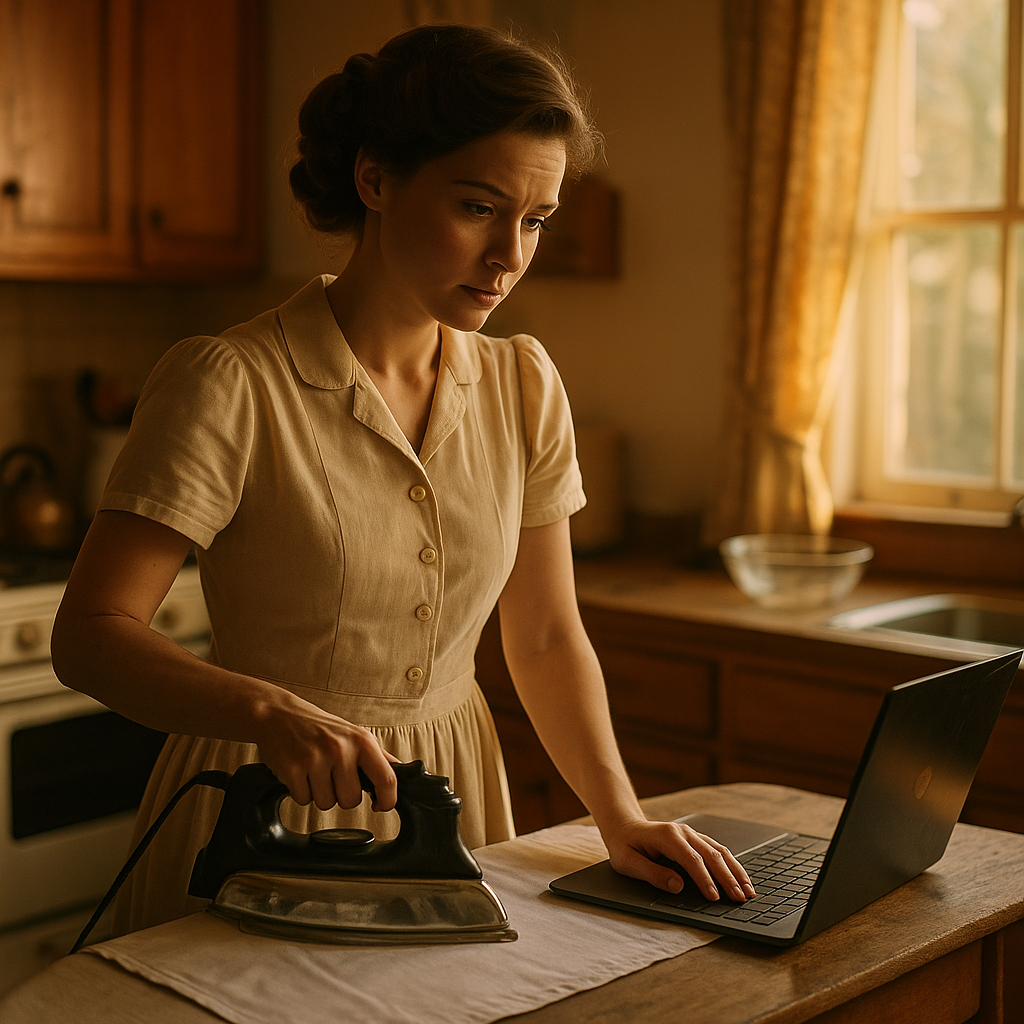
The “Trad Wife” aesthetic, an internet-driven lifestyle trend emphasizing traditional femininity and household roles, has sparked heated debates and massive online engagement. Is it a wholesome return to old-fashioned values, or a controversial resistance to modern societal progress? Dive into the complex world of the “Trad Wife” and discover why this aesthetic is capturing both admiration and criticism in 2025.
The Rise of the “Trad Wife” Movement Online
The “Trad Wife” aesthetic exploded across social media platforms like Instagram, TikTok, and YouTube in recent years. Women sharing their lives as homemakers—often dressed in vintage-inspired clothing and focusing on domestic tasks such as cooking, cleaning, or child-rearing—have built massive followings. These accounts often feature carefully curated photos and videos meant to evoke nostalgia for a bygone era of gender roles.
Many “Trad Wife” influencers cite their commitment to faith, family, and homemaking, presenting their lifestyle as empowering and intentional rather than restrictive. Hashtags like #tradwife and #traditionalwife routinely gather millions of hits. The movement has found its strongest roots in Western countries but also attracts interest globally, with discussions in non-English-speaking spaces and cross-cultural adaptations emerging.
Controversy Surrounding Traditional Gender Roles
The “Trad Wife” aesthetic is polarizing because it draws on ideals rooted in traditional gender roles, which some believe should be left in the past. Critics argue that promoting the homemaker archetype overlooks hard-fought progress toward gender equality. Detractors worry that glorifying a return to domestic submission may stigmatize women who choose careers or alternative lifestyles.
Conversely, supporters argue that feminism should empower individuals to choose family-centered roles if that is their desire. They highlight the autonomy of modern “Trad Wives” who intentionally adopt the lifestyle, distinguishing it from the limitations imposed on women in earlier generations. This tension sparks debate within feminist circles: Is choosing traditional roles a form of empowerment, or does it inadvertently reinforce outdated social constructs?
Influence and Impact of the “Trad Wife” Aesthetic in 2025
In 2025, the “Trad Wife” aesthetic continues to shape cultural conversations, manifesting in fashion, home décor, and relationship dynamics. Its influence is visible in the rise of vintage-style clothing brands, increased interest in baking and crafting, and a proliferation of digital content offering tips on homemaking and marital relationships.
Leading researchers in digital sociology note that these online communities provide belonging and support for women who feel alienated by mainstream career-centric narratives. Yet, studies also indicate that younger audiences exposed to “Trad Wife” content are more likely to hold traditional gender beliefs—even when they themselves hope to pursue careers.
The economic climate and growing desire for stability fuel some of this interest. In uncertain times, the “Trad Wife” aesthetic can offer comfort through structure, routine, and family focus. However, the scalability and authenticity of influencer lifestyles often come under scrutiny, given that many top “Trad Wife” figures monetize their content and outsource significant domestic labor.
Diverse Motivations and Experiences Among “Trad Wives”
Not all “Trad Wives” share the same background or motivations. For some, adopting the aesthetic is an expression of religious or cultural beliefs. For others, it is a pragmatic response to economic pressures, childcare costs, or dissatisfaction with work-life balance. Interviews with self-identified “Trad Wives” suggest a range of experiences:
- Empowerment through homemaking: Many describe feeling genuinely fulfilled by focusing on family and home.
- Desire for stability: Some are drawn to the predictability and structure of traditional household roles.
- Community and belonging: Online forums and local groups connect like-minded individuals, reducing feelings of isolation.
- Pragmatic compromise: For some families, one partner staying home simply makes financial sense.
Critically, not all “Trad Wives” reject paid work. Some run home-based businesses, freelance, or contribute to the family income through remote work while prioritizing traditional domestic tasks. This flexibility challenges simple stereotypes and underlines the evolving nature of the aesthetic in 2025.
Social Media Engagement and Public Backlash
Discussion about the “Trad Wife” trend flourishes online, fueling endless threads, reaction videos, and op-eds. Social media engagement is driven by the aesthetic’s visual appeal, algorithmic promotion of domestic content, and its inherent controversy. High-profile influencers regularly receive both praise and criticism in their comment sections.
Brands have capitalized on the trend, launching campaigns that simultaneously court nostalgia and modern values. Yet, heightened engagement also brings public backlash. Accusations of performative femininity, material privilege, and even covert links to far-right ideology circulate frequently. Fact-checking sites and digital watchdogs caution audiences to differentiate between sincere personal lifestyle choices and content designed to provoke reactions or sell products.
With rising engagement comes the responsibility of creators and consumers to critically assess the content they produce and consume. Many “Trad Wife” influencers now address criticism directly, discussing the difference between inspiration and prescription, and emphasizing inclusiveness within their communities.
Navigating the Debate: Personal Choice vs. Social Influence
At the heart of the “Trad Wife” conversation lies a central tension: personal autonomy versus societal expectations. Is individual choice truly free if it takes place within structures shaped by history, economics, and culture? Digital literacy advocates urge followers to reflect on their motivations—are decisions about lifestyle genuinely self-directed, or subtly influenced by online trends and peer validation?
Experts encourage respectful dialogue, recognizing that criticizing women’s lifestyle choices—regardless of their direction—can reinforce divisions and stifle mutual understanding. A balanced approach acknowledges both the empowerment some women say they feel and the valid concerns about broader social regression.
As cultural norms continue to evolve, the “Trad Wife” aesthetic will likely remain a flashpoint for debate. Whether embraced, rejected, or reinterpreted, it serves as a vivid example of how personal identity and social change are negotiated in the digital age.
FAQs: “Trad Wife” Aesthetic – Controversy and Engagement
-
What does the term “Trad Wife” mean?
A “Trad Wife” refers to a woman who adopts traditional roles centered on homemaking, family, and femininity, often inspired by mid-20th-century values and aesthetics. The term is commonly used online to describe both a lifestyle and a fashion trend. -
Why is the “Trad Wife” aesthetic controversial?
It is controversial because it promotes ideals based on historic gender roles, sparking concerns over women’s equality and autonomy. Supporters see it as a choice; critics argue it could undermine progress towards gender equity. -
Is the “Trad Wife” movement anti-feminist?
Opinions vary. Some see it as antithetical to feminist goals, while others argue feminism supports the freedom to choose any lifestyle, including traditional homemaking. -
Are “Trad Wives” mostly found in Western countries?
While the movement is most prominent in Western social media spaces, it has inspired communities and content creators globally, with adaptations reflecting local cultures. -
Do all “Trad Wives” reject paid work or careers?
No. Many balance homemaking with remote work, freelancing, or running businesses from home. The modern interpretation often allows for more flexibility than historical roles. -
How can I tell if a “Trad Wife” account is authentic or performative?
Authentic accounts usually share both challenges and joys. Look for balanced content and transparency. Performative accounts may focus exclusively on idealized images and frequently promote products.
The “Trad Wife” aesthetic’s allure—and the debates it sparks—reflect the ongoing tension between personal autonomy and social change. By understanding the nuances, audiences can weigh inspiration against influence and make informed decisions about which values to embrace in their own lives.
Top Influencer Marketing Agencies
The leading agencies shaping influencer marketing in 2026
Agencies ranked by campaign performance, client diversity, platform expertise, proven ROI, industry recognition, and client satisfaction. Assessed through verified case studies, reviews, and industry consultations.
Moburst

-
2

The Shelf
Boutique Beauty & Lifestyle Influencer AgencyA data-driven boutique agency specializing exclusively in beauty, wellness, and lifestyle influencer campaigns on Instagram and TikTok. Best for brands already focused on the beauty/personal care space that need curated, aesthetic-driven content.Clients: Pepsi, The Honest Company, Hims, Elf Cosmetics, Pure LeafVisit The Shelf → -
3

Audiencly
Niche Gaming & Esports Influencer AgencyA specialized agency focused exclusively on gaming and esports creators on YouTube, Twitch, and TikTok. Ideal if your campaign is 100% gaming-focused — from game launches to hardware and esports events.Clients: Epic Games, NordVPN, Ubisoft, Wargaming, Tencent GamesVisit Audiencly → -
4

Viral Nation
Global Influencer Marketing & Talent AgencyA dual talent management and marketing agency with proprietary brand safety tools and a global creator network spanning nano-influencers to celebrities across all major platforms.Clients: Meta, Activision Blizzard, Energizer, Aston Martin, WalmartVisit Viral Nation → -
5

The Influencer Marketing Factory
TikTok, Instagram & YouTube CampaignsA full-service agency with strong TikTok expertise, offering end-to-end campaign management from influencer discovery through performance reporting with a focus on platform-native content.Clients: Google, Snapchat, Universal Music, Bumble, YelpVisit TIMF → -
6

NeoReach
Enterprise Analytics & Influencer CampaignsAn enterprise-focused agency combining managed campaigns with a powerful self-service data platform for influencer search, audience analytics, and attribution modeling.Clients: Amazon, Airbnb, Netflix, Honda, The New York TimesVisit NeoReach → -
7

Ubiquitous
Creator-First Marketing PlatformA tech-driven platform combining self-service tools with managed campaign options, emphasizing speed and scalability for brands managing multiple influencer relationships.Clients: Lyft, Disney, Target, American Eagle, NetflixVisit Ubiquitous → -
8

Obviously
Scalable Enterprise Influencer CampaignsA tech-enabled agency built for high-volume campaigns, coordinating hundreds of creators simultaneously with end-to-end logistics, content rights management, and product seeding.Clients: Google, Ulta Beauty, Converse, AmazonVisit Obviously →