


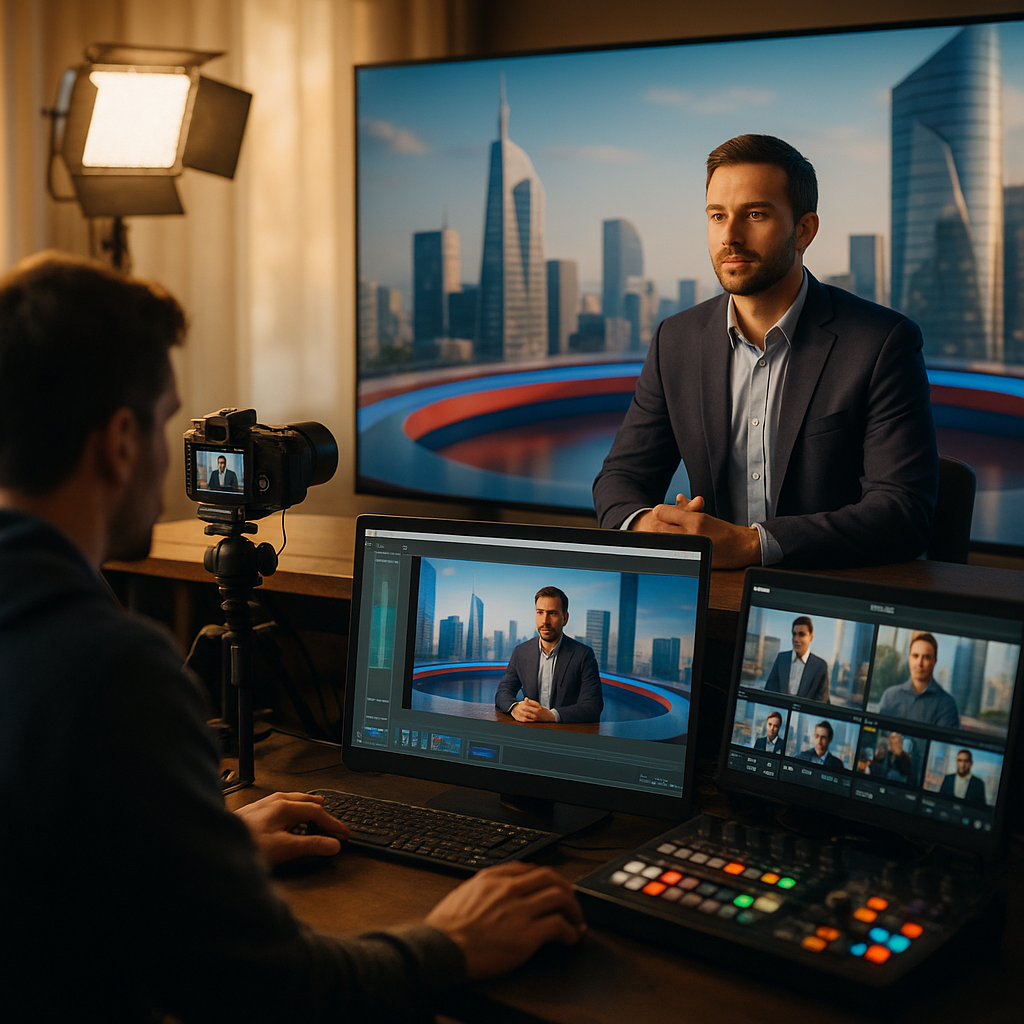
AI for creating virtual sets for livestreams has rapidly redefined how content creators, businesses, and educators produce captivating broadcasts. These technologies go far beyond digital backdrops, delivering professional-grade results without costly physical sets. As quality demands and audience expectations climb in 2025, could AI-powered virtual sets become the norm for streaming? Let’s explore how they’re elevating production to new heights.
The Rise of Virtual Sets in Livestreaming: Why AI Matters
Livestreaming experienced exponential growth, with platforms reporting over 25% more live content since 2024. Viewers expect high production value, compelling visuals, and branding consistency—demands that traditionally stretched resources. Enter AI-driven virtual sets: advanced algorithms now reconstruct vivid environments in real-time, requiring only a basic green screen or even none at all. This accessibility bridges the gap between amateur streamers and professional studios, democratizing the streaming landscape.
How AI-Powered Virtual Set Technology Works
Modern virtual sets use a blend of computer vision, real-time rendering, and deep learning. AI identifies a presenter and background elements, then seamlessly overlays or replaces them with digital environments. Here’s how the pipeline typically unfolds:
- Segmentation: AI models sharply distinguish the subject from the background even in complex lighting.
- Content Generation: Neural networks generate or fetch pre-designed 3D environments tailored to brand or theme.
- Real-Time Rendering: GPU-accelerated engines integrate camera movement, lighting shifts, and overlays in milliseconds.
- Dynamic Adjustment: AI auto-corrects scale, color, and perspective to maintain realism, even with multiple presenters or objects.
Because much of this happens automatically, even small teams or solo creators can unveil broadcasts that rival TV studios.
Benefits of Using AI for Livestream Set Creation
The potential advantages extend far beyond visual appeal. Here’s what AI brings to the table:
- Cost Efficiency: Set construction, maintenance, and storage can be eliminated entirely. AI allows for endless set updates without recurring expense.
- Brand Consistency: Pre-made templates and AI-driven customization ensure every broadcast matches your visual identity.
- Interactivity: AI sets respond dynamically to chats, polls, or user choices, elevating the interactive experience for audiences.
- Accessibility: Even those without a technical background can achieve pro-level results with drag-and-drop tools or automated AI features.
- Environmental Sustainability: Reducing or eliminating physical set materials conserves resources and decreases waste.
Whether hosting product launches, teaching online, or producing live podcasts, AI-powered sets make ambitious presentations possible for everyone.
Choosing the Right AI Virtual Set Platform in 2025
With new tools launching almost monthly, it’s vital to choose a solution that matches your needs and experience. Here’s what to consider:
- Compatibility: Ensure the platform works with your preferred camera hardware, streaming software, and broadcasting workflows.
- Customization: Seek tools that offer a mix of ready-to-use environments and flexibility for branded or bespoke 3D sets.
- Ease of Use: AI-driven automation should minimize manual editing; look for intuitive interfaces and strong customer support.
- Real-Time Performance: Latency is critical for live interactions—prioritize platforms with minimal delay and robust performance metrics.
- Security & Privacy: Consider where your video is processed; on-premise and encrypted cloud solutions offer varying levels of data protection.
Leading platforms in 2025 often feature generative AI options, empowering even small brands to build entirely unique virtual stages on demand.
Best Practices: Maximizing Engagement With AI Virtual Sets
While AI offers stunning technical capabilities, the art of livestreaming still centers on human connection and engagement. Here are ways to harness AI for maximum impact:
- Keep it Relevant: Match your set’s style to your content and audience expectations. A tech channel might use futuristic environments, while educators benefit from warm, inviting settings.
- Balance Novelty and Professionalism: Use dynamic graphics and 3D environments sparingly; too much movement can overwhelm or distract.
- Leverage Interactivity: Integrate live polls, comment highlights, or data visualizations into your virtual sets. Modern AI can automate these reactions.
- Test Lighting and Camera Placement: Even with the best AI, good lighting and angles help avoid glitches or uncanny effects, keeping viewers immersed.
- Solicit Feedback: Use viewer surveys or chat analytics to refine your set designs—aesthetics in livestreaming evolve quickly, so stay responsive to your audience.
Ultimately, the most successful creators use AI to enhance storytelling, clarity, and brand impact while staying authentic and approachable.
Future Trends: How AI Virtual Sets Are Shaping Livestreaming
Virtual set technology now extends far beyond green-screen illusions. In 2025, we’re witnessing:
- Full-body Volumetric Capture: AI enables 3D avatars and holograms, reshaping events, remote collaborations, and education. These breakthroughs collapse the boundary between real and virtual.
- Personalized Environments: AI curates backdrops based on viewer preferences, making experiences more immersive and sticky.
- Seamless AR Integration: Combining AI sets with augmented reality overlays lets streamers interact with both real and digital objects in real time.
- Sustainable Workflows: AI-powered pipelines can now automate post-processing, transcription, and highlight reels, saving even more time for creators.
As 5G and edge computing spread, latency and bandwidth constraints shrink, pushing AI virtual sets into mainstream adoption. Experts predict that within a few years, the distinction between physical and virtual studios may disappear entirely for most livestreamed content.
Conclusion: Why AI Virtual Sets Are Transforming Livestreaming in 2025
AI for creating virtual sets for livestreams is no longer futuristic—it’s a present-day game-changer enabling high-quality, memorable, and brand-aligned broadcasts for anyone. By strategically choosing tools, engaging audiences, and staying alert to trends, creators and organizations can lead the streaming revolution and capture new opportunities in the rapidly evolving digital landscape.
FAQs: AI For Creating Virtual Sets For Livestreams
-
Do I need a green screen to use AI-powered virtual sets?
No. Many solutions in 2025 use advanced AI segmentation to distinguish you from your environment, even without a green screen. However, optimal lighting and a plain background can improve results.
-
Can AI virtual sets be used with multiple cameras?
Yes. Most modern platforms support multi-camera workflows and automatically adjust sets for various angles, ensuring seamless transitions and professional production quality.
-
Are AI virtual sets resource-intensive?
Some platforms leverage cloud processing or optimized local software, meaning even modest hardware can achieve high-quality results. Be sure to check system requirements before starting.
-
Is it possible to create custom branded virtual sets with AI?
Absolutely. Many platforms now offer tools to design or generate unique branded environments using AI, often with simple drag-and-drop or prompt-based interfaces.
-
How secure is my livestream data with AI set platforms?
Security varies. Reputable platforms encrypt data streams and adhere to privacy best practices, but always review privacy policies and choose services with robust security certifications where required.
Top Influencer Marketing Agencies
The leading agencies shaping influencer marketing in 2026
Agencies ranked by campaign performance, client diversity, platform expertise, proven ROI, industry recognition, and client satisfaction. Assessed through verified case studies, reviews, and industry consultations.
Moburst

-
2

The Shelf
Boutique Beauty & Lifestyle Influencer AgencyA data-driven boutique agency specializing exclusively in beauty, wellness, and lifestyle influencer campaigns on Instagram and TikTok. Best for brands already focused on the beauty/personal care space that need curated, aesthetic-driven content.Clients: Pepsi, The Honest Company, Hims, Elf Cosmetics, Pure LeafVisit The Shelf → -
3

Audiencly
Niche Gaming & Esports Influencer AgencyA specialized agency focused exclusively on gaming and esports creators on YouTube, Twitch, and TikTok. Ideal if your campaign is 100% gaming-focused — from game launches to hardware and esports events.Clients: Epic Games, NordVPN, Ubisoft, Wargaming, Tencent GamesVisit Audiencly → -
4

Viral Nation
Global Influencer Marketing & Talent AgencyA dual talent management and marketing agency with proprietary brand safety tools and a global creator network spanning nano-influencers to celebrities across all major platforms.Clients: Meta, Activision Blizzard, Energizer, Aston Martin, WalmartVisit Viral Nation → -
5

The Influencer Marketing Factory
TikTok, Instagram & YouTube CampaignsA full-service agency with strong TikTok expertise, offering end-to-end campaign management from influencer discovery through performance reporting with a focus on platform-native content.Clients: Google, Snapchat, Universal Music, Bumble, YelpVisit TIMF → -
6

NeoReach
Enterprise Analytics & Influencer CampaignsAn enterprise-focused agency combining managed campaigns with a powerful self-service data platform for influencer search, audience analytics, and attribution modeling.Clients: Amazon, Airbnb, Netflix, Honda, The New York TimesVisit NeoReach → -
7

Ubiquitous
Creator-First Marketing PlatformA tech-driven platform combining self-service tools with managed campaign options, emphasizing speed and scalability for brands managing multiple influencer relationships.Clients: Lyft, Disney, Target, American Eagle, NetflixVisit Ubiquitous → -
8

Obviously
Scalable Enterprise Influencer CampaignsA tech-enabled agency built for high-volume campaigns, coordinating hundreds of creators simultaneously with end-to-end logistics, content rights management, and product seeding.Clients: Google, Ulta Beauty, Converse, AmazonVisit Obviously →