


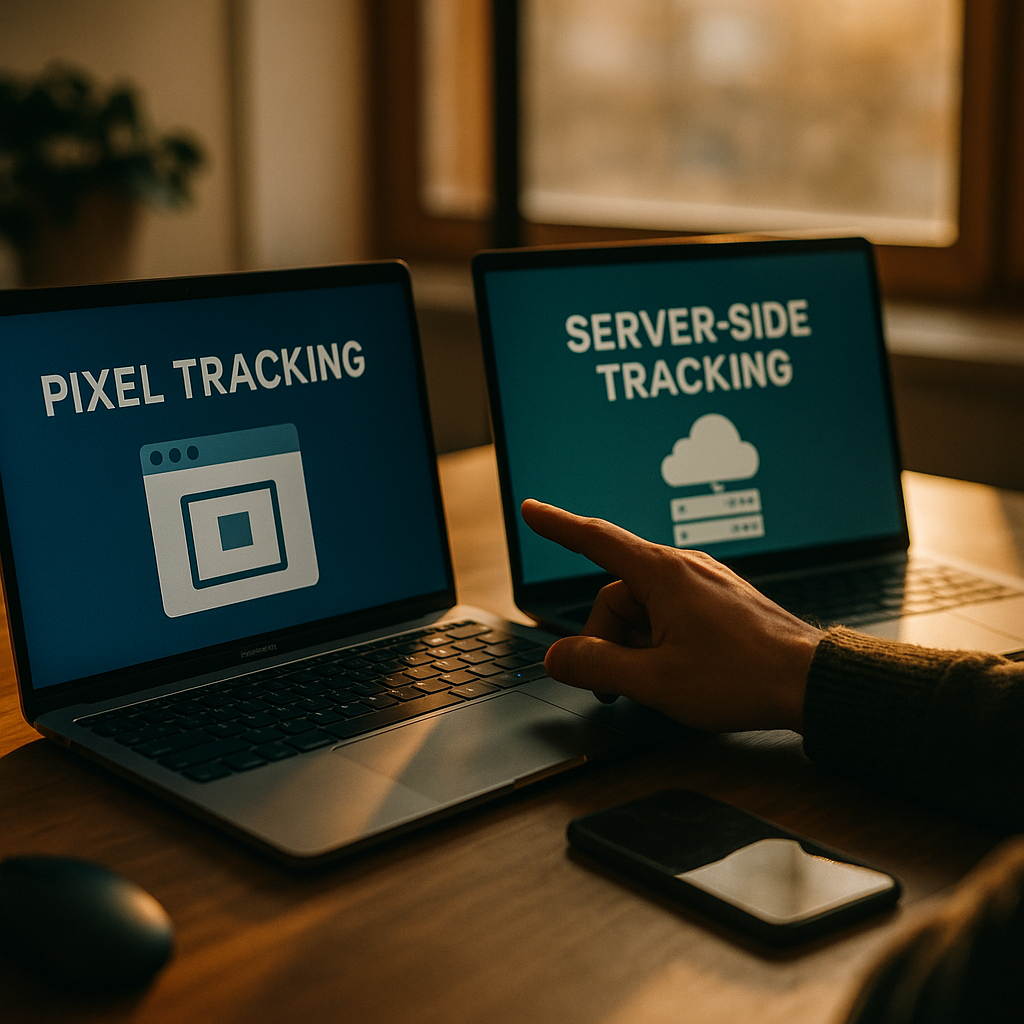
Affiliate tracking software is essential for accurately monitoring conversions and optimizing campaigns. Recent advances have highlighted two dominant methods: pixel tracking and server-side tracking. Understanding the differences is crucial for affiliates and advertisers seeking transparency, compliance, and data integrity. In this article, discover which affiliate tracking approach best fits your business in 2025 and what each means for your marketing success.
Pixel Tracking in Affiliate Software: The Classic Method
Pixel tracking, also known as client-side tracking, remains a cornerstone of many affiliate tracking software solutions. This method uses a short script or image pixel placed on the advertiser’s conversion page. When a user completes a desired action, such as a purchase, the pixel triggers and sends data back to the affiliate platform.
Historically, pixel tracking has been popular due to its simplicity and ease of integration. Marketers need only insert a code snippet, and tracking begins instantly. Affiliates and advertisers appreciate its low cost, immediate data reporting, and minimal technical barriers.
However, pixel tracking has limitations in today’s privacy-focused environment. In 2025, browser updates and privacy settings—such as third-party cookie restrictions—can interfere with pixel functionality. Furthermore, ad-blockers and browser anti-tracking measures may block the pixel from firing, leading to potential underreporting of conversions. These issues can impact campaign optimization, partner compensation, and trust in performance reports.
Server-Side Tracking: The Future-Proof Solution
Server-side tracking, also called postback or server-to-server (S2S) tracking, has gained prominence as a reliable alternative to pixel tracking. Instead of relying on browser code, this method records conversions directly through a secure server connection. When a conversion takes place, the advertiser’s server communicates this event to the affiliate tracking server, passing key data behind the scenes.
This method excels in accuracy, privacy compliance, and resilience against browser restrictions. Because data is exchanged directly between servers, server-side tracking is not affected by cookie limitations, ad-blockers, or JavaScript errors. Leading affiliate networks and major brands are rapidly adopting server-side tracking to preserve data accuracy in a landscape shaped by GDPR, CCPA, and similar regulations.
Implementing server-side tracking requires a closer technical collaboration between affiliates and advertisers. Well-documented APIs and proper validation processes are critical for secure, accurate transmission. While more complex than pixels, the resulting data integrity and peace of mind are well worth the initial investment for brands prioritizing long-term success.
Privacy Regulations and Data Compliance in 2025
With ongoing evolution in privacy regulations worldwide, compliance is now a non-negotiable component of affiliate tracking. Authorities in Europe, North America, and Asia are enforcing stricter policies on consent, data retention, and user anonymity. Both pixel and server-side tracking approaches must address these requirements to avoid legal penalties and reputational risk.
Pixel tracking faces mounting compliance challenges, because browser-based cookies can potentially store identifiers that fall under privacy law oversight. Server-side tracking minimizes such issues by enabling first-party data processing, customizable retention policies, and granular user consent management.
In 2025, many affiliate tracking software providers offer privacy dashboards, automated consent management, and region-specific tracking modes as native features—especially for clients leveraging server-side integrations. Marketers must ensure their chosen tracking technology is adapted for the regulatory demands of their target markets.
Accuracy, Attribution, and Data Loss: Comparing Methods
Conversion accuracy and robust attribution underpin affiliate payouts and campaign scaling. Pixel tracking, since it occurs on the user’s device, is vulnerable to disruptions from:
- Browser cookie deletion (automatic or user-initiated)
- Third-party tracking restrictions (default in many browsers)
- Ad-blockers or VPN usage
- Latency issues on slow connections
This can result in “lost” conversions, with affiliates missing out on rightful commissions and advertisers misjudging campaign performance.
Server-side tracking, in contrast, connects conversions to clicks via trusted server communication, meaning fewer points of failure. It enables advanced attribution models, multi-touch tracking, and more comprehensive reporting—even as privacy technologies become stricter.
Over the last year, industry data suggests brands using server-side tracking report up to 15% higher conversion attribution compared to pixel-dependent competitors, underscoring the method’s superior reliability in 2025.
Choosing the Right Affiliate Tracking Approach
Selecting between pixel and server-side tracking depends on your campaign goals, available resources, and compliance needs. Consider these factors:
- Technical Support: Server-side integrations may need more technical expertise, while pixels are quick to launch.
- Privacy Compliance: Server-to-server tracking is recommended for strict regulatory markets or brands handling sensitive data.
- Data Accuracy: For consistently accurate reporting, server-side is typically superior, though robust pixel setups can suffice for basic needs.
- Cost and ROI: Pixel setups are cost-effective for entry-level campaigns; server-side pays off as scale and complexity increase.
Leading affiliate tracking software in 2025 now offers hybrid solutions—enabling marketers to combine both methods and transition seamlessly as their requirements evolve. Always consult with your provider to customize your tracking stack for optimal reliability, compliance, and growth.
Frequently Asked Questions
-
What is affiliate tracking software?
Affiliate tracking software monitors and records user actions—like clicks and conversions—between advertisers and their affiliate partners. This ensures accurate commission payments and campaign performance insights. -
Why is server-side tracking considered more reliable than pixel tracking?
Server-side tracking is more reliable because it bypasses browser limitations, ad-blockers, and privacy restrictions. It records conversions through direct server communication, reducing the likelihood of data loss. -
Do I need technical knowledge to implement server-side tracking?
Implementing server-side tracking typically requires some technical expertise, including working with APIs and back-end systems. Many software providers now offer onboarding support and integrations to facilitate the process. -
Is pixel tracking still relevant in 2025?
Pixel tracking remains relevant for simple campaigns or in environments with minimal privacy restrictions, but its accuracy can be compromised by modern browser features and privacy laws. -
Can I use pixel and server-side tracking together?
Yes, many affiliate tracking platforms support hybrid tracking to maximize accuracy while maintaining ease of setup for certain campaigns. Combining both methods provides redundancy and flexibility.
In summary, understanding the strengths and limitations of pixel and server-side tracking prepares affiliate marketers for success in 2025. Prioritize compliance, accuracy, and scalability by choosing or combining methods that best align with your business objectives and regulatory landscape.
Top Influencer Marketing Agencies
The leading agencies shaping influencer marketing in 2026
Agencies ranked by campaign performance, client diversity, platform expertise, proven ROI, industry recognition, and client satisfaction. Assessed through verified case studies, reviews, and industry consultations.
Moburst

-
2

The Shelf
Boutique Beauty & Lifestyle Influencer AgencyA data-driven boutique agency specializing exclusively in beauty, wellness, and lifestyle influencer campaigns on Instagram and TikTok. Best for brands already focused on the beauty/personal care space that need curated, aesthetic-driven content.Clients: Pepsi, The Honest Company, Hims, Elf Cosmetics, Pure LeafVisit The Shelf → -
3

Audiencly
Niche Gaming & Esports Influencer AgencyA specialized agency focused exclusively on gaming and esports creators on YouTube, Twitch, and TikTok. Ideal if your campaign is 100% gaming-focused — from game launches to hardware and esports events.Clients: Epic Games, NordVPN, Ubisoft, Wargaming, Tencent GamesVisit Audiencly → -
4

Viral Nation
Global Influencer Marketing & Talent AgencyA dual talent management and marketing agency with proprietary brand safety tools and a global creator network spanning nano-influencers to celebrities across all major platforms.Clients: Meta, Activision Blizzard, Energizer, Aston Martin, WalmartVisit Viral Nation → -
5

The Influencer Marketing Factory
TikTok, Instagram & YouTube CampaignsA full-service agency with strong TikTok expertise, offering end-to-end campaign management from influencer discovery through performance reporting with a focus on platform-native content.Clients: Google, Snapchat, Universal Music, Bumble, YelpVisit TIMF → -
6

NeoReach
Enterprise Analytics & Influencer CampaignsAn enterprise-focused agency combining managed campaigns with a powerful self-service data platform for influencer search, audience analytics, and attribution modeling.Clients: Amazon, Airbnb, Netflix, Honda, The New York TimesVisit NeoReach → -
7

Ubiquitous
Creator-First Marketing PlatformA tech-driven platform combining self-service tools with managed campaign options, emphasizing speed and scalability for brands managing multiple influencer relationships.Clients: Lyft, Disney, Target, American Eagle, NetflixVisit Ubiquitous → -
8

Obviously
Scalable Enterprise Influencer CampaignsA tech-enabled agency built for high-volume campaigns, coordinating hundreds of creators simultaneously with end-to-end logistics, content rights management, and product seeding.Clients: Google, Ulta Beauty, Converse, AmazonVisit Obviously →