


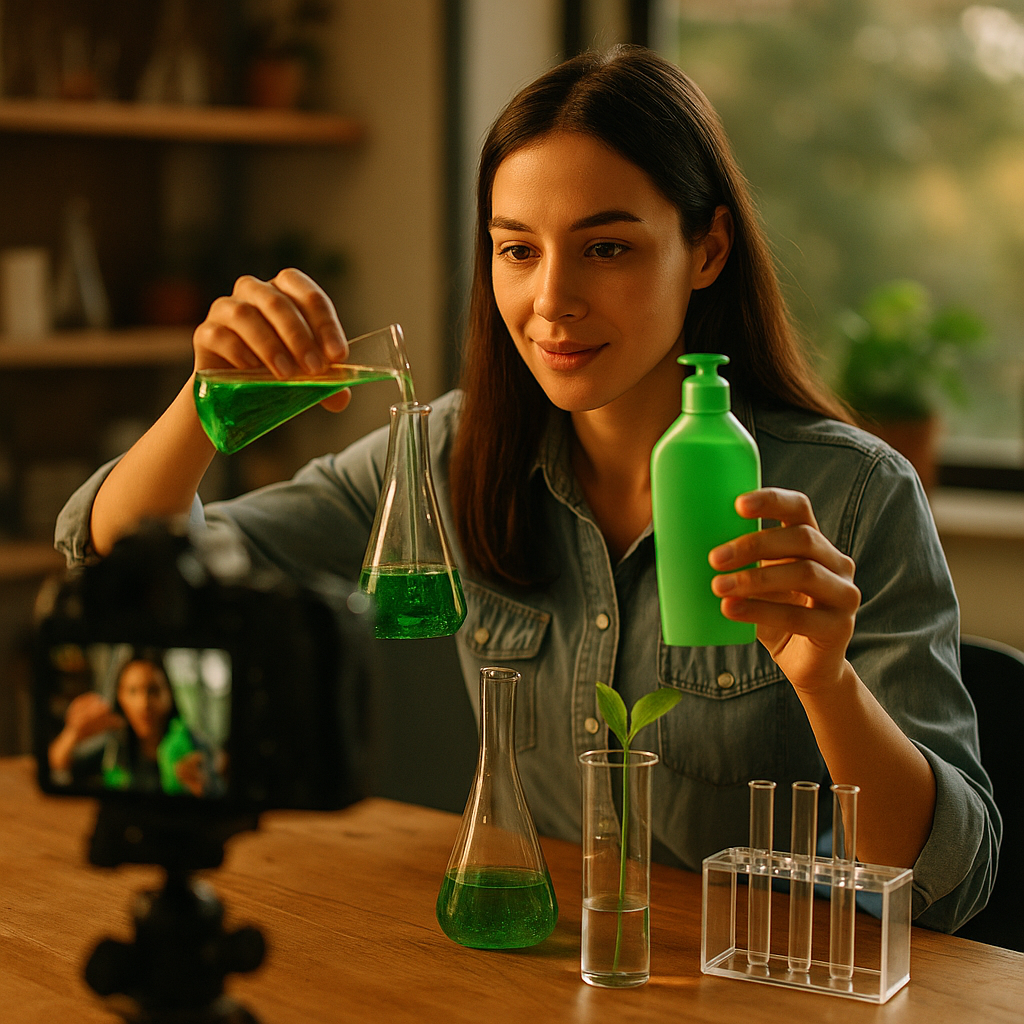
Sustainable CPG brands face increasing scrutiny over their environmental claims. As consumers demand more transparency, integrating scientific validation through science creators is essential for building trust and credibility. This article explores why sustainable CPG companies should leverage science creators to substantiate their green claims—and how doing so can drive lasting loyalty.
Understanding Sustainable CPG and Consumer Expectations
The sustainable consumer packaged goods (CPG) market has grown rapidly as people prioritize brands with meaningful environmental impacts. Shoppers in 2025 are informed, data-driven, and expect more than just buzzwords like “eco-friendly” or “natural.” Instead, they look for specific, science-backed proof that products reduce harm or promote positive environmental change. Brands that fail to meet these evolving expectations risk losing credibility, customer loyalty, and market share.
A 2024 NielsenIQ survey found that 77% of consumers have doubts about green marketing claims. This skepticism places the onus on brands to move beyond vague promises and back up their sustainability narratives with verifiable scientific evidence. Consumers demand transparency throughout the product lifecycle, including sourcing, manufacturing, packaging, and end-of-life disposal.
The Role of Science Creators in Verifying Environmental Claims
Science creators are independent, knowledgeable communicators—often scientists, researchers, or engineers—who excel at translating complex data into accessible content. By collaborating with these experts, sustainable CPG brands can elevate their green marketing beyond self-reported claims to robust, third-party validation.
These creators conduct independent reviews, analyze life-cycle assessments (LCAs), and scrutinize certifications. For instance, a prominent science creator can break down the greenhouse gas reductions of a new biodegradable packaging solution, or evaluate the authenticity of water stewardship certifications. Their evaluations carry authority, providing the tangible proof that both consumers and regulators demand.
Overcoming Greenwashing: Transparent Science Communication
Greenwashing—making misleading environmental claims—is a leading concern in the CPG sector. Regulatory bodies, such as the US Federal Trade Commission (FTC), have tightened guidelines to curb deceptive marketing. However, compliance alone is not enough to win public trust. Brands must go the extra mile by making their science transparent and understandable to everyday consumers.
Science creators bridge this gap by presenting product data via social media, interactive infographics, and explainer videos. They address consumer questions, highlight weaknesses as well as strengths, and foster two-way conversations. By being candid about areas for improvement, brands can demonstrate an authentic commitment to progress, not just perfection.
- Independent certification analysis (Fair Trade, Rainforest Alliance, etc.)
- Clear explanations of carbon offset projects and their limitations
- Breakdowns of ingredient sourcing and environmental impact
Collaboration Strategies: Engaging Science Creators for Sustainable Impact
Effectively collaborating with science creators requires openness and a willingness to subject your claims to scrutiny. Brands must provide full access to product data, supply chain information, and scientific reports. In return, they benefit from:
- Credibility Boost: Reports and reviews from recognized science creators enhance consumer confidence.
- Content Amplification: Creators can engage audiences across YouTube, TikTok, podcasts, and written features.
- Educational Initiatives: Joint webinars, Q&As, and open forums improve scientific literacy about sustainable products.
- Feedback Loops: Science creators relay customer concerns, enabling brands to refine their sustainability strategies in real time.
CPG companies can identify the right partners through academic networks, LinkedIn, science communications collectives, or by approaching creators who have expertise aligned with their product niche—such as materials science for packaging, or environmental chemistry for cleaning agents.
Building Consumer Trust With Data-Driven Storytelling
Trust is the cornerstone of sustainable CPG success in 2025. Data-driven storytelling, powered by science creators, helps humanize complex metrics and create engaging, persuasive narratives. For example, a brand might publish a video featuring a materials scientist who walks viewers through the environmental savings from switching to recycled aluminum cans, complete with real data and visual evidence.
To maximize impact, brands should:
- Publish full life-cycle analyses and update them annually
- Use clear, jargon-free language, explained by science creators
- Highlight third-party validation badges and certifications
- Invite direct feedback and questions from the public
This approach not only demonstrates regulatory compliance, but also helps brands stand out in a crowded marketplace where authenticity is prized above all.
The Future of Sustainable CPG: Regulation, Innovation, and Community
In 2025, regulatory bodies and industry groups are expected to further intensify scrutiny over green claims. Meanwhile, eco-conscious consumers continue making purchase decisions based on trust and proof. By embedding science creators into their marketing and innovation processes, CPG brands can future-proof their reputations and drive continuous improvement.
The most forward-thinking companies will establish advisory panels of science communicators, integrate consumer insights, and adapt swiftly as new environmental technologies and metrics emerge. As the bar for sustainability rises, success will belong to CPG brands bold enough to let science—interpreted by credible experts—lead their story.
FAQs: Proving Green Claims With Science Creators
-
What is a science creator and why are they important for sustainable CPG?
Science creators are experts who translate complex scientific data for general audiences. Their involvement provides vital third-party validation for green claims, building trust and reducing the risk of greenwashing.
-
How can CPG brands collaborate with science creators effectively?
Brands should openly share data, supply chain information, and sustainability reports. Involving science creators early in product development and marketing ensures authenticity and credibility throughout the brand journey.
-
Which green claims are most important to validate in 2025?
Key areas of focus include carbon footprint, recyclability, biodegradability, water stewardship, renewable energy usage, and ethical sourcing. Brands should prioritize claims relevant to their industry niche and regulatory environment.
-
What are the risks of not verifying green claims?
Unverified or misleading claims can result in regulatory penalties, reputational damage, consumer backlash, and diminished market share. Transparency and independent scientific validation are essential safeguards.
-
How do science creators communicate complex data effectively?
They leverage storytelling, simple language, visual aids, and interactive content such as explainer videos and infographics to break down complicated sustainability data for all audiences.
In summary, sustainable CPG brands must substantiate their green claims through partnerships with science creators. This approach fosters transparency, builds consumer trust, and ensures enduring success as sustainability standards and expectations continue to evolve.
Top Influencer Marketing Agencies
The leading agencies shaping influencer marketing in 2026
Agencies ranked by campaign performance, client diversity, platform expertise, proven ROI, industry recognition, and client satisfaction. Assessed through verified case studies, reviews, and industry consultations.
Moburst

-
2

The Shelf
Boutique Beauty & Lifestyle Influencer AgencyA data-driven boutique agency specializing exclusively in beauty, wellness, and lifestyle influencer campaigns on Instagram and TikTok. Best for brands already focused on the beauty/personal care space that need curated, aesthetic-driven content.Clients: Pepsi, The Honest Company, Hims, Elf Cosmetics, Pure LeafVisit The Shelf → -
3

Audiencly
Niche Gaming & Esports Influencer AgencyA specialized agency focused exclusively on gaming and esports creators on YouTube, Twitch, and TikTok. Ideal if your campaign is 100% gaming-focused — from game launches to hardware and esports events.Clients: Epic Games, NordVPN, Ubisoft, Wargaming, Tencent GamesVisit Audiencly → -
4

Viral Nation
Global Influencer Marketing & Talent AgencyA dual talent management and marketing agency with proprietary brand safety tools and a global creator network spanning nano-influencers to celebrities across all major platforms.Clients: Meta, Activision Blizzard, Energizer, Aston Martin, WalmartVisit Viral Nation → -
5

The Influencer Marketing Factory
TikTok, Instagram & YouTube CampaignsA full-service agency with strong TikTok expertise, offering end-to-end campaign management from influencer discovery through performance reporting with a focus on platform-native content.Clients: Google, Snapchat, Universal Music, Bumble, YelpVisit TIMF → -
6

NeoReach
Enterprise Analytics & Influencer CampaignsAn enterprise-focused agency combining managed campaigns with a powerful self-service data platform for influencer search, audience analytics, and attribution modeling.Clients: Amazon, Airbnb, Netflix, Honda, The New York TimesVisit NeoReach → -
7

Ubiquitous
Creator-First Marketing PlatformA tech-driven platform combining self-service tools with managed campaign options, emphasizing speed and scalability for brands managing multiple influencer relationships.Clients: Lyft, Disney, Target, American Eagle, NetflixVisit Ubiquitous → -
8

Obviously
Scalable Enterprise Influencer CampaignsA tech-enabled agency built for high-volume campaigns, coordinating hundreds of creators simultaneously with end-to-end logistics, content rights management, and product seeding.Clients: Google, Ulta Beauty, Converse, AmazonVisit Obviously →