


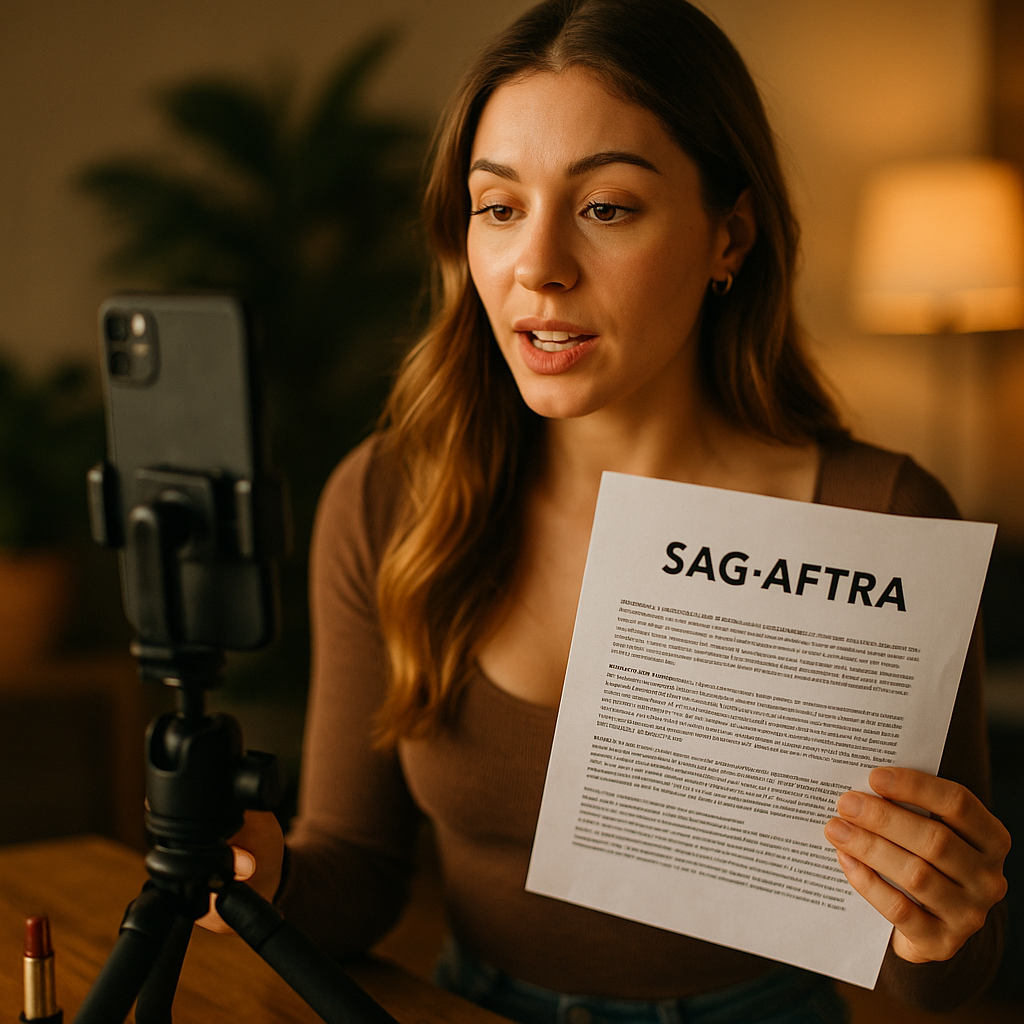
Understanding union rules is essential if you are an influencer or a brand hoping to work with creators. The question “When do influencers count as SAG-AFTRA talent?” has become increasingly important as digital content blurs the lines between traditional and new media careers. Let’s discover what makes content creators subject to influential union guidelines.
Understanding SAG-AFTRA Guidelines for Influencers
The Screen Actors Guild‐American Federation of Television and Radio Artists (SAG-AFTRA) is a powerhouse union representing actors and media professionals—now including digital content creators. In 2023, SAG-AFTRA formalized its “Influencer Agreement,” recognizing the rise of paid brand partnerships and setting clear boundaries around union coverage in influencer marketing.
Under these guidelines, when an influencer produces sponsored content—that is, they are paid to create and share a message promoting a product, event, or service—they may be considered SAG-AFTRA talent. This is especially true if the influencer is already a union member or if the brand expects union-compliant work. The landscape continues to evolve, raising key questions about what qualifies as union work and how influencers are protected.
When Do Influencers Fall Under Union Jurisdiction?
So, at what point do union rules kick in for creators? The primary factor is whether content is produced under the terms of a SAG-AFTRA contract. If an influencer is a member and performs “covered services”—acting, voiceover, or other promotional activities under a paid contract—they must adhere to union rules. Non-members may also be required to sign a union contract if the brand or agency is signatory to SAG-AFTRA for influencer marketing campaigns.
The union specifically distinguishes between purely personal content and professional, paid promotions. Organic, unpaid posts are generally not covered. However, the line blurs as paid partnerships become increasingly sophisticated. Even UGC (user-generated content) campaigns may be subject to union contracts if compensation and brand control are involved. Understanding this distinction is crucial for both talent and brands.
What the Influencer Agreement Means for Brands and Creators
SAG-AFTRA’s “Influencer Agreement” allows content creators to benefit from union protections—fair pay, healthcare, and pension contributions—while accommodating social media’s unique workflow. Brands working with union talent must abide by set minimum rates, usage rights, and working conditions.
For influencers, signing with SAG-AFTRA means guaranteed standards and a clear path to a sustainable career. For brands, it means greater accountability: adhering to union rules, submitting contracts, and contributing to benefits funds where required. Non-compliance may result in grievances or compliance actions—making it imperative for both parties to clarify expectations before campaigns begin.
SAG-AFTRA vs. Non-Union Influencer Work
How does union work differ from non-union influencer work? The biggest difference lies in protection and structure. SAG-AFTRA influences rates, usage rights, dispute resolution, and working conditions. Contracts also ensure accurate credit and residuals for qualifying content.
Non-union deals may offer more flexibility but lack these safeguards. For up-and-coming influencers, this means weighing quick sponsorships against the long-term benefits of union coverage. For established creators, adhering to union rules preserves eligibility for traditional acting and voiceover opportunities, expanding rather than limiting their careers.
Steps for Influencers and Brands to Ensure Compliance
If you’re an influencer or a brand, following proper steps will help prevent costly missteps:
- Clarify Membership Status: Know whether the influencer is a current SAG-AFTRA member.
- Check Campaign Status: Determine if the contract qualifies as union work. Is the brand a union signatory?
- Review the Influencer Agreement: Understand standard pay, content rights, and usage guidelines.
- Keep Documentation: Ensure paperwork is complete and rates comply with union minimums.
- Plan Ahead: Involve union representatives early if there’s any uncertainty about coverage.
Staying informed helps everyone avoid misunderstandings and upholds industry standards for ethical creator marketing.
The Future of Union Rules for Influencers
SAG-AFTRA has positioned itself at the forefront of labor rights in the influencer space, and its role keeps growing. In 2025, industry experts anticipate expansion of the Influencer Agreement, not just to encompass new platforms but also forms of content like livestreams and AI-generated influencer avatars. Brands and creators who stay ahead of evolving union rules will be best equipped for longevity in the creator economy.
By deepening your knowledge of SAG-AFTRA guidelines, you build trust, future-proof your brand or career, and ensure fair standards for all participants in sponsored digital content.
Conclusion: Key Takeaways for Influencers and Brands
If you’re wondering, “When do influencers count as SAG-AFTRA talent?”—the answer revolves around paid, professional campaigns governed by union contracts. Both creators and brands benefit by understanding and complying with SAG-AFTRA rules, ensuring ethical collaboration and industry-wide sustainability.
FAQs: Influencers and SAG-AFTRA Union Rules
-
Do all influencers need to join SAG-AFTRA?
No. Only those who participate in covered, paid promotional work for union signatory brands or who wish to benefit from union protections are required to join. -
Can a non-union influencer work with a union brand?
Yes, but if the campaign is governed by a SAG-AFTRA contract, non-union talent may need to join the union or work as a “financial core” member to participate legally and ethically. -
Does the Influencer Agreement apply to non-video content (e.g., photos, stories, blog posts)?
Yes, the agreement can apply to any paid promotional content, not solely video. Each campaign’s terms determine the extent of union coverage. -
Are brands responsible for enforcing union rules with influencers?
Brands that are SAG-AFTRA signatories are responsible for ensuring all campaign participants comply with union standards and agreements. -
What are the benefits of being a union influencer?
Union influencers receive fair pay, healthcare and pensions, protections against exploitation, and the support of a major entertainment union as their career develops.
Top Influencer Marketing Agencies
The leading agencies shaping influencer marketing in 2026
Agencies ranked by campaign performance, client diversity, platform expertise, proven ROI, industry recognition, and client satisfaction. Assessed through verified case studies, reviews, and industry consultations.
Moburst

-
2

The Shelf
Boutique Beauty & Lifestyle Influencer AgencyA data-driven boutique agency specializing exclusively in beauty, wellness, and lifestyle influencer campaigns on Instagram and TikTok. Best for brands already focused on the beauty/personal care space that need curated, aesthetic-driven content.Clients: Pepsi, The Honest Company, Hims, Elf Cosmetics, Pure LeafVisit The Shelf → -
3

Audiencly
Niche Gaming & Esports Influencer AgencyA specialized agency focused exclusively on gaming and esports creators on YouTube, Twitch, and TikTok. Ideal if your campaign is 100% gaming-focused — from game launches to hardware and esports events.Clients: Epic Games, NordVPN, Ubisoft, Wargaming, Tencent GamesVisit Audiencly → -
4

Viral Nation
Global Influencer Marketing & Talent AgencyA dual talent management and marketing agency with proprietary brand safety tools and a global creator network spanning nano-influencers to celebrities across all major platforms.Clients: Meta, Activision Blizzard, Energizer, Aston Martin, WalmartVisit Viral Nation → -
5

The Influencer Marketing Factory
TikTok, Instagram & YouTube CampaignsA full-service agency with strong TikTok expertise, offering end-to-end campaign management from influencer discovery through performance reporting with a focus on platform-native content.Clients: Google, Snapchat, Universal Music, Bumble, YelpVisit TIMF → -
6

NeoReach
Enterprise Analytics & Influencer CampaignsAn enterprise-focused agency combining managed campaigns with a powerful self-service data platform for influencer search, audience analytics, and attribution modeling.Clients: Amazon, Airbnb, Netflix, Honda, The New York TimesVisit NeoReach → -
7

Ubiquitous
Creator-First Marketing PlatformA tech-driven platform combining self-service tools with managed campaign options, emphasizing speed and scalability for brands managing multiple influencer relationships.Clients: Lyft, Disney, Target, American Eagle, NetflixVisit Ubiquitous → -
8

Obviously
Scalable Enterprise Influencer CampaignsA tech-enabled agency built for high-volume campaigns, coordinating hundreds of creators simultaneously with end-to-end logistics, content rights management, and product seeding.Clients: Google, Ulta Beauty, Converse, AmazonVisit Obviously →