


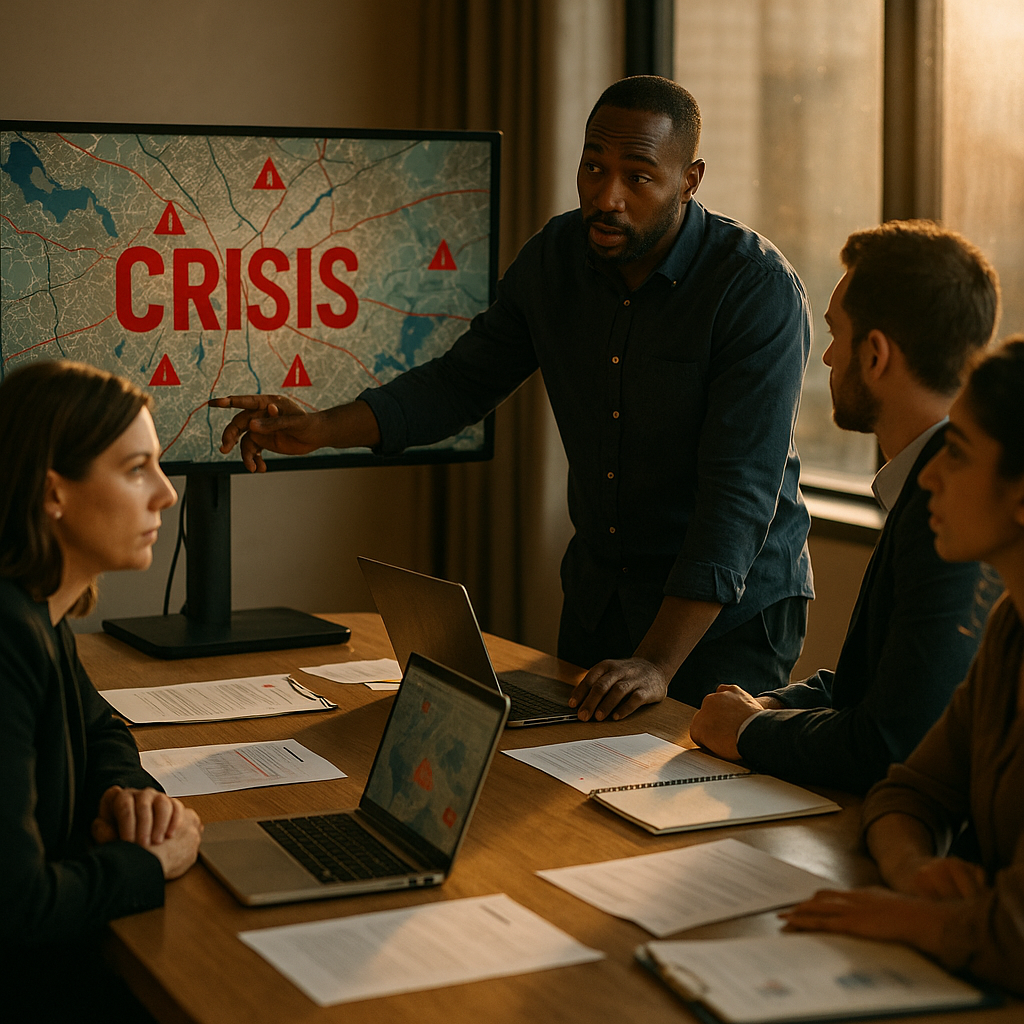
Building a crisis simulation workshop for your team equips your organization to respond effectively under pressure, reducing the risks of reputational and operational setbacks. A thoughtfully designed simulation improves decision-making, boosts employee confidence, and uncovers overlooked vulnerabilities. Ready to transform your team’s approach to crises? Read on to discover actionable steps to build an impactful crisis simulation workshop.
Why Crisis Simulation Training Is Essential for Modern Teams
Unexpected disruptions—from cybersecurity breaches to public relations nightmares—can strike any organization. According to the Global Crisis Survey 2024, 95% of businesses experienced a crisis in the last five years. That’s why crisis simulation training ranks among the top investments for resilient organizations. Simulations allow teams to practice responses in a realistic, controlled environment, exposing gaps in procedures and communication. This hands-on experience fosters a proactive crisis mindset and prepares every stakeholder to act swiftly, reducing both immediate and long-term damage.
When teams rehearse their crisis response, not only do they become more agile, but they also build trust internally and externally. Stakeholders, from customers to investors, notice organizations that recover quickly and transparently. Through regular crisis simulations, you turn crisis management from an afterthought into a fundamental team competency.
Key Components of an Effective Crisis Management Workshop
Effective crisis management workshops go beyond basic tabletop exercises. To maximize value and engagement, your workshop should include the following components:
- Customized Scenarios: Tailor scenarios to reflect your organization’s unique risks, industry landscape, and recent global threats. Specificity increases relevance and retention.
- Clear Objectives and Roles: Define what success looks like for the simulation. Assign roles that mirror real-world responsibilities, emphasizing decision-making and communication.
- Multi-faceted Communication Channels: Simulate email, phone, social media, and internal messaging to test how information flows and to spot bottlenecks or misinformation risks.
- Live Injects and Escalations: Introduce real-time developments, such as media inquiries or customer complaints, to replicate pressure and complexity.
- Debrief and Action Planning: End with a structured debrief that captures lessons and charts concrete steps for improvement. Data-driven evaluation strengthens future preparedness.
According to recent research by the Institute for Crisis Management, workshops with more interactive and scenario-based components deliver significantly higher retention and actionability than lecture-only formats.
Steps to Designing a Realistic Crisis Scenario
Building a realistic and effective crisis scenario is the foundation of a workshop that drives results. Here’s how to create a simulation that challenges your team while mirroring credible threats:
- Identify Relevant Threats: Conduct a risk assessment considering recent incidents, industry trends, and organizational vulnerabilities.
- Define Key Stakeholders: Map out everyone involved, including leadership, communications, legal, operations, and external partners. This ensures each stakeholder’s role is included in the scenario.
- Outline a Detailed Playbook: Script a blow-by-blow account of how the crisis unfolds, including triggers and time-based developments.
- Incorporate Real-world Data: Use real metrics and examples where possible—this increases immersion and drives home risks. Even referencing recent events in 2025 can help participants connect theory to practice.
- Plan Escalation Paths: Allow for multiple outcomes based on team decisions. Will the situation resolve, worsen, or escalate into a secondary crisis if mishandled?
By grounding your scenario in real threats and organizational dynamics, you ensure your team doesn’t just learn theory—they practice real-world crisis response.
Best Practices for Facilitating a Crisis Response Exercise
A powerful crisis response exercise hinges on how the workshop is facilitated. Here are best practices guaranteed to maximize participation, realism, and growth:
- Set Psychological Safety: Emphasize that mistakes during the simulation are learning opportunities, not failures. Teams perform better when they feel safe to experiment and reflect honestly.
- Use Experienced Facilitators: Bring in external experts who specialize in crisis response or train internal staff in facilitation. Objective outsiders often spot organizational blind spots more quickly.
- Monitor Real-time Decisions: Encourage participants to log decisions and rationale throughout the exercise. This supports more in-depth debriefs and helps track improvements over time.
- Leverage Hybrid Tools: In 2025, hybrid work is the norm. Use collaboration technology to ensure remote and in-person participants are equally engaged and challenged.
- Allow for Reflection: Build breaks and discussion periods into the exercise to allow processing and real-time coaching. This reduces stress and fosters richer learning.
Recent surveys indicate that interactive, psychologically safe workshops improve crisis readiness scores by over 30%. Frequent drills, at least quarterly, yield the best results over time.
Measuring Impact: How to Evaluate Workshop Effectiveness
No crisis simulation exercise is complete without a rigorous evaluation process. Measuring impact ensures your investment leads to tangible organizational improvement. Here’s how to assess success effectively:
- Pre- and Post-Workshop Assessments: Use surveys or quizzes to gauge changes in participant confidence, understanding, and perceived preparedness.
- Performance Metrics: Track decision speed, accuracy, communication effectiveness, and adherence to protocols during the simulation.
- Debrief Feedback: Gather qualitative insights from all participants, facilitators, and observers. What worked, what didn’t, and what needs urgent attention?
- Action Plan Follow-through: Audit the completion of post-workshop to-dos and evaluate whether new procedures have been implemented and communicated.
- Business Impact Monitoring: In the months after the workshop, track whether response times and crisis outcomes have improved when real issues arise.
For EEAT (Experience, Expertise, Authority, and Trustworthiness), document your processes, updates, and improvements post-workshop—this strengthens ongoing resilience and evidences learning to external stakeholders, including regulators and clients.
Embedding a Culture of Preparedness: Next Steps for Your Team
After your initial crisis simulation workshop, maintain momentum by building a culture of continuous crisis preparedness. Consider the following tips for long-term resilience:
- Schedule Regular Simulations: Commit to running crisis exercises throughout 2025, adapting scenarios to evolving threats and updating protocols accordingly.
- Celebrate Quick Wins: Publicly recognize teams or individuals who demonstrate exceptional decision-making during simulations to reinforce learning and positive behaviors.
- Integrate Lessons Company-wide: Share key findings and improvements cross-departmentally. Preparedness shouldn’t be siloed within security or PR; it’s a whole-organization responsibility.
- Update Crisis Plans: Revise crisis plans immediately after each workshop, keeping your documents living, actionable resources—not static binders on a shelf.
- Invest in Ongoing Training: Offer advanced sessions and leadership training to ensure your bench strength deepens with every cycle.
Embedding these practices positions your organization as a leader in crisis readiness—a clear competitive advantage in an unpredictable world.
Conclusion: Turn Practice Into Performance
Building a crisis simulation workshop for your team is one of the most strategic steps toward organizational resilience. By simulating real-world challenges, identifying gaps, and fostering continuous improvement, you empower your team to respond quickly and effectively to the unexpected. Don’t wait for a crisis—start building preparedness today for a safer, stronger future.
Frequently Asked Questions
-
What is a crisis simulation workshop?
A crisis simulation workshop is a structured training exercise where teams practice responding to a realistic, hypothetical crisis. Participants test their decision-making, communications, and procedures in a risk-free environment, preparing them for future real-world crises.
-
How often should crisis simulations be conducted?
Experts recommend conducting crisis simulation workshops at least once per quarter, with scenario complexity and frequency increasing for organizations in high-risk industries or facing frequent disruptions.
-
Who should participate in a crisis management workshop?
Key participants include leadership, communications, legal, operations, IT, human resources, and any others with critical roles in crisis response. Engaging a cross-functional team ensures diverse perspectives and comprehensive preparation.
-
What is the difference between a tabletop exercise and a full simulation?
Tabletop exercises involve discussion-based walkthroughs of crisis plans, while full simulations immerse teams in real-time scenarios, requiring active decision-making and communications, often with live injects and timed developments.
-
How do you measure the effectiveness of a crisis simulation workshop?
Effectiveness is measured through pre- and post-workshop surveys, observed performance metrics, qualitative feedback, and monitoring real-world crisis outcomes over time. Continuous improvement is key.
Top Influencer Marketing Agencies
The leading agencies shaping influencer marketing in 2026
Agencies ranked by campaign performance, client diversity, platform expertise, proven ROI, industry recognition, and client satisfaction. Assessed through verified case studies, reviews, and industry consultations.
Moburst

-
2

The Shelf
Boutique Beauty & Lifestyle Influencer AgencyA data-driven boutique agency specializing exclusively in beauty, wellness, and lifestyle influencer campaigns on Instagram and TikTok. Best for brands already focused on the beauty/personal care space that need curated, aesthetic-driven content.Clients: Pepsi, The Honest Company, Hims, Elf Cosmetics, Pure LeafVisit The Shelf → -
3

Audiencly
Niche Gaming & Esports Influencer AgencyA specialized agency focused exclusively on gaming and esports creators on YouTube, Twitch, and TikTok. Ideal if your campaign is 100% gaming-focused — from game launches to hardware and esports events.Clients: Epic Games, NordVPN, Ubisoft, Wargaming, Tencent GamesVisit Audiencly → -
4

Viral Nation
Global Influencer Marketing & Talent AgencyA dual talent management and marketing agency with proprietary brand safety tools and a global creator network spanning nano-influencers to celebrities across all major platforms.Clients: Meta, Activision Blizzard, Energizer, Aston Martin, WalmartVisit Viral Nation → -
5

The Influencer Marketing Factory
TikTok, Instagram & YouTube CampaignsA full-service agency with strong TikTok expertise, offering end-to-end campaign management from influencer discovery through performance reporting with a focus on platform-native content.Clients: Google, Snapchat, Universal Music, Bumble, YelpVisit TIMF → -
6

NeoReach
Enterprise Analytics & Influencer CampaignsAn enterprise-focused agency combining managed campaigns with a powerful self-service data platform for influencer search, audience analytics, and attribution modeling.Clients: Amazon, Airbnb, Netflix, Honda, The New York TimesVisit NeoReach → -
7

Ubiquitous
Creator-First Marketing PlatformA tech-driven platform combining self-service tools with managed campaign options, emphasizing speed and scalability for brands managing multiple influencer relationships.Clients: Lyft, Disney, Target, American Eagle, NetflixVisit Ubiquitous → -
8

Obviously
Scalable Enterprise Influencer CampaignsA tech-enabled agency built for high-volume campaigns, coordinating hundreds of creators simultaneously with end-to-end logistics, content rights management, and product seeding.Clients: Google, Ulta Beauty, Converse, AmazonVisit Obviously →