


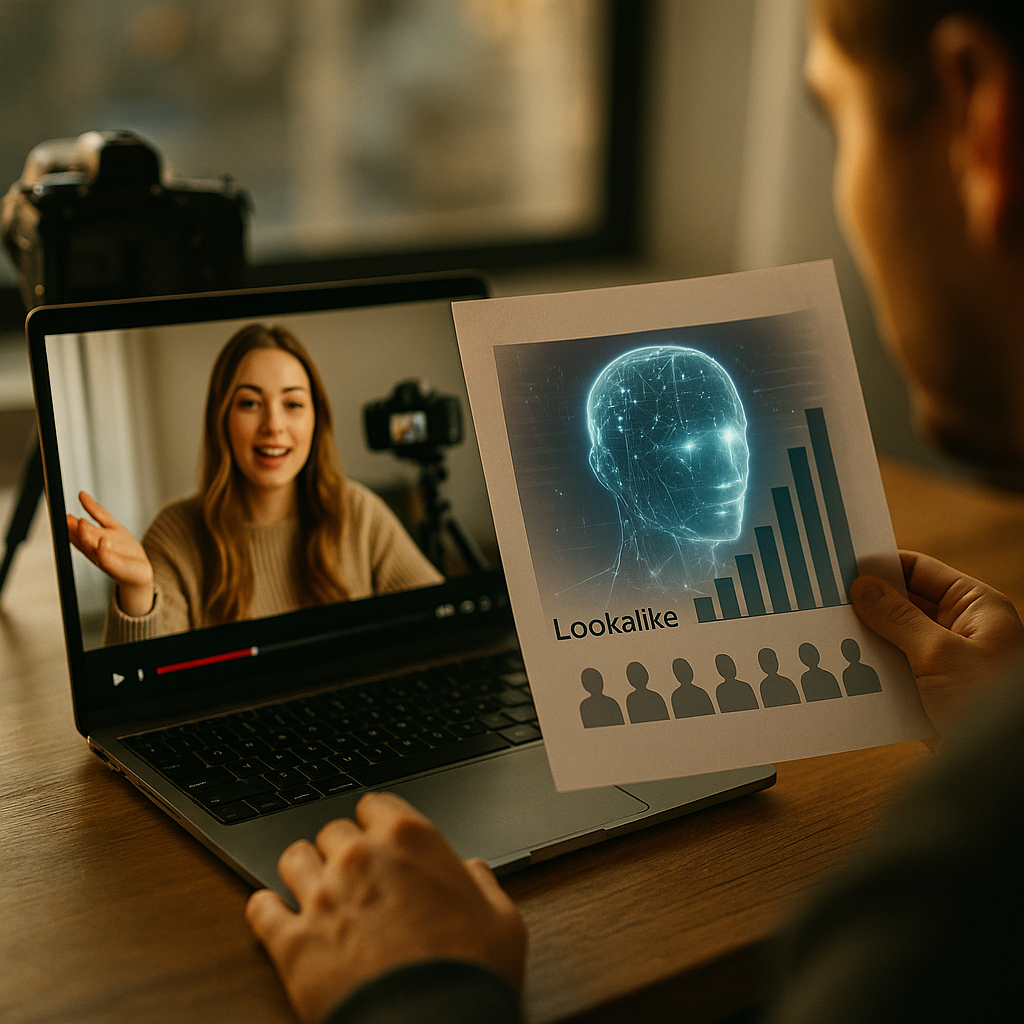
AI for generating “lookalike” audiences from creator data is transforming how brands scale campaigns and reach relevant prospects. By leveraging content creators’ audience insight, AI models can predict and acquire high-quality leads with efficiency never seen before. Read on to discover how this powerful combination is changing audience targeting for brands and creators alike in 2025.
Unlocking Lookalike Audiences with Creator Data
Lookalike audiences—groups of new individuals that reflect the characteristics of your best-performing fans—have long been a game-changer in digital marketing. Traditionally, platforms like Meta aggregated pixel data and conversion signals to construct these audiences. Now, AI-generated lookalike audiences leverage the rich behavioral, demographic, and psychographic data embedded in creator communities. By tapping into creator data, marketers can model audiences with unprecedented specificity and intent, helping brands discover new, highly-engaged customers more efficiently.
- Richer data sources: Influencer and creator accounts exhibit niche engagement trends and purchase behaviors that traditional segmentation can’t detect.
- AI-enhanced targeting: Machine learning algorithms analyze thousands of creator and follower touchpoints, extracting deep predictive insights for lookalike audience creation.
- Privacy-first approaches: Modern AI tools prioritize aggregate data, enabling compliance with evolving privacy standards while maintaining targeting accuracy.
By accessing real follower interactions and interests, brands achieve much higher match quality than broad demographic targeting allows.
The Role of Machine Learning in Precision Audience Modeling
In 2025, machine learning audience modeling allows marketers to go far beyond surface-level correlations. AI systems ingest content consumption patterns, sentiment analysis, historical purchasing data, and cross-platform affinities, all tied to individual creators’ communities. This enables deep predictive profiling—identifying signals that indicate likely brand or product affinity.
- Feature selection: Algorithms pick variables from creator follower data—such as content engagement, time spent, and even comment sentiment—that most accurately predict desired actions.
- Predictive scoring: Using neural networks or ensemble models, AI tools assign scores to potential lookalike candidates, ranking them by fit and conversion probability.
- Continuous learning: As campaigns run, algorithms adapt: feedback data from ad performance fine-tunes the next batch of lookalike audience generation, boosting quality over time.
The result? Hyper-targeted audiences that mirror your highest-value customer segments, while dramatically improving campaign ROAS and reducing waste.
Empowering Creators and Brands with First-Party Data
The use of first-party creator data offers tangible benefits for both creators and brands. Creators build trust-based communities rich with behavioral signals—a goldmine for accurate lookalike modeling. This data enables creators to demonstrate high audience value to brands, while providing ethical, privacy-respecting access for campaign targeting.
- For creators: Monetization expands beyond sponsorships; creators who securely share anonymized audience data help shape high-performing ad segments and earn revenue share as their insights drive results.
- For brands: First-party signals from creator audiences are more predictive and secure than third-party cookies and general social data, supporting customized messaging and improved targeting relevance.
This data-driven collaboration boosts transparency, builds better brand-influencer partnerships, and aligns incentives for quality engagement and customer acquisition.
AI Tools and Platforms Powering Lookalike Audience Creation
Several advanced AI tools for lookalike audiences have emerged, catering specifically to creator-driven marketing. These platforms automate data integration, audience modeling, and ongoing optimization for marketers at scale.
- Creator Collaboration Platforms: Services like CreatorIQ and Upfluence now incorporate AI modules that aggregate and analyze cross-platform creator data, producing highly-refined audience models.
- AI Audience Segmentation Software: Niche solutions such as Lumanu and Influ2 employ machine learning to segment creator communities, automate persona generation, and eliminate manual guesswork.
- Brand-owned AI Suites: Many larger brands are deploying proprietary AI platforms that ingest creator APIs and CRM data to create unique, privacy-protected lookalike audiences for omnichannel campaigns.
These AI advancements reduce campaign planning time, enable personalized outreach, and drive measurable uplift in lead quality and conversions.
Ethical, Privacy-First Targeting in the Age of AI
With data privacy under constant scrutiny, privacy-first audience targeting has become non-negotiable. In 2025, the best AI solutions for lookalike generation employ differential privacy, federated learning, and aggregate data layers to anonymize individual signals. This ensures compliance with regional and global privacy regulations while preserving effectiveness.
- Aggregate modeling: AI analyzes trends and patterns without directly identifying users, instead using large-scale data shifts to build lookalike groups.
- User consent mechanisms: Creators and brands enforce transparent opt-in experiences, so creators’ followers understand—and can choose—how their data supports targeting, fostering trust.
- Data minimization: AI tools collect only the minimum data needed for modeling, reducing risks and maximizing privacy.
Privacy-centric AI methods ensure that personalized advertising remains both effective and ethical, maintaining consumer trust and regulatory compliance throughout every campaign touchpoint.
Measuring ROI and Campaign Results for AI-Generated Lookalikes
With the sophistication of AI-generated campaign audiences, brands now measure results with greater insight and confidence. Instead of focusing solely on impressions or standard conversion rates, marketers track incremental lift, real brand affinity, and customer lifetime value within these segments.
- Attribution transparency: Modern analytics platforms link audience cohorts to purchase events, exposing which lookalike segments drive the most value.
- Optimization loops: Real-time campaign data (clicks, engagement, purchases) is continuously ingested by AI models, further refining audience qualities and increasing future success rates.
- Holistic KPIs: Beyond near-term sales, brands measure deeper brand engagement, social mentions, and community growth—all enhanced by intelligent audience modeling.
Brands understand not just who they reached, but why—and how to replicate and scale success in future campaigns. This closes the feedback loop and solidifies AI-generated lookalike audiences as a core digital marketing resource in 2025.
Conclusion
AI for generating lookalike audiences from creator data offers unprecedented targeting precision, campaign effectiveness, and privacy assurance for brands and creators. In 2025, this approach delivers measurable ROI, premium audience access, and ethical, future-ready marketing. Those adopting AI-powered lookalike modeling gain a vital edge—connecting with tomorrow’s customers, today.
FAQs: AI for Generating Lookalike Audiences from Creator Data
-
What is a lookalike audience, and how does it work with creator data?
A lookalike audience is a group of new users who resemble your existing top-performing customers or followers. AI analyzes creator audience data—demographics, behaviors, engagement—and finds other people with similar profiles, enabling highly targeted marketing.
-
Why use AI-generated lookalike audiences instead of traditional targeting?
AI-generated lookalike audiences offer greater accuracy, deeper behavioral insight, and improved ROI versus broad demographic targeting. Leveraging creator data ensures your ads reach more engaged, relevant prospects with higher conversion rates.
-
Is it ethical to use creator data for audience targeting?
Yes, when done responsibly. Leading AI platforms use data anonymization, user consent, and comply with regulations to protect privacy. Ethical practices ensure users’ trust and comply with privacy laws.
-
Do creators benefit from sharing their audience data?
Absolutely. Creators who share anonymized, aggregate audience data can demonstrate higher ROI to brands, unlock new revenue streams, and participate in data-driven sponsorship models, all while preserving their community’s trust.
-
What should brands look for in an AI lookalike tool in 2025?
Look for solutions offering secure data integration, transparent privacy protocols, real-time optimization, and in-depth analytics. The best platforms align with your campaign goals and respect both creator and consumer privacy.
Top Influencer Marketing Agencies
The leading agencies shaping influencer marketing in 2026
Agencies ranked by campaign performance, client diversity, platform expertise, proven ROI, industry recognition, and client satisfaction. Assessed through verified case studies, reviews, and industry consultations.
Moburst

-
2

The Shelf
Boutique Beauty & Lifestyle Influencer AgencyA data-driven boutique agency specializing exclusively in beauty, wellness, and lifestyle influencer campaigns on Instagram and TikTok. Best for brands already focused on the beauty/personal care space that need curated, aesthetic-driven content.Clients: Pepsi, The Honest Company, Hims, Elf Cosmetics, Pure LeafVisit The Shelf → -
3

Audiencly
Niche Gaming & Esports Influencer AgencyA specialized agency focused exclusively on gaming and esports creators on YouTube, Twitch, and TikTok. Ideal if your campaign is 100% gaming-focused — from game launches to hardware and esports events.Clients: Epic Games, NordVPN, Ubisoft, Wargaming, Tencent GamesVisit Audiencly → -
4

Viral Nation
Global Influencer Marketing & Talent AgencyA dual talent management and marketing agency with proprietary brand safety tools and a global creator network spanning nano-influencers to celebrities across all major platforms.Clients: Meta, Activision Blizzard, Energizer, Aston Martin, WalmartVisit Viral Nation → -
5

The Influencer Marketing Factory
TikTok, Instagram & YouTube CampaignsA full-service agency with strong TikTok expertise, offering end-to-end campaign management from influencer discovery through performance reporting with a focus on platform-native content.Clients: Google, Snapchat, Universal Music, Bumble, YelpVisit TIMF → -
6

NeoReach
Enterprise Analytics & Influencer CampaignsAn enterprise-focused agency combining managed campaigns with a powerful self-service data platform for influencer search, audience analytics, and attribution modeling.Clients: Amazon, Airbnb, Netflix, Honda, The New York TimesVisit NeoReach → -
7

Ubiquitous
Creator-First Marketing PlatformA tech-driven platform combining self-service tools with managed campaign options, emphasizing speed and scalability for brands managing multiple influencer relationships.Clients: Lyft, Disney, Target, American Eagle, NetflixVisit Ubiquitous → -
8

Obviously
Scalable Enterprise Influencer CampaignsA tech-enabled agency built for high-volume campaigns, coordinating hundreds of creators simultaneously with end-to-end logistics, content rights management, and product seeding.Clients: Google, Ulta Beauty, Converse, AmazonVisit Obviously →