


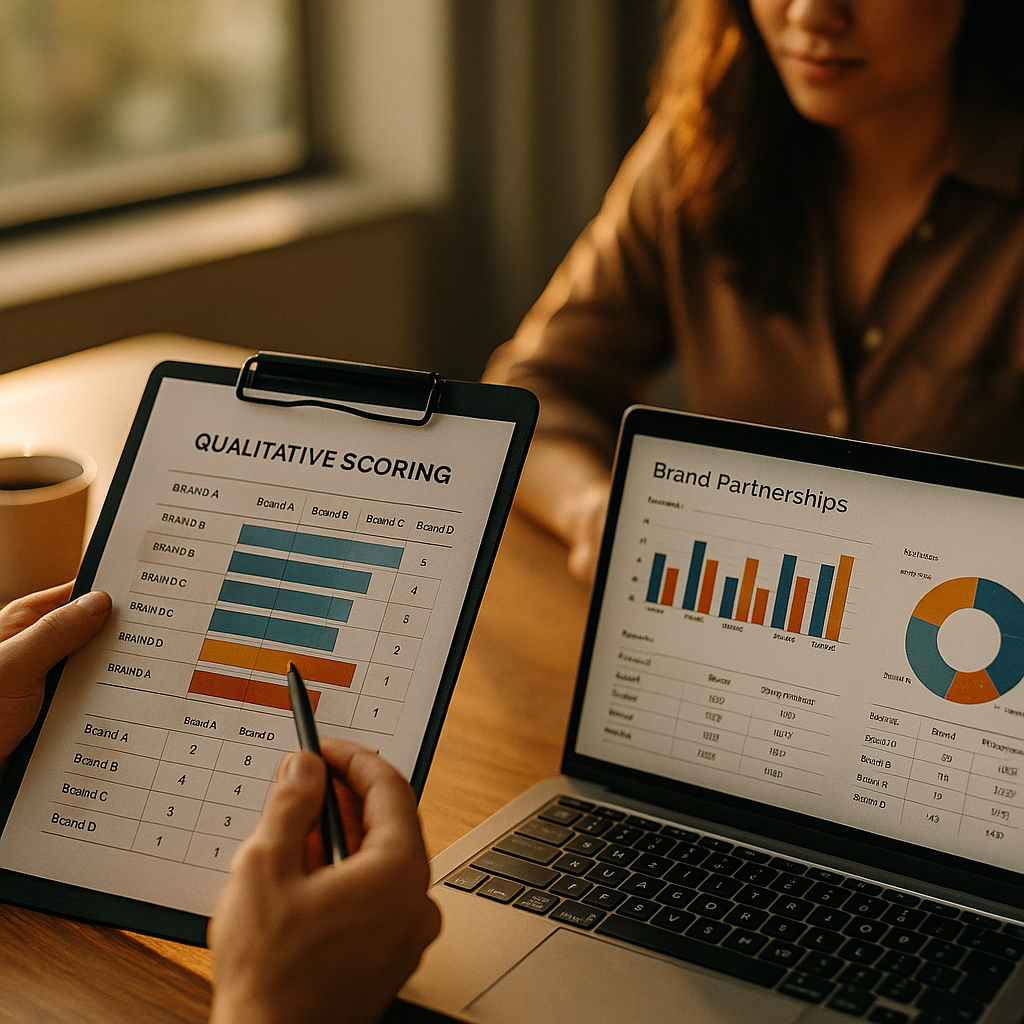
In 2025, aligning partnerships with your company’s values is more vital than ever. The concept of “brand fit” takes center stage, helping businesses select collaborations that truly resonate with their identity. In this article, we’ll break down a qualitative scoring framework for defining brand fit and show you practical steps to elevate your brand partnerships. Ready to transform your selection strategy?
Understanding Brand Fit: The Foundation of Strategic Partnerships
Brand fit describes how well another entity—be it a partner, product, or influencer—aligns with your brand’s core attributes, values, and target audience. In today’s crowded market, brand fit is integral not just for image, but for driving authentic engagement and building trust with customers.
Research from Forrester in 2024 revealed that businesses listing ‘brand fit’ as a top partnership criterion saw a 19% higher customer retention rate. This signals a shift from transactional deals to collaborations built on mutual values and shared audiences. Thus, defining brand fit should be a strategic priority, supported by reliable evaluation methods.
Why a Qualitative Scoring Framework Matters
Applying a qualitative scoring framework for brand fit brings consistency and objectivity to partnership decisions. Unlike rigid checklists, a qualitative approach contextualizes compatibility, factoring in nuances such as cultural resonance, tone of voice, and ethical alignments.
- Reduces subjectivity: Decision makers benefit from clear criteria, minimizing bias.
- Promotes transparency: Stakeholders can understand and trust the rationale behind selected partnerships.
- Supports adaptability: Frameworks can evolve as your brand and culture shift over time.
With this framework, brands avoid costly mismatches and harness partnerships that truly enhance their reputation and return on investment (ROI).
Key Elements of a Robust Brand Fit Evaluation
To effectively assess brand fit, the framework must be comprehensive yet flexible. Here are the five essential secondary keywords to consider:
- Core values alignment: Does the potential partner share your ethical standards, mission, and long-term vision?
- Audience synergy: Will the partnership resonate with your primary consumer base and boost customer loyalty?
- Communications style compatibility: Is the tone, messaging, and public presence of the partner consistent with your brand voice?
- Reputation and risk assessment: Are there any red flags or positive signals in the partner’s external reputation or recent history?
- Cultural and market relevance: Does the collaborator add value through cultural understanding and market positioning relevant to your sector?
Each criterion deserves a weighted score based on your strategic priorities. For instance, in sectors like finance or healthcare, values alignment and risk assessment may carry greater weight compared to market relevance.
Building Your Qualitative Scoring Matrix
Constructing a qualitative scoring matrix enables clear, repeatable evaluations across multiple prospects. Here’s how a matrix can be developed and applied:
- Define scoring scales: Assign qualitative ratings like Excellent, Good, Acceptable, Poor (with associated numerical values).
- Determine weighting: Not all criteria matter equally. Assign percentage weights based on strategic importance.
- Score objectively: Involve multiple stakeholders to give feedback and score each area independently before aggregating results.
- Analyze qualitative factors: Use open-ended questions or comment fields in your matrix to capture insights and context for each score.
For example, “How does this partner demonstrate commitment to sustainability?” can reveal depth beyond a numeric rating alone. Documenting these insights boosts accountability and learning for future evaluations.
Case Example: Applying the Qualitative Framework in Real Life
Imagine a sustainable fashion company seeking a collaboration with a footwear brand for a ‘green collection’ in 2025. Using the qualitative scoring framework, evaluators would:
- Score the footwear brand’s recent eco-friendly initiatives (values alignment).
- Analyze overlapping target demographics (audience synergy).
- Compare marketing communication styles and previous campaign feedback (communications compatibility).
- Review public records, media mentions, or controversies (reputation/risk).
- Evaluate relevance in both local and broader fashion markets (cultural/market relevance).
Through stakeholder input and qualitative comments, they might discover exceptional alignment in sustainability but note a minor risk related to a recent product recall. Such nuanced insight lets them make an informed decision or negotiate additional safeguards.
Future-Proofing Brand Fit Assessments
Brand landscapes evolve, and so should your brand fit evaluation. To stay effective in 2025 and beyond, regularly review partnership outcomes and recalibrate your qualitative scoring framework. Solicit feedback from both internal teams and partners. Trends such as AI-driven brand analysis and social listening tools will further enrich the qualitative scoring process, uncovering early warning signs or untapped synergies.
Lastly, integrate your findings into a centralized knowledge base for institutional memory. This ensures future decision-makers build on your insights, maximizing consistency, and unlocking competitive advantages in brand collaborations.
Frequently Asked Questions: Qualitative Scoring Framework for Brand Fit
-
What is a qualitative scoring framework for brand fit?
A qualitative scoring framework systematically evaluates brand partnerships using criteria like values, audience, and reputation, applying subjective ratings and contextual comments rather than just quantitative scores.
-
Why use qualitative instead of just quantitative scoring?
Qualitative scoring captures nuance, context, and the human element that purely numerical systems may overlook, resulting in more reflective and effective partnership decisions.
-
How often should we revisit our brand fit criteria?
Review your criteria at least annually or after major partnerships to ensure alignment with evolving brand values, strategic goals, and shifts in your industry landscape.
-
Who should be involved in the scoring process?
Include representatives from leadership, marketing, compliance, and other key departments for balanced, objective evaluations and broader buy-in.
-
Can technology support the qualitative assessment process?
Yes, digital tools can facilitate data collection, centralize feedback, and harness AI for analyzing sentiment or flagging potential concerns, strengthening the evaluation process.
Defining brand fit with a qualitative scoring framework ensures every partnership matches your values and audience, protecting your brand’s integrity and growth. By tailoring and refining your approach, you’ll navigate 2025’s evolving landscape with confidence—and secure collaborations that stand the test of time.
Top Influencer Marketing Agencies
The leading agencies shaping influencer marketing in 2026
Agencies ranked by campaign performance, client diversity, platform expertise, proven ROI, industry recognition, and client satisfaction. Assessed through verified case studies, reviews, and industry consultations.
Moburst

-
2

The Shelf
Boutique Beauty & Lifestyle Influencer AgencyA data-driven boutique agency specializing exclusively in beauty, wellness, and lifestyle influencer campaigns on Instagram and TikTok. Best for brands already focused on the beauty/personal care space that need curated, aesthetic-driven content.Clients: Pepsi, The Honest Company, Hims, Elf Cosmetics, Pure LeafVisit The Shelf → -
3

Audiencly
Niche Gaming & Esports Influencer AgencyA specialized agency focused exclusively on gaming and esports creators on YouTube, Twitch, and TikTok. Ideal if your campaign is 100% gaming-focused — from game launches to hardware and esports events.Clients: Epic Games, NordVPN, Ubisoft, Wargaming, Tencent GamesVisit Audiencly → -
4

Viral Nation
Global Influencer Marketing & Talent AgencyA dual talent management and marketing agency with proprietary brand safety tools and a global creator network spanning nano-influencers to celebrities across all major platforms.Clients: Meta, Activision Blizzard, Energizer, Aston Martin, WalmartVisit Viral Nation → -
5

The Influencer Marketing Factory
TikTok, Instagram & YouTube CampaignsA full-service agency with strong TikTok expertise, offering end-to-end campaign management from influencer discovery through performance reporting with a focus on platform-native content.Clients: Google, Snapchat, Universal Music, Bumble, YelpVisit TIMF → -
6

NeoReach
Enterprise Analytics & Influencer CampaignsAn enterprise-focused agency combining managed campaigns with a powerful self-service data platform for influencer search, audience analytics, and attribution modeling.Clients: Amazon, Airbnb, Netflix, Honda, The New York TimesVisit NeoReach → -
7

Ubiquitous
Creator-First Marketing PlatformA tech-driven platform combining self-service tools with managed campaign options, emphasizing speed and scalability for brands managing multiple influencer relationships.Clients: Lyft, Disney, Target, American Eagle, NetflixVisit Ubiquitous → -
8

Obviously
Scalable Enterprise Influencer CampaignsA tech-enabled agency built for high-volume campaigns, coordinating hundreds of creators simultaneously with end-to-end logistics, content rights management, and product seeding.Clients: Google, Ulta Beauty, Converse, AmazonVisit Obviously →