


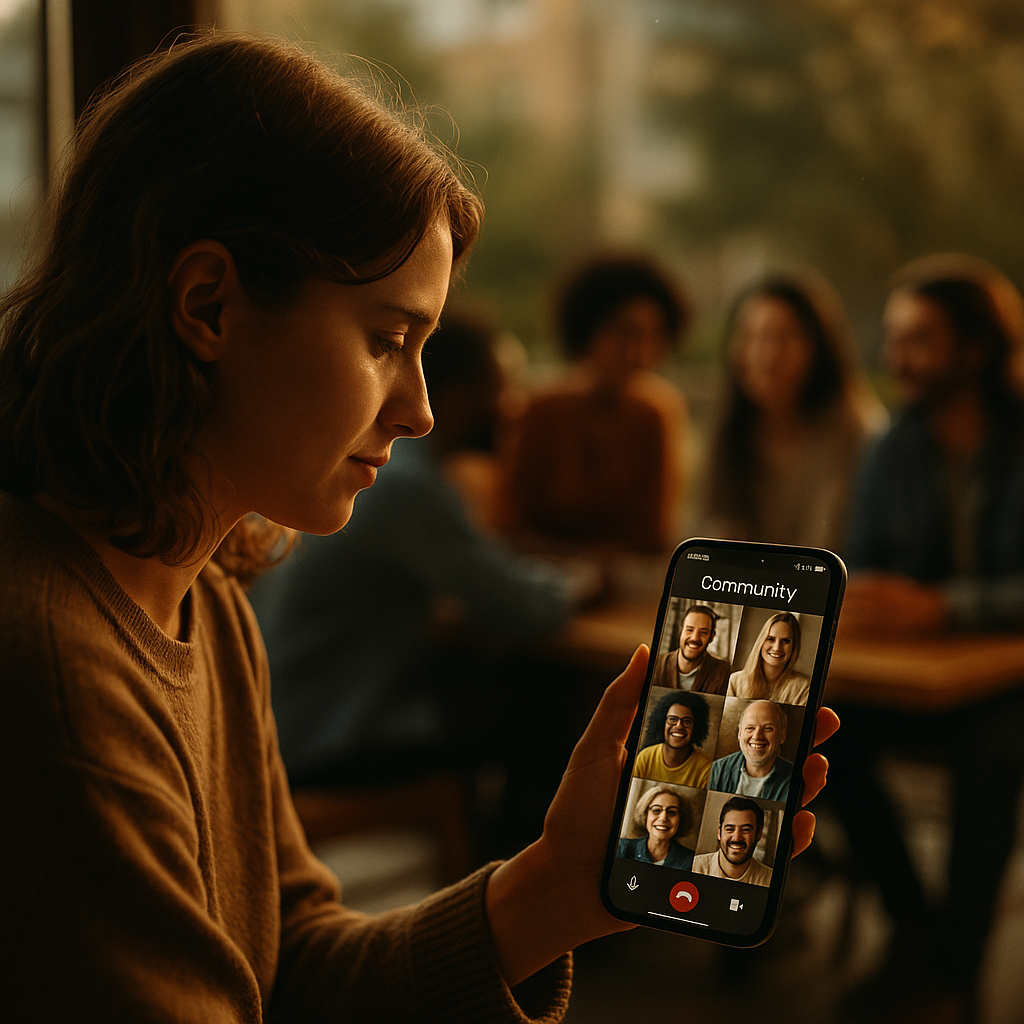
In 2025, more people report feeling disconnected despite constant digital contact. The loneliness epidemic is no longer a private struggle; it is a societal pattern shaping how we work, shop, and socialize. As traditional “third places” shrink and trust in institutions wavers, customers look for belonging elsewhere. Brands that build authentic communities can meet that need—if they do it responsibly. Are you ready to see why?
Understanding the loneliness epidemic
Loneliness is not the same as being alone. It is the subjective gap between the connection you want and the connection you feel. That distinction matters for leaders trying to respond: you cannot “fix” loneliness with more notifications, more content, or more transactions.
Recent public health framing reinforces how serious this is. In the U.S., the Surgeon General’s advisory on social disconnection (2023) highlighted measurable health risks associated with chronic loneliness and isolation. In the U.K., ongoing national measurement (including ONS reporting) continues to track loneliness as a population-level issue. While the exact prevalence varies by survey method, the direction is consistent: many adults and younger people report frequent loneliness, and the pattern is not limited to any one demographic.
Several forces make the problem harder to ignore in 2025:
- Fragmented routines: Remote and hybrid work reduce “incidental” social contact that once came with commuting and offices.
- Weaker local ties: People move more, family lives are more dispersed, and neighborhood participation has declined in many places.
- Higher social comparison: Social platforms can amplify perceived exclusion, especially for those already vulnerable.
- Trust gaps: When people distrust institutions and media, they often retreat into smaller circles.
For brands, this is not a marketing opportunity first. It is a human context. Customers who feel disconnected often seek spaces where they can be seen, contribute, and build identity. That is the opening for well-designed, ethical community strategy.
Why brand communities are growing
Brand communities are not simply audiences or follower counts. They are networks of people who share identity, practices, language, and norms around a product, mission, or lifestyle. The growth in demand comes from a straightforward reality: many people want reliable social infrastructure, and they will join it where it is available and safe.
In 2025, customers increasingly expect brands to offer more than a product:
- Belonging: A place to participate, not just consume.
- Meaning: Values expressed through action, not slogans.
- Support: Peer answers, shared experiences, and practical help.
- Recognition: Status earned through contribution, not spending alone.
This helps explain why communities form around categories that are deeply personal: wellness, parenting, gaming, personal finance, education, fitness, creative tools, and even niche hobbies. When people feel isolated, they gravitate toward groups that reduce uncertainty and provide a stable social role.
Brands also have structural advantages compared with ad-hoc social groups. They can fund moderation, create events, provide tools, and keep a long-term roadmap. When done well, a community becomes a “container” where relationships can develop more predictably than in open social feeds.
However, the driver is not that brands are inherently more trusted. The driver is that brands can be present where people already are, and can invest in repeated, high-quality touchpoints. That is why the demand is growing—and why the responsibility is, too.
The psychology of belonging and customer trust
Community works when it satisfies basic psychological needs: connection, competence, and autonomy. People stay when they feel safe and useful. They leave when the space feels extractive or chaotic.
To earn customer trust in a community, brands need to design for four outcomes:
- Safety: Clear rules, consistent moderation, and predictable consequences for harassment or misinformation.
- Agency: Members can influence topics, formats, and norms, rather than being treated as a captive focus group.
- Reciprocity: Give more than you take. Provide education, tools, and access that meaningfully helps members.
- Integrity: Be transparent about data use, sponsorships, affiliate links, and what is or is not “community-led.”
One reason loneliness can amplify brand-community demand is that loneliness can also increase sensitivity to rejection and exclusion. That means community teams must avoid “performative inclusion.” Superficial welcomes, generic engagement prompts, or algorithmic favoritism can backfire by reinforcing the sense that connection is conditional.
Answering a common follow-up question: Can a brand community replace real-world relationships? It should not try. Strong communities instead act as bridges: they create opportunities for members to move from passive consumption to shared projects, local meetups, mentorship, or collaboration. The healthiest communities point outward as much as inward.
Designing online communities that reduce isolation
Not every community reduces loneliness. Some increase it by creating pressure to perform, buy, or compete. To build online communities that genuinely help, structure matters more than hype.
Start with a specific “job to be done.” A community needs a reason to exist beyond “engagement.” Examples include: getting better at a skill, staying accountable to a goal, learning from experts, troubleshooting, or sharing progress. When purpose is clear, relationships form naturally around shared practice.
Build layered participation. Many members will lurk before they speak. Design clear paths:
- Observe: Read starter guides, norms, and best-of threads.
- Introduce: Simple prompts that do not force oversharing.
- Contribute: Templates for questions, show-and-tell posts, or peer reviews.
- Lead: Volunteer roles, mentorship, or event hosting.
Use rituals and shared language. Weekly challenges, office hours, member spotlights, and “wins of the week” create rhythm. Predictable cadence reduces social anxiety because members know what to do and when.
Prioritize real moderation, not reactive policing. Set community guidelines that address tone, health claims, harassment, and spam. Enforce consistently. A safe environment is a prerequisite for vulnerable conversations—especially in wellness, finance, and parenting.
Respect mental health boundaries. If members share personal struggles, your team must know when to redirect to professional resources. Communities should provide connection, not clinical care. Add clear disclaimers where needed, and train moderators to de-escalate and to flag crisis language.
Choose the right platform for depth. Public social feeds are good for discovery but weak for intimacy. Many brands combine channels: a private forum or group for discussions, a newsletter for continuity, and periodic live events for richer connection.
Another likely question: Do smaller communities outperform large ones? Often, yes—at least for belonging. Large communities can feel anonymous unless they are subdivided into cohorts, local chapters, or topic-based rooms. Scale requires architecture.
Community-led marketing and measurable business value
Community-led marketing works when it aligns with member outcomes and produces business value as a byproduct, not the main event. In 2025, leadership teams want measurable impact, and community teams need to speak that language without turning members into metrics.
Track a balanced set of measures:
- Connection metrics: Active members, returning participants, peer-to-peer reply rate, time-to-first-response, and cohort retention.
- Quality metrics: Member-reported helpfulness, moderation resolution time, and sentiment trends from surveys.
- Product metrics: Support ticket deflection, feature adoption, onboarding completion, and churn reduction among engaged members.
- Revenue metrics: Expansion within member accounts, referral rate, conversion from community events, and customer lifetime value comparisons (with careful attribution).
The highest-value communities usually create three business advantages:
- Lower cost of support: Members answer each other’s questions, and answers persist as a searchable knowledge base.
- Faster learning: Product teams get continuous qualitative insight and can validate roadmaps with real users.
- Stronger retention: Leaving a product becomes harder when it also means leaving relationships and identity.
Still, the ethical line matters. If community exists primarily to drive upsells, members detect it quickly. The most sustainable approach is to publish a clear “value exchange” statement: what members get, what the brand gets, and how decisions are made. Transparency increases trust, and trust increases participation.
A practical follow-up: What does a strong first 90 days look like? Launch with a narrow focus, recruit a founding cohort, host recurring events, highlight member contributions, and iterate guidelines. Avoid over-automating welcome messages; human responses early on set the tone.
Ethical community building in 2025: safety, privacy, and inclusivity
As demand rises, so do risks. Ethical community building is now a differentiator because people are tired of manipulation, unsafe spaces, and unclear data practices.
To build responsibly:
- Protect privacy by design: Collect the minimum data needed, explain why you collect it, and provide simple ways to delete accounts and content.
- Be explicit about commercial intent: Mark staff accounts, disclose partnerships, and label promotional posts so members can interpret motives accurately.
- Invest in trained moderation: Moderation is not an intern task. Train for bias, harassment patterns, and misinformation. Provide escalation paths.
- Design for accessibility: Clear typography, captioned video, alt-friendly image practices where the platform allows, and multiple participation formats (text, audio, live, async).
- Avoid “parasocial traps”: Do not pressure members to share intimate stories for engagement. Encourage boundaries and consent.
Community can become a powerful counterweight to loneliness only if it is emotionally safe and socially fair. Inclusive spaces are not created by statements; they are created by how conflict is handled, whose voices are elevated, and whether new members can integrate without feeling tested.
If you operate in health, finance, or other high-stakes domains, strengthen EEAT signals inside the community: involve credentialed experts for educational sessions, cite reputable sources, maintain disclaimers, and separate peer experience from professional advice. That protects members and reduces brand risk.
FAQs
What is the loneliness epidemic?
It refers to widespread increases in perceived social disconnection, where people feel they lack meaningful relationships even if they have frequent contact online. Public health authorities have linked chronic loneliness and isolation with negative health outcomes and have treated social connection as a serious well-being issue.
Why are brand communities growing in 2025?
People want belonging, practical support, and shared identity, and many traditional social spaces have weakened. Brands can fund structured spaces, events, and moderation, creating reliable places to connect—if the community is built with clear purpose and trust.
How do brand communities help reduce loneliness?
They can create repeat interactions, peer support, and shared rituals that make connection easier. The most effective communities encourage contribution, mentorship, and small-group participation, and they often bridge into real-world meetups or collaborative projects.
What makes an online community feel safe and trustworthy?
Clear rules, consistent moderation, transparent data practices, and honest disclosure of commercial intent. Trust also grows when members can influence the space and when the brand prioritizes member outcomes over promotion.
How can a company measure community ROI without harming trust?
Use a balanced scorecard: connection and quality metrics alongside product and revenue outcomes. Be transparent about what you measure and why, and avoid surveillance-style tracking. Use surveys and opt-in research to understand member experience.
Are brand communities a replacement for friendships?
No. A healthy community provides connection and belonging around shared practice, but it should not position itself as a substitute for personal relationships or professional mental health support. The best communities help members build confidence and pathways to deeper relationships elsewhere.
Loneliness shapes consumer behavior in 2025, and it increases demand for places where people can belong, contribute, and feel recognized. Brand communities can meet that need when they are purpose-led, well-moderated, and transparent about value exchange. Build for safety, agency, and real peer support—not just visibility. When you design community as social infrastructure, trust and growth follow.
Top Influencer Marketing Agencies
The leading agencies shaping influencer marketing in 2026
Agencies ranked by campaign performance, client diversity, platform expertise, proven ROI, industry recognition, and client satisfaction. Assessed through verified case studies, reviews, and industry consultations.
Moburst

-
2

The Shelf
Boutique Beauty & Lifestyle Influencer AgencyA data-driven boutique agency specializing exclusively in beauty, wellness, and lifestyle influencer campaigns on Instagram and TikTok. Best for brands already focused on the beauty/personal care space that need curated, aesthetic-driven content.Clients: Pepsi, The Honest Company, Hims, Elf Cosmetics, Pure LeafVisit The Shelf → -
3

Audiencly
Niche Gaming & Esports Influencer AgencyA specialized agency focused exclusively on gaming and esports creators on YouTube, Twitch, and TikTok. Ideal if your campaign is 100% gaming-focused — from game launches to hardware and esports events.Clients: Epic Games, NordVPN, Ubisoft, Wargaming, Tencent GamesVisit Audiencly → -
4

Viral Nation
Global Influencer Marketing & Talent AgencyA dual talent management and marketing agency with proprietary brand safety tools and a global creator network spanning nano-influencers to celebrities across all major platforms.Clients: Meta, Activision Blizzard, Energizer, Aston Martin, WalmartVisit Viral Nation → -
5

The Influencer Marketing Factory
TikTok, Instagram & YouTube CampaignsA full-service agency with strong TikTok expertise, offering end-to-end campaign management from influencer discovery through performance reporting with a focus on platform-native content.Clients: Google, Snapchat, Universal Music, Bumble, YelpVisit TIMF → -
6

NeoReach
Enterprise Analytics & Influencer CampaignsAn enterprise-focused agency combining managed campaigns with a powerful self-service data platform for influencer search, audience analytics, and attribution modeling.Clients: Amazon, Airbnb, Netflix, Honda, The New York TimesVisit NeoReach → -
7

Ubiquitous
Creator-First Marketing PlatformA tech-driven platform combining self-service tools with managed campaign options, emphasizing speed and scalability for brands managing multiple influencer relationships.Clients: Lyft, Disney, Target, American Eagle, NetflixVisit Ubiquitous → -
8

Obviously
Scalable Enterprise Influencer CampaignsA tech-enabled agency built for high-volume campaigns, coordinating hundreds of creators simultaneously with end-to-end logistics, content rights management, and product seeding.Clients: Google, Ulta Beauty, Converse, AmazonVisit Obviously →