


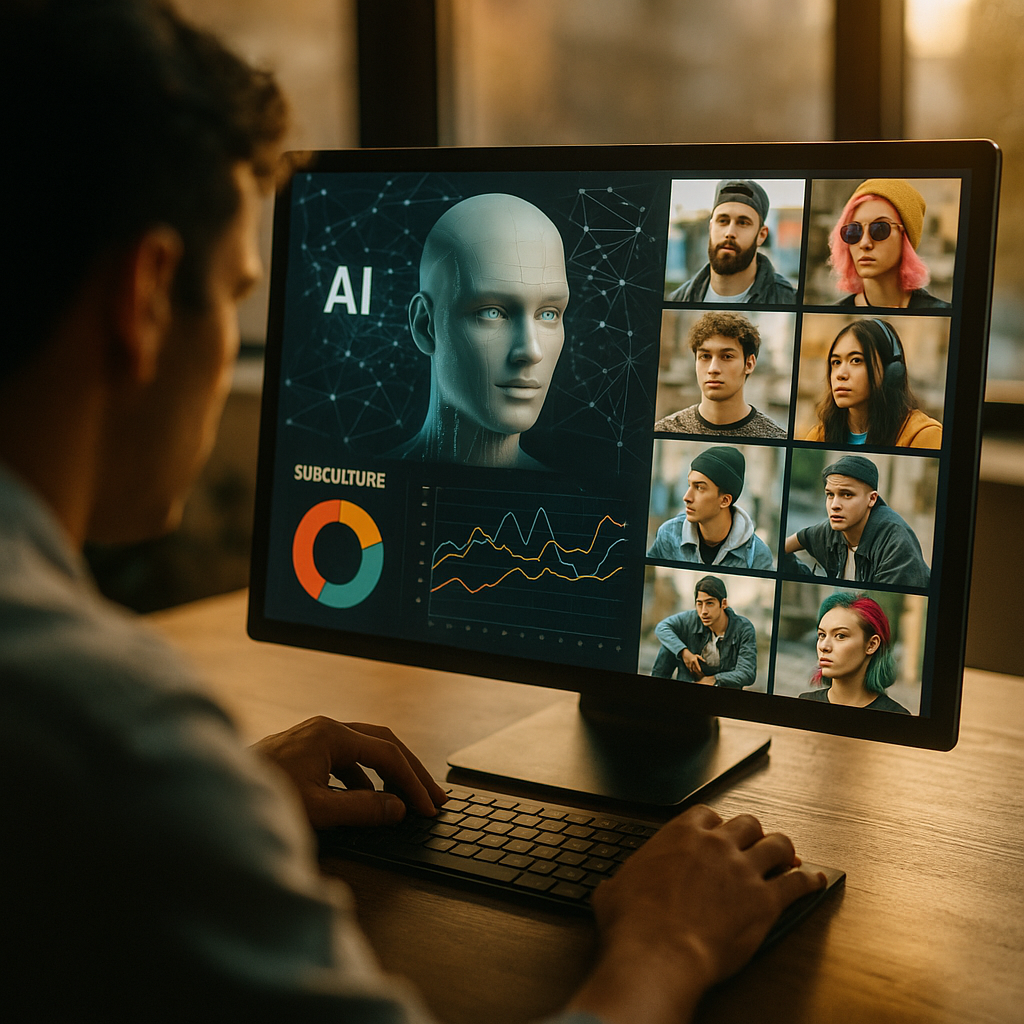
Using AI To Detect Emerging Cultural Subcultures For Early Targeting is becoming a core advantage for brands, agencies, and creators who need to act before trends peak. In 2025, subcultures form across platforms, games, cities, and private communities faster than traditional research can track. This guide explains how to spot early signals, validate them responsibly, and convert insight into action without sounding like a tourist—ready to see what your competitors miss?
AI social listening for subculture discovery
Emerging subcultures rarely announce themselves with a neat label. They show up as shifting language, niche creators, remixed aesthetics, and new forms of participation. AI social listening helps you find these weak signals at scale by analyzing large volumes of public content across social platforms, forums, comments, reviews, and news.
To make social listening useful for subculture discovery, focus on pattern detection rather than counting mentions of a single keyword. Modern AI pipelines can cluster posts by semantic similarity, then surface recurring themes even when people use different slang. For example, a subculture may be tied together by shared values (anti-optimization, “slow” consumption, repair culture) or shared formats (photo style, edit pacing, meme structures) rather than a specific hashtag.
Practical signals AI can surface early:
- Vocabulary drift: new terms, reclaimed words, ironic spellings, or codewords that spread within a cluster.
- Creator graphs: micro-influencers frequently co-mentioned or co-engaged by the same audience pockets.
- Aesthetic convergence: similar visual motifs, color palettes, fashion silhouettes, or typography patterns.
- Behavioral rituals: recurring prompts, challenges, inside jokes, or “how we do it here” norms.
- Cross-platform migration: early talk on one platform followed by “receipt” posts and compilations elsewhere.
Answering the common follow-up: Do you need access to private groups? No. Many of the earliest signals appear in public spaces, especially in comments, duets/remixes, and creator-to-creator conversations. If you rely on private data, you risk ethical and legal issues and may misread context.
Trend forecasting models and weak-signal detection
Trend forecasting models work when you treat subcultures as living systems, not campaigns. The goal is to identify “pre-viral” growth patterns and the conditions that make a subculture durable. AI supports this by combining time-series analysis with network science and natural language understanding.
Effective weak-signal detection typically uses:
- Time-series acceleration: not just volume, but rate of change, volatility, and sustained baseline shifts.
- Network expansion: growth in distinct community nodes (new creators and micro-communities) rather than a single hub going viral.
- Semantic diversification: the topic starts spawning related subtopics, guides, “starter packs,” and debate threads.
- Format replication: the same idea expressed in multiple formats (short video, carousel, longform, livestream) signals transferability.
To reduce false positives, apply three validation questions before you act:
- Is it coherent? Do participants share values, symbols, or behaviors, or is it just an algorithmic blip?
- Is it repeatable? Can people participate without insider access, expensive gear, or rare knowledge?
- Is it resilient? Does it persist through platform shifts, moderation changes, or creator churn?
Many teams ask: How early is “early”? In practice, you aim for the window where a subculture is large enough to study without invading privacy, but small enough that mainstream brands have not homogenized it. AI helps you measure that window by monitoring acceleration, creator diversity, and audience overlap with adjacent communities.
Consumer insights from embeddings and audience clustering
Consumer insights improve when you move past basic demographic targeting. Subcultures are driven by identity, belonging, and shared meaning, so your analysis should map how people describe themselves, what they reject, and how they signal membership.
AI embeddings let you represent text, images, and audio as vectors so you can cluster meaning at scale. This matters because subculture language is often oblique: irony, layered references, and “if you know, you know” cues. Embeddings can connect these signals without forcing everything into a rigid taxonomy.
A strong workflow for audience clustering:
- Collect representative public data from multiple platforms to avoid single-platform bias.
- Build semantic clusters of posts and comments, then label clusters with human researchers who understand the context.
- Map adjacent interests by analyzing co-occurring topics (music scenes, micro-sports, niche beauty, indie game mods).
- Identify identity markers such as slogans, rituals, aesthetic signatures, or “rules of the community.”
- Quantify audience overlap between clusters to find bridges and likely adoption paths.
Answering the next question: How do you avoid stereotyping? Use AI to describe behaviors and preferences, not to infer sensitive attributes. Keep your segments grounded in observable participation (content types, engagement patterns, self-described affinities). Validate with qualitative research and, where possible, opt-in community feedback.
What good insight looks like: a clear description of why the subculture exists, what pain points or aspirations it addresses, what status signals matter, and what would feel inauthentic. That becomes your creative and product brief, not just a targeting list.
Brand strategy and early targeting without backlash
Brand strategy in subcultures succeeds when you add value, respect norms, and stay consistent. Early targeting is not about “claiming” a scene; it is about participating appropriately and supporting creators and community infrastructure.
Use AI findings to decide how to show up:
- Choose the right role: sponsor tools or spaces, commission creators, co-create limited drops, or simply amplify community voices.
- Match the tempo: some subcultures reward fast iteration; others punish rushed, trend-chasing behavior.
- Design for participation: templates, remixable assets, challenges, or IRL meetups that fit existing rituals.
- Protect meaning: avoid flattening nuanced values into generic slogans.
Early targeting also means you need an internal “authenticity gate” that reviews creative before it ships. A simple checklist helps:
- Context: do we understand the origin, not just the surface aesthetic?
- Credit: are we naming and paying the creators and communities we borrow from?
- Contribution: what are we funding, improving, or making easier for participants?
- Consistency: will this align with our past actions, or will it look like a costume?
A frequent follow-up: Should you target with ads or with community programs first? In most cases, start with community programs or creator partnerships, then use paid media to scale once you have proof that your contribution is welcome. AI can guide you toward which creators are trusted connectors, not just high-reach accounts.
Data privacy, bias mitigation, and EEAT in AI research
In 2025, credibility depends on how you handle data privacy, bias, and transparency. Subculture research can cross ethical lines quickly if you treat communities as a resource to extract. Google’s EEAT principles reward content and strategies that demonstrate expertise, experience, authoritativeness, and trustworthiness, and your internal research standards should mirror that.
Implement guardrails that make your insights defensible:
- Use public data and respect platform rules: avoid scraping where it violates terms, and never attempt to deanonymize users.
- Minimize data: collect only what you need, keep retention periods short, and secure access.
- Separate analysis from identity: focus on aggregated patterns; avoid profiling individuals.
- Bias audits: check for language, region, and platform bias; ensure smaller communities are not misclassified as “noise.”
- Human-in-the-loop review: AI should surface possibilities; trained analysts should validate meaning and context.
- Documentation: maintain model cards, data sources, and reasoning trails so decisions are explainable.
To meet EEAT expectations in your outputs, build a repeatable research memo format: what you observed, how you observed it, what limitations exist, and what you recommend. When stakeholders ask “Can we trust this?”, you can answer with methodology, not vibes.
Measurement framework: from discovery to ROI
Subculture targeting needs a measurement plan that reflects the lifecycle: discovery, validation, participation, and scale. A strong framework links AI signals to business outcomes while protecting brand equity.
Track four layers of metrics:
- Signal health: acceleration, creator diversity, semantic diversification, and cross-platform movement.
- Community acceptance: sentiment in-context (not generic), creator willingness to collaborate, and comment quality indicators (questions, saves, remixes).
- Brand contribution: usage of tools/templates you provide, event attendance, UGC volume with organic phrasing (not forced hashtags).
- Commercial impact: conversion where appropriate, but also assisted conversions, repeat purchase, and retention in aligned segments.
Operationally, set up an “insight-to-action” cadence:
- Weekly: new cluster detection, narrative shifts, and creator graph changes.
- Monthly: validation sprints with qualitative checks and small creative tests.
- Quarterly: portfolio review to decide which subcultures to nurture, pause, or avoid.
The key follow-up: What if a subculture turns controversial? Your framework should include a risk layer: moderation policy changes, extremist co-opting signals, harassment patterns, or misinformation ties. If those rise, prioritize community safety and step back rather than “reframing” the narrative.
FAQs about AI and emerging cultural subcultures
What’s the difference between a trend and a subculture?
A trend is often a short-lived behavior or format. A subculture has durable shared meaning: values, norms, symbols, and ongoing participation. AI can spot both, but you should validate subcultures through coherence, resilience, and community structure.
Which data sources work best for detecting emerging subcultures?
Use multiple public sources: short-form video comments, creator feeds, forums, review text, playlists, niche newsletters, and community event listings. Cross-source confirmation reduces platform bias and helps you understand context.
How do you prevent AI from misreading irony or slang?
Use domain-adapted language models, rely on embeddings plus human labeling, and validate interpretations with qualitative research. Track examples and counterexamples, and update your taxonomy as language shifts.
Do you need a custom model, or can you use off-the-shelf tools?
Start with off-the-shelf tools for clustering and monitoring, then customize once you know what signals matter in your category. Many teams succeed with a hybrid: commercial listening plus a lightweight internal pipeline for embeddings and network analysis.
How do you engage a subculture without looking exploitative?
Lead with contribution: fund creators, support spaces, improve tools, and credit origins. Let community members shape the collaboration. Avoid “trend cosplay” creative that borrows aesthetics while ignoring values.
What’s a realistic timeline from detection to campaign?
Plan for a staged approach: 2–4 weeks to detect and validate, then small tests with creators and community programs, then scale after you see acceptance signals. Rushing often increases backlash risk and lowers performance.
AI can reveal emerging subcultures earlier than conventional research, but early insight only matters if you validate meaning and act with respect. In 2025, the winning approach combines semantic clustering, network analysis, and human cultural expertise to avoid false positives and stereotypes. Treat communities as partners, not targets. Build a measurement plan that rewards contribution and trust, and you’ll earn attention before the mainstream arrives.
Top Influencer Marketing Agencies
The leading agencies shaping influencer marketing in 2026
Agencies ranked by campaign performance, client diversity, platform expertise, proven ROI, industry recognition, and client satisfaction. Assessed through verified case studies, reviews, and industry consultations.
Moburst

-
2

The Shelf
Boutique Beauty & Lifestyle Influencer AgencyA data-driven boutique agency specializing exclusively in beauty, wellness, and lifestyle influencer campaigns on Instagram and TikTok. Best for brands already focused on the beauty/personal care space that need curated, aesthetic-driven content.Clients: Pepsi, The Honest Company, Hims, Elf Cosmetics, Pure LeafVisit The Shelf → -
3

Audiencly
Niche Gaming & Esports Influencer AgencyA specialized agency focused exclusively on gaming and esports creators on YouTube, Twitch, and TikTok. Ideal if your campaign is 100% gaming-focused — from game launches to hardware and esports events.Clients: Epic Games, NordVPN, Ubisoft, Wargaming, Tencent GamesVisit Audiencly → -
4

Viral Nation
Global Influencer Marketing & Talent AgencyA dual talent management and marketing agency with proprietary brand safety tools and a global creator network spanning nano-influencers to celebrities across all major platforms.Clients: Meta, Activision Blizzard, Energizer, Aston Martin, WalmartVisit Viral Nation → -
5

The Influencer Marketing Factory
TikTok, Instagram & YouTube CampaignsA full-service agency with strong TikTok expertise, offering end-to-end campaign management from influencer discovery through performance reporting with a focus on platform-native content.Clients: Google, Snapchat, Universal Music, Bumble, YelpVisit TIMF → -
6

NeoReach
Enterprise Analytics & Influencer CampaignsAn enterprise-focused agency combining managed campaigns with a powerful self-service data platform for influencer search, audience analytics, and attribution modeling.Clients: Amazon, Airbnb, Netflix, Honda, The New York TimesVisit NeoReach → -
7

Ubiquitous
Creator-First Marketing PlatformA tech-driven platform combining self-service tools with managed campaign options, emphasizing speed and scalability for brands managing multiple influencer relationships.Clients: Lyft, Disney, Target, American Eagle, NetflixVisit Ubiquitous → -
8

Obviously
Scalable Enterprise Influencer CampaignsA tech-enabled agency built for high-volume campaigns, coordinating hundreds of creators simultaneously with end-to-end logistics, content rights management, and product seeding.Clients: Google, Ulta Beauty, Converse, AmazonVisit Obviously →