


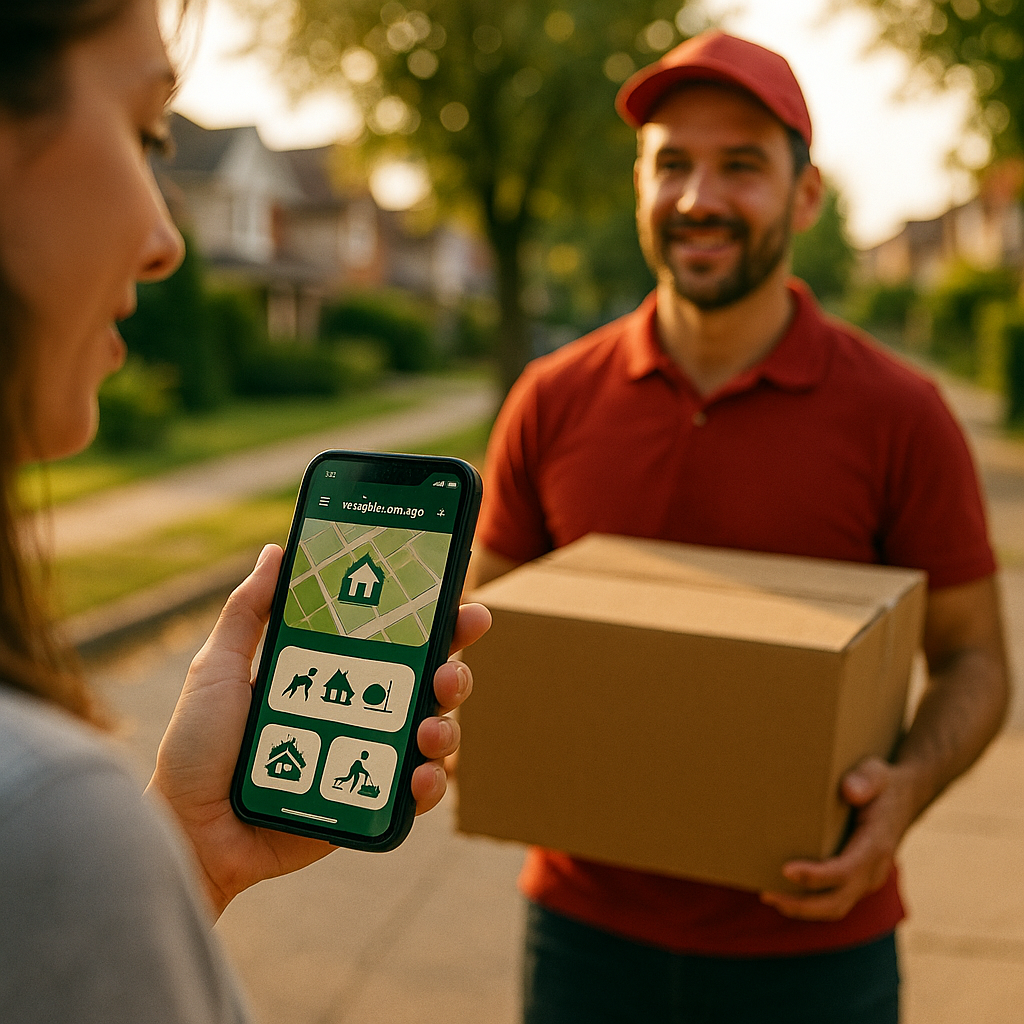
Leveraging Local Neighborhood Apps For Niche Service Delivery has become one of the fastest ways for specialized providers to reach nearby customers who already trust community recommendations. In 2025, neighborhood-first platforms influence buying decisions for everything from pet care to appliance repair because they combine proximity, social proof, and real-time messaging. If you want predictable local leads without wasting budget, the right approach starts here—ready to win your block?
Local neighborhood apps marketing: Why these platforms convert for niche services
Local neighborhood apps sit at the intersection of community and commerce. Unlike broad social networks, they organize users by address-verified areas, making intent more local and recommendations more credible. For niche service delivery—where trust, availability, and fit matter—this structure creates a conversion advantage.
Why conversion is often higher:
- Warm introductions via neighbors: People post “Who can fix my vintage lamp?” or “Need a postpartum meal prep service” and expect replies from real customers, not ads.
- High-context requests: Posts often include constraints like timing, budget, parking, pets in the home, or building rules—information that helps you qualify quickly.
- Low-friction messaging: In-app DMs reduce the steps between discovery and booking.
- Local proof beats generic reviews: A neighbor’s experience feels more relevant than a distant 5-star rating.
This is especially effective for services that rely on trust and proximity: home organizing, mobile bike repair, specialized tutoring, elder companionship, allergy-aware meal prep, plant care, tech setup for seniors, or niche trades like historic window restoration.
Follow-up you’re likely asking: “Do I need paid ads on these apps?” Often no—organic participation plus a tight operational system can produce consistent leads. Paid features can help later, once your messaging and fulfillment are proven.
Hyperlocal customer acquisition: Choosing the right app and neighborhood micro-market
Not every neighborhood platform performs the same for every niche. Your job is to match your service to where (and how) residents ask for help.
Evaluate platforms using a simple fit test:
- Request density: Search past posts for your service keywords and adjacent needs (e.g., “cat sitter,” “pet meds,” “litter help”). If you see recurring pain points, you have demand.
- Buyer seriousness: Look for posts that include timing (“today,” “this weekend”), specifics (model numbers, allergies, square footage), and follow-up comments. That signals action, not browsing.
- Community norms: Some neighborhoods embrace professional promos; others prefer “recommendations only.” Respecting tone is a hidden competitive edge.
- Service radius feasibility: If your niche requires tools, refrigeration, or multi-stop scheduling, choose clusters where drive time stays predictable.
Micro-market selection matters more than city selection. In 2025, two neighborhoods five miles apart can behave like different markets: one may value budget fixes; another may pay for premium, insured, white-glove work. Choose 2–4 adjacent neighborhoods where your offer matches the local “default” expectations.
Operational reality check: Before you post, confirm you can respond quickly, travel reliably, and deliver consistently. Neighborhood apps reward fast, helpful responders—and punish flaky providers through public comments and private DMs that never convert again.
Neighborhood app profile optimization: Building trust, credibility, and EEAT signals
Your profile is your storefront. To earn trust in a community setting, you need clarity, proof, and accountability—without sounding like an ad.
Optimize for Experience, Expertise, Authoritativeness, and Trust:
- Experience: State what you do and who you do it for, with a concrete example. “I provide mobile knife sharpening for home cooks and small restaurants; I service Japanese and German blades and can demonstrate edge quality on-site.”
- Expertise: Share credentials that matter in your niche (certifications, licensing, training, safety procedures). Keep it concise and verifiable.
- Authoritativeness: Add recognizable trust markers: insurance, background checks where relevant, partnerships (local shops, vet clinics, PT offices), and featured community collaborations.
- Trust: Publish clear policies: pricing range, cancellation terms, what you won’t do, and how you protect customer property and privacy.
Profile essentials that improve response rate:
- A one-line offer: “Same-day screen repair for iPhone and Android—house calls in [Neighborhoods].”
- Service area list: Name neighborhoods explicitly to match how residents search and speak.
- Proof gallery (if supported): Before/after shots, sanitized workbench photos, tools, and final results—avoid personal data or identifiable interiors.
- Fast contact path: Include booking link, phone (if appropriate), and the best hours to message.
Answering the unspoken question: “What if I’m new?” Be transparent. Offer an introductory package, a satisfaction guarantee, or supervised trials (where safe), and focus on responsiveness and professionalism. Credibility is built through consistent delivery and community-safe behavior.
Community-based lead generation: Posting, responding, and turning conversations into bookings
Neighborhood apps reward helpful participation. The goal is to be the obvious “safe choice” when someone asks for your niche.
Three content types that perform well:
- Problem-solver posts: Short tips that prevent costly mistakes. Example: “If your basement smells musty, don’t run a fan first—find the moisture source. Here are two quick checks…” End with: “If you want me to assess it, message me with a photo.”
- Service availability posts: “I have two openings Saturday for in-home computer tune-ups in [Neighborhoods].” Scarcity works when it’s honest.
- Community support posts: Offer a limited number of discounted slots for seniors, new parents, or community projects. This builds goodwill and real referrals when done consistently and transparently.
Response framework for recommendation threads:
- Lead with relevance: “I’m local to [Neighborhood] and specialize in [specific niche], not general [category].”
- Ask one qualifying question: Keep it simple: size, timeline, constraints, or goal.
- Give a micro-answer: Provide a helpful tip or expectation-setting detail.
- Move to DM for specifics: Protect privacy and reduce thread clutter.
Turn DMs into bookings with a “3-step close”:
- Confirm the outcome: “You want the closet to fit two adults’ workwear plus seasonal storage.”
- Offer two options: “Standard visit (90 minutes) or full reset (3 hours).”
- Set the next action: “Reply with your address block and preferred window; I’ll send a fixed quote and arrival ETA.”
Common mistake: Copy-pasting salesy replies. Residents can spot it instantly. Tailor each response to the situation; specificity signals competence.
Local reputation management: Reviews, referrals, and handling issues in public threads
On neighborhood apps, reputation travels fast. A single strong recommendation can create a chain of bookings; a single poorly handled complaint can stall growth for months.
How to earn more neighborhood recommendations (ethically):
- Ask at the right moment: After a visible win—when the customer is relieved or impressed.
- Make it easy: Provide a one-sentence prompt they can paste: “If you feel comfortable, could you share a recommendation describing the problem and the result?”
- Request specifics: “Mention punctuality, cleanliness, and the outcome.” Specific praise converts better than generic compliments.
- Never gatekeep: Don’t offer incentives for positive reviews. Focus on service quality and a smooth process.
Handling negative feedback:
- Respond quickly and calmly: Acknowledge the concern and state what you will do next.
- Move details to private messages: Protect the customer’s privacy and yours.
- Close the loop publicly: Without oversharing, confirm resolution: “We connected and completed a no-cost follow-up adjustment.”
Set expectations to prevent complaints: publish arrival windows, what “same-day” means, pricing ranges, and what counts as an emergency call. Many disputes come from mismatched assumptions, not bad intent.
What readers usually ask here: “Should I respond to every comment?” Respond to questions and direct mentions. For general praise, a brief thank-you is fine, but avoid flooding threads. Consistent professionalism matters more than volume.
On-demand local services scaling: Operations, partnerships, and measurable growth
Once leads start coming in, delivery becomes the bottleneck. Scaling niche service delivery through neighborhood apps requires tight operations and clear boundaries.
Operational systems that protect quality:
- Standardize intake: Use a short form or scripted questions: address area, photos, constraints, desired outcome, timing, and budget range.
- Offer packaged services: Packages reduce back-and-forth and anchor pricing. Example: “Basic tune-up,” “Deep clean,” “Urgent visit.”
- Routing and batching: Group bookings by neighborhood to cut drive time. Residents also like seeing you “in the area.”
- Communicate like a pro: Confirm arrival windows, send “on my way,” and share what to prepare (parking instructions, access codes, pets secured).
Partnerships that multiply trust:
- Local businesses: Pair with pet stores, bike shops, hardware stores, specialty grocers, or community centers. Ask for referral swaps that prioritize customer fit.
- Property managers and HOAs: If your niche supports buildings (pest prevention, tech setup, waste bin cleaning), offer a building-wide program.
- Complementary specialists: Example: a home organizer partners with a donation pickup service and a handyman. Each becomes a trusted node in the neighborhood.
Measure what matters (simple, actionable metrics):
- Response time: Faster responses typically win threads.
- Conversation-to-booking rate: Track DMs that become scheduled jobs.
- Repeat rate: Niche services can build recurring schedules (monthly, seasonal, quarterly).
- Referral rate: Count jobs that mention a neighbor by name or a thread link.
Risk control for growth: Don’t expand neighborhoods until you can maintain punctuality and quality. In community apps, overpromising is visible, and reputational recovery is slow.
FAQs about leveraging local neighborhood apps for niche service delivery
Which niche services perform best on neighborhood apps?
Services that rely on trust, proximity, and quick scheduling do especially well: pet care, mobile repair, home cleaning, senior tech help, tutoring, lawn and garden specialties, small handyman tasks, meal prep for dietary needs, and in-home wellness services where credentials and safety practices are clear.
How often should I post without annoying the community?
Follow the platform’s rules first. As a baseline, post value-forward updates 1–2 times per week in each neighborhood, and focus more on replying to requests than broadcasting promotions. Consistent helpful participation typically drives more leads than frequent ads.
Should I share pricing publicly in threads?
Share a clear range or package price when it helps residents decide quickly, then confirm a fixed quote in DMs after one or two qualifying questions. Transparent pricing builds trust and reduces low-intent messages.
How do I compete with cheaper providers recommended by neighbors?
Compete on fit and outcomes, not price. Emphasize your specialization, safety/insurance, reliability, and the specific result you deliver. Offer two tiered options so customers can choose value level without forcing you into a race to the bottom.
What’s the best way to ask for recommendations?
Ask right after a successful job, make the request easy, and suggest what to mention (problem, neighborhood, result). Avoid incentives tied to positivity. A steady stream of detailed, neighbor-written recommendations is one of the strongest conversion drivers on these platforms.
Do neighborhood apps help if I already rank on Google?
Yes. They add “community proof” and can fill schedule gaps quickly with hyperlocal demand. They also reveal language customers use to describe problems, which you can reuse on your website and service pages for better alignment with real intent.
How fast should I respond to messages?
As fast as you can sustainably manage—ideally within an hour during business hours. If you can’t respond quickly, use saved replies that still feel personal: confirm you’re local, ask one qualifying question, and give a clear next step.
Are there privacy or safety considerations?
Yes. Keep customer addresses, entry details, and personal situations out of public threads. Use DMs for specifics, document agreements (scope and price), and follow local licensing, insurance, and background-check requirements relevant to your niche.
How long until I see results?
Many providers see inquiries within the first few weeks if they respond to active request threads and maintain a strong profile. More stable results usually appear after you earn several neighborhood-specific recommendations and repeat customers.
What if the platform bans self-promotion?
Adapt to the rules. Prioritize answering requests, offering helpful guidance, and letting customers recommend you. You can also participate through partnerships, community events, or educational posts that don’t read like ads while still making your expertise clear.
Leveraging local neighborhood apps can turn a niche service into a steady, trust-based pipeline when you focus on community norms, fast responses, and consistent delivery. In 2025, the providers who win are the ones who package their offer clearly, prove credibility with local recommendations, and scale only when operations can keep quality high. Start with two neighborhoods, earn visible wins, and let neighbors market for you.
Top Influencer Marketing Agencies
The leading agencies shaping influencer marketing in 2026
Agencies ranked by campaign performance, client diversity, platform expertise, proven ROI, industry recognition, and client satisfaction. Assessed through verified case studies, reviews, and industry consultations.
Moburst

-
2

The Shelf
Boutique Beauty & Lifestyle Influencer AgencyA data-driven boutique agency specializing exclusively in beauty, wellness, and lifestyle influencer campaigns on Instagram and TikTok. Best for brands already focused on the beauty/personal care space that need curated, aesthetic-driven content.Clients: Pepsi, The Honest Company, Hims, Elf Cosmetics, Pure LeafVisit The Shelf → -
3

Audiencly
Niche Gaming & Esports Influencer AgencyA specialized agency focused exclusively on gaming and esports creators on YouTube, Twitch, and TikTok. Ideal if your campaign is 100% gaming-focused — from game launches to hardware and esports events.Clients: Epic Games, NordVPN, Ubisoft, Wargaming, Tencent GamesVisit Audiencly → -
4

Viral Nation
Global Influencer Marketing & Talent AgencyA dual talent management and marketing agency with proprietary brand safety tools and a global creator network spanning nano-influencers to celebrities across all major platforms.Clients: Meta, Activision Blizzard, Energizer, Aston Martin, WalmartVisit Viral Nation → -
5

The Influencer Marketing Factory
TikTok, Instagram & YouTube CampaignsA full-service agency with strong TikTok expertise, offering end-to-end campaign management from influencer discovery through performance reporting with a focus on platform-native content.Clients: Google, Snapchat, Universal Music, Bumble, YelpVisit TIMF → -
6

NeoReach
Enterprise Analytics & Influencer CampaignsAn enterprise-focused agency combining managed campaigns with a powerful self-service data platform for influencer search, audience analytics, and attribution modeling.Clients: Amazon, Airbnb, Netflix, Honda, The New York TimesVisit NeoReach → -
7

Ubiquitous
Creator-First Marketing PlatformA tech-driven platform combining self-service tools with managed campaign options, emphasizing speed and scalability for brands managing multiple influencer relationships.Clients: Lyft, Disney, Target, American Eagle, NetflixVisit Ubiquitous → -
8

Obviously
Scalable Enterprise Influencer CampaignsA tech-enabled agency built for high-volume campaigns, coordinating hundreds of creators simultaneously with end-to-end logistics, content rights management, and product seeding.Clients: Google, Ulta Beauty, Converse, AmazonVisit Obviously →