


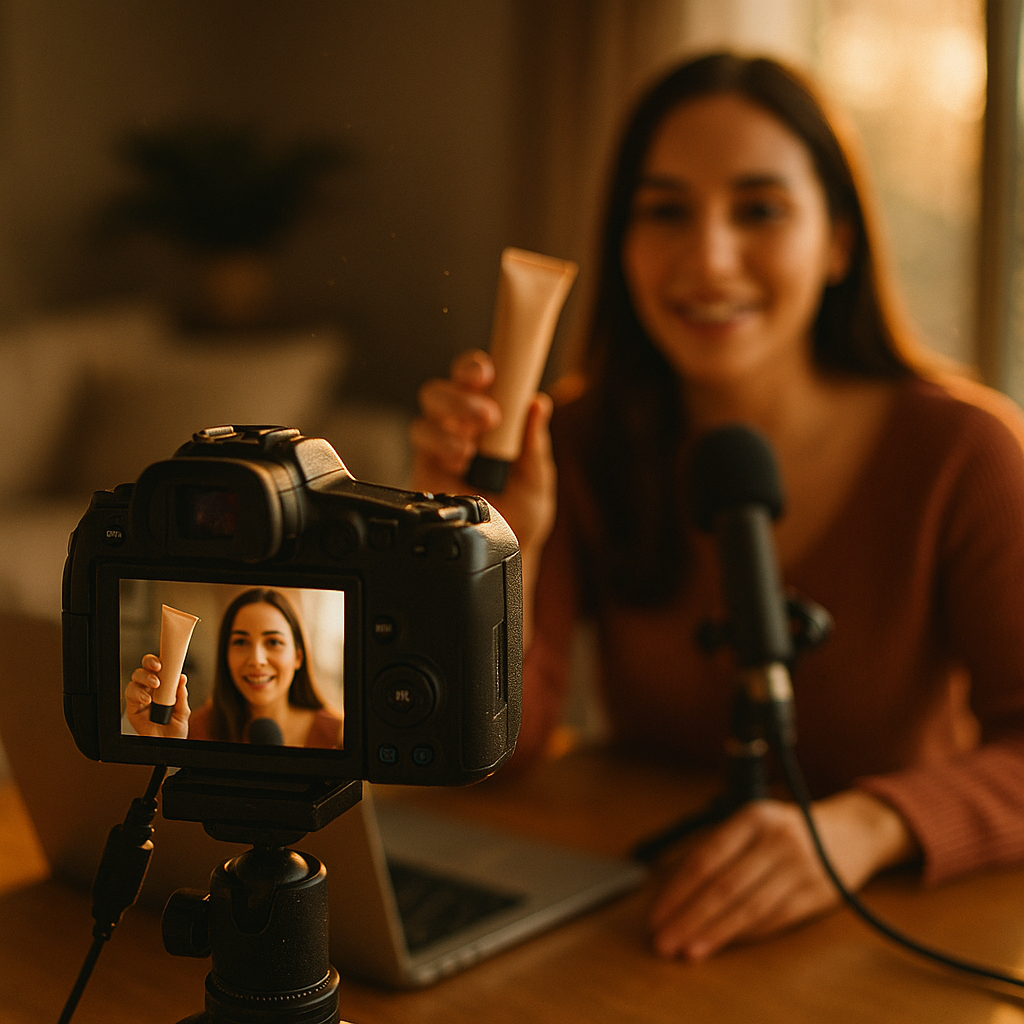
In 2025, audiences scroll past banners, skip pre-roll, and tune out even clever campaigns. Brands respond with a new playbook: post-advertising embedded in creator content, where messaging lives inside the story instead of interrupting it. This shift changes how trust is earned, how performance is measured, and how partnerships are managed. Done well, it feels natural—so what separates effective embeds from expensive noise?
Why creator-first storytelling beats traditional ads
Traditional advertising relies on interruption. Creator ecosystems rely on attention that is earned and maintained—often across long sessions, communities, and recurring formats. When a creator integrates a product into a narrative (a workflow, a routine, a challenge, a behind-the-scenes process), the audience experiences it as part of the value exchange rather than a break from it.
The most important driver is trust transfer. Creators build credibility through consistency and demonstrated expertise. Viewers don’t just follow content; they follow judgment. That changes persuasion mechanics: the message lands because it is contextual, demonstrated, and often validated by real usage rather than claims.
This is not “influencer marketing” as a one-off endorsement. The shift is toward embedded brand presence: a product becomes a tool the creator genuinely uses, a supporting character, or a recurring reference point. For brands, the upside is attention quality. For audiences, the upside is relevance—if the integration respects their time and intelligence.
To make this work, align with creators who already speak to the right problem and audience. If the product solves a pain point the creator has discussed repeatedly, the embed looks inevitable rather than forced. If it arrives out of nowhere, viewers notice—and skepticism spikes.
Native brand integration that respects audience trust
Native brand integration succeeds when it is truthful, useful, and clearly disclosed. In 2025, disclosure is not optional; it is a trust strategy. Clear language—“sponsored,” “paid partnership,” “affiliate”—protects the audience and protects the creator’s long-term credibility.
High-performing integrations typically share these traits:
- Problem-first framing: the creator starts with the audience’s challenge, then shows how the product fits.
- Demonstration over declaration: viewers see the product in use, not just described.
- Real constraints: the creator mentions who it is not for, or what to consider before buying.
- Seamless format fit: the integration matches the channel’s pacing and tone.
Brands often ask, “How much control should we keep?” Enough to ensure accuracy, safety, and compliance—but not so much that the creator becomes a script reader. Over-control is easy to spot and tends to underperform because it breaks the creator’s established voice.
Practical approach: agree on non-negotiables (claims, disclosures, prohibited topics, legal requirements) and leave the rest to the creator. Add a shared checklist for product facts and brand-safe language, then review for correctness—not for “sound like an ad.”
Community-led marketing and the economics of attention
Community-led marketing treats creators as operators of ongoing ecosystems rather than media placements. The most valuable creator channels are not just distribution; they are community infrastructure: comments, DMs, live streams, Discords, newsletters, meetups, and recurring content formats that shape behavior over time.
That changes budget logic. Brands used to buy reach; now they buy relationship proximity. A smaller creator with a tightly aligned community can outperform a larger creator with broad, low-intent reach—especially in categories where trust and education matter (software, financial products, health-adjacent wellness, parenting, home improvement).
Expect to answer these follow-up questions internally before you spend:
- What is the community’s “job to be done”? Entertainment, learning, belonging, status, problem-solving?
- Where does buying behavior happen? Link in bio, pinned comment, newsletter, live shopping, or off-platform search?
- What does the creator’s audience already believe? Your embed must connect to existing beliefs or responsibly reshape them.
Economically, embedded content often produces longer-tail outcomes: delayed purchases, branded search lift, word-of-mouth, and repeat exposure through evergreen videos. This is why single-post ROI can understate performance. Build measurement to match how communities actually decide.
Authenticity and disclosure in creator partnerships
Authenticity and disclosure are now operational requirements. In 2025, regulators and platforms continue to emphasize clear identification of paid relationships, and audiences are quicker to call out ambiguity. The goal is not to hide the sponsorship; it is to make the sponsorship feel compatible with the creator’s standards.
Brands can support authenticity by changing how they brief:
- Brief the truth: provide accurate product details, limitations, pricing, and typical user outcomes. Avoid inflated claims.
- Encourage creator testing: build time for real usage before posting. Firsthand experience shows.
- Approve angles, not scripts: agree on what story to tell and what must be accurate; let creators write in their voice.
- Respect audience boundaries: some communities reject hard selling. Optimize for helpfulness, not pressure.
Creators should also protect their own EEAT signals—experience, expertise, authoritativeness, and trustworthiness—by documenting what they used, how they used it, and what results they saw. When a creator says, “Here’s my workflow, here’s where it helped, here’s where it didn’t,” the content reads as credible guidance rather than persuasion.
One more operational detail: define content permanence. Will the post stay live? Can the brand whitelist it for ads? Is the creator allowed to work with competitors, and on what timeline? Handling these questions early prevents conflict and preserves trust.
Influencer content strategy for measurable performance
An influencer content strategy that fits the post-advertising era treats creator work as a portfolio of assets and learning loops—not a single deliverable. Performance improves when content is designed for multiple stages of the customer journey: discovery, consideration, conversion, and retention.
Start with a simple architecture:
- Top-of-funnel embeds: entertaining or educational integrations that introduce the problem and show the category value.
- Mid-funnel proof: comparisons, “how I use it,” deep dives, and Q&A that address objections.
- Bottom-funnel assist: limited-time offers, bundles, onboarding help, and setup tutorials that reduce friction.
- Retention content: tips, templates, challenges, and community prompts that increase product adoption.
Measurement should be multi-layered. Use direct-response tracking where it fits (UTMs, unique codes, landing pages), but also track incremental signals that embedded content tends to influence:
- Branded search lift and share of search around the creator’s posting window
- Site engagement quality (time on page, return visits, product-page depth)
- Assisted conversions in analytics and CRM
- Creative learnings (which angles reduce objections, which demos increase intent)
Brands often ask, “How do we scale without losing authenticity?” Scale systems, not sameness. Build creator-specific briefs, diversify creator archetypes, and standardize only the back-end: contracting, compliance, asset management, and measurement. Then iterate based on what audiences actually respond to, not what stakeholders assume will work.
Brand safety, compliance, and long-term creator relationships
Brand safety and compliance in embedded creator content requires more than a list of forbidden words. It requires thoughtful partner selection and a shared understanding of boundaries. In 2025, reputational risk moves at platform speed, so prevention matters.
Best practices that reduce risk without suffocating creativity:
- Due diligence: review past content, community norms, and controversy history. Look for patterns, not isolated clips.
- Clear claims governance: document what can be stated, what must be qualified, and what cannot be claimed.
- Disclosure templates: provide compliant language that still sounds like the creator.
- Escalation plan: define who responds, how quickly, and what actions are available if issues arise.
Long-term relationships often outperform one-off deals because they compound familiarity. Repeated, honest exposure makes the product feel like a real part of the creator’s life and reduces the “why are they promoting this?” question. To earn that longevity, brands must be reliable partners: pay on time, communicate quickly, and treat creators as stakeholders, not inventory.
Finally, invest in post-campaign reviews with creators. Ask what the audience said, where friction happened, and what questions came up repeatedly. Those insights can improve product messaging, onboarding, and even product roadmaps—an advantage traditional ads rarely provide.
FAQs
What does “post-advertising” mean in creator marketing?
It means shifting from interruptive ads to messaging that is integrated into content viewers already want. The brand appears through demonstration, story, and utility, with clear disclosure, rather than as a separate ad unit.
How do we know if an embedded integration will feel authentic?
Check creator-audience fit and narrative fit. The product should solve a problem the creator already discusses, and the integration should match the channel’s usual format. Require real usage time and encourage the creator to share constraints, not just benefits.
Should brands script creator content?
Brands should control accuracy and compliance, not voice. Provide key facts, required disclosures, and prohibited claims. Let the creator write and perform in their established style to maintain trust and engagement.
How do we measure results beyond promo codes?
Combine direct tracking (UTMs, codes, dedicated landing pages) with incremental indicators such as branded search lift, assisted conversions, on-site engagement quality, and retention metrics for users acquired through creator channels.
Is embedded creator content safe for regulated categories?
It can be, if you build a compliance workflow: approved claims library, disclosure requirements, review steps, and documentation. Choose creators who follow guidelines and can communicate responsibly to their audience.
What’s the ideal contract structure for creator partnerships?
It depends on goals. Common structures include flat fee (for predictable delivery), performance bonuses (for aligned incentives), and usage rights fees (for whitelisting or repurposing). Define exclusivity, content permanence, and revision limits up front.
Post-advertising embedded creator content works in 2025 because it matches how people learn, decide, and buy: through trusted voices, demonstrations, and community context. Brands that prioritize truthful storytelling, transparent disclosure, and creator-fit measurement see stronger attention quality and longer-tail impact. The takeaway: treat creators as partners in communication, not ad slots, and build systems that protect trust while scaling performance.
Top Influencer Marketing Agencies
The leading agencies shaping influencer marketing in 2026
Agencies ranked by campaign performance, client diversity, platform expertise, proven ROI, industry recognition, and client satisfaction. Assessed through verified case studies, reviews, and industry consultations.
Moburst

-
2

The Shelf
Boutique Beauty & Lifestyle Influencer AgencyA data-driven boutique agency specializing exclusively in beauty, wellness, and lifestyle influencer campaigns on Instagram and TikTok. Best for brands already focused on the beauty/personal care space that need curated, aesthetic-driven content.Clients: Pepsi, The Honest Company, Hims, Elf Cosmetics, Pure LeafVisit The Shelf → -
3

Audiencly
Niche Gaming & Esports Influencer AgencyA specialized agency focused exclusively on gaming and esports creators on YouTube, Twitch, and TikTok. Ideal if your campaign is 100% gaming-focused — from game launches to hardware and esports events.Clients: Epic Games, NordVPN, Ubisoft, Wargaming, Tencent GamesVisit Audiencly → -
4

Viral Nation
Global Influencer Marketing & Talent AgencyA dual talent management and marketing agency with proprietary brand safety tools and a global creator network spanning nano-influencers to celebrities across all major platforms.Clients: Meta, Activision Blizzard, Energizer, Aston Martin, WalmartVisit Viral Nation → -
5

The Influencer Marketing Factory
TikTok, Instagram & YouTube CampaignsA full-service agency with strong TikTok expertise, offering end-to-end campaign management from influencer discovery through performance reporting with a focus on platform-native content.Clients: Google, Snapchat, Universal Music, Bumble, YelpVisit TIMF → -
6

NeoReach
Enterprise Analytics & Influencer CampaignsAn enterprise-focused agency combining managed campaigns with a powerful self-service data platform for influencer search, audience analytics, and attribution modeling.Clients: Amazon, Airbnb, Netflix, Honda, The New York TimesVisit NeoReach → -
7

Ubiquitous
Creator-First Marketing PlatformA tech-driven platform combining self-service tools with managed campaign options, emphasizing speed and scalability for brands managing multiple influencer relationships.Clients: Lyft, Disney, Target, American Eagle, NetflixVisit Ubiquitous → -
8

Obviously
Scalable Enterprise Influencer CampaignsA tech-enabled agency built for high-volume campaigns, coordinating hundreds of creators simultaneously with end-to-end logistics, content rights management, and product seeding.Clients: Google, Ulta Beauty, Converse, AmazonVisit Obviously →