


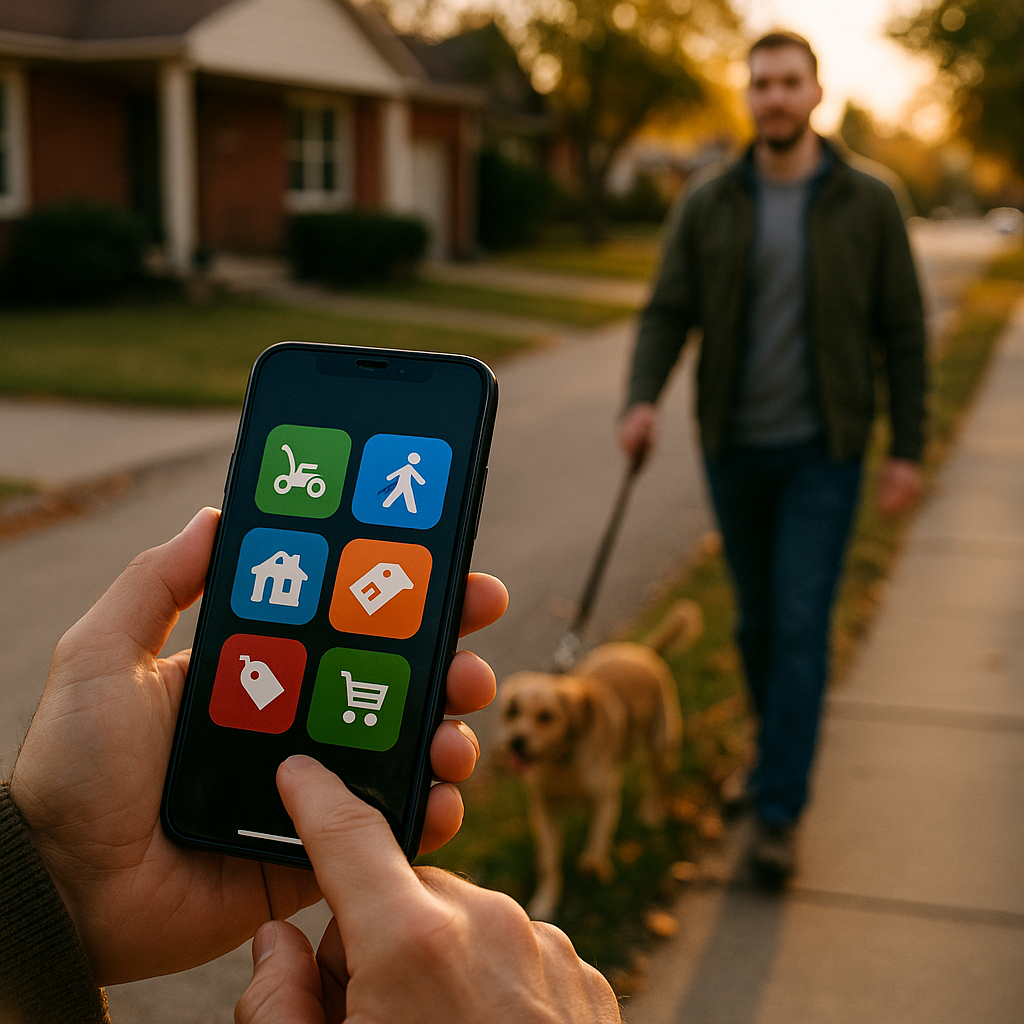
In 2025, local demand is increasingly captured inside neighborhood platforms where trust is built one recommendation at a time. Leveraging local neighborhood apps helps niche service providers reach nearby buyers with high intent, shorten sales cycles, and earn repeat work through visible proof. This article shows how to choose the right apps, optimize your presence, and measure results—so you can win locally without wasting spend. Ready to turn neighbors into customers?
Neighborhood app marketing: Why hyperlocal platforms work for niche services
Neighborhood apps sit at the intersection of community trust and immediate need. When someone’s fence latch breaks, they need a fix today—not a general search result with uncertain availability. These platforms make it easy for residents to ask, “Who can handle this?” and for providers to answer with proof.
What makes neighborhood app marketing different from broad social media? Intent and proximity. Users typically post requests tied to their address and timeframe. That means your niche service—pet waste removal, stroller repair, violin lessons, eco-friendly grout cleaning, elderly tech setup, mobile bike tuning—can show up precisely when it matters.
Why it converts:
- Trust signals are native: neighbors see mutual connections, local history, and public recommendations.
- Context reduces friction: service areas are implied; scheduling is easier; travel estimates are realistic.
- Reputation compounds: one good job can generate recurring referrals within the same few blocks.
- Feedback loops are fast: you can adjust offers and messaging quickly based on what neighbors ask for.
EEAT note: On neighborhood apps, “experience” is visible. People evaluate you based on specific stories and outcomes. That’s an advantage for specialists who can describe processes and results clearly.
Hyperlocal service delivery: Picking the right apps and defining your service territory
Before posting, clarify what you deliver, where you deliver it, and how quickly. Hyperlocal platforms reward providers who are clear about boundaries and response times.
Choose 2–3 apps to focus on instead of spreading thin. Selection depends on your niche and how residents in your target neighborhoods communicate. Look for:
- High activity in your service area: daily posts and frequent recommendation threads.
- Built-in business profiles: categories, reviews, and contact buttons that reduce steps.
- Moderation quality: fewer spam posts usually means better buyer intent and more trust.
- Local group density: multiple neighborhoods or subgroups near you increases reachable demand.
Define your delivery map: Start with a tight radius you can serve reliably. In 2025, reliability is a differentiator; neighborhoods punish no-shows and vague ETAs. Create three tiers:
- Core zone: where you can respond fastest and accept most jobs.
- Extended zone: where you add a travel fee or set minimum job size.
- Exceptions: specific high-value services you’ll travel farther for.
Answer the follow-up question upfront: “Do you serve my street?” Add a simple service-area statement to every profile and recurring post. Example: “Serving Oakview, Riverside, and Midtown; same-day slots usually available Mon–Thu.”
Local trust signals: Building an EEAT-first profile that earns recommendations
Neighborhood apps are reputation engines. Your profile should function like a mini “proof page” that makes it easy for someone to say yes.
Build EEAT directly into your profile and posts:
- Experience: Describe what you do in concrete terms. Instead of “handyman,” say “door alignment, hinge repair, and latch troubleshooting for older homes.”
- Expertise: List specialties, tools, methods, and constraints. If you only handle certain brands or materials, state that clearly.
- Authoritativeness: Add verifiable credentials where relevant (licenses, insurance, background checks, certifications). If not applicable, emphasize process standards and safety practices.
- Trustworthiness: Publish business name consistency, clear pricing logic, and a direct way to reach you. Include policies for cancellations, deposits, and warranties.
Use proof that fits the platform: Residents respond to specifics. Include a short set of “before/after” descriptions in text (and images if allowed). Keep claims measurable and realistic: “Replaced 12 feet of damaged baseboard, color-matched paint, and sealed gaps to reduce drafts.”
Make recommendations easy: After a completed job, ask for a recommendation in one sentence and provide a prompt: “If you were happy with the result, could you recommend me for ‘mobile bike tune-up’ and mention turnaround time?” This improves relevance inside search and recommendation threads.
Important compliance reminder: Never incentivize reviews in ways that violate platform rules. Instead, focus on request timing and specificity.
Niche service leads: Posting, responding, and converting without sounding salesy
The fastest way to generate niche service leads is to respond to requests with clarity and calm confidence. Most posts are need-driven; your job is to remove uncertainty.
Use a three-part response template:
- Confirm fit: “Yes, I handle X for Y type of situation.”
- Ask one smart question: “Is it solid wood or hollow-core?” “How old is the device?” “Any pets in the home?”
- Offer a next step: “I can share a fixed quote after two photos,” or “I have a 4–6 pm slot today.”
Pre-qualify to protect your schedule: Neighborhood apps can generate many small requests. Reduce time-wasters by stating minimums and boundaries politely: “Minimum service call is $95 within Oakview; includes 30 minutes on-site and small hardware.”
Create recurring “availability posts” sparingly: If the platform allows, post once per week in relevant groups: what you do, where you do it, and your next openings. Keep it short, specific, and neighborly. Avoid exaggerated claims; locals dislike hype.
Convert in private channels when appropriate: Public threads build credibility; details like addresses, pricing breakdowns, and payment links belong in direct messages. Move the conversation once basic fit is established.
Handle follow-up questions proactively: Include these answers in your replies to reduce back-and-forth:
- Pricing structure: flat-rate vs hourly, what’s included, and common add-ons.
- Timing: earliest appointment, typical duration, and how you confirm arrival.
- Safety: ID, insurance, and how you protect floors, pets, and privacy.
- Guarantee: what you stand behind and what’s excluded.
Community engagement strategy: Partnerships, offers, and ethical promotion
Neighborhood apps reward participation. You don’t need to post daily; you need to be consistently useful. The goal is to become the person neighbors tag when a relevant request appears.
Build a community engagement strategy that fits your niche:
- Answer informational questions: Explain options and risks without pushing a sale. Example: how to choose the right gasket, or what causes recurring clogging.
- Create micro-guides: Short seasonal tips: winterizing outdoor faucets, protecting instruments from humidity, safe pet odor control. End with a soft CTA: “If you’d like me to handle it, message me.”
- Partner with adjacent services: A stroller repair specialist can partner with a local kids’ consignment shop; a senior tech helper can partner with an in-home care agency. Cross-recommendations work well because they feel neighborly, not transactional.
- Support local causes carefully: Offer a limited number of discounted jobs for elderly residents or community projects, and document outcomes honestly. This builds goodwill when done without self-congratulation.
Run offers that protect margin: Instead of blanket discounts, use capacity-based offers: “Two weekday slots open; $20 off for Oakview residents if booked by Thursday.” This controls demand and keeps you from training customers to wait for sales.
Stay ethical and platform-safe: Respect group rules, disclose relationships in partnerships, and avoid posting customer addresses or sensitive images. Trust is your strongest conversion lever.
Local customer acquisition: Tracking ROI, operations, and scaling across neighborhoods
To grow past “random jobs,” treat neighborhood apps as measurable channels. You can do this without complex tools.
Track the basics weekly:
- Leads: number of inquiries from each app and neighborhood group.
- Conversion rate: inquiries to booked jobs.
- Average job value: and margin after travel/time.
- Time-to-first-response: faster replies often win, especially for urgent requests.
- Repeat/referral rate: how many customers book again or refer within 30–60 days.
Operationalize your workflow: Use saved reply templates, a simple intake checklist, and a scheduling link (if allowed). Confirm jobs with written scope and terms. This reduces misunderstandings that can turn into public complaints.
Scale in a controlled way: Expand from your core zone only after your response time and quality stay consistent. When you add a new neighborhood, seed credibility there by:
- Getting 3–5 jobs quickly: even smaller ones, to generate localized recommendations.
- Posting a neighborhood-specific intro: mention why you’re nearby and what you specialize in.
- Maintaining service standards: consistent arrival windows, cleanup, and follow-up message.
Prepare for common scale questions: If you hire subcontractors, disclose it, ensure they meet your standards, and keep the customer experience consistent. If you remain solo, set expectations on lead time and limit same-day promises to what you can actually fulfill.
FAQs
Which local neighborhood apps are best for niche services?
The best app is the one with active neighborhood groups in your service area and a culture of recommendations. Start by searching your niche keywords inside each platform and reviewing how often residents ask for that service, how providers respond, and how recommendations are displayed.
How do I get my first recommendations quickly without violating rules?
Focus on fast response, clear scope, and an excellent finish. After the job, ask for a recommendation with a specific prompt (what to mention) and a direct link to your profile if the platform allows. Avoid discounts or gifts tied to reviews if the rules prohibit it.
Should I publish prices publicly on neighborhood apps?
Publish a transparent pricing structure (minimum call-out, typical ranges, what’s included) and move exact quotes to private messages after you confirm scope. This reduces haggling and prevents misunderstandings while still building trust.
How fast should I respond to posts requesting help?
Respond as quickly as you can while staying accurate. For urgent categories, aim to reply within an hour during business hours. Use templates to confirm fit, ask one key question, and propose a clear next step.
What if a customer posts a negative comment publicly?
Reply calmly and briefly, acknowledge the concern, and offer to resolve it via direct message. State facts without sharing private details. If you made an error, own it and explain your fix. If the claim is inaccurate, provide neutral clarification and invite a private review of evidence.
How do I prevent neighborhood apps from overwhelming my schedule?
Set boundaries: define your service area, minimum charge, and available days. Use pre-qualification questions and offer specific appointment windows. Post availability updates only when you have capacity, and pause promotions when your calendar is full.
Local neighborhood apps can become your most dependable pipeline when you treat them like community spaces, not ad boards. Choose the right platforms, build a proof-rich profile, respond with clarity, and earn recommendations through consistent outcomes. Track what converts, tighten your service area, and scale only when you can maintain reliability. The takeaway: be specific, be visible, and let neighbor trust do the selling.
Top Influencer Marketing Agencies
The leading agencies shaping influencer marketing in 2026
Agencies ranked by campaign performance, client diversity, platform expertise, proven ROI, industry recognition, and client satisfaction. Assessed through verified case studies, reviews, and industry consultations.
Moburst

-
2

The Shelf
Boutique Beauty & Lifestyle Influencer AgencyA data-driven boutique agency specializing exclusively in beauty, wellness, and lifestyle influencer campaigns on Instagram and TikTok. Best for brands already focused on the beauty/personal care space that need curated, aesthetic-driven content.Clients: Pepsi, The Honest Company, Hims, Elf Cosmetics, Pure LeafVisit The Shelf → -
3

Audiencly
Niche Gaming & Esports Influencer AgencyA specialized agency focused exclusively on gaming and esports creators on YouTube, Twitch, and TikTok. Ideal if your campaign is 100% gaming-focused — from game launches to hardware and esports events.Clients: Epic Games, NordVPN, Ubisoft, Wargaming, Tencent GamesVisit Audiencly → -
4

Viral Nation
Global Influencer Marketing & Talent AgencyA dual talent management and marketing agency with proprietary brand safety tools and a global creator network spanning nano-influencers to celebrities across all major platforms.Clients: Meta, Activision Blizzard, Energizer, Aston Martin, WalmartVisit Viral Nation → -
5

The Influencer Marketing Factory
TikTok, Instagram & YouTube CampaignsA full-service agency with strong TikTok expertise, offering end-to-end campaign management from influencer discovery through performance reporting with a focus on platform-native content.Clients: Google, Snapchat, Universal Music, Bumble, YelpVisit TIMF → -
6

NeoReach
Enterprise Analytics & Influencer CampaignsAn enterprise-focused agency combining managed campaigns with a powerful self-service data platform for influencer search, audience analytics, and attribution modeling.Clients: Amazon, Airbnb, Netflix, Honda, The New York TimesVisit NeoReach → -
7

Ubiquitous
Creator-First Marketing PlatformA tech-driven platform combining self-service tools with managed campaign options, emphasizing speed and scalability for brands managing multiple influencer relationships.Clients: Lyft, Disney, Target, American Eagle, NetflixVisit Ubiquitous → -
8

Obviously
Scalable Enterprise Influencer CampaignsA tech-enabled agency built for high-volume campaigns, coordinating hundreds of creators simultaneously with end-to-end logistics, content rights management, and product seeding.Clients: Google, Ulta Beauty, Converse, AmazonVisit Obviously →