


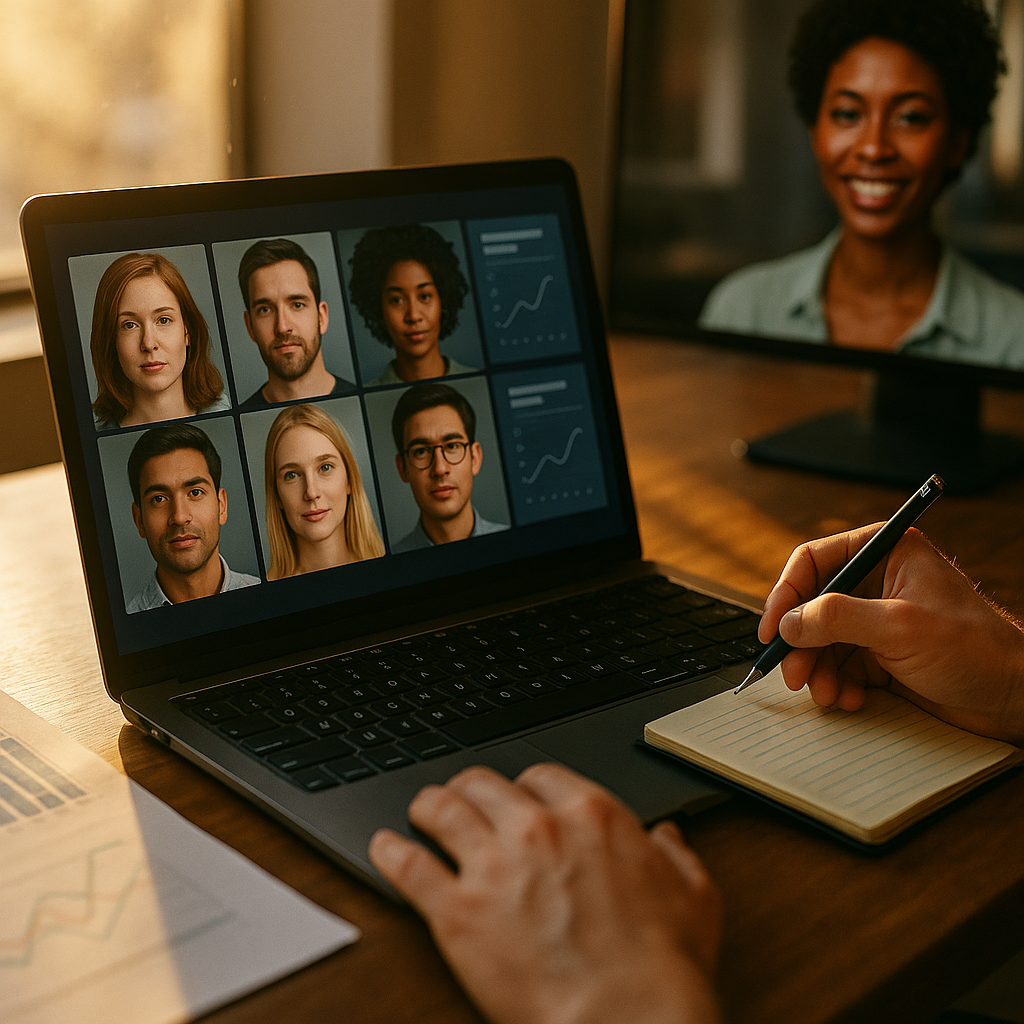
Using AI to generate synthetic personas for campaign testing helps marketers evaluate creative, messaging, and channel mix before spending real budget. In 2025, teams face tighter privacy rules and noisier signals, yet still need fast, evidence-based decisions. Synthetic personas fill research gaps with scalable, testable audience models that complement first-party data. Done right, they reduce risk and improve relevance—so what does “done right” look like?
AI synthetic personas: what they are and why they matter
AI synthetic personas are algorithmically generated audience profiles designed to simulate how specific customer segments might think, feel, and respond to marketing stimuli. Unlike traditional personas built from workshops and small-sample interviews, synthetic personas are produced from structured inputs (your first-party insights, market research, and campaign performance signals) and then expanded into consistent, testable models.
They matter because modern campaign planning often runs into three constraints:
- Privacy limits and reduced tracking: you may not have the granular behavioral data you used to rely on.
- Speed requirements: stakeholders want answers in days, not quarters.
- Fragmented audiences: micro-segments behave differently across channels and contexts.
Synthetic personas don’t replace real customers. They extend what you know by enabling rapid scenario testing: “If we lead with price vs. value, which segment shifts?” “Which objections appear on mobile vs. desktop?” “How does message framing change response for high-intent vs. curious researchers?”
To keep them credible, treat synthetic personas as models with assumptions. You should be able to explain where each attribute came from, how it was validated, and where uncertainty remains.
Synthetic audience modeling for campaign design
Synthetic audience modeling turns personas into a practical planning tool by linking identity traits to marketing behaviors. The goal isn’t to invent characters; it’s to produce decision-ready audience hypotheses you can test with experiments.
A strong synthetic model typically includes:
- Segment definition: who they are (needs-based, not demographic-only) and how you will recognize them in your own systems.
- Jobs-to-be-done: what progress they want, what triggers evaluation, and what “success” looks like.
- Motivators and inhibitors: benefits they seek, risks they avoid, and common objections.
- Message receptivity: what proof points reduce doubt (reviews, certifications, ROI, trials, comparisons).
- Channel context: how discovery differs on search, social, email, marketplaces, events, or partners.
- Decision dynamics: who influences, who approves, typical timeline, and switching costs.
Answer the follow-up question your stakeholders will ask: “How do we use this next week?” Convert persona traits into testable predictions. For example:
- Prediction: “Risk-averse evaluators respond better to compliance and guarantees than to discounts.”
- Test: A/B landing page hero + proof modules, measured by qualified conversion and downstream retention.
When synthetic modeling is tied to experiments, it becomes a learning system rather than a one-time document.
Campaign testing with generative AI: practical workflows
Campaign testing with generative AI works best when you treat the model as a simulation partner and the marketer as the judge. The workflow below keeps speed high while protecting quality.
1) Define the decision you’re testing
Be explicit about what’s at stake. Examples: “Select two positioning angles for Q2,” “Choose between three offer structures,” or “Prioritize channels for a new segment.” This prevents persona outputs from drifting into irrelevant detail.
2) Ground the personas in real inputs
Start with evidence you can defend:
- First-party analytics (site behavior, CRM stages, win/loss, churn reasons)
- Support and sales call themes (tagged transcripts or summaries)
- Survey responses and NPS verbatims (with sampling notes)
- Market research reports you’re licensed to use
- Creative performance data by segment or intent level
Then instruct the AI to cite which input supports each persona attribute. If an attribute is inferred, label it as a hypothesis.
3) Generate a persona set with coverage rules
Ask for 4–8 personas that cover meaningful variation: high/low intent, price/value sensitivity, novice/expert, high/low switching cost, and different decision roles (user, influencer, approver). Avoid generating dozens of near-duplicates.
4) Create a standardized testing pack
For each persona, generate:
- Primary need + secondary need
- Top 5 objections and the evidence required to overcome each
- Preferred message frames and disliked frames
- Channel-by-channel expectations (what they do on search vs. social vs. email)
- What would make them distrust the brand
5) Simulate reactions to campaign variants
Provide the AI with the actual assets: ad copy, landing page, email, offer, and CTA. Ask for structured outputs: likely questions, emotional response, comprehension gaps, perceived credibility, and predicted next action. Require the AI to separate:
- Observed from input (grounded)
- Assumed (hypothesis)
- Unknown (needs validation)
6) Move from simulation to real experiment
Use simulation results to narrow options, then validate with controlled tests: A/B, multivariate, holdout, or geo tests depending on scale. Your persona output should feed an experiment plan that states success metrics (not just CTR), guardrails (brand safety, compliance), and minimal sample thresholds.
Persona validation and measurement: turning simulations into evidence
Persona validation and measurement is where most teams either build trust or lose it. Synthetic personas are useful only if you can connect them to real-world outcomes and update them as evidence changes.
Use a three-layer validation approach:
- Face validity: Do sales, support, and product teams recognize these patterns? Run a short review and capture disagreements as hypotheses to test.
- Data validity: Can you map each persona to measurable proxies (intent signals, product usage patterns, firmographic markers, content paths)? If not, the persona isn’t actionable.
- Predictive validity: When you run tests, do persona-based predictions match results better than generic assumptions?
Choose metrics that reflect business impact and customer experience:
- Qualified conversion (not just clicks): demo requests that meet criteria, trial-to-paid, or lead scoring thresholds.
- Down-funnel performance: opportunity creation, close rate, average order value, renewal probability.
- Message comprehension: scroll depth to proof points, time to value comprehension, support deflection.
- Brand risk signals: unsubscribe, complaint rates, negative feedback, policy flags.
Answer the follow-up question: “How often should we refresh personas?” Refresh when you see meaningful shifts in:
- Acquisition channels (new traffic sources change intent mix)
- Product packaging and pricing
- Competitive landscape and category narratives
- Regulatory or platform policy changes affecting targeting
Operationally, treat personas like a versioned artifact. Document inputs, assumptions, and the experiments that confirmed or contradicted predictions.
Privacy, bias, and governance for synthetic persona testing
Privacy and governance determine whether synthetic personas reduce risk or create it. Because persona generation can inadvertently echo sensitive attributes or leak private information, you need clear controls.
Protect privacy by design
- Use aggregated inputs: prefer summaries and distributions over raw records when possible.
- Minimize sensitive data: avoid generating personas based on protected characteristics unless you have a lawful, explicit reason and appropriate safeguards.
- Never paste regulated data into unsecured tools: route prompts through approved, audited AI environments and follow your vendor risk process.
- Apply retention rules: store prompts/outputs only as long as needed for auditability and learning.
Manage bias and stereotyping
Generative models can produce “familiar” but inaccurate stories. Counter this with:
- Counterfactual personas: ask the AI to generate alternative explanations for the same behavior to avoid single-story narratives.
- Constraint prompts: require that persona attributes be linked to evidence, not stereotypes.
- Bias checks: review for assumptions tied to age, gender, ethnicity, disability, or income proxies that aren’t necessary for campaign decisions.
Set governance roles
- Owner: marketing or insights lead responsible for versioning and validation.
- Reviewer: legal/privacy partner for sensitive use cases.
- Approver: channel owner who ensures tests align with platform policies.
Answer the follow-up question: “Can we use synthetic personas for regulated industries?” Yes, but only with stricter controls, documentation, and clear boundaries between simulation and real targeting decisions.
Best practices for scalable persona generation in 2025
Scalable persona generation requires repeatable systems, not one-off prompting. In 2025, the best teams run synthetic persona work like a lightweight research program with strong documentation and fast feedback loops.
Use a consistent persona template
Standardize fields so teams can compare segments and run cross-persona analysis. Include “confidence” levels for each attribute to prevent over-trust.
Build a “persona-to-test” mapping
Every persona should map to:
- At least one measurable cohort in your data
- At least two message hypotheses
- At least one channel hypothesis
- A clear risk: what happens if you get this persona wrong
Keep humans in the loop where it matters
Use AI for breadth and speed, and human expertise for:
- Interpreting nuance from sales/support conversations
- Spotting unrealistic claims or weak causal logic
- Designing experiments that can actually detect differences
Combine synthetic and real research
When a campaign is high stakes, pair simulation with quick reality checks:
- 5–10 short customer interviews to validate objections and language
- On-site polls to confirm intent and concerns
- Ad concept tests with statistically meaningful samples
Document EEAT signals in your process
To align with helpful content standards, capture:
- Experience: who reviewed outputs (sales leaders, researchers, product managers) and what changed.
- Expertise: which inputs and methods were used, including limitations.
- Authoritativeness: how personas connect to your proprietary first-party data and validated tests.
- Trust: privacy controls, bias checks, and transparent versioning.
FAQs: AI-generated synthetic personas for campaign testing
Are synthetic personas “fake customers”?
No. They’re models that summarize and extend real insights. They can suggest likely reactions, but they don’t replace customer feedback or experimental results.
What data do we need to start?
You can start with aggregated first-party analytics, CRM stage data, and sales/support themes. The key is to document sources and label inferences as hypotheses.
How many personas should we generate?
Typically 4–8. Fewer than that can miss important variation; more than that often creates overlap and slows decisions without adding predictive power.
How do we prevent hallucinations or overconfident outputs?
Require structured outputs with “grounded vs. inferred vs. unknown” labels, and tie every claim to an input. Then validate through controlled campaign experiments.
Can synthetic personas help with creative testing?
Yes. They can identify comprehension gaps, credibility issues, and objection handling opportunities before you run paid tests—helping you refine creatives and landing pages faster.
Is it safe to use customer data in persona prompts?
It depends on your tooling and policies. Use approved environments, minimize sensitive data, prefer aggregated summaries, and follow retention and access controls to reduce privacy risk.
Synthetic personas are most valuable when they produce testable predictions, not just detailed descriptions. Use AI to generate models grounded in first-party evidence, then pressure-test them with structured simulations and real experiments. Build governance for privacy and bias, and version your personas as markets shift. The takeaway: treat synthetic personas as a measurement-driven system that speeds learning while protecting trust.
Top Influencer Marketing Agencies
The leading agencies shaping influencer marketing in 2026
Agencies ranked by campaign performance, client diversity, platform expertise, proven ROI, industry recognition, and client satisfaction. Assessed through verified case studies, reviews, and industry consultations.
Moburst

-
2

The Shelf
Boutique Beauty & Lifestyle Influencer AgencyA data-driven boutique agency specializing exclusively in beauty, wellness, and lifestyle influencer campaigns on Instagram and TikTok. Best for brands already focused on the beauty/personal care space that need curated, aesthetic-driven content.Clients: Pepsi, The Honest Company, Hims, Elf Cosmetics, Pure LeafVisit The Shelf → -
3

Audiencly
Niche Gaming & Esports Influencer AgencyA specialized agency focused exclusively on gaming and esports creators on YouTube, Twitch, and TikTok. Ideal if your campaign is 100% gaming-focused — from game launches to hardware and esports events.Clients: Epic Games, NordVPN, Ubisoft, Wargaming, Tencent GamesVisit Audiencly → -
4

Viral Nation
Global Influencer Marketing & Talent AgencyA dual talent management and marketing agency with proprietary brand safety tools and a global creator network spanning nano-influencers to celebrities across all major platforms.Clients: Meta, Activision Blizzard, Energizer, Aston Martin, WalmartVisit Viral Nation → -
5

The Influencer Marketing Factory
TikTok, Instagram & YouTube CampaignsA full-service agency with strong TikTok expertise, offering end-to-end campaign management from influencer discovery through performance reporting with a focus on platform-native content.Clients: Google, Snapchat, Universal Music, Bumble, YelpVisit TIMF → -
6

NeoReach
Enterprise Analytics & Influencer CampaignsAn enterprise-focused agency combining managed campaigns with a powerful self-service data platform for influencer search, audience analytics, and attribution modeling.Clients: Amazon, Airbnb, Netflix, Honda, The New York TimesVisit NeoReach → -
7

Ubiquitous
Creator-First Marketing PlatformA tech-driven platform combining self-service tools with managed campaign options, emphasizing speed and scalability for brands managing multiple influencer relationships.Clients: Lyft, Disney, Target, American Eagle, NetflixVisit Ubiquitous → -
8

Obviously
Scalable Enterprise Influencer CampaignsA tech-enabled agency built for high-volume campaigns, coordinating hundreds of creators simultaneously with end-to-end logistics, content rights management, and product seeding.Clients: Google, Ulta Beauty, Converse, AmazonVisit Obviously →