


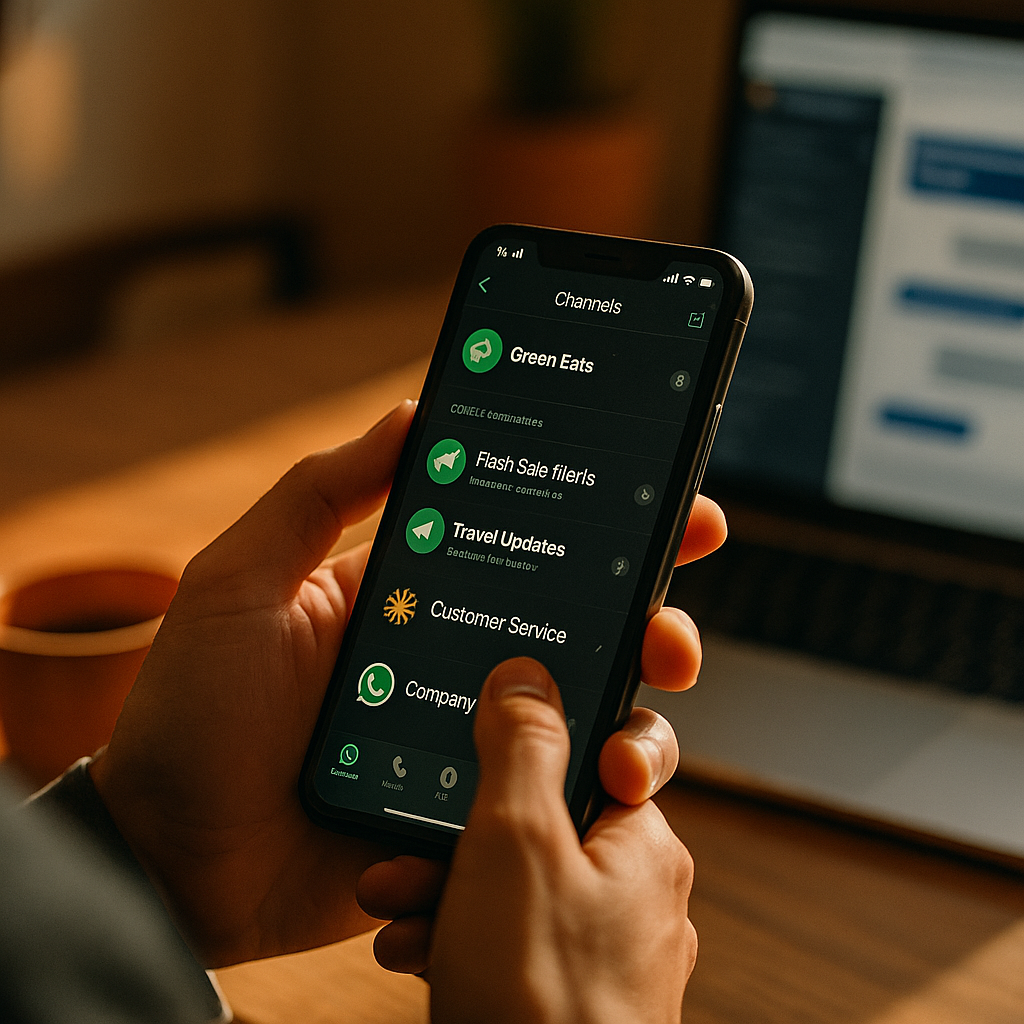
In 2025, customers expect fast answers, personal attention, and consistent value in the apps they already use. Mastering WhatsApp Channels helps brands deliver timely updates, human support pathways, and loyalty-driven content without spamming inboxes. This guide shows how to set strategy, optimize broadcasts, and turn subscribers into long-term advocates—starting with a simple question: are you earning attention or renting it?
WhatsApp Channels strategy for retention: set the role, promise, and cadence
WhatsApp Channels work best when you treat them as a retention product, not a promotional megaphone. The first step is clarifying what your channel is for and what it is not for. Customers subscribe because they expect a consistent benefit—exclusive access, priority updates, useful tips, or community-worthy announcements.
Define a clear retention promise. Write a one-sentence promise you can deliver weekly. Examples: “Early access to product drops and restock alerts,” “Pro tips and templates to get better results,” or “Priority service updates and resolution timelines.” A strong promise also reduces churn because subscribers know what to expect.
Choose a sustainable cadence. High-touch does not mean high-frequency. It means high relevance. For most brands, 2–4 posts per week is enough to stay present without becoming noise. If your business is operationally dynamic (deliveries, events, travel, service outages), you can post more often—provided each post reduces uncertainty.
Decide the channel’s boundaries. Channels are one-to-many. They do not replace support. Instead, they should guide customers to the right support path when needed. Establish rules such as:
- Channel posts share updates, education, and curated offers—not back-and-forth troubleshooting.
- Complex requests route to Click to WhatsApp chat, a help center, or a ticket form.
- Urgent issues get a pinned “How to get help fast” post.
Build your content pillars. Use three pillars to keep variety while reinforcing value: (1) product value and how-to, (2) trust and transparency (service updates, roadmap notes), (3) loyalty triggers (early access, subscriber-only perks). This structure keeps your channel aligned with retention outcomes rather than short-term clicks.
Customer retention marketing on WhatsApp: create content that feels personal at scale
High-touch retention depends on perceived care. With Channels, you can deliver that feeling by designing posts that anticipate questions, reduce effort, and reward loyalty. Your goal is to make each message “save-worthy,” not merely “seen.”
Write like a human, not a banner ad. Use direct language, short paragraphs, and one clear call to action. Avoid stacking multiple promotions. When you must promote, frame it around customer outcomes: saved time, reduced risk, or improved results.
Use the “answer-first” format. Many subscribers scan quickly. Lead with the most useful line, then add detail. For example:
- What changed: “We extended returns to 30 days for subscribers.”
- Why it helps: “You can test at home without pressure.”
- What to do: “Reply in chat if you need a label, or tap the link.”
Make retention content operationally useful. Retention improves when customers feel in control. Operational content builds trust: delivery windows, maintenance notices, known issues, and clear timelines. If you sell subscriptions, include “how to pause,” “how to change plan,” and “how to get the most value” posts. Reducing friction is retention.
Balance education and exclusivity. Education proves expertise; exclusivity rewards commitment. Rotate between:
- Mini playbooks: 5-step checklists, setup guides, best practices.
- Behind-the-scenes: quality testing, sourcing standards, new feature previews.
- Subscriber-only access: early links, limited-time bundles, priority booking windows.
Design for “micro-moments.” Customers often check WhatsApp during short breaks. Create posts that deliver value in under 20 seconds: one tip, one update, one link. If the topic needs depth, post a summary and link to the full resource.
High-touch customer engagement: build trust with support handoffs and clear escalation
Channels can increase engagement without turning your team into a 24/7 hotline—if you set up clean handoffs. High-touch retention is not about replying to everything; it is about making it easy to get help when it matters.
Pin a “Support shortcuts” post. Include the fastest routes for common scenarios. Keep it updated and easy to skim. For example:
- Order status: link to tracking page
- Billing changes: link to account page
- Urgent help: Click-to-WhatsApp chat with hours and expected response time
- Returns: link to portal plus the one thing people forget (photos, packaging, etc.)
Use proactive posts to prevent tickets. If you see repeat issues in support logs, convert them into channel content. A weekly “Top 3 fixes” post reduces inbound volume and raises satisfaction because customers feel you’re paying attention.
Show decision-making, not excuses. When something goes wrong, retention depends on transparency and action. Share: what happened, what you’re doing, when customers can expect resolution, and what compensation or workaround exists (if any). Avoid vague language. Clear timelines reduce anxiety.
Create a VIP pathway without creating unfairness. If you offer priority support to certain tiers, explain it plainly and offer a path to qualify (e.g., membership tiers, annual plans). Customers accept prioritization when it is predictable and tied to a program, not favoritism.
Protect privacy and consent. Do not publish personal order details or ask customers to share sensitive info publicly. Instruct them to move to a private support chat or secure form. This is part of trust and part of compliance.
WhatsApp customer loyalty: integrate offers, rewards, and community signals
Loyalty grows when customers feel recognized and when staying offers compounding benefits. WhatsApp Channels support this by creating a “subscriber advantage” that feels tangible but not manipulative.
Offer benefits that reduce effort, not just price. Discounts work, but convenience keeps customers longer. Consider perks such as:
- Early access to restocks and limited releases
- Priority booking or installation slots
- Subscriber-only onboarding sessions or office hours
- Extended trials, warranty boosts, or flexible pauses
Use loyalty messaging with clear rules. Customers disengage when rewards feel confusing. State eligibility, deadlines, and redemption steps in one place. If you use codes, explain where they work and what happens if they fail. Better: use tracked links that auto-apply offers to reduce friction.
Show social proof responsibly. Channels can share community signals—case studies, customer milestones, user-generated content—without exposing private data. Ask permission and anonymize where needed. Keep the spotlight on outcomes: time saved, results achieved, problems solved.
Run retention “events.” Events create momentum and habit. Examples:
- Monthly “Ask the Expert” recap with top questions and answers
- Quarterly product roadmap note with what shipped and what’s next
- 7-day challenge that helps customers adopt a feature and see results
Prevent offer fatigue. If every post sells, subscribers tune out. Maintain a ratio where at least 60–70% of posts are utility or education, and the remainder are offers tied to customer value. This keeps engagement high and churn low.
WhatsApp Channels analytics: measure retention impact with practical KPIs
Channels can feel hard to measure if you rely on vanity metrics. You need a simple measurement system that ties channel activity to retention outcomes. In 2025, the best approach is combining platform indicators with your first-party data.
Start with three layers of KPIs.
- Channel health: follower growth, post reach, reactions, link clicks, saves (if available), and churn signals (drops after certain posts).
- Engagement to action: support deflection (fewer repeat tickets), time-to-resolution improvements, traffic to account pages, redemption rates, and repeat purchases driven by tracked links.
- Retention outcomes: repeat purchase rate, subscription renewal rate, downgrade rate, return rate, and customer lifetime value shifts for channel subscribers versus non-subscribers.
Track with clean attribution. Use unique links for channel posts and map them to outcomes in your analytics stack. If you have a CRM, tag channel-sourced contacts and compare cohorts. Your goal is not perfect attribution; it is directional clarity about what content reduces churn and what content triggers unsubscribes.
Use a simple experiment loop. Each month, run one controlled test:
- Test two cadences (e.g., 2 vs. 4 posts weekly) for churn impact.
- Test one “how-to” series vs. one “offer” series for repeat purchase lift.
- Test proactive service updates vs. reactive updates for ticket volume and CSAT.
Close the loop with qualitative feedback. Analytics tell you what happened; customers tell you why. Add a periodic post that asks a single question with lightweight responses, then summarize what you changed. This demonstrates responsiveness—an EEAT signal that builds trust.
WhatsApp Channels best practices: governance, compliance, and team workflows
Retention programs fail when execution becomes inconsistent or risky. Governance keeps your channel reliable, on-brand, and compliant—especially as more teams want access.
Assign clear ownership. A retention lead should own the editorial calendar, while support and product provide inputs. Define who can publish, who can approve time-sensitive posts, and who monitors responses in adjacent support channels.
Create a lightweight editorial system. A weekly workflow is usually enough:
- Collect insights from support, sales, and product (top issues, objections, updates).
- Draft posts using your three content pillars.
- Review for accuracy, privacy, and brand tone.
- Schedule and publish with consistent timing windows.
Standardize message templates. Templates reduce mistakes and speed publishing. Maintain templates for:
- Service incident updates (what/impact/ETA/workaround)
- Feature releases (who it’s for/how to use/where to learn more)
- Offers (eligibility/how to redeem/expiry/support path)
Follow consent and data-minimization principles. Even though Channels are broadcast, your broader WhatsApp ecosystem may include chats, forms, and integrations. Collect only what you need, store it securely, and route sensitive issues to private channels. If your industry is regulated, have legal review your escalation and disclosure wording.
Train for judgment, not just rules. Equip your team to decide what belongs in a channel post versus a private support interaction. When in doubt, prioritize customer privacy, clarity, and usefulness.
FAQs
What makes WhatsApp Channels different from WhatsApp Business chat for retention?
Channels are one-to-many broadcasts designed for updates and content, while WhatsApp Business chat is one-to-one (or small group) conversation for support and sales. Use Channels to deliver ongoing value and direct customers to chat when they need personalized help.
How often should a brand post on a WhatsApp Channel?
Most brands see strong retention impact with 2–4 posts per week, as long as each post is genuinely useful. Increase frequency only when you have operational updates or time-sensitive content that reduces customer uncertainty.
What content drives the best customer retention in WhatsApp Channels?
Content that reduces effort and increases confidence: onboarding tips, “how to get value” guides, proactive service updates, restock alerts, and subscriber-only access. Promotions work best when tied to customer outcomes and kept secondary to utility.
Can WhatsApp Channels replace email for retention?
Channels can reduce reliance on email for certain updates and loyalty messaging, but they should complement email, not fully replace it. Email still works well for long-form content, receipts, and lifecycle automation, while Channels excel at timely, high-attention updates.
How do you measure ROI from WhatsApp Channels?
Use tracked links and cohort tagging to compare retention outcomes for channel subscribers versus non-subscribers. Monitor repeat purchases, renewals, support deflection, and churn triggers after specific posts, then refine content based on results.
How do you keep WhatsApp Channels high-touch without overwhelming your team?
Set boundaries: use Channels for broadcasts, pin clear support shortcuts, and route complex issues to chat or tickets. Publish proactive posts that answer common questions, and use templates for incidents, releases, and offers to speed execution.
WhatsApp Channels can become a retention engine when you treat them as a product: a clear promise, consistent cadence, and content that reduces effort for customers. Pair helpful broadcasts with clean support handoffs, loyalty perks that feel earned, and analytics tied to renewals and repeat purchases. The takeaway: deliver utility first, promote second, and use every post to deepen trust.
Top Influencer Marketing Agencies
The leading agencies shaping influencer marketing in 2026
Agencies ranked by campaign performance, client diversity, platform expertise, proven ROI, industry recognition, and client satisfaction. Assessed through verified case studies, reviews, and industry consultations.
Moburst

-
2

The Shelf
Boutique Beauty & Lifestyle Influencer AgencyA data-driven boutique agency specializing exclusively in beauty, wellness, and lifestyle influencer campaigns on Instagram and TikTok. Best for brands already focused on the beauty/personal care space that need curated, aesthetic-driven content.Clients: Pepsi, The Honest Company, Hims, Elf Cosmetics, Pure LeafVisit The Shelf → -
3

Audiencly
Niche Gaming & Esports Influencer AgencyA specialized agency focused exclusively on gaming and esports creators on YouTube, Twitch, and TikTok. Ideal if your campaign is 100% gaming-focused — from game launches to hardware and esports events.Clients: Epic Games, NordVPN, Ubisoft, Wargaming, Tencent GamesVisit Audiencly → -
4

Viral Nation
Global Influencer Marketing & Talent AgencyA dual talent management and marketing agency with proprietary brand safety tools and a global creator network spanning nano-influencers to celebrities across all major platforms.Clients: Meta, Activision Blizzard, Energizer, Aston Martin, WalmartVisit Viral Nation → -
5

The Influencer Marketing Factory
TikTok, Instagram & YouTube CampaignsA full-service agency with strong TikTok expertise, offering end-to-end campaign management from influencer discovery through performance reporting with a focus on platform-native content.Clients: Google, Snapchat, Universal Music, Bumble, YelpVisit TIMF → -
6

NeoReach
Enterprise Analytics & Influencer CampaignsAn enterprise-focused agency combining managed campaigns with a powerful self-service data platform for influencer search, audience analytics, and attribution modeling.Clients: Amazon, Airbnb, Netflix, Honda, The New York TimesVisit NeoReach → -
7

Ubiquitous
Creator-First Marketing PlatformA tech-driven platform combining self-service tools with managed campaign options, emphasizing speed and scalability for brands managing multiple influencer relationships.Clients: Lyft, Disney, Target, American Eagle, NetflixVisit Ubiquitous → -
8

Obviously
Scalable Enterprise Influencer CampaignsA tech-enabled agency built for high-volume campaigns, coordinating hundreds of creators simultaneously with end-to-end logistics, content rights management, and product seeding.Clients: Google, Ulta Beauty, Converse, AmazonVisit Obviously →