


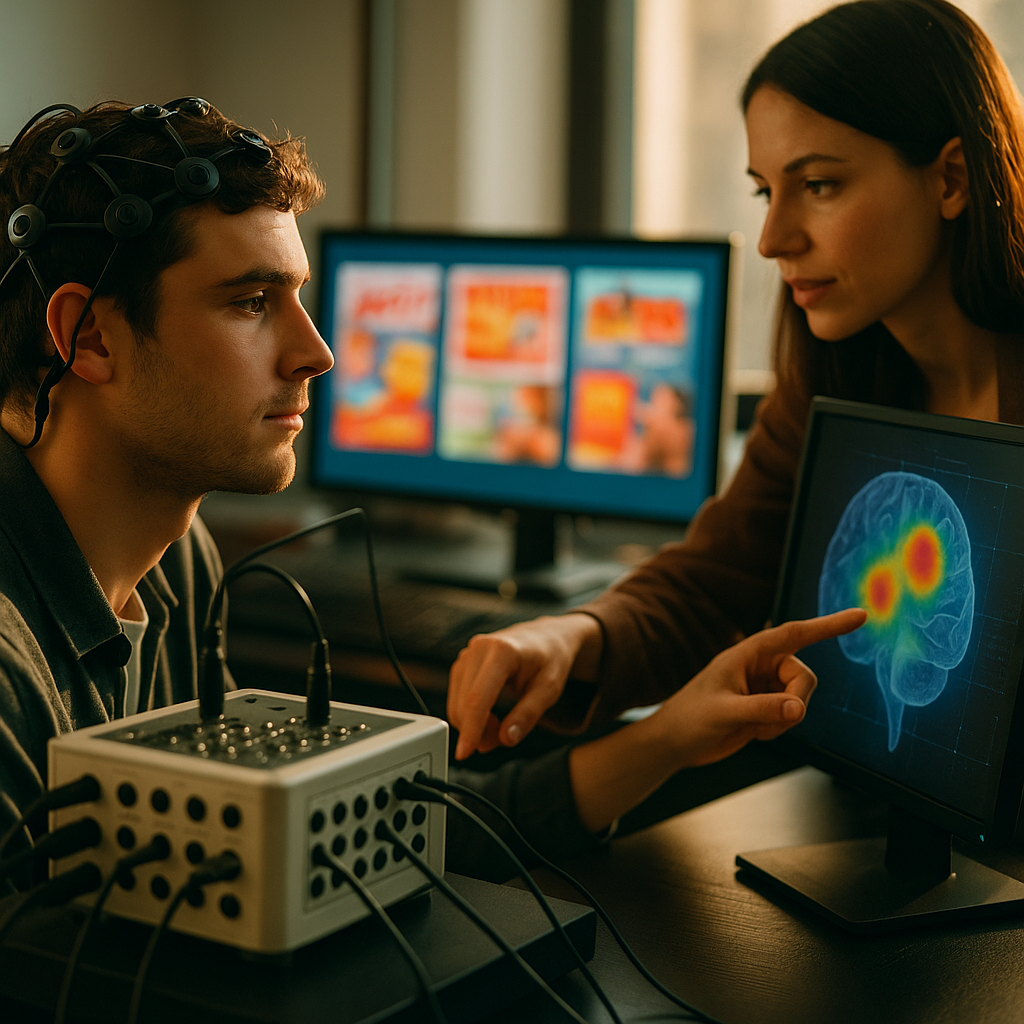
In 2025, ad teams face crowded feeds, shrinking attention, and higher stakes for every impression. The Impact Of Neuromarketing Research On Ad Creative Decisions is no longer abstract; it shapes what people notice, remember, and act on. When you connect neuroscience-informed evidence to creative craft, you reduce guesswork without killing originality. The most valuable insights start before the storyboard—so what should you change first?
Neuromarketing research: what it is and why it matters for creative
Neuromarketing research applies tools from neuroscience and behavioral science to understand how people process marketing stimuli—often below conscious awareness. In practical terms, it helps creative teams identify whether an ad is being seen, understood, emotionally felt, and remembered. That matters because most ad failure isn’t about bad products; it’s about creative that doesn’t earn attention quickly or doesn’t encode the brand into memory.
In 2025, the value of neuromarketing is less about “mind reading” and more about disciplined measurement. The most credible programs combine multiple signals—attention, emotion, comprehension, and memory—then translate them into specific creative choices. This is where neuromarketing supports Google’s EEAT expectations: you show your work, explain limits, and make decisions grounded in evidence rather than hype.
Common misconceptions to clear up before applying it:
- It does not replace strategy. It validates whether the creative expresses the strategy in a way brains can process.
- It does not guarantee sales. It improves intermediate drivers (attention, recall, motivation) that influence outcomes.
- It is not one method. Quality comes from choosing the right method for the question and triangulating results.
Consumer attention metrics that change the first 3 seconds
Consumer attention metrics are the fastest route from research to creative decisions because they address the moment most ads lose. Whether you run a 6-second bumper, a 15-second vertical video, or a connected TV spot, you’re competing against thumb-stops and distractions. Neuromarketing reframes the early seconds as a measurable design problem: “What is the viewer’s brain allocating attention to, and why?”
Creative decisions that attention research commonly influences:
- Early clarity over slow reveals. If attention spikes but comprehension lags, simplify the opening premise and reduce visual clutter.
- One focal point per beat. Eye-tracking often shows scattered gaze when scenes include multiple competing elements (logo, faces, offer, product pack). Recompose to guide the eye.
- Movement with purpose. Motion attracts attention, but unnecessary motion can pull focus away from product or message. Use movement to direct toward the brand cue, not away from it.
- Readable supers and on-screen text. If viewers look but don’t process, typography is often the culprit: poor contrast, too many words, or text placed where hands/UI overlays hide it.
Likely follow-up question: Does this push every ad into the same “fast hook” style? Not if you treat attention as a constraint, not a formula. The goal is to win enough attention to deliver meaning. Luxury, mission-driven, and B2B ads can still be paced—just design the opening to establish immediate relevance (a problem, a promise, a striking product truth) while preserving tone.
Emotional response testing that shapes story, music, and casting
Emotional response testing examines how an ad makes people feel moment-to-moment and whether that emotional arc supports the intended brand meaning. Emotions influence memory formation and motivation, but not all “strong emotion” is useful. Neuromarketing helps separate emotional intensity from emotional fit.
How this changes creative decisions:
- Choose an emotional arc that matches the job. If the ad is meant to reduce anxiety (insurance, healthcare), a high-arousal opening may backfire unless it resolves clearly into reassurance.
- Music as a meaning cue. The same visuals can test differently with alternate music. Testing can reveal whether music increases engagement or distracts from message comprehension.
- Casting and face time. Viewers follow faces. If the brand or product disappears during emotional peaks, the ad may create “borrowed interest” that fails to attach to the brand.
- Humor with brand linkage. Humor often boosts enjoyment, but it can also reduce brand recall if the joke is unrelated. Testing can identify where to integrate brand cues without killing the punchline.
A practical way to apply this without overcomplicating your process: define the intended emotion in the brief as a single sentence (“Make me feel confident switching” or “Make me feel delighted by the convenience”), then use testing to check whether the emotional peaks occur at moments that also contain brand and message cues. If they don’t, you revise structure, not just visuals.
Eye-tracking insights for layout, branding, and product focus
Eye-tracking insights show where people look, in what order, and for how long. This is especially powerful for ad creative decisions because many failures are visual hierarchy problems: viewers look at beautiful content and still miss the product name, offer, or differentiator.
Eye-tracking typically influences these creative choices:
- Branding timing and placement. If the logo appears but isn’t fixated, increase size, improve contrast, or place it near the natural gaze path (often near faces or the main action).
- Pack shots that actually work. A pack shot at the end is common, but testing may show viewers don’t fixate long enough to read it. Solutions include earlier product glimpses, longer hold, or simplified pack framing.
- CTA visibility. If the call-to-action is in peripheral areas, on cluttered backgrounds, or too brief, eye-tracking will reveal it. Improve placement, duration, and contrast.
- Reducing cognitive overload. When gaze jumps rapidly across many elements, simplify: fewer icons, fewer claims, more whitespace, and a single dominant message.
Follow-up question: Is eye-tracking enough to decide the “best” creative? No. It tells you what was seen, not what was understood or felt. The most reliable creative optimization pairs eye-tracking with measures of comprehension and recall, plus conventional brand lift or conversion tests where possible.
Implicit memory and brand recall research to improve long-term effectiveness
Implicit memory and brand recall research focuses on whether an ad leaves behind usable memory traces—especially brand-linked memory. Many ads entertain but fail to build brand assets. Neuromarketing helps diagnose that gap and fix it without turning ads into logo reels.
Creative decisions influenced by memory-focused research:
- Distinctive brand assets. If recall is low, integrate recognizable assets (sonic logo, color, characters, product silhouette) earlier and more consistently.
- Message discipline. Too many claims can reduce what’s remembered. Testing often supports a “one key takeaway” approach per asset, especially in short formats.
- Fluency and comprehension. If people can’t easily explain what the product does, memory suffers. Simplify language, shorten sentences, and avoid jargon.
- Brand-to-benefit connection. The brain remembers associations. Show the brand causing the benefit, not merely appearing near it.
To answer a common stakeholder concern: Does “more branding” reduce creativity? It can, if handled bluntly. But strong creative often makes branding part of the idea—visual motifs, recurring characters, product-as-hero moments, or sound design that carries identity. The goal is not brand intrusion; it’s brand integration.
Ethical neuromarketing methods and how to apply them to creative workflows
Ethical neuromarketing methods matter because the credibility of insights depends on transparency, consent, and realistic claims. In 2025, teams also need to be careful about privacy, sensitive categories, and overpromising what biometric signals can prove. Applying neuromarketing responsibly is part of EEAT: demonstrate expertise, acknowledge limitations, and prioritize user welfare.
Key methods used in modern creative development:
- Eye-tracking for visual attention and hierarchy.
- Facial expression coding and other affect measures for emotional valence and engagement cues.
- EEG for patterns associated with attention and cognitive workload (useful, but easy to oversell if not interpreted by qualified experts).
- Implicit association tests for brand linkage and automatic attitudes.
- Survey-based diagnostics for comprehension and stated preference, used alongside biometric signals.
How to integrate research into a creative workflow without slowing production:
- Start with a decision checklist. Define what you need to decide: opening shot, product reveal timing, CTA, offer clarity, or emotional tone.
- Use concept-stage testing first. Test animatics, scripts, or rough cuts to catch structural issues early when changes are cheaper.
- Triangulate and prioritize. If attention is high but recall is low, prioritize brand linkage changes. If recall is fine but comprehension is low, prioritize simplification.
- Document interpretations. Keep a short “insights to edits” log: what the data suggests, what you changed, and what you expect to improve.
- Validate in-market. Where possible, follow with brand lift, incrementality, or A/B testing so neuromarketing informs outcomes, not just internal confidence.
Safeguards that protect credibility:
- Informed consent and privacy. Avoid collecting unnecessary personal data; anonymize and secure what you do collect.
- Avoid “subliminal” claims. Position insights as optimization of clarity and engagement, not manipulation.
- Use qualified partners. EEG and advanced biometrics require expert interpretation and clear methodological reporting.
FAQs
- What types of ads benefit most from neuromarketing research?
Ads with high production costs, complex messages, or intense competition benefit most—especially short-form video, connected TV, and product launches. Neuromarketing is also useful when a brand struggles with recall or when creative is polarizing and you need to understand why.
- Can neuromarketing replace A/B testing?
No. Neuromarketing explains why an ad works or fails (attention, emotion, comprehension, memory). A/B testing shows what performs better in a specific channel and audience. The strongest approach uses neuromarketing to design better variants, then uses A/B tests to validate performance in-market.
- How many participants do you need for reliable insights?
It depends on the method and the decision. Eye-tracking can reveal consistent attention patterns with moderate samples, while broader claims about segments require larger, well-recruited samples. Ask providers for confidence intervals, recruitment criteria, and evidence that results replicate across similar studies.
- What’s the biggest creative mistake neuromarketing often uncovers?
“Borrowed interest”: the audience engages with a story, face, or spectacle, but the brand and product are not visually or causally connected at the moment of peak attention and emotion. Fixes include earlier brand cues, clearer product role, and tighter linkage between benefit and brand.
- Is neuromarketing ethical?
It can be, when it’s transparent, consent-based, and used to improve clarity and relevance rather than exploit vulnerabilities. Ethical practice includes secure data handling, avoiding deceptive claims, and using methods appropriate to the research question.
- How do you brief a creative team using neuromarketing findings?
Translate metrics into edits: “Reduce competing elements in the first 2 seconds,” “Move the product reveal earlier,” or “Hold the CTA on-screen longer.” Share 3–5 prioritized recommendations, the evidence behind them, and the intended outcome (higher comprehension, stronger brand linkage, clearer offer).
Neuromarketing turns creative debates into testable decisions by measuring attention, emotion, and memory—then connecting those signals to specific edits. Used well in 2025, it doesn’t standardize creativity; it protects ideas from avoidable failure and strengthens brand linkage. The clear takeaway: combine neuroscience-informed diagnostics with in-market validation, and let evidence guide the craft without replacing it.
Top Influencer Marketing Agencies
The leading agencies shaping influencer marketing in 2026
Agencies ranked by campaign performance, client diversity, platform expertise, proven ROI, industry recognition, and client satisfaction. Assessed through verified case studies, reviews, and industry consultations.
Moburst

-
2

The Shelf
Boutique Beauty & Lifestyle Influencer AgencyA data-driven boutique agency specializing exclusively in beauty, wellness, and lifestyle influencer campaigns on Instagram and TikTok. Best for brands already focused on the beauty/personal care space that need curated, aesthetic-driven content.Clients: Pepsi, The Honest Company, Hims, Elf Cosmetics, Pure LeafVisit The Shelf → -
3

Audiencly
Niche Gaming & Esports Influencer AgencyA specialized agency focused exclusively on gaming and esports creators on YouTube, Twitch, and TikTok. Ideal if your campaign is 100% gaming-focused — from game launches to hardware and esports events.Clients: Epic Games, NordVPN, Ubisoft, Wargaming, Tencent GamesVisit Audiencly → -
4

Viral Nation
Global Influencer Marketing & Talent AgencyA dual talent management and marketing agency with proprietary brand safety tools and a global creator network spanning nano-influencers to celebrities across all major platforms.Clients: Meta, Activision Blizzard, Energizer, Aston Martin, WalmartVisit Viral Nation → -
5

The Influencer Marketing Factory
TikTok, Instagram & YouTube CampaignsA full-service agency with strong TikTok expertise, offering end-to-end campaign management from influencer discovery through performance reporting with a focus on platform-native content.Clients: Google, Snapchat, Universal Music, Bumble, YelpVisit TIMF → -
6

NeoReach
Enterprise Analytics & Influencer CampaignsAn enterprise-focused agency combining managed campaigns with a powerful self-service data platform for influencer search, audience analytics, and attribution modeling.Clients: Amazon, Airbnb, Netflix, Honda, The New York TimesVisit NeoReach → -
7

Ubiquitous
Creator-First Marketing PlatformA tech-driven platform combining self-service tools with managed campaign options, emphasizing speed and scalability for brands managing multiple influencer relationships.Clients: Lyft, Disney, Target, American Eagle, NetflixVisit Ubiquitous → -
8

Obviously
Scalable Enterprise Influencer CampaignsA tech-enabled agency built for high-volume campaigns, coordinating hundreds of creators simultaneously with end-to-end logistics, content rights management, and product seeding.Clients: Google, Ulta Beauty, Converse, AmazonVisit Obviously →