


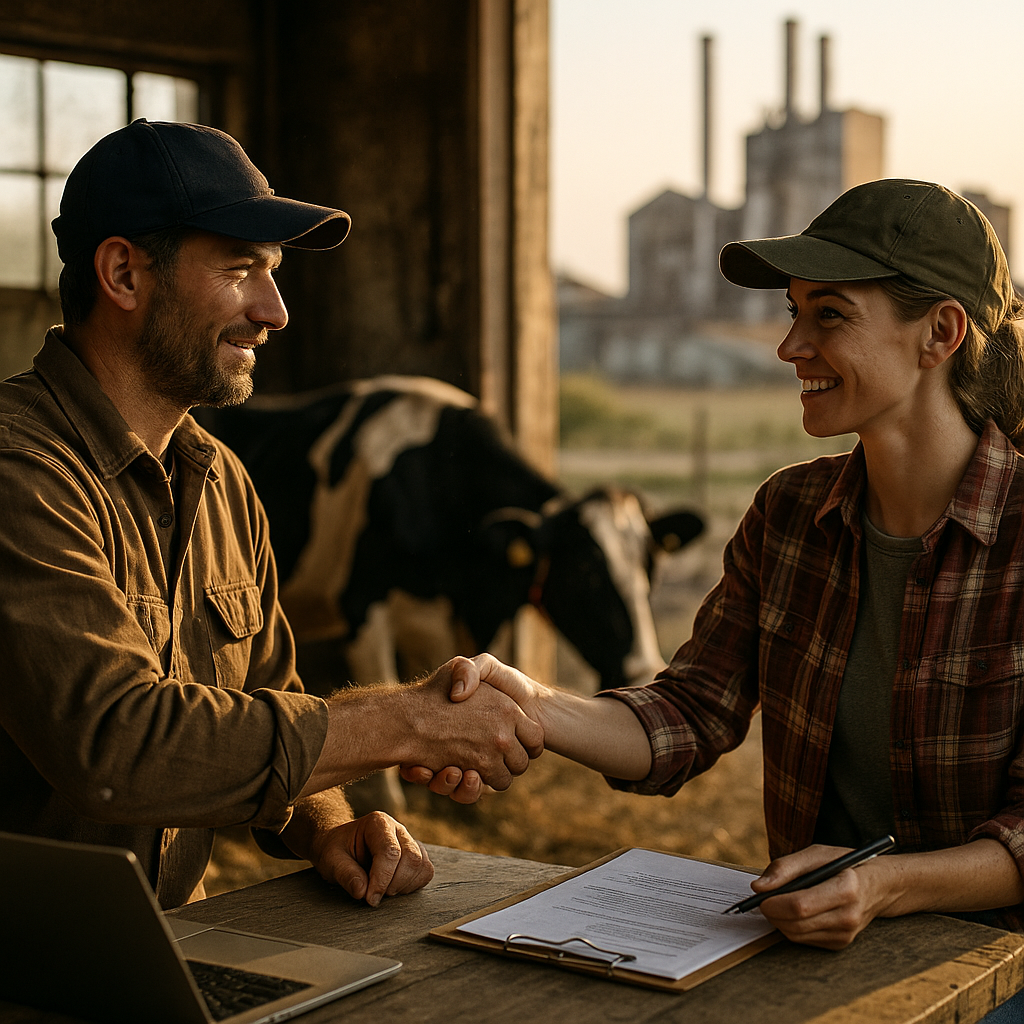
In 2025, post-Industrial homesteading isn’t a niche hobby; it’s a fast-moving media category shaped by climate anxiety, supply-chain realism, and a renewed appetite for practical skills. The rise of post-industrial homesteading content and brand synergy is accelerating as creators teach resilient living while partnering with tools, energy, and food brands. What makes audiences trust some voices—and ignore others?
Why post-industrial homesteading content is booming (secondary keyword: post-industrial homesteading content)
Post-industrial homesteading content sits at the intersection of practical self-reliance and modern constraints: smaller living spaces, mixed rural-suburban settings, and a reliance on technology for learning and community. Unlike traditional “back-to-the-land” storytelling, today’s creators document systems that work in real time: balcony gardening, micro-orchards, rain capture, DIY solar, fermented foods, repair culture, and emergency preparedness that doesn’t drift into fear.
Several factors push this growth in 2025:
- Resilience as a lifestyle, not a bunker fantasy: Audiences want food and energy strategies that reduce bills, waste, and risk without cutting ties to society.
- Skill scarcity: Many viewers never learned basic repair, tool use, or food preservation. Content that teaches step-by-step fundamentals performs well because it solves immediate problems.
- Platform dynamics: Short-form discovery drives interest, while long-form video, newsletters, and podcasts convert that curiosity into trust. People binge “systems” content when it is structured and repeatable.
- Proof-based learning: Creators who show inputs, outputs, and mistakes—yield counts, water usage, time estimates—build credibility quickly.
Readers often wonder whether this is just aesthetic “cottagecore 2.0.” The difference is measurable: the strongest channels emphasize budgets, maintenance schedules, and realistic limitations. They teach the tradeoffs: compost draws pests if unmanaged, chickens cost more than expected, and solar needs a clear load plan. That honesty is why audiences stay.
Audience trust and Google EEAT in homesteading media (secondary keyword: EEAT homesteading content)
In a category where advice can affect health, safety, and finances, EEAT homesteading content practices aren’t optional. Whether you publish a blog, video scripts, or a brand landing page, readers expect expertise they can verify and experience they can relate to.
To align with Google’s helpful-content expectations and build durable trust, top creators and brands do the following:
- Show lived experience: Document a full season. Share failures, learning curves, and what you’d do differently. “Here’s my first attempt” can be more trustworthy than polished perfection.
- Differentiate advice vs. personal preference: For example, state when you’re using a method because it fits your climate or time constraints—not because it’s universally best.
- Address safety with clarity: When discussing pressure canning, electrical work, biosecurity, graywater, or off-grid energy, include clear cautions and direct readers to local codes and manufacturer instructions.
- Use transparent sourcing: If you reference studies, cite reputable institutions or peer-reviewed research. If you cite personal results, describe the conditions (zone, rainfall, soil, flock size, square footage).
- Demonstrate authority without posturing: Collaborate with specialists—master gardeners, electricians, food-safety educators, veterinarians—and credit them. Viewers notice when a creator stays in their lane.
Follow-up question readers ask: What if I’m a beginner—can I still publish? Yes. Beginner creators can meet EEAT by being explicit about their level, documenting progress, and seeking expert review for higher-risk topics. “I tried this method; here were the results; here’s what an expert says to watch out for” is both helpful and credible.
Creator economies and brand synergy models (secondary keyword: brand synergy)
Brand synergy in this space works when products genuinely reduce friction in a homesteader’s system—time, waste, labor, uncertainty, or cost. The best partnerships feel like infrastructure, not advertising: a tool that survives abuse, a water filter with clear testing, a seed company with transparent germination rates, or a composting solution that fits apartment constraints.
Common synergy models in 2025 include:
- System sponsorships: A multi-episode series where a brand supports a coherent project (e.g., building a pantry plan, starting a garden bed, setting up rain capture). The audience learns a workflow, not just a product name.
- Co-developed bundles: Creator-designed kits (starter seed sets, fermentation kits, tool rolls) that reflect what the creator actually uses. Done right, this reduces decision fatigue for beginners.
- Education-first affiliate partnerships: Affiliates can remain trustworthy when they’re paired with comparisons, pros/cons, and “who this isn’t for.”
- Community challenges: “30 days of waste reduction” or “pantry reset week,” supported by brands that provide materials and prizes. The content stays mission-led.
Brands often ask, “How do we avoid looking like we’re exploiting a movement?” The answer is to fund outcomes. Sponsor the soil test kits, the safety gear, the workshop time, the free public checklist—then let the creator be candid. Trust grows when brands tolerate honest critique and still earn a place because the product performs.
Product fit for resilient living audiences (secondary keyword: sustainable lifestyle marketing)
Effective sustainable lifestyle marketing in homesteading doesn’t rely on vague promises. This audience expects specificity: performance metrics, warranty terms, repairability, and total cost over time. Many are budget-conscious and skeptical of “green” messaging that ignores durability or supply-chain ethics.
Brands that convert in this category typically emphasize:
- Repairability and parts availability: Replaceable seals, blades, batteries, fittings, and documented maintenance steps. A repairable product is a values match.
- Measurable claims: Filtration ratings, energy output ranges, expected lifespan, tested materials, and independent certifications where relevant.
- Compatibility with small spaces: Modular systems for renters and suburban lots. Not everyone has acreage, and the winning products acknowledge that reality.
- Clear safety guidance: Especially for electrical, food storage, water, and livestock products. Safety information increases confidence and reduces returns.
Creators can anticipate the next question: What should I recommend without betraying my audience? Recommend only what you can test, maintain, and explain. If you can’t show it working in your workflow, label it as “unverified” and avoid strong claims. The audience rewards restraint.
Ethics, transparency, and avoiding “prepper-washing” (secondary keyword: ethical influencer partnerships)
Ethical influencer partnerships matter more here than in many lifestyle categories because the content often responds to stress—financial pressure, disaster concerns, health needs, and uncertainty. When brands manipulate that fear, they damage creators and the broader community.
To avoid “prepper-washing” (using resilience aesthetics to sell unrelated products), prioritize these practices:
- Disclose clearly and early: State sponsorships in plain language. Avoid vague “thanks to our partner” phrasing that obscures incentives.
- Separate education from urgency: Don’t use scarcity tactics that mirror crisis thinking. If there is a real supply limitation, explain it without sensationalism.
- Respect local realities: Advice and product recommendations should acknowledge climate zones, regulations, water rights, building codes, and animal ordinances.
- Don’t medicalize food: Many homesteading accounts drift into health claims. Keep nutrition talk evidence-based and avoid implying that a pantry plan cures disease.
- Protect community trust: Decline partnerships that conflict with your stated values, especially around exploitative labor, poor quality control, or deceptive environmental claims.
For creators, the follow-up is practical: What disclosure is “enough”? Use conspicuous disclosure at the top of a post or early in a video, and repeat it near purchase links. If a link earns commission, say so. If a product is gifted, say so. If results vary, state the key variables.
How to build a content-to-commerce flywheel (secondary keyword: content strategy for homesteading creators)
A strong content strategy for homesteading creators turns scattered tips into a coherent learning path. In 2025, audiences reward creators who reduce complexity: what to do first, what to skip, how to budget, and how to maintain systems over time. That structure also improves conversion without resorting to hype.
Use a flywheel approach:
- Start with a “baseline plan”: A free checklist or guide: pantry staples, starter tools, seed-starting timeline, or a monthly maintenance schedule.
- Publish proof-driven series content: Multi-part projects with consistent metrics: costs, hours spent, yields, failures, and next steps. This builds authority and rewatch value.
- Create decision tools: Comparison charts (pressure canner vs. water-bath, hand tools vs. power tools, rain barrels vs. cisterns) with “best for” scenarios.
- Offer a paid layer that saves time: Templates, workshop access, office hours, or curated kits. People pay to reduce uncertainty, not to buy motivation.
- Collect feedback and iterate: Use polls, Q&As, and community posts to learn where people get stuck—then update the baseline plan and resurface it.
Brands that want to plug into this flywheel should ask: “Which step of the workflow does our product improve?” If the answer is unclear, the partnership will likely underperform. Synergy isn’t about reach; it’s about fit inside a system.
FAQs
What is post-industrial homesteading?
Post-industrial homesteading blends traditional self-reliance skills with modern constraints and tools. It focuses on practical resilience—food, water, energy, repair, and waste reduction—often in suburban, urban, or small-lot settings while using online education and community support.
How do creators stay credible when they take sponsorships?
They disclose clearly, test products in real workflows, share limitations, and avoid exaggerated claims. Credibility improves when creators show data (costs, yields, performance) and are willing to critique sponsored products honestly.
What types of brands fit best with homesteading audiences?
Brands that prioritize durability, repairability, safety guidance, and measurable performance—tools, water filtration, energy storage, gardening supplies, preservation equipment, and workwear—tend to fit well when they support real projects and education.
How can beginners start consuming homesteading content safely?
Look for creators who explain risks, reference reputable sources, and encourage compliance with local regulations. For higher-risk topics (pressure canning, electrical work, livestock health), cross-check guidance with extension services, manufacturer manuals, and qualified professionals.
What content formats work best in 2025 for homesteading creators?
Short-form video drives discovery, but long-form video, newsletters, and searchable guides build lasting trust. Series-based projects and downloadable checklists perform well because they provide structure and measurable progress.
How can a brand measure whether a homesteading partnership is working?
Beyond clicks, track downstream signals: email sign-ups, repeat site visits, return rates, customer support tickets, and user-generated content from challenge participation. The most valuable indicator is whether the product becomes part of the creator’s ongoing system.
Post-industrial homesteading content thrives in 2025 because it delivers practical skills, honest constraints, and repeatable systems—exactly what stressed audiences want. Brand synergy works when it funds outcomes, improves workflows, and stays transparent about incentives. The takeaway is simple: build trust with proof, safety, and specificity, and partnerships will feel like infrastructure rather than ads.
Top Influencer Marketing Agencies
The leading agencies shaping influencer marketing in 2026
Agencies ranked by campaign performance, client diversity, platform expertise, proven ROI, industry recognition, and client satisfaction. Assessed through verified case studies, reviews, and industry consultations.
Moburst

-
2

The Shelf
Boutique Beauty & Lifestyle Influencer AgencyA data-driven boutique agency specializing exclusively in beauty, wellness, and lifestyle influencer campaigns on Instagram and TikTok. Best for brands already focused on the beauty/personal care space that need curated, aesthetic-driven content.Clients: Pepsi, The Honest Company, Hims, Elf Cosmetics, Pure LeafVisit The Shelf → -
3

Audiencly
Niche Gaming & Esports Influencer AgencyA specialized agency focused exclusively on gaming and esports creators on YouTube, Twitch, and TikTok. Ideal if your campaign is 100% gaming-focused — from game launches to hardware and esports events.Clients: Epic Games, NordVPN, Ubisoft, Wargaming, Tencent GamesVisit Audiencly → -
4

Viral Nation
Global Influencer Marketing & Talent AgencyA dual talent management and marketing agency with proprietary brand safety tools and a global creator network spanning nano-influencers to celebrities across all major platforms.Clients: Meta, Activision Blizzard, Energizer, Aston Martin, WalmartVisit Viral Nation → -
5

The Influencer Marketing Factory
TikTok, Instagram & YouTube CampaignsA full-service agency with strong TikTok expertise, offering end-to-end campaign management from influencer discovery through performance reporting with a focus on platform-native content.Clients: Google, Snapchat, Universal Music, Bumble, YelpVisit TIMF → -
6

NeoReach
Enterprise Analytics & Influencer CampaignsAn enterprise-focused agency combining managed campaigns with a powerful self-service data platform for influencer search, audience analytics, and attribution modeling.Clients: Amazon, Airbnb, Netflix, Honda, The New York TimesVisit NeoReach → -
7

Ubiquitous
Creator-First Marketing PlatformA tech-driven platform combining self-service tools with managed campaign options, emphasizing speed and scalability for brands managing multiple influencer relationships.Clients: Lyft, Disney, Target, American Eagle, NetflixVisit Ubiquitous → -
8

Obviously
Scalable Enterprise Influencer CampaignsA tech-enabled agency built for high-volume campaigns, coordinating hundreds of creators simultaneously with end-to-end logistics, content rights management, and product seeding.Clients: Google, Ulta Beauty, Converse, AmazonVisit Obviously →