


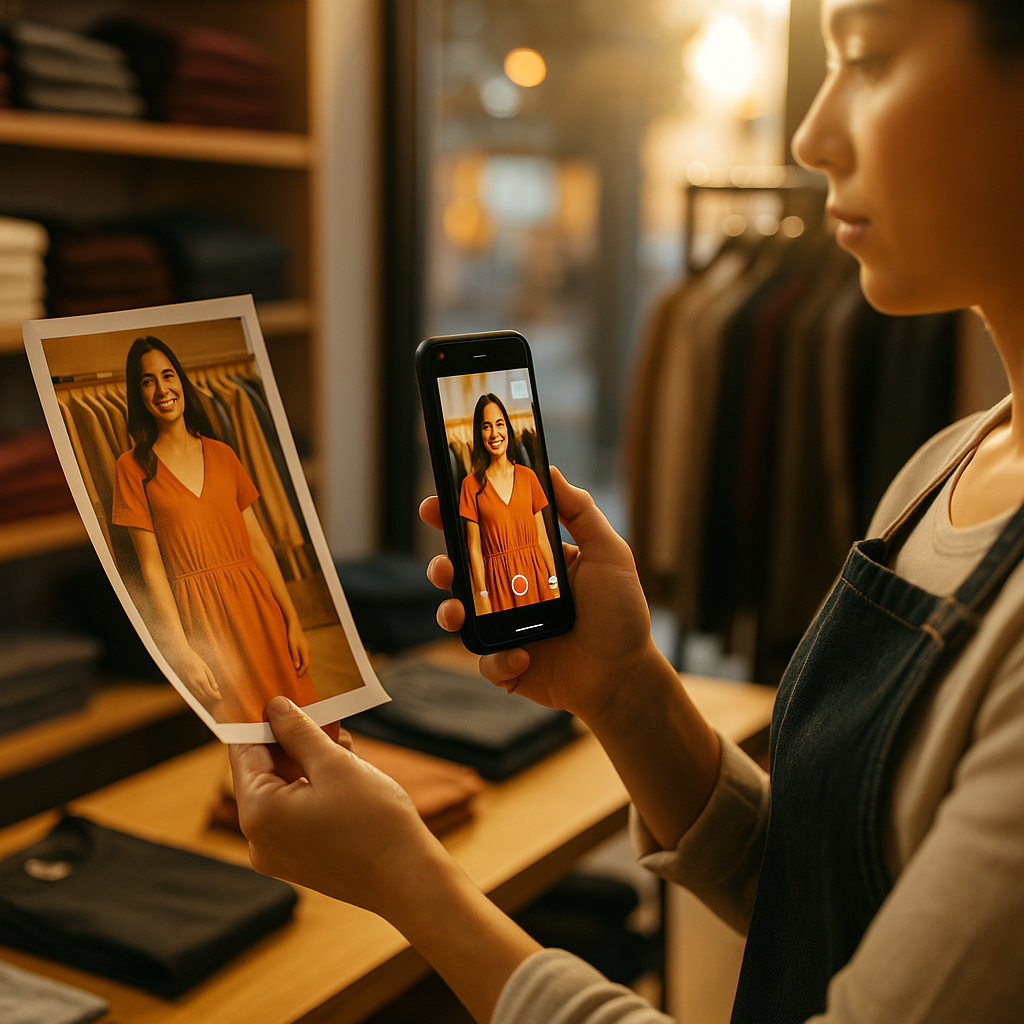
In 2025, retail marketers face higher printing costs, shorter attention spans, and audiences that live on mobile. This case study shows how one mid-sized brand used a print to social video transition to protect reach, improve targeting, and connect store traffic to measurable outcomes. You’ll see what changed, what stayed, and how results were sustained—plus the exact playbook you can adapt next.
Why print was losing impact: retail marketing shift
“Northline Home & Style” (a fictional but realistic mid-sized omnichannel retailer with 42 stores and a growing e-commerce business) relied for years on seasonal catalogs, direct mail, and newspaper inserts. The strategy had worked because it delivered broad reach and helped customers plan purchases. By early 2025, however, the team saw a steady erosion in efficiency even while total spend stayed flat.
Three practical forces drove the retail marketing shift:
- Distribution fragility: print timelines were long, and late product arrivals created mismatches between what was promoted and what was on shelves.
- Reduced measurability: unique coupons and vanity URLs helped, but attribution remained fuzzy when customers moved between store and web.
- Audience behavior: customers increasingly discovered products through short-form video, creator reviews, and “how it looks in real life” demos.
Northline didn’t decide to “kill print” overnight. Leadership asked a sharper question: What portion of our print budget can we reallocate to a channel that proves incremental sales and still supports stores? The answer became a controlled transition rather than a risky reinvention.
Success criteria were defined upfront to avoid post-hoc storytelling:
- Incremental revenue: measure lift against matched markets and historical baselines.
- Store impact: connect video exposure to store visits and in-store transactions where possible.
- Creative sustainability: produce video weekly without burning out the team.
Setting goals and baselines: social video strategy
Northline built a social video strategy around customer problems, not “campaigns.” The team audited what print did well—product discovery, seasonal storytelling, and promo clarity—and translated those strengths into video formats that worked natively across platforms.
They set three tiers of goals:
- Top of funnel: efficient reach among local and lookalike audiences; strong 2-second and 6-second view rates.
- Mid-funnel: measurable intent actions (product page views, add-to-carts, store locator searches).
- Bottom-funnel: incremental purchases, with separate reporting for e-commerce and store-influenced sales.
Baselines came from the prior two seasonal cycles and recent digital performance. Instead of comparing print impressions to video impressions (an apples-to-oranges trap), Northline used business outcomes:
- Revenue per thousand reached: estimated from campaign-level sales lift studies and modeled attribution.
- Cost per incremental store visit: using platform store-visit measurement where available and privacy-safe aggregation.
- Margin-aware ROAS: factoring product mix so a high-ROAS low-margin item didn’t distort decisions.
To keep the program honest, they reserved a “holdout” region where print remained heavier for eight weeks. This allowed leadership to answer the follow-up question everyone asks: Did video drive growth, or did sales rise anyway?
Content production that scaled: short-form video content
Print teams often struggle with video because they assume every asset must be a polished commercial. Northline won by treating short-form video content like a repeatable retail system: simple templates, fast testing, and consistent on-brand execution.
They standardized production into four formats, each mapped to a shopper need:
- “Show it in a room” demos (10–20 seconds): real footage showing scale, texture, and lighting.
- “Three reasons” explainers (15–25 seconds): quick value props tied to common objections (durability, fit, easy care).
- Associate picks (12–18 seconds): store staff recommendations, improving authenticity and trust.
- Offer clarity cut-downs (6–10 seconds): simple promo messages designed for retargeting and peak sale days.
Operationally, they used a “batch and adapt” workflow:
- One half-day shoot per week in a store and one in a small home set, capturing 30–40 clips.
- Two editing tracks: fast-turn edits for testing within 48 hours and refined versions for evergreen use.
- Brand guardrails: consistent color, captions, and product naming so videos felt cohesive across channels.
To meet EEAT expectations, they embedded real product details instead of vague claims. Every video referenced verifiable information: materials, dimensions, care instructions, warranty, delivery estimates, and in-stock status. This reduced returns and built credibility because the content aligned with the product page and in-store signage.
They also created a lightweight compliance checklist to avoid overpromising, especially on “performance” products (e.g., stain resistance). If a claim couldn’t be proven by product specs or manufacturer documentation, it didn’t go in the script.
Paid distribution and targeting: retail social ads
Organic video helped, but the transition from print required dependable reach. Retail social ads provided that predictability—if the team built a structure that mirrored how shoppers actually move from discovery to purchase.
Northline used a three-layer funnel with strict budgeting rules:
- Prospecting (55% of spend): broad local targeting around store radiuses, plus interest clusters tied to home refresh, organization, and gifting; optimized for video views initially to feed retargeting pools.
- Consideration (25%): retargeted viewers and site visitors with product demos and “three reasons” explainers; optimized for landing page views and add-to-carts.
- Conversion (20%): dynamic product and offer cut-downs to cart abandoners and high-intent audiences; optimized for purchases and store visits where available.
Two distribution choices made the difference:
- Geo-weighting by inventory: ads in a store’s radius increased only when that store had depth of stock, reducing disappointment and protecting trust.
- Creative sequencing: viewers saw a demo first, then an explainer, then an offer. This answered the follow-up question customers ask subconsciously: What is it, why should I care, and why now?
Measurement avoided single-platform bias. Northline tracked:
- Platform conversion reporting for daily optimization signals.
- Incrementality tests (geo holdouts) to confirm lift.
- Store feedback loops (associate observations, top FAQ themes, returns reasons) to refine messaging.
To protect performance amid privacy changes, the team leaned on first-party data: email subscribers, loyalty members, and past purchasers. They refreshed audiences weekly and used suppression lists to avoid wasting spend on customers who had already bought during the promotion window.
Connecting video to sales: omnichannel attribution
The hardest part of a print-to-video change is proving that social content drives store sales, not just online clicks. Northline approached omnichannel attribution as a layered model rather than a single “perfect” number.
They set up five practical links between exposure and outcomes:
- Store locator intent: tracked visits to store pages and map clicks after video exposure.
- Unique offer architecture: instead of dozens of coupons, they used a small set of offer codes by region and channel to keep data clean.
- Receipt-level surveys: a one-question prompt (“Where did you first see this product?”) captured directional insights with minimal friction.
- Matched-market lift: the holdout region provided an incremental sales estimate, not just correlation.
- Product mix analysis: they checked whether video shifted demand toward featured categories or simply discounted items already selling well.
Results after the first 10-week transition window were presented with clear caveats, which increased leadership trust:
- Higher efficiency: the video-led regions produced more incremental revenue per marketing dollar than print-heavy regions, based on the matched-market lift read.
- Better on-shelf alignment: inventory-based geo-weighting reduced out-of-stock complaints tied to promotions.
- Faster learning: weekly creative iteration replaced the long print cycle, allowing the team to correct messaging quickly when customers misunderstood size, color, or assembly.
Northline also learned what didn’t translate from print. Dense product grids and “everything on sale” messaging performed poorly in video. Shoppers responded to specificity: one hero product, one setting, one clear reason to buy.
Organizational change: marketing team workflow
A transition succeeds when the organization can sustain it. Northline treated the change as a marketing team workflow redesign, not a creative experiment.
They updated roles and responsibilities:
- Print designers became motion-first creators: trained on templates, caption hierarchy, and pacing for mobile viewing.
- Merchants joined weekly “video standups”: to flag inventory risks, seasonal priorities, and product truths worth highlighting.
- Store associates became on-camera contributors: with simple scripts and opt-in participation to keep it authentic.
Governance improved speed without sacrificing quality:
- Creative brief in one page: audience, single message, proof points, and a “do not claim” list.
- Approval SLA: 24-hour turnaround from merchandising and legal on templated formats.
- Performance review cadence: every Monday, the team killed underperforming edits and scaled winners, with notes captured in a shared library.
Budgeting changed too. Print wasn’t eliminated; it was narrowed to moments where physical still delivered unique value (select store openings, high-ticket seasonal guides, and limited direct mail to top loyalty tiers). The broader awareness role moved to video because it allowed faster iteration and better targeting.
The key cultural shift: teams stopped asking, “What should we post?” and started asking, “What do customers need to see to feel confident buying this?”
FAQs: print to social video transition
-
How much of a print budget should a retailer move to social video first?
Start with a controlled reallocation that you can measure, often 15–30% of the spend tied to one season or category. Use a geo holdout or matched-market approach so you can estimate incrementality before moving more budget.
-
What video length works best for retailers in 2025?
Most retailers see the most scalable results with 6–20 second assets for paid distribution, plus occasional 25–45 second explainers for higher-consideration products. The best length depends on the product’s complexity and the buyer’s questions.
-
Do we need professional production to replace catalogs?
No. You need consistent, truthful product presentation, clear captions, and repeatable templates. Smartphone footage can outperform studio work when it shows real scale and use. Invest in lighting, basic audio, and editing standards before expensive shoots.
-
How can we measure store sales impact from social video?
Combine methods: platform store-visit measurement where available, store locator and map-click tracking, unique regional offers, receipt surveys, and matched-market tests. Use platform reporting for optimization signals and lift studies for decision-making.
-
What content themes usually replace print best?
Formats that mimic what shoppers used catalogs for: seasonal styling, “what’s new,” product comparisons, and clear offer messaging. Video works especially well for showing texture, size, assembly, and before/after transformations.
-
Should retailers still use print after moving to video?
Often yes, but more selectively. Print can be reserved for high-value customer segments, premium brand storytelling, or local moments. Social video can carry the always-on discovery role because it iterates faster and targets more precisely.
Northline’s transition worked because it treated video as a measurable retail system, not a creative gamble. The team kept what print did well—clarity, seasonal relevance, and product truth—then rebuilt it for mobile with faster testing and better targeting. The takeaway: move budget in controlled increments, tie distribution to inventory, and prove lift with holdouts so leadership can scale with confidence.
Top Influencer Marketing Agencies
The leading agencies shaping influencer marketing in 2026
Agencies ranked by campaign performance, client diversity, platform expertise, proven ROI, industry recognition, and client satisfaction. Assessed through verified case studies, reviews, and industry consultations.
Moburst

-
2

The Shelf
Boutique Beauty & Lifestyle Influencer AgencyA data-driven boutique agency specializing exclusively in beauty, wellness, and lifestyle influencer campaigns on Instagram and TikTok. Best for brands already focused on the beauty/personal care space that need curated, aesthetic-driven content.Clients: Pepsi, The Honest Company, Hims, Elf Cosmetics, Pure LeafVisit The Shelf → -
3

Audiencly
Niche Gaming & Esports Influencer AgencyA specialized agency focused exclusively on gaming and esports creators on YouTube, Twitch, and TikTok. Ideal if your campaign is 100% gaming-focused — from game launches to hardware and esports events.Clients: Epic Games, NordVPN, Ubisoft, Wargaming, Tencent GamesVisit Audiencly → -
4

Viral Nation
Global Influencer Marketing & Talent AgencyA dual talent management and marketing agency with proprietary brand safety tools and a global creator network spanning nano-influencers to celebrities across all major platforms.Clients: Meta, Activision Blizzard, Energizer, Aston Martin, WalmartVisit Viral Nation → -
5

The Influencer Marketing Factory
TikTok, Instagram & YouTube CampaignsA full-service agency with strong TikTok expertise, offering end-to-end campaign management from influencer discovery through performance reporting with a focus on platform-native content.Clients: Google, Snapchat, Universal Music, Bumble, YelpVisit TIMF → -
6

NeoReach
Enterprise Analytics & Influencer CampaignsAn enterprise-focused agency combining managed campaigns with a powerful self-service data platform for influencer search, audience analytics, and attribution modeling.Clients: Amazon, Airbnb, Netflix, Honda, The New York TimesVisit NeoReach → -
7

Ubiquitous
Creator-First Marketing PlatformA tech-driven platform combining self-service tools with managed campaign options, emphasizing speed and scalability for brands managing multiple influencer relationships.Clients: Lyft, Disney, Target, American Eagle, NetflixVisit Ubiquitous → -
8

Obviously
Scalable Enterprise Influencer CampaignsA tech-enabled agency built for high-volume campaigns, coordinating hundreds of creators simultaneously with end-to-end logistics, content rights management, and product seeding.Clients: Google, Ulta Beauty, Converse, AmazonVisit Obviously →