


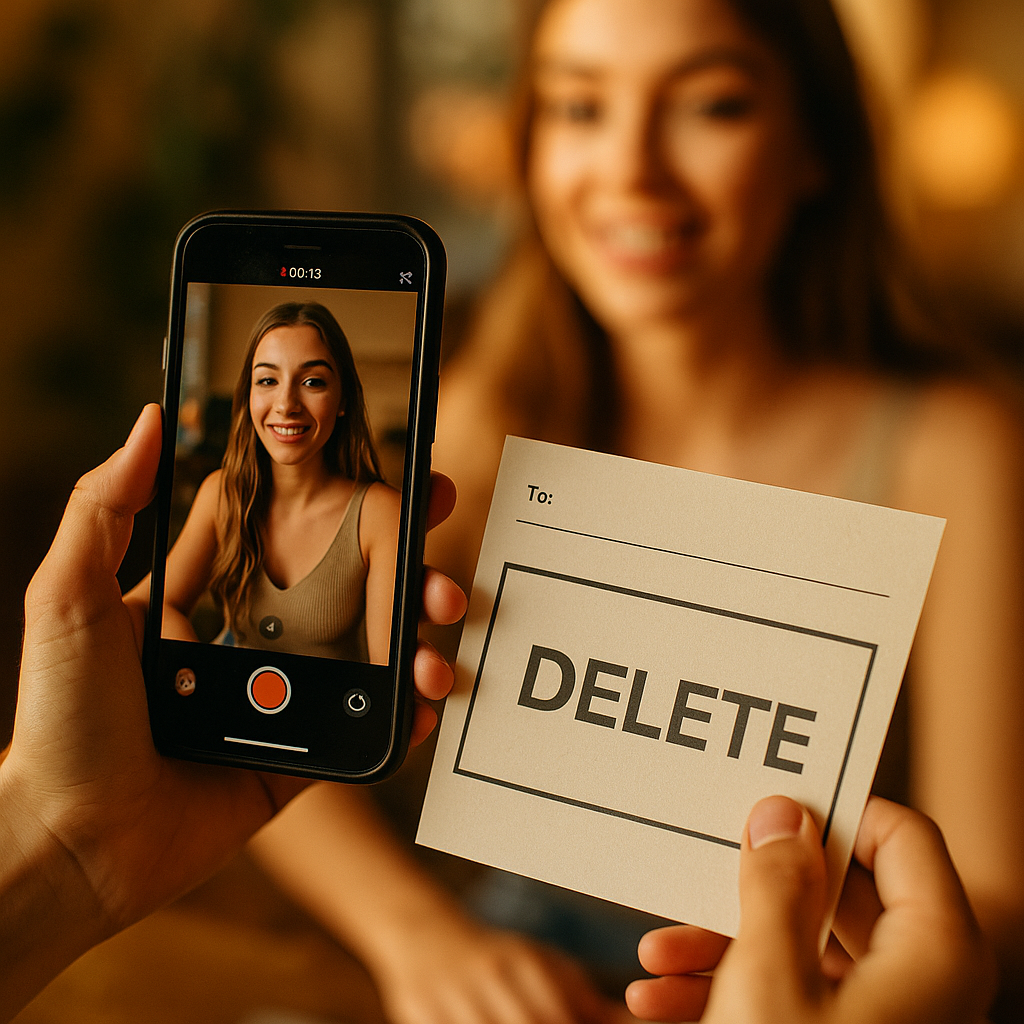
In 2025, creators, brands, and platforms must handle Right To Be Forgotten Requests without breaking trust or destroying valuable archives. Influencer content spreads fast, persists in backups, and is copied across reposts and search results. This guide explains how to evaluate requests, verify identity, remove data correctly, and document decisions while staying fair to audiences and compliant with privacy rules—especially when the stakes are high. Ready?
Understanding the right to be forgotten in creator ecosystems
Influencer archives are not simple “posts.” They include stories, livestream replays, comments, captions, tags, collaboration assets, brand usage rights, analytics exports, newsletters, podcasts, and media kits. A deletion request can touch many systems at once: social platforms, brand servers, agency drives, editing tools, backup services, and search engines.
The right to be forgotten (often linked to deletion or delisting rights in certain jurisdictions) generally aims to let individuals limit ongoing exposure of personal data that is no longer necessary or is unfairly harmful. In influencer ecosystems, the most common triggers include:
- Old content featuring a private individual who never expected long-term distribution.
- Misidentification (tagging the wrong person or using the wrong name).
- Doxxing or sensitive data (addresses, phone numbers, medical details, school locations).
- Minor-related content that becomes inappropriate over time.
- Reputation harm from outdated or context-free posts.
Creators often worry that honoring requests will look like “rewriting history.” A strong approach avoids extremes: it respects privacy while preserving legitimate public-interest records and contractual obligations. The key is to treat each request as a structured case, not an emotional negotiation.
Influencer archives compliance: mapping what you control
Before you can respond confidently, you need a map of your archive—what exists, where it lives, and who controls it. This is the backbone of influencer archives compliance, and it also reduces accidental partial deletions that leave traces elsewhere.
Build a content-and-data inventory that covers:
- Primary platforms: posts, stories, reels/shorts, livestreams, highlights, comments, community posts.
- Owned channels: websites, blogs, email newsletters, Discord/communities, podcasts, paid courses.
- Production assets: raw footage, project files, thumbnails, transcripts, release forms, contracts.
- Distribution copies: repost accounts, brand channels, affiliate sites, PR syndication, press kits.
- Search surfaces: indexed pages, cached previews, image search results.
- Backups and logs: cloud backups, device backups, CDN logs, analytics and engagement exports.
Also classify what you can do without anyone else’s permission. You can usually remove content you control, but you may not be able to delete content on a brand’s channel or a fan repost. In those cases, you’ll need a coordinated takedown plan and a clear explanation to the requester about what is feasible.
To reduce risk, assign responsibility: one person (or role) should “own” request intake, while another reviews decisions for consistency. That separation improves quality, avoids rushed judgments, and supports credibility if challenged.
Privacy request workflow for creators: intake, verification, triage
A predictable privacy request workflow for creators lowers conflict and proves you take privacy seriously. The workflow should be easy to find (link in bio, website footer, or business email auto-response) and should set expectations without sounding defensive.
1) Intake: capture the essentials
- Requester’s name and contact details
- What content they want removed (URLs, screenshots, platform handles, timestamps)
- Why the content is problematic (sensitive data, harassment risk, outdated context, etc.)
- Preferred remedy (full deletion, blur/edit, de-index, unlink, remove tags)
2) Identity and authority: verify safely
Verify the requester is the person affected—or an authorized representative—without collecting more personal data than necessary. For example, you can request a minimal proof that matches what’s visible in the content (such as confirming a unique detail or responding from an account tagged in the post). Avoid requesting full IDs unless truly necessary, and if you do, specify what to redact and how you will delete the verification file after review.
3) Triage: classify urgency
- High priority: exposed address/phone, stalking risk, minor safety, medical/financial details, threats.
- Medium priority: reputational harm, misidentification, outdated content causing ongoing harassment.
- Standard: preference-based requests where no clear harm exists.
Respond fast on high-priority cases with interim mitigation (hide the post, remove tags, disable comments) while you assess the full request. This protects people first and prevents escalation.
4) Decision timeline and communication
Give a clear time window for a decision and keep messages factual. Confirm what you will do, what you cannot do, and what the requester can do next (for example, submitting delisting requests to a search engine if applicable). A calm, documented process often prevents public disputes.
GDPR influencer content: legal bases, balancing tests, and exceptions
When GDPR influencer content is involved, deletion and delisting requests often come down to a balancing exercise: privacy rights versus legitimate interests such as freedom of expression, journalistic or artistic purposes, public interest, and contractual obligations.
Important considerations you should document in your case file:
- Is the person a public figure? Private individuals generally deserve stronger privacy protection than public officials or public-facing professionals, but fame alone doesn’t erase privacy rights.
- What is the sensitivity of the data? Addresses, health details, and information about minors typically require stricter handling and faster remediation.
- How old is the content and is it still relevant? Outdated content with no current value is harder to justify keeping online.
- Was there consent? A signed release helps, but it may not cover every use forever, and it doesn’t excuse publishing sensitive data.
- Was the content misleading? Mislabeling, wrong tagging, or false implications weigh toward removal or correction.
- Is there a less intrusive fix? Editing, blurring faces, removing names/tags, or restricting visibility may meet the need without erasing the entire record.
Creators and brands often ask, “Do we have to delete everything everywhere?” Not always. Some requests are best solved through delisting (reducing search visibility) or contextual correction (adding clarification or removing identifiers). However, if you published highly sensitive data, full removal is usually the responsible move.
Also address third-party spread: if a brand partner republished the content, your response should include outreach steps (e.g., a written request to the partner to remove or edit the asset). If the content has been scraped, you may need to provide the requester with links to platform reporting tools and explain that you cannot compel unrelated third parties—while still showing you took reasonable action.
De-indexing and takedown strategy: platforms, search, and backups
Meeting a request is more than clicking “delete.” A solid de-indexing and takedown strategy reduces reappearance across search, caches, and mirrored copies.
1) Platform-level removal or edits
- Delete or archive the post where possible.
- Edit captions to remove names, handles, locations, and identifying details.
- Blur or crop images if deletion is unnecessary but identification is the problem.
- Remove tags and mentions; adjust privacy settings; disable comments if harassment is ongoing.
2) Search delisting and cache cleanup
If the content was on your site or a public page you control, ensure it returns an appropriate “not found” response and isn’t linked internally. Then pursue cache updates through search engine tools designed for outdated content removal. If the request relates to search results rather than your own hosting, explain the difference clearly: you may need to help the requester identify the correct URLs and provide evidence of removal.
3) CDNs, thumbnails, and previews
Even after deletion, thumbnails and link previews can persist. Purge CDN caches where you control them and update metadata on pages that remain. For video, check if short-form previews were generated and stored separately.
4) Backups and internal copies
Backups create the most confusion. You typically do not want to rewrite historical backups every time, but you should:
- Stop active processing of the removed data (no reuse in edits, compilations, or reels).
- Implement a “do not republish” flag in your asset library.
- Limit access and retention where feasible; document the retention rationale.
5) Reposts and affiliates
Prepare a standard notice you can send to partners, fan pages (when cooperative), and affiliates. Include the exact URL, requested action, and a deadline. Keep records of outreach attempts; reasonable effort matters.
Record-keeping and reputation management: transparent decisions without overexposure
Influencers worry that honoring a request invites more requests, while denying one risks backlash. The answer is not secrecy; it’s disciplined documentation paired with careful transparency.
Maintain a request log that captures:
- Date received, requester type (self/representative), verification method used
- Content identifiers (URLs, filenames), platforms involved
- Risk category (safety, sensitive data, reputational, misidentification)
- Decision and rationale (including balancing considerations)
- Actions taken and confirmation (screenshots or platform confirmations)
- Partner outreach attempts and outcomes
This helps you show consistent practice, avoid repeat mistakes, and improve speed. It also supports your EEAT signals: you operate with a defined process, you can explain your reasoning, and you can demonstrate that you acted responsibly.
Use public statements sparingly. If the issue becomes public, avoid repeating the sensitive information you removed. A short statement such as “We reviewed a privacy request, removed identifying details, and updated our processes” protects the affected person and reduces amplification.
Build preventive controls into your content pipeline:
- Consent checks before posting identifiable bystanders.
- Location-delay posting for home and routine locations.
- Redaction rules for minors and sensitive contexts.
- Contract clauses requiring brand partners to cooperate with removal/edit requests.
Prevention answers the question you’ll inevitably get: “How do we stop this from happening again?”
FAQs
Do influencers have to comply with every right-to-be-forgotten request?
No. Many requests require a balancing of privacy rights against legitimate interests such as freedom of expression, public interest, and contractual or legal obligations. You should still respond, assess risk, and document a clear rationale for approval, partial remediation, or denial.
Is deleting a post enough to remove it from the internet?
Usually not. Copies may remain in search caches, reposts, thumbnails, and third-party archives. A complete response often includes platform deletion or edits, cache updates, partner outreach, and a plan to prevent republishing from internal backups.
What if the requester is not the person in the content?
Ask for proof of authority (for example, a parent/guardian for a minor, or a legal representative). If they cannot verify authority, you can decline to act on their behalf while still reviewing whether the content violates platform rules or creates safety risks.
How should brands handle archived influencer campaign content after a request?
Brands should follow the contract and privacy obligations, then coordinate with the creator on removal or editing across brand channels, paid ads, landing pages, and press materials. Strong campaign agreements include a cooperation clause for privacy removals and specify who owns and can modify assets.
Can we meet the request by blurring a face instead of deleting the post?
Often, yes—especially when the value is in the message rather than the person’s identity. Blurring, cropping, removing tags, and editing captions can reduce identification while preserving legitimate content. For sensitive data or safety risks, full removal is typically safer.
What documentation should we keep without collecting too much personal data?
Keep a minimal case record: the request, the affected URLs, the actions taken, and the decision rationale. If you needed identity verification, retain only what is necessary and delete it as soon as the decision is finalized, consistent with your retention policy.
How fast should we respond to urgent requests?
For safety-related requests (doxxing, stalking risk, minors), take immediate interim steps such as hiding the content and removing tags, then follow with a documented review. Speed matters because ongoing exposure increases harm.
Influencer archives last longer than anyone expects, which makes privacy requests inevitable in 2025. Treat each case with a consistent workflow: map what you control, verify identity with minimal data, assess sensitivity and public interest, then remove, edit, or delist with a plan for caches and partners. The takeaway is simple: a documented, humane process protects people, preserves trust, and reduces legal and reputational risk.
Top Influencer Marketing Agencies
The leading agencies shaping influencer marketing in 2026
Agencies ranked by campaign performance, client diversity, platform expertise, proven ROI, industry recognition, and client satisfaction. Assessed through verified case studies, reviews, and industry consultations.
Moburst

-
2

The Shelf
Boutique Beauty & Lifestyle Influencer AgencyA data-driven boutique agency specializing exclusively in beauty, wellness, and lifestyle influencer campaigns on Instagram and TikTok. Best for brands already focused on the beauty/personal care space that need curated, aesthetic-driven content.Clients: Pepsi, The Honest Company, Hims, Elf Cosmetics, Pure LeafVisit The Shelf → -
3

Audiencly
Niche Gaming & Esports Influencer AgencyA specialized agency focused exclusively on gaming and esports creators on YouTube, Twitch, and TikTok. Ideal if your campaign is 100% gaming-focused — from game launches to hardware and esports events.Clients: Epic Games, NordVPN, Ubisoft, Wargaming, Tencent GamesVisit Audiencly → -
4

Viral Nation
Global Influencer Marketing & Talent AgencyA dual talent management and marketing agency with proprietary brand safety tools and a global creator network spanning nano-influencers to celebrities across all major platforms.Clients: Meta, Activision Blizzard, Energizer, Aston Martin, WalmartVisit Viral Nation → -
5

The Influencer Marketing Factory
TikTok, Instagram & YouTube CampaignsA full-service agency with strong TikTok expertise, offering end-to-end campaign management from influencer discovery through performance reporting with a focus on platform-native content.Clients: Google, Snapchat, Universal Music, Bumble, YelpVisit TIMF → -
6

NeoReach
Enterprise Analytics & Influencer CampaignsAn enterprise-focused agency combining managed campaigns with a powerful self-service data platform for influencer search, audience analytics, and attribution modeling.Clients: Amazon, Airbnb, Netflix, Honda, The New York TimesVisit NeoReach → -
7

Ubiquitous
Creator-First Marketing PlatformA tech-driven platform combining self-service tools with managed campaign options, emphasizing speed and scalability for brands managing multiple influencer relationships.Clients: Lyft, Disney, Target, American Eagle, NetflixVisit Ubiquitous → -
8

Obviously
Scalable Enterprise Influencer CampaignsA tech-enabled agency built for high-volume campaigns, coordinating hundreds of creators simultaneously with end-to-end logistics, content rights management, and product seeding.Clients: Google, Ulta Beauty, Converse, AmazonVisit Obviously →