


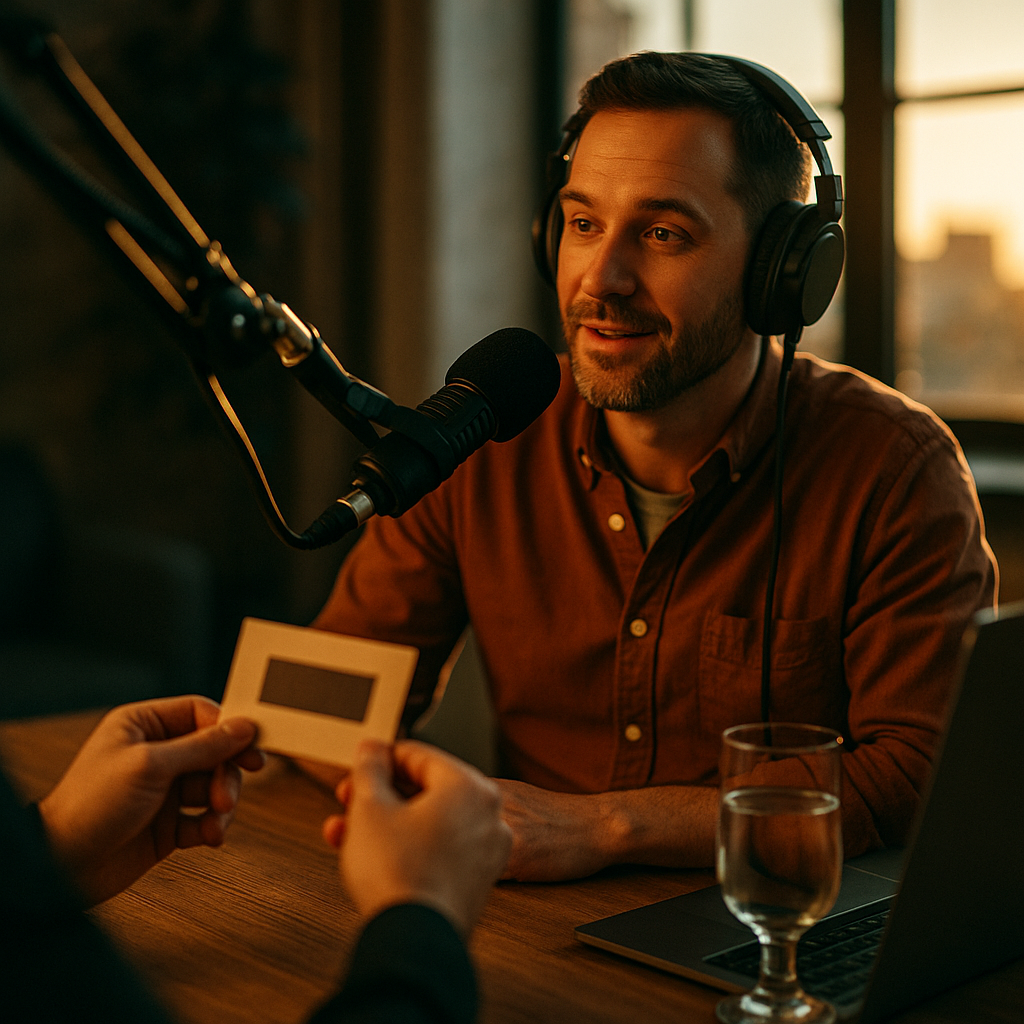
In 2025, podcast audiences are older, wealthier, and more decisive than many ad buyers realize, which makes A Playbook For Sponsoring Professional Podcasts For High-Intent Leads essential for B2B and premium B2C teams. Done well, podcast sponsorships feel like trusted recommendations, not interruptions. This guide shows you how to choose shows, structure offers, measure outcomes, and scale without wasting spend—ready to turn listeners into sales calls?
Audience-fit podcast sponsorship strategy
High-intent leads come from relevance, credibility, and timing. A strong sponsorship strategy starts with audience-fit, not CPM. Define the buyer you want, then map them to listening contexts where they already seek solutions: industry deep-dives, founder/operator shows, and practitioner-led interview formats.
Start with these targeting inputs:
- Role and seniority: Are you targeting VPs, directors, founders, or practitioners who influence purchases?
- Buying moment: Are listeners likely evaluating vendors now (e.g., “how we chose,” “stack teardown,” “implementation lessons” episodes)?
- Category proximity: Sponsor shows that discuss adjacent problems, not just your own category buzzwords.
- Deal size alignment: Higher ACV tolerates higher acquisition costs; your sponsorship model should match payback expectations.
Use a preflight scorecard before you buy:
- Content credibility: Host has real operator experience, clear point of view, and consistent publishing.
- Audience signals: Strong newsletter, community, or LinkedIn engagement; episodes spark thoughtful discussion.
- Commercial fit: Show already runs sponsorships and can describe what converts for similar brands.
- Brand safety: Confirm editorial standards, guest vetting, and what topics are off-limits.
Expect to sponsor fewer, better-aligned shows rather than chasing broad reach. High-intent lead generation improves when the host’s credibility transfers to your offer and the audience recognizes the problem you solve within the episode’s theme.
Host-read podcast ads that convert
Professional podcasts win because of trust. Your creative must protect that trust while prompting action. In most B2B and premium services, host-read ads outperform generic scripts because the delivery feels native and personal—if you give the host the right ingredients.
Build your ad around three conversion levers:
- Specific pain: Name the costly problem in the listener’s language (time, risk, compliance, revenue leakage).
- Clear outcome: Describe the measurable result, not a vague benefit.
- Low-friction next step: Offer a fast, high-value action (calculator, teardown, benchmark report, consult).
Write a “host kit,” not a rigid script:
- Core message: One sentence the host must hit.
- Proof points: 3–5 bullets (results, customer types, timelines, differentiator).
- Do/don’t list: Claims you can substantiate; words to avoid; compliance notes.
- Personalization prompts: How the host might authentically tie your offer to their own workflow or audience questions.
Place ads where intent is highest: Mid-rolls usually drive better response because the listener is engaged. Pre-rolls can work for recognizable brands and simple offers, while post-rolls are best as low-cost add-ons when you already have a strong mid-roll.
Answer the next question inside the ad: “Is this for me?” Include a qualification cue—company size, role, stage, or use case—so the right listeners act and the wrong ones self-select out. That improves lead quality and reduces wasted SDR cycles.
High-intent lead magnets & podcast landing pages
Many sponsorships fail after the click. If you want high-intent leads, match the ad to a landing experience that is fast, focused, and built for podcast behavior. Listeners often act while multitasking; your page must work on mobile and load quickly.
Choose offers that signal buying intent:
- Diagnostic: “Get a 10-minute audit,” “ROI estimate,” “stack assessment,” “security readiness check.”
- Benchmark: Industry report or scorecard that requires a work email and one qualifying question.
- Teardown: “We’ll review your site/funnel/workflow and send a custom plan.”
- Demo alternative: “See the 7-minute walkthrough” plus “Book a tailored session” for those ready.
Design the podcast landing page for conversion:
- Message match: Repeat the host’s phrasing and the episode context near the top.
- One CTA: One primary action; remove navigation if possible.
- Proof near the form: Logos, a short testimonial, or one quantified outcome.
- Form discipline: Ask for only what you will use immediately. Add 1–2 qualifying fields (role, company size, timeline) rather than long forms.
- Fallback path: If they are not ready to book, offer the resource and nurture them.
Use unique vanity URLs and codes for listener recall (short, pronounceable, and specific to the show). Then back it up with UTMs and server-side tracking where possible. This reduces attribution gaps without relying on fragile last-click logic.
Plan the follow-up like a product, not an afterthought: Send the promised asset immediately, then trigger a short sequence that references the show, reinforces the problem, and offers a direct path to a call. High-intent leads decay quickly; speed matters.
Podcast sponsorship pricing & negotiation
Professional podcasts vary widely in pricing because performance depends on trust and audience fit, not just downloads. Enter negotiations with a clear goal: buy outcomes, not inventory.
Know the common buying models:
- CPM (cost per thousand downloads): Simple and common, best when the show’s audience is proven for your category.
- Flat fee per episode: Typical for niche shows where downloads are lower but audience quality is high.
- Package deals: Multiple episodes plus newsletter, YouTube, or community placements.
- Performance components: Rarely pure CPA, but you can negotiate bonuses tied to booked calls or qualified leads if tracking is clean.
Negotiate around risk and learning:
- Pilot first: Buy 3–6 episodes to capture variation across topics and guest types.
- Category exclusivity: If the show sells competing tools, ask for a time-bound exclusivity window.
- Creative collaboration: Include a pre-call with the host and approval on key claims, not delivery style.
- Make-goods: If an episode underdelivers on promised placements or schedule, get a replacement slot.
Ask for evidence without demanding perfection: A professional show should share recent sponsor feedback, audience demographics, and typical ad formats that perform. You are not buying guaranteed sales; you are buying a repeatable channel. Your goal is to control variables: offer, placement, frequency, and follow-up.
Podcast attribution & ROI measurement
Attribution is where many teams either over-credit podcasts or dismiss them. Use a measurement plan that recognizes how podcast listening works: delayed response, cross-device conversions, and word-of-mouth effects.
Track in layers:
- Direct response: Vanity URL visits, promo code usage, booked calls from the podcast page.
- Assisted conversions: “How did you hear about us?” fields, sales call notes, CRM source mapping.
- Brand lift proxies: Increases in branded search, direct traffic, and inbound mentions after ad flights.
Set quality gates for “high-intent lead”: Define what counts before you launch. For example: correct persona + minimum company size + explicit timeline or problem severity. Align marketing and sales on a single definition so podcast leads are evaluated consistently.
Build a simple ROI model your finance team will accept:
- Inputs: Spend, qualified lead rate, meeting rate, close rate, average contract value, gross margin, sales cycle length.
- Outputs: CAC, payback period, and pipeline generated per sponsorship.
Operationalize learnings episode by episode: Track episode topic, guest type, ad placement, CTA, and landing page variant. Patterns often emerge quickly: certain themes attract buyers, while others attract curious non-buyers. Use that insight to renew only the placements that drive qualified demand.
Scaling professional podcast partnerships
Scaling is not “buy more shows.” Scaling is repeating what works while protecting the audience trust that created performance in the first place. Treat top podcasts like partnerships, not media slots.
Scale with these levers:
- Frequency and consistency: Buyers need multiple exposures; negotiate recurring placements over sporadic one-offs.
- Integrated content: Consider a founder interview, a case study episode, or a live Q&A—only if the show’s editorial standards stay intact.
- Audience capture: Bundle newsletter placements or community posts that extend the CTA beyond the audio moment.
- Offer evolution: Start with a strong lead magnet, then graduate to “book a consult” once trust and awareness rise.
Protect brand integrity: Keep claims verifiable, avoid sensationalism, and prioritize listener value. The fastest way to kill performance is to pressure a host into reading something they do not believe. The best partnerships feel like the host is sharing a resource they would recommend anyway.
Create a repeatable internal process: One owner for show selection, one for creative approvals, one for landing pages and tracking, and one for sales follow-up. When responsibilities are clear, you can expand your sponsorship portfolio without quality slipping.
FAQs about sponsoring podcasts for high-intent leads
-
How long should a podcast sponsorship test run?
Run a pilot for 3–6 episodes so you capture performance across different topics and listener moods. One episode can mislead you; a short flight gives enough data to see patterns in qualified leads and meeting rates.
-
What ad length works best for high-intent leads?
For most professional shows, 45–75 seconds is a strong range because it allows the host to explain who it is for, why it matters, and what to do next. Shorter spots can work for well-known brands or very simple offers.
-
Should we use promo codes or vanity URLs?
Use both when possible. Vanity URLs are easier to remember and measure online behavior, while promo codes help when listeners convert later or mention the show in sales conversations. Pair them with UTMs and CRM source fields.
-
How do we qualify podcast leads without killing conversion?
Use one or two high-signal questions (role, company size, timeline, or primary challenge). Then route fast: high-fit leads to booking, lower-fit leads to nurture. Keep the form short and make the value of the asset obvious.
-
What metrics matter most for sponsorship decisions?
Prioritize qualified leads, booked meetings, cost per qualified meeting, and pipeline influenced. Downloads and CPM help with pricing context, but they do not prove buyer intent. Also review sales feedback on lead quality.
-
Is it better to sponsor a few big shows or many niche shows?
For high-intent leads, niche shows often win because the audience is concentrated around a problem and trusts the host deeply. Big shows can work when your offer is broadly relevant and your landing experience is built for volume.
Podcast sponsorships produce high-intent leads when you treat them as a trust-based channel, not a volume buy. In 2025, the winning approach is simple: pick shows where your buyers already learn, give hosts credible talking points, send listeners to a focused page, and measure quality in your CRM. Pilot, refine, and scale only what drives qualified meetings—then turn sponsorships into durable partnerships.
Top Influencer Marketing Agencies
The leading agencies shaping influencer marketing in 2026
Agencies ranked by campaign performance, client diversity, platform expertise, proven ROI, industry recognition, and client satisfaction. Assessed through verified case studies, reviews, and industry consultations.
Moburst

-
2

The Shelf
Boutique Beauty & Lifestyle Influencer AgencyA data-driven boutique agency specializing exclusively in beauty, wellness, and lifestyle influencer campaigns on Instagram and TikTok. Best for brands already focused on the beauty/personal care space that need curated, aesthetic-driven content.Clients: Pepsi, The Honest Company, Hims, Elf Cosmetics, Pure LeafVisit The Shelf → -
3

Audiencly
Niche Gaming & Esports Influencer AgencyA specialized agency focused exclusively on gaming and esports creators on YouTube, Twitch, and TikTok. Ideal if your campaign is 100% gaming-focused — from game launches to hardware and esports events.Clients: Epic Games, NordVPN, Ubisoft, Wargaming, Tencent GamesVisit Audiencly → -
4

Viral Nation
Global Influencer Marketing & Talent AgencyA dual talent management and marketing agency with proprietary brand safety tools and a global creator network spanning nano-influencers to celebrities across all major platforms.Clients: Meta, Activision Blizzard, Energizer, Aston Martin, WalmartVisit Viral Nation → -
5

The Influencer Marketing Factory
TikTok, Instagram & YouTube CampaignsA full-service agency with strong TikTok expertise, offering end-to-end campaign management from influencer discovery through performance reporting with a focus on platform-native content.Clients: Google, Snapchat, Universal Music, Bumble, YelpVisit TIMF → -
6

NeoReach
Enterprise Analytics & Influencer CampaignsAn enterprise-focused agency combining managed campaigns with a powerful self-service data platform for influencer search, audience analytics, and attribution modeling.Clients: Amazon, Airbnb, Netflix, Honda, The New York TimesVisit NeoReach → -
7

Ubiquitous
Creator-First Marketing PlatformA tech-driven platform combining self-service tools with managed campaign options, emphasizing speed and scalability for brands managing multiple influencer relationships.Clients: Lyft, Disney, Target, American Eagle, NetflixVisit Ubiquitous → -
8

Obviously
Scalable Enterprise Influencer CampaignsA tech-enabled agency built for high-volume campaigns, coordinating hundreds of creators simultaneously with end-to-end logistics, content rights management, and product seeding.Clients: Google, Ulta Beauty, Converse, AmazonVisit Obviously →