


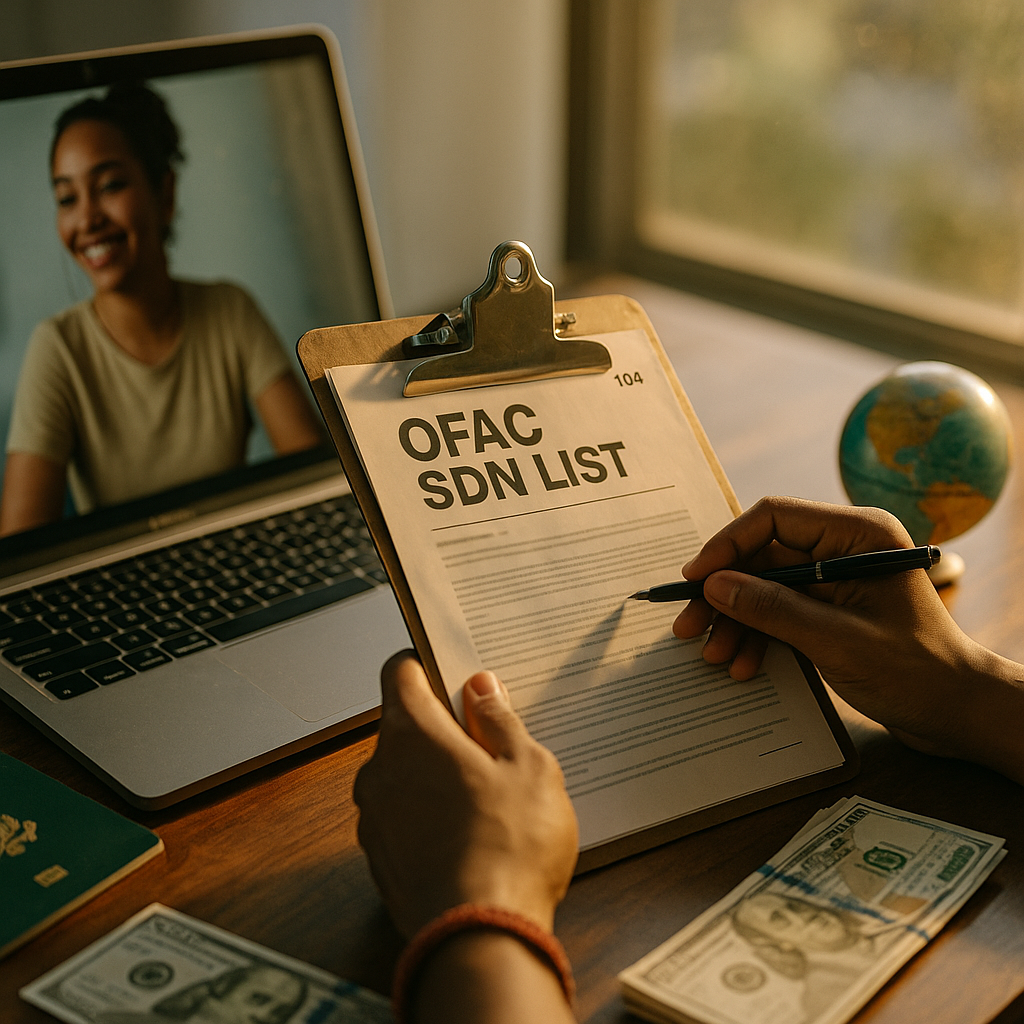
Navigating OFAC Compliance For Global Cross-Border Creator Payments is now a core operational requirement for platforms, brands, and agencies that pay creators worldwide. In 2025, sanctions programs evolve quickly, payment rails are instant, and regulators expect provable controls. This guide explains practical screening, contracting, and payout steps that reduce risk without slowing growth—so you can scale internationally with confidence. Ready to stress-test your workflow?
OFAC sanctions compliance: what it means for creator payouts
The U.S. Department of the Treasury’s Office of Foreign Assets Control (OFAC) administers and enforces sanctions that restrict transactions involving targeted countries, entities, and individuals. If you facilitate creator payments—whether you are a creator platform, talent marketplace, affiliate network, brand, or payment intermediary—OFAC risk can apply even if you are not a bank.
Why it matters for cross-border creator payments: creator earnings often flow through multiple parties (brand → platform → creator), across multiple jurisdictions, and through multiple payment methods (cards, ACH, wires, e-wallets, crypto on-ramps, local bank transfer). OFAC expectations typically center on whether your organization:
- Prevents prohibited payments to sanctioned persons or blocked jurisdictions.
- Maintains effective, risk-based controls (not “check-the-box” screening).
- Can demonstrate compliance through logs, policies, and audit trails.
For most creator-economy businesses, the practical question is not “Do we need OFAC compliance?” It is “What controls are proportionate to our exposure, and how do we prove they work?” Your exposure increases if you onboard creators globally, allow self-service withdrawals, support multiple payout methods, or enable marketplace transactions between users.
Cross-border payments risk assessment: map your exposure before you screen
Effective programs start with a documented risk assessment that fits your business model. OFAC and broader sanctions compliance are most defensible when you can show you understood where the risk lives and designed controls accordingly.
Build a simple but defensible map of your payment journey:
- Who pays? Brand, platform, agency, advertiser, or other creators.
- Who receives? Individual creator, creator business entity, manager, or charity.
- Where are parties located? Country of residence, citizenship (when relevant), and bank location.
- How does money move? Processor, bank partner, payment orchestrator, local rails, or crypto-related services.
- What triggers payout? Milestones, ad revenue share, tips, subscriptions, or performance campaigns.
Key risk drivers for creator payouts:
- Geographic exposure: creators or banks located in higher-risk or comprehensively sanctioned jurisdictions.
- Marketplace features: peer-to-peer transfers, tipping, or user-to-user commerce increases screening complexity.
- Speed and automation: instant payouts reduce time for review and escalation.
- Entity complexity: creators paid through LLCs, agencies, or multi-channel networks may obscure beneficial ownership.
- Content and activity signals: publicly available information can indicate affiliation with sanctioned entities.
Answer follow-up questions now, not during an incident: Which countries do we support? Do we block IPs? Do we rely on a payment provider’s screening? Who approves exceptions? What happens when a creator disputes a hold? Documenting these decisions is part of “show your work” compliance in 2025.
Sanctions screening best practices: SDN checks, fuzzy matching, and ongoing monitoring
Sanctions screening is not a single list check at onboarding. For creator payments, you typically need screening at multiple points: onboarding, pre-payout, and when material profile attributes change.
What to screen:
- Creators: legal name, aliases/handle when relevant, date of birth where collected, address/country, and identification data consistent with your KYC approach.
- Payees: bank account holder name, e-wallet account name, and recipient details provided for payouts.
- Businesses: registered company name, trading names, and, where risk warrants, beneficial owners and controlling persons.
- Counterparties: brands/advertisers and agencies that fund payouts, particularly for high-value campaigns.
How to screen well:
- Use quality data sources: OFAC sanctions lists and other applicable sanctions lists based on your jurisdiction and risk footprint.
- Implement fuzzy matching: transliterations, spelling variations, and common name collisions are routine in global creator rosters.
- Tune thresholds: reduce false positives without letting true matches slip through; document why thresholds are reasonable.
- Screen continuously: rescreen on list updates and on key events (new payout method, bank change, country change, large payout, sudden volume spikes).
- Build an escalation path: define who reviews alerts, how you gather additional context, and when you pause payouts.
Address the common follow-up question: “Can we rely entirely on our payment processor?” You can leverage a processor’s controls, but you still need governance. If you determine screening is fully outsourced, obtain evidence: what lists they screen, update frequency, match logic, investigation procedures, and what data fields they actually screen. If your platform controls recipient onboarding and payout initiation, you likely need at least some internal screening and case management.
Ongoing monitoring in a creator context: Creators change usernames, travel, relocate, add managers, and switch payout accounts. Make those changes “screening moments.” Treat high-risk signals—such as repeated payout reroutes, mismatched payee names, or unusual geographic patterns—as prompts for enhanced review.
Know Your Creator (KYC) and KYB for platforms: verification, beneficial ownership, and data minimization
Sanctions compliance is stronger when identity verification matches your payout risk. You do not need to collect every data point from every creator, but you do need enough to make screening meaningful and defensible.
Right-size your KYC/KYB approach:
- Low-risk creators: verify core identity and location, confirm payout ownership, and screen against sanctions lists.
- Higher-risk creators or corridors: collect stronger identity signals (government ID, proof of address, selfie/liveness checks where appropriate), and consider enhanced due diligence.
- Business payees (KYB): validate registration details; when risk warrants, identify beneficial owners and controllers to reduce the chance of paying a blocked person through a front company.
Beneficial ownership in practice: If creators are paid through entities, you should define when you require ownership information. For example, you may trigger KYB when a creator’s earnings exceed internal thresholds, when a business is in a higher-risk geography, or when the entity structure appears complex. The goal is clarity: who ultimately benefits from the funds?
Data minimization and retention: In 2025, privacy expectations are high. Collect only what you need for compliance and operations, store it securely, and document retention periods. Strong security controls (access controls, encryption, audit logs) support both compliance and trust—two pillars of EEAT for a payments-facing platform.
Practical question you will get from creators: “Why are you asking for this information?” Provide a clear explanation in onboarding: you verify identity to prevent fraud, comply with sanctions laws, and protect the creator community. Transparent messaging reduces churn and support burden.
Payment operations and internal controls: holds, investigations, and audit-ready documentation
Screening only helps if your operations can act on results consistently. Build a workflow that converts alerts into decisions and decisions into evidence.
Design a sanctions alert workflow that works at scale:
- Queue management: prioritize by match score, geography, and payout value.
- Research playbooks: define what analysts check (name similarity, DOB, location, public information, business registries where relevant).
- Decision outcomes: clear, consistent categories such as “false positive,” “needs more info,” “escalate,” “reject,” or “block/hold.”
- Payout controls: prevent disbursement until alerts are resolved; lock changes to payout details during review.
- Case notes and evidence: store rationale, screenshots or references, and the exact data screened at the time.
Handle holds professionally: When payouts are delayed, creators want timelines and clarity. Provide templated communications that explain a compliance review is in progress, what information is needed, and how to submit it securely. Avoid over-sharing sensitive compliance logic, but do not leave creators guessing.
Recordkeeping: If regulators, auditors, or bank partners ask how you prevented prohibited transactions, you need more than a policy PDF. Maintain:
- Screening logs (inputs, time stamps, list versions, outcomes).
- Policy and procedure versions with approval history.
- Training completion records for relevant staff (payments ops, support, trust & safety).
- Vendor due diligence files (processors, screening providers, KYC vendors).
Internal governance: Assign ownership. Even a lean team should define who acts as the sanctions compliance lead, who approves higher-risk decisions, and who can authorize account termination or long-term holds. In fast-growing creator platforms, unclear decision rights create inconsistent outcomes and reputational risk.
Third-party payment providers and international partners: due diligence, contracts, and shared responsibility
Most creator payment stacks rely on partners: processors, payout aggregators, banks, KYC vendors, and sometimes local disbursement partners. OFAC compliance becomes a shared-control environment, which demands clarity.
Conduct practical vendor due diligence:
- Scope of screening: which parties (sender, recipient, bank) and which data fields.
- List coverage: OFAC lists and any additional sanctions lists relevant to your operations.
- Update frequency: how quickly list changes propagate into screening.
- Alert handling: who investigates, how cases are documented, and how quickly payouts are stopped.
- Subcontractors: whether your provider relies on downstream entities for screening or KYB.
- Audit support: ability to provide logs, attestations, and incident details promptly.
Contract essentials: Ensure agreements define responsibilities for screening, escalation, record retention, breach notification, and cooperation with regulators/bank partners. Avoid vague language like “we comply with applicable law” without operational detail—especially if your platform markets “fast global payouts.”
International nuance: You may be subject to sanctions regimes beyond OFAC depending on your location, customer base, and banking partners. Decide which regimes you must screen against and document that decision. This also helps answer the follow-up question from stakeholders: “Why was a creator approved by one partner but rejected by another?” Different list coverage and thresholds often explain discrepancies.
FAQs
Do creator platforms need OFAC compliance if they are not U.S.-based?
Often, yes. OFAC risk can apply through U.S. touchpoints such as U.S. banks, U.S. payment processors, U.S. customers, U.S.-dollar clearing, or U.S. persons involved in operations. Even when OFAC does not directly apply, bank partners may require OFAC-aligned controls as a condition of service.
Is it enough to screen only at onboarding?
No. Sanctions lists change and creator profiles change. Best practice is to screen at onboarding, rescreen on relevant account changes (name, country, payout method), and screen prior to payouts—especially for higher-value payments or higher-risk corridors.
What data do we need to screen creators effectively?
At minimum, you need a reliable legal name and country/location signal. For higher-risk cases, collecting date of birth, address, and stronger identity verification improves match resolution and reduces false positives.
How should we handle a potential sanctions match?
Pause the payout, open a case, and investigate using a documented playbook. If the match appears credible, escalate to your compliance lead and follow your legal and reporting procedures. Keep thorough records of what was reviewed and why a decision was made.
Can we rely on our payout provider to do all sanctions screening?
You can outsource parts of screening, but you cannot outsource accountability. Maintain oversight through due diligence, contractual commitments, and periodic reviews of evidence (logs, attestations, incident reporting). If your platform controls onboarding or payout instructions, you typically need internal controls as well.
How do we reduce false positives without increasing risk?
Use tuned fuzzy matching, collect enough identifiers to distinguish common names, and implement a structured review process. Track false-positive rates and resolution times to justify threshold changes and to keep creator experience smooth.
What’s the most common compliance gap in creator payouts?
Inconsistent operations: screening exists, but payout holds, escalations, and documentation are not standardized. Regulators and bank partners care about repeatability and proof—your workflow must produce clear evidence every time.
OFAC compliance for global creator payouts in 2025 requires more than a one-time list check. You need a risk-based program that combines identity verification, event-driven screening, disciplined investigations, and audit-ready documentation across your payment stack. When you clarify responsibilities with partners and standardize operational controls, you reduce regulatory risk and payout friction at the same time. Build the workflow now, before growth exposes gaps.
Top Influencer Marketing Agencies
The leading agencies shaping influencer marketing in 2026
Agencies ranked by campaign performance, client diversity, platform expertise, proven ROI, industry recognition, and client satisfaction. Assessed through verified case studies, reviews, and industry consultations.
Moburst

-
2

The Shelf
Boutique Beauty & Lifestyle Influencer AgencyA data-driven boutique agency specializing exclusively in beauty, wellness, and lifestyle influencer campaigns on Instagram and TikTok. Best for brands already focused on the beauty/personal care space that need curated, aesthetic-driven content.Clients: Pepsi, The Honest Company, Hims, Elf Cosmetics, Pure LeafVisit The Shelf → -
3

Audiencly
Niche Gaming & Esports Influencer AgencyA specialized agency focused exclusively on gaming and esports creators on YouTube, Twitch, and TikTok. Ideal if your campaign is 100% gaming-focused — from game launches to hardware and esports events.Clients: Epic Games, NordVPN, Ubisoft, Wargaming, Tencent GamesVisit Audiencly → -
4

Viral Nation
Global Influencer Marketing & Talent AgencyA dual talent management and marketing agency with proprietary brand safety tools and a global creator network spanning nano-influencers to celebrities across all major platforms.Clients: Meta, Activision Blizzard, Energizer, Aston Martin, WalmartVisit Viral Nation → -
5

The Influencer Marketing Factory
TikTok, Instagram & YouTube CampaignsA full-service agency with strong TikTok expertise, offering end-to-end campaign management from influencer discovery through performance reporting with a focus on platform-native content.Clients: Google, Snapchat, Universal Music, Bumble, YelpVisit TIMF → -
6

NeoReach
Enterprise Analytics & Influencer CampaignsAn enterprise-focused agency combining managed campaigns with a powerful self-service data platform for influencer search, audience analytics, and attribution modeling.Clients: Amazon, Airbnb, Netflix, Honda, The New York TimesVisit NeoReach → -
7

Ubiquitous
Creator-First Marketing PlatformA tech-driven platform combining self-service tools with managed campaign options, emphasizing speed and scalability for brands managing multiple influencer relationships.Clients: Lyft, Disney, Target, American Eagle, NetflixVisit Ubiquitous → -
8

Obviously
Scalable Enterprise Influencer CampaignsA tech-enabled agency built for high-volume campaigns, coordinating hundreds of creators simultaneously with end-to-end logistics, content rights management, and product seeding.Clients: Google, Ulta Beauty, Converse, AmazonVisit Obviously →