


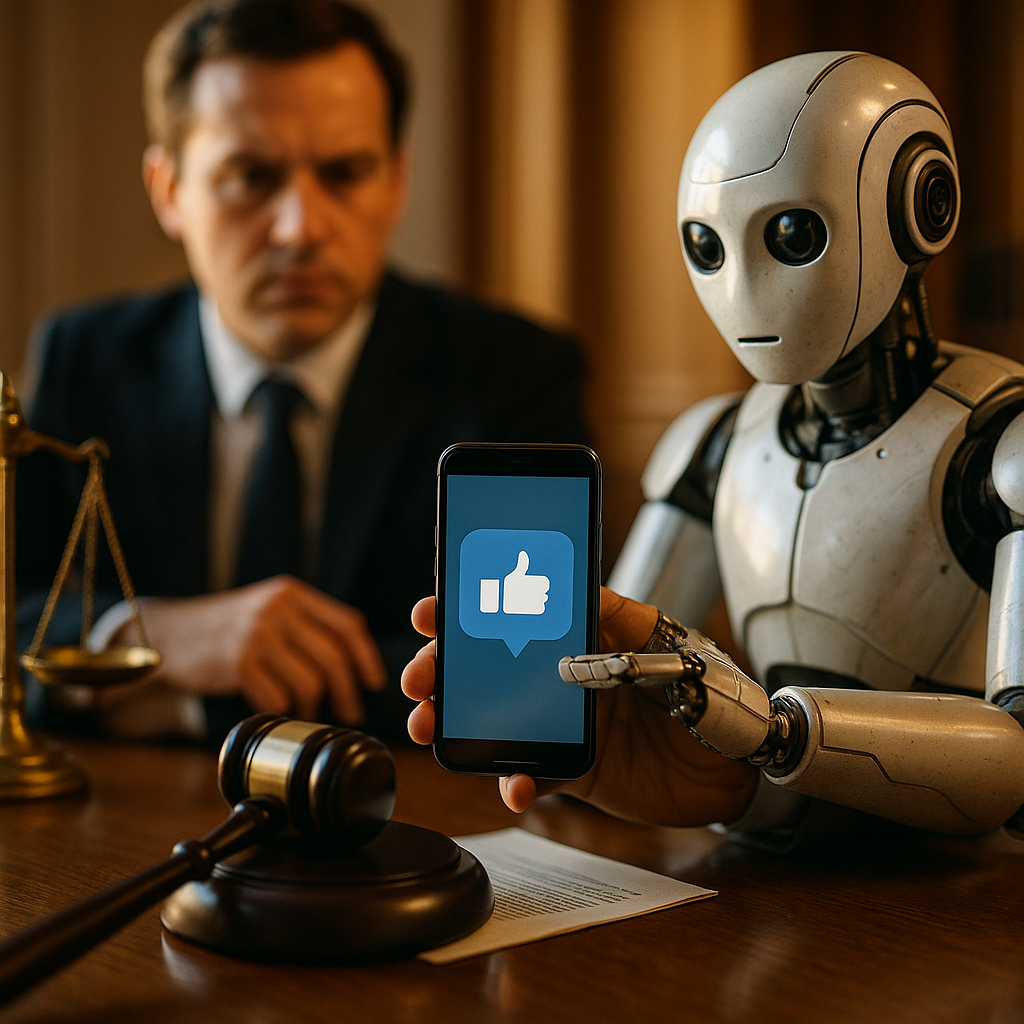
Understanding Legal Liabilities For Autonomous AI Brand Representatives is now a board-level concern as brands deploy always-on AI agents across ads, support, and sales. These systems speak in your name, collect data, and can commit you to promises in seconds. In 2025, regulators and plaintiffs treat “autonomous” as a design choice, not an excuse—so who pays when it goes wrong?
AI brand representatives: what they are and why liability attaches
Autonomous AI brand representatives include chatbots, voice agents, social media responders, personalized outreach tools, and “AI sales reps” that can negotiate, recommend, and resolve issues without a human in the loop. They often integrate with CRMs, payment systems, inventory, customer service platforms, and marketing automation.
Liability attaches because the AI acts as your agent. In most jurisdictions, a company cannot outsource responsibility for customer-facing conduct simply by using software. When an AI communicates in your brand voice, offers terms, handles payments, or collects personal data, it triggers familiar legal duties that already apply to human representatives: truthful advertising, fair dealing, privacy compliance, and nondiscrimination.
Autonomy increases exposure in three ways:
- Scale: a single flawed prompt, policy, or model update can generate thousands of harmful interactions.
- Speed: errors propagate before detection or containment.
- Opacity: when you cannot explain why the system said something, it becomes harder to defend reasonableness, diligence, and controls.
Practical takeaway: treat these agents as “digital employees” with the same onboarding, training, supervision, and audit expectations—then document those controls.
Corporate liability and vicarious responsibility for autonomous agents
Vicarious liability (responsibility for acts of agents within the scope of their role) can apply when an AI is deployed to represent the brand. If the AI makes misstatements, discriminates, or causes foreseeable harm while performing its assigned function, plaintiffs will often pursue the company, not the vendor.
Negligence and product/service liability theories also come into play. Claimants may argue you failed to exercise reasonable care in selecting, configuring, monitoring, or restricting the AI—especially if you marketed the agent as authoritative or “human-level.” Expect scrutiny on whether you:
- Performed pre-deployment risk assessments and testing (including red-teaming for harmful outputs).
- Implemented guardrails (policy prompts, content filters, tool permissions, and rate limits).
- Provided escalation paths to humans for sensitive topics (billing disputes, medical or legal advice, harassment, safety).
- Monitored performance with logs, sampling, and incident response playbooks.
Contract and apparent authority risks are common in sales and support. If an AI offers discounts, refunds, warranties, or service terms, customers may claim they reasonably relied on those statements as authorized. The more your brand presents the AI as “your representative,” the harder it is to argue the customer should have known the AI lacked authority.
What readers usually ask next: “Can we avoid liability by disclosing it’s an AI?” Disclosure helps, but it rarely eliminates responsibility for deceptive, unfair, or harmful conduct. It can, however, reduce confusion and support defenses around reasonableness and reliance—if paired with clear limits on what the AI can commit to.
Consumer protection and false advertising risks from AI outputs
When an AI brand representative makes claims about price, performance, health outcomes, sustainability, or availability, advertising and consumer protection rules apply just as they do to traditional marketing. In 2025, regulators increasingly focus on “AI-washed” claims and automated persuasion that crosses into deception or unfairness.
Common liability triggers include:
- Hallucinated features or guarantees: the agent invents capabilities, certifications, or endorsements.
- Inconsistent pricing or terms: the agent quotes a deal not supported by your published policy or systems.
- Health, financial, or legal claims: the agent implies professional advice or assured outcomes.
- Green claims: unverified statements about carbon neutrality, recyclability, or sourcing.
- Dark patterns: manipulative flows that pressure purchases, hide fees, or obstruct cancellation.
Control strategy: constrain outputs to verified sources. Route product specifications, warranty terms, and pricing through retrieval from approved content (a controlled knowledge base) rather than free-form generation. Add hard refusals for prohibited claims (“guaranteed cure,” “legal advice,” “investment returns”).
How to answer the follow-up question: “Can we use disclaimers like ‘AI may be inaccurate’?” Disclaimers do not cure deception. If you deploy an agent in a way that predictably produces inaccurate claims, the safer approach is prevention: limit what it can say, validate what it does say, and monitor drift after updates.
Data privacy and security liability for AI customer interactions
AI representatives routinely process personal data: identities, contact details, purchase history, support tickets, payment-related information, and sometimes sensitive data. That creates privacy, security, and confidentiality obligations under applicable frameworks (for example, GDPR/UK GDPR, state privacy laws, sector rules like HIPAA/GLBA where relevant, and platform policies).
Key liability areas:
- Purpose limitation and minimization: collecting more data than needed to serve the user can violate privacy principles and increase breach impact.
- Notice and consent: if the AI uses data for personalization, training, or cross-context advertising, you may need explicit disclosures and, in some cases, consent or opt-out mechanisms.
- Data retention: storing chat logs indefinitely increases risk and may breach retention limits.
- Security failures: prompt injection, tool abuse, and unauthorized access can expose PII or enable fraudulent transactions.
- Cross-border transfers and vendor chains: using third-party AI APIs can trigger transfer assessments and contractual safeguards.
Security is not optional in agentic systems. A brand rep that can call tools (refunds, order changes, account edits) needs permissioning akin to zero-trust: least privilege, step-up verification for sensitive actions, and strong authentication to prevent account takeover.
Practical checklist for 2025 deployments:
- Publish a clear AI interaction notice and link it in-chat.
- Disable model training on customer content unless you have a documented lawful basis and clear user-facing disclosure.
- Redact or tokenize sensitive fields in logs; separate identity data from conversation text where possible.
- Implement prompt-injection defenses: tool-call allowlists, input sanitization, and policy validation layers.
- Maintain an incident response plan that covers AI-specific failures (leakage, unauthorized tool calls, mass misinformation).
Bias, discrimination, and accessibility compliance for AI brand reps
Autonomous agents can create civil rights and equality exposure if they treat users differently based on protected characteristics or proxies (location, language, device type, name, browsing patterns). Risks are highest in credit offers, housing-related services, employment inquiries, insurance quotes, and any “eligibility” decisioning—even when the system is framed as “just customer service.”
Where problems arise:
- Unequal service quality: slower escalation, fewer remedies, or more friction for certain groups.
- Steering: the AI nudges some users away from higher-value products or toward unfavorable terms.
- Language and dialect bias: misclassification of intent, tone policing, or mistaken fraud flags.
- Accessibility gaps: voice agents that fail speech recognition for disabled users or chat experiences incompatible with assistive technologies.
Compliance approach: run fairness evaluations using representative test sets, track outcome disparities (refund approvals, escalations, resolutions), and document remediation. Build accessibility into requirements: compatibility with screen readers, clear error recovery, options for text/voice, and a reliable path to a human agent.
Follow-up question: “If the model is third-party, is bias the vendor’s responsibility?” Vendors may share responsibility, but regulators and courts often focus on the deployer because you control the use case, the guardrails, and the customer relationship. Vendor diligence helps, but it does not replace deployer governance.
Contracts, vendor risk, and governance controls that reduce legal exposure
Managing legal liabilities for autonomous AI brand representatives requires both external contracts and internal governance. Treat the AI supply chain like any critical outsourced function: define obligations, measure performance, and keep the ability to intervene quickly.
Vendor and platform contract priorities:
- Clear roles: who is controller/processor (or equivalent) for privacy, and who handles user requests.
- Security commitments: encryption, access controls, audit reports, incident notification timelines, and subcontractor transparency.
- Data usage limits: prohibit training on your customer data unless explicitly approved.
- Indemnities and caps: negotiate for IP infringement, data breaches, and regulatory fines where possible, with realistic caps and exclusions.
- Service levels: uptime, latency, and—crucially—quality and safety obligations (harmful content rates, hallucination thresholds, escalation reliability).
Internal governance controls that demonstrate due care:
- Use-case approval: classify by risk (marketing, support, payments, regulated advice) and require sign-off from legal, security, and product.
- Policy-by-design: codify prohibited claims, required disclosures, and escalation rules into prompts and policy engines.
- Human oversight: define when the AI must hand off and how quickly humans respond.
- Auditability: retain versioned prompts, model identifiers, tool permissions, and decision logs for defensibility.
- Continuous monitoring: drift detection after model updates, sampling of conversations, and user feedback loops.
Operational tip: build a “kill switch” that can disable tool use, freeze deployments, or revert to a safe fallback knowledge base within minutes. In fast-moving incidents, speed of containment often determines legal and reputational outcomes.
FAQs about legal liabilities for autonomous AI brand representatives
Who is legally responsible when an AI brand representative misleads a customer?
In most cases, the company deploying the AI is the primary target because the AI acts on the company’s behalf. Vendors may share responsibility depending on defects, representations, and contract terms, but deployment decisions and oversight typically drive liability.
Does labeling the agent as “AI” eliminate liability?
No. Disclosure reduces confusion, but it does not excuse deceptive advertising, unfair practices, privacy violations, or discrimination. Combine disclosure with limits on authority, verified knowledge sources, and escalation to humans.
Can an AI agent accidentally create a binding contract?
It can create serious contract risk if it appears authorized to offer terms (refunds, discounts, warranties, service commitments) and the customer reasonably relies on those statements. Reduce exposure with strict tool permissions, scripted offer logic, and clear rules on what the AI may commit to.
Should we allow AI agents to process payments or issue refunds?
Only with strong controls: identity verification, step-up authentication, transaction limits, audit logs, and anomaly detection. Many brands keep payment actions human-approved while allowing the AI to prepare a draft resolution.
Are we allowed to use customer chats to train the model?
Possibly, but it depends on applicable privacy laws, your notices and user choices, your vendor’s terms, and whether the data includes sensitive categories. Many organizations in 2025 choose “no training by default” and use opt-in or de-identified, policy-reviewed datasets when training is necessary.
What documentation helps most if there is a regulatory inquiry or lawsuit?
Keep: risk assessments, testing results, prompt and policy versions, model and vendor records, monitoring metrics, incident tickets, remediation actions, and evidence of user notices and consent/opt-out handling. Documentation should show continuous oversight, not a one-time review.
Autonomous AI brand representatives can deliver faster service and higher conversion, but they also amplify legal risk across advertising, privacy, discrimination, and contract formation. In 2025, the safest posture treats AI autonomy as a governed capability: limit authority, verify claims, protect data, test for bias, and maintain audit-ready logs. If the agent can speak for you, build controls worthy of that power.
Top Influencer Marketing Agencies
The leading agencies shaping influencer marketing in 2026
Agencies ranked by campaign performance, client diversity, platform expertise, proven ROI, industry recognition, and client satisfaction. Assessed through verified case studies, reviews, and industry consultations.
Moburst

-
2

The Shelf
Boutique Beauty & Lifestyle Influencer AgencyA data-driven boutique agency specializing exclusively in beauty, wellness, and lifestyle influencer campaigns on Instagram and TikTok. Best for brands already focused on the beauty/personal care space that need curated, aesthetic-driven content.Clients: Pepsi, The Honest Company, Hims, Elf Cosmetics, Pure LeafVisit The Shelf → -
3

Audiencly
Niche Gaming & Esports Influencer AgencyA specialized agency focused exclusively on gaming and esports creators on YouTube, Twitch, and TikTok. Ideal if your campaign is 100% gaming-focused — from game launches to hardware and esports events.Clients: Epic Games, NordVPN, Ubisoft, Wargaming, Tencent GamesVisit Audiencly → -
4

Viral Nation
Global Influencer Marketing & Talent AgencyA dual talent management and marketing agency with proprietary brand safety tools and a global creator network spanning nano-influencers to celebrities across all major platforms.Clients: Meta, Activision Blizzard, Energizer, Aston Martin, WalmartVisit Viral Nation → -
5

The Influencer Marketing Factory
TikTok, Instagram & YouTube CampaignsA full-service agency with strong TikTok expertise, offering end-to-end campaign management from influencer discovery through performance reporting with a focus on platform-native content.Clients: Google, Snapchat, Universal Music, Bumble, YelpVisit TIMF → -
6

NeoReach
Enterprise Analytics & Influencer CampaignsAn enterprise-focused agency combining managed campaigns with a powerful self-service data platform for influencer search, audience analytics, and attribution modeling.Clients: Amazon, Airbnb, Netflix, Honda, The New York TimesVisit NeoReach → -
7

Ubiquitous
Creator-First Marketing PlatformA tech-driven platform combining self-service tools with managed campaign options, emphasizing speed and scalability for brands managing multiple influencer relationships.Clients: Lyft, Disney, Target, American Eagle, NetflixVisit Ubiquitous → -
8

Obviously
Scalable Enterprise Influencer CampaignsA tech-enabled agency built for high-volume campaigns, coordinating hundreds of creators simultaneously with end-to-end logistics, content rights management, and product seeding.Clients: Google, Ulta Beauty, Converse, AmazonVisit Obviously →