


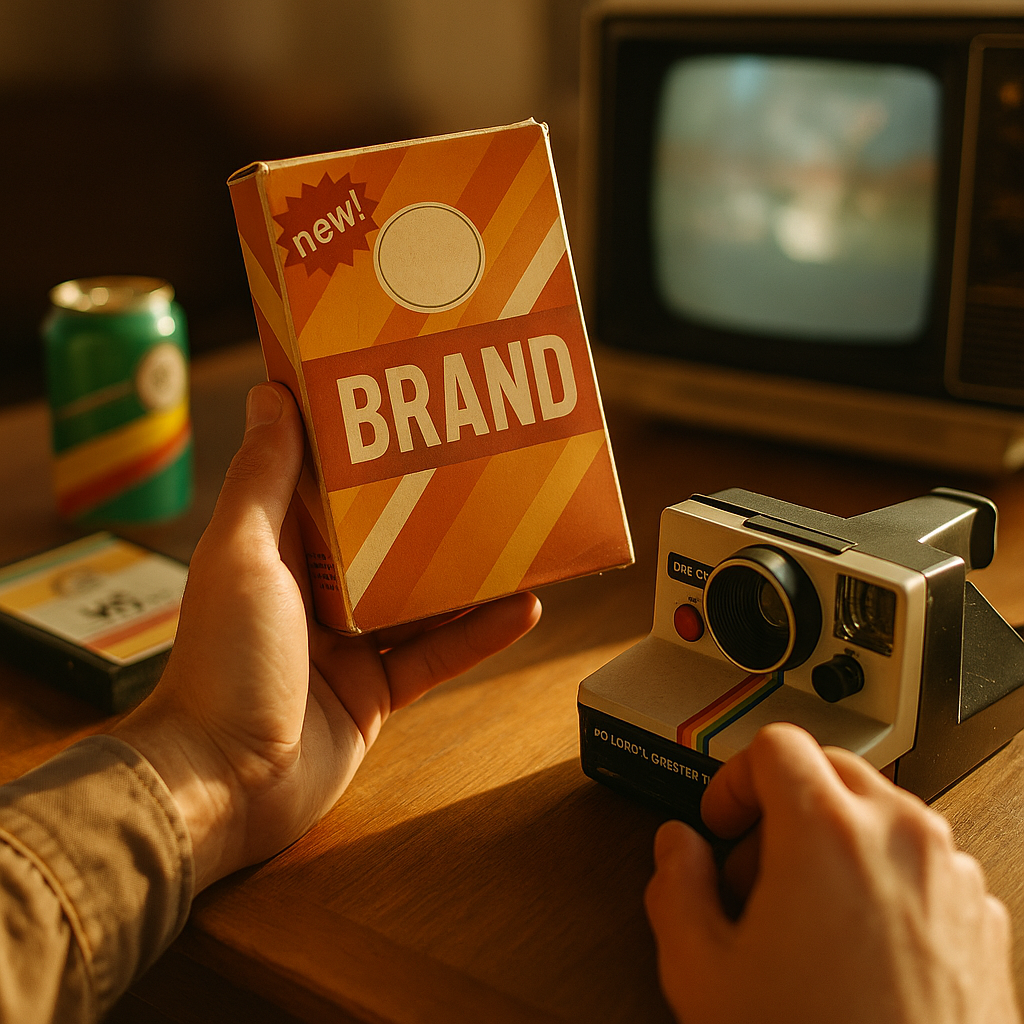
In 2025, brands face shoppers who are cautious, comparison-driven, and emotionally fatigued. The psychology of nostalgia marketing explains why familiar sounds, designs, and stories can feel safer than novelty when budgets tighten. Done well, nostalgia does more than “remember the good old days”—it lowers perceived risk, boosts meaning, and speeds decisions. But when does it work, and when does it backfire?
Nostalgia marketing psychology: why comfort beats novelty under pressure
Economic uncertainty changes how people process information. When headlines feel volatile, consumers tend to reduce cognitive load, avoid regret, and seek signals of reliability. Nostalgia activates those signals by linking a brand to personal or cultural memories that already carry emotional credibility.
What’s happening in the brain and behavior:
- Affect heuristic: People use feelings as a shortcut for judgment. If a campaign evokes warmth or belonging, viewers often infer the product is “safe” or “worth it.”
- Meaning-making under stress: Psychological research consistently shows nostalgia can increase feelings of social connectedness and continuity of self. In uncertain times, that continuity matters; it counteracts the sense that everything is shifting.
- Reduced perceived risk: Familiar aesthetics and references can lower the mental “newness penalty” that makes a purchase feel risky.
- Faster recognition: Retro cues (logos, color palettes, packaging shapes, audio stingers) increase processing fluency. When something is easy to process, it tends to feel more trustworthy.
Practical implication: Nostalgia works best when it supports the consumer’s present-day goals—stretching a budget, choosing dependable quality, or reconnecting with identity—not when it distracts from value.
Consumer trust during recession: why familiar brands feel like a safer bet
When disposable income feels fragile, trust becomes a purchase accelerator. Consumers ask: “Will this last?” “Will I regret this?” “Will customer service show up if something goes wrong?” Nostalgic cues can strengthen trust because they imply longevity and stability, especially when the brand has real history to back it up.
How nostalgia can reinforce trust without manipulating the audience:
- Anchor to verifiable proof: Pair retro creative with clear, current evidence—warranties, transparent pricing, durability testing, ingredient sourcing, or third-party reviews.
- Show continuity, not stagnation: Consumers don’t want to go backward; they want the reassurance that some things still work. Communicate what has improved (materials, safety, sustainability, service) while honoring what stayed consistent (craft, taste, fit, reliability).
- Respect budget sensitivity: If a campaign evokes childhood comfort but the price feels out of reach, the emotional uplift flips into frustration. Offer accessible entry points, bundles, refills, or trade-in options.
Answering the follow-up question: Does nostalgia only work for legacy brands? No. Newer brands can use “time-capsule” references (e.g., early-internet aesthetics, classic game design language, or vintage category cues) as long as they remain truthful and avoid implying a heritage they don’t have.
Emotional branding in downturns: using memory cues that convert, not just entertain
In uncertain economic times, entertainment alone rarely closes the sale. Effective nostalgia marketing connects emotion to a clear, present benefit. The goal is not to trigger sentimentality; it is to reduce friction and increase confidence.
High-performing nostalgia cues and how to use them:
- Sensory cues: Familiar fonts, packaging textures, jingle-like audio signatures, or “retro” UI micro-interactions can boost recognition quickly. Keep them subtle; heavy-handed references can feel costume-like.
- Ritual-based storytelling: Position the product as part of a repeatable routine—morning coffee, family dinner, after-work decompression—because routines are stabilizing in stressful periods.
- Intergenerational framing: “What you loved, now made for your life today” can resonate with shoppers balancing nostalgia and modern needs. Make it concrete: improved comfort, better battery life, fewer additives, easier cleanup.
Turn emotion into action: The call-to-action should match the psychological state nostalgia creates. Instead of urgency-heavy language, use confidence-based CTAs: “Try it risk-free,” “See the difference,” “Built to last,” and include easy comparisons and guarantees.
Common pitfall: Brands sometimes recreate old ads shot-for-shot and forget the product’s current reasons-to-believe. The result is shareable content that doesn’t move revenue. Always attach the memory cue to a tangible value proposition.
Brand storytelling with nostalgia: authenticity, ethics, and avoiding backlash
Nostalgia can look like emotional manipulation if it exploits hardship or rewrites history. In 2025, audiences have sharp radar for inauthenticity, and backlash spreads fast. EEAT-aligned nostalgia is transparent, inclusive, and grounded in reality.
How to keep nostalgia ethical and credible:
- Be precise about what you’re referencing: If you evoke a cultural era, don’t sanitize its problems or appropriate communities’ memories. Focus on universal human moments—connection, small joys, everyday wins—without claiming ownership of a culture.
- Do not imply heritage you can’t document: If you’re a newer brand, avoid lines like “since forever.” Instead, say what’s true: the inspiration, the craft influences, the design lineage.
- Represent the audience as they are now: Nostalgia often fails when it centers only one demographic’s memories. Use inclusive casting and multiple “entry points” to the story so different age groups can see themselves in it.
- Support emotion with substance: Add product education, transparent policies, and proof of quality. This strengthens trust and reduces the sense that the campaign is a distraction from price increases.
Answering the follow-up question: Can nostalgia be used in serious categories like finance or healthcare? Yes, but carefully. Use nostalgia to highlight continuity and care (e.g., “guidance you can rely on”) rather than idealizing the past. Avoid promising certainty; emphasize support, clarity, and responsible decision-making.
Retro branding strategy: tactical playbook for campaigns in 2025
Nostalgia is not a single creative choice; it is a strategy spanning product, pricing, channel, and measurement. The most effective retro branding strategy in 2025 respects how people shop: they research more, trust peers, and expect frictionless experiences.
Step-by-step approach:
- Pick the right nostalgia layer: Choose personal nostalgia (childhood routines), collective nostalgia (shared pop culture), or brand nostalgia (your own past product eras). Match it to your audience data, not internal taste.
- Define the “memory-to-benefit” bridge: Write one sentence that connects the cue to today’s advantage: “That familiar look, now with modern performance and better value.” If you can’t write it, the campaign is likely just aesthetic.
- Update the product experience: Keep the retro surface, modernize the function. Examples include improved materials, refills, accessibility updates, more transparent labeling, and better customer support.
- Make value easy to understand: Add clear comparisons, cost-per-use framing, and bundles. In uncertain times, people want to justify purchases to themselves and their households.
- Use channels that amplify memory: Short-form video with recognizable audio cues, email with “then vs now” product evolution, and retail displays that invite touch and recognition. Encourage user-generated stories with prompts that stay respectful and privacy-safe.
- Measure beyond likes: Track brand search lift, repeat purchase, return rates, customer service contacts, and net promoter score movement. Nostalgia should reduce anxiety and increase confidence; those signals show up in retention and fewer “pre-purchase” questions.
Budget reality: If you must choose, invest more in product truth (quality, support, clarity) than in expensive retro production. Nostalgia fails fastest when the experience doesn’t match the promise.
Nostalgia advertising examples: what works across industries (and why)
Nostalgia can drive performance in many categories, but the mechanism differs by purchase type. Use these patterns to predict fit and avoid misfires.
- CPG and food: Works well because taste and smell are powerful memory triggers. Win by keeping the “signature” sensory cue while improving ingredients, labeling clarity, and pack sizes for different budgets.
- Apparel and footwear: Strong fit when reissuing iconic silhouettes. Success depends on modern comfort and durability, plus transparent sizing. Offer content showing how the piece fits into today’s wardrobe, not only archival imagery.
- Entertainment and gaming: Remakes and re-releases convert when they respect the original while improving usability (loading times, accessibility settings, cross-platform play). Avoid paywalls that feel like a tax on memories.
- Consumer electronics: Retro design can differentiate, but shoppers still demand modern performance. Use nostalgia to simplify choice: “classic form, current standards.” Back it with warranty terms and repairability information.
- Travel and hospitality: Nostalgia can position trips as “returning to yourself,” but don’t glamorize unaffordable luxury. Offer flexible cancellation, transparent fees, and itinerary options that reduce uncertainty.
Answering the follow-up question: How do you know if nostalgia is helping or hurting? Watch for rising engagement paired with flat conversion. That gap often means your creative is resonant, but the offer, pricing, or proof isn’t strong enough to carry the emotional momentum into a decision.
FAQs
-
What is nostalgia marketing in simple terms?
Nostalgia marketing uses familiar memories, aesthetics, and cultural references to create emotional comfort and recognition, then links that feeling to a current product benefit such as reliability, quality, or value.
-
Why does nostalgia work better in uncertain economic times?
Uncertainty increases risk aversion and decision fatigue. Familiar cues feel easier to evaluate, can lower perceived risk, and help people regain a sense of stability and identity—making them more confident in a purchase.
-
Is nostalgia marketing manipulative?
It can be if it exaggerates heritage, exploits hardship, or uses emotion to distract from poor value. It stays ethical when the references are truthful, inclusive, and supported by clear product proof, fair pricing, and transparent policies.
-
How can a new brand use nostalgia without pretending it has history?
Borrow category cues (retro packaging shapes, classic design language) and be transparent about inspiration. Focus on the customer’s memories and routines rather than claiming a legacy you can’t document.
-
What metrics best measure nostalgia campaign success?
Prioritize conversion rate, repeat purchase, customer lifetime value, return rate, customer service volume, and brand search lift. Engagement metrics matter, but they can overstate impact if the offer and product proof are weak.
-
What are the biggest mistakes brands make with nostalgia marketing?
Over-relying on retro visuals without a modern value proposition, excluding large parts of the audience by referencing narrow memories, and failing to deliver a product experience that matches the comforting promise of the campaign.
Nostalgia marketing works in uncertain economic times because it reduces perceived risk and restores a sense of continuity when people feel stretched. The strongest campaigns in 2025 treat nostalgia as a bridge to present value: dependable quality, clearer choices, and fair policies. Use authentic references, back them with evidence, and measure outcomes that reflect trust. Comfort converts when the experience delivers.
Top Influencer Marketing Agencies
The leading agencies shaping influencer marketing in 2026
Agencies ranked by campaign performance, client diversity, platform expertise, proven ROI, industry recognition, and client satisfaction. Assessed through verified case studies, reviews, and industry consultations.
Moburst

-
2

The Shelf
Boutique Beauty & Lifestyle Influencer AgencyA data-driven boutique agency specializing exclusively in beauty, wellness, and lifestyle influencer campaigns on Instagram and TikTok. Best for brands already focused on the beauty/personal care space that need curated, aesthetic-driven content.Clients: Pepsi, The Honest Company, Hims, Elf Cosmetics, Pure LeafVisit The Shelf → -
3

Audiencly
Niche Gaming & Esports Influencer AgencyA specialized agency focused exclusively on gaming and esports creators on YouTube, Twitch, and TikTok. Ideal if your campaign is 100% gaming-focused — from game launches to hardware and esports events.Clients: Epic Games, NordVPN, Ubisoft, Wargaming, Tencent GamesVisit Audiencly → -
4

Viral Nation
Global Influencer Marketing & Talent AgencyA dual talent management and marketing agency with proprietary brand safety tools and a global creator network spanning nano-influencers to celebrities across all major platforms.Clients: Meta, Activision Blizzard, Energizer, Aston Martin, WalmartVisit Viral Nation → -
5

The Influencer Marketing Factory
TikTok, Instagram & YouTube CampaignsA full-service agency with strong TikTok expertise, offering end-to-end campaign management from influencer discovery through performance reporting with a focus on platform-native content.Clients: Google, Snapchat, Universal Music, Bumble, YelpVisit TIMF → -
6

NeoReach
Enterprise Analytics & Influencer CampaignsAn enterprise-focused agency combining managed campaigns with a powerful self-service data platform for influencer search, audience analytics, and attribution modeling.Clients: Amazon, Airbnb, Netflix, Honda, The New York TimesVisit NeoReach → -
7

Ubiquitous
Creator-First Marketing PlatformA tech-driven platform combining self-service tools with managed campaign options, emphasizing speed and scalability for brands managing multiple influencer relationships.Clients: Lyft, Disney, Target, American Eagle, NetflixVisit Ubiquitous → -
8

Obviously
Scalable Enterprise Influencer CampaignsA tech-enabled agency built for high-volume campaigns, coordinating hundreds of creators simultaneously with end-to-end logistics, content rights management, and product seeding.Clients: Google, Ulta Beauty, Converse, AmazonVisit Obviously →