


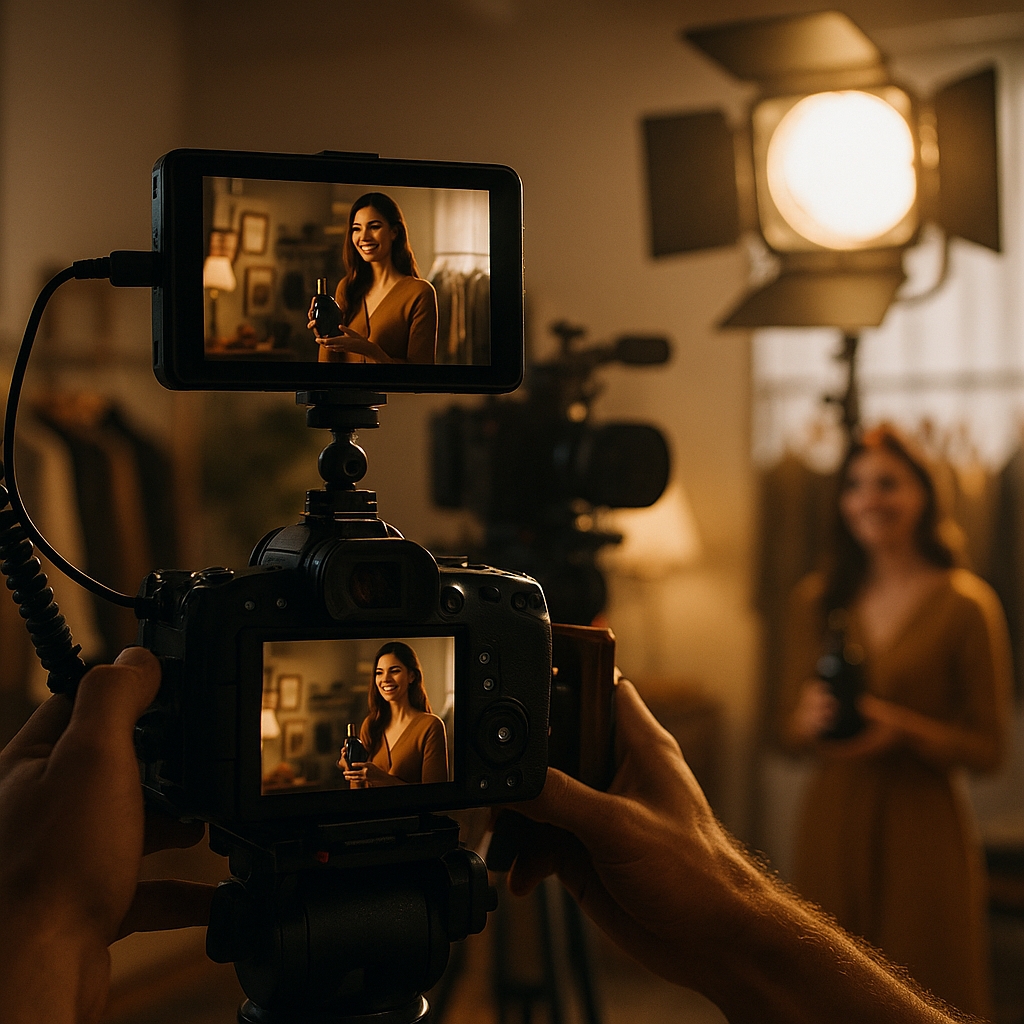
The Art Of The Cinematic Brand Story is reshaping how audiences experience brands in 2025. People skip ads, mute interruptions, and reward content that respects their time and intelligence. Cinematic storytelling blends emotion, craft, and purpose into narratives viewers choose to watch—and share. This article breaks down what makes it work, how to plan it, and how to measure impact without losing the plot.
Why cinematic brand storytelling beats traditional advertising
Traditional ads often focus on immediate persuasion: a problem, a product, a punchline, a call to action. Cinematic brand storytelling works differently. It earns attention by delivering value first—through a moment of truth, a compelling character, or a visual idea that feels like entertainment rather than interruption.
In 2025, the audience is trained to filter. Subscription streaming, social feeds, and ad blockers have made attention scarce and selective. When viewers sense an obvious sales pitch, their guard goes up. When they sense a story, they lean in. That difference changes everything: completion rates, shares, brand recall, and the willingness to explore further.
A cinematic approach also creates what traditional ads struggle to sustain: a consistent brand world. Instead of repeating claims, you build meaning through repeated themes, symbols, values, and tone. Over time, your story becomes a shortcut to trust.
What “cinematic” actually means:
- Intentional craft: strong pacing, sound design, lighting, production design, and editing choices that support the message.
- Emotional clarity: one dominant feeling the viewer can name, even if they can’t explain why.
- Narrative momentum: a setup, tension, and payoff that feels complete—whether it’s 30 seconds or 6 minutes.
- Brand integration: the brand influences the outcome, not just the frame.
If you’re wondering whether this is only for big budgets: it isn’t. Cinematic is a discipline, not a price tag. The most persuasive “cinatic” work often comes from tight constraints and strong decisions.
Building narrative authenticity and brand purpose
Audiences can tell when a brand borrows a cause or copies a trend. Authenticity in 2025 is less about sounding “real” and more about being consistent with what you do, how you do it, and who benefits. That’s where helpful content and EEAT principles matter: your story should reflect genuine experience, credible expertise, clear evidence, and transparent intent.
Start by separating purpose from positioning. Positioning is what you want the market to believe. Purpose is what your company repeatedly proves through choices—pricing, sourcing, policies, customer support, product design, and community impact. A cinematic story amplifies purpose; it cannot substitute for it.
A practical authenticity checklist:
- Proven stakes: What does your brand risk or sacrifice to keep its promises?
- Specific proof: Can you point to verifiable actions, not slogans?
- Human perspective: Whose lived experience is at the center—customer, employee, partner, community?
- Consistency: Does the story align with what people find when they research you?
One of the most effective approaches is to anchor the narrative in a real tension your audience recognizes: uncertainty, pressure, identity, fairness, time, safety, belonging, or ambition. Then show how your brand enables a better choice without making your brand the hero. Make the customer (or community) the hero; make your brand the ally.
Answering the follow-up question: “Do we need a mission-driven brand to do this?” No. You need a clear point of view and a verified promise. Even performance-driven categories—software, logistics, finance, tools—can tell cinematic stories about competence, reliability, and momentum, as long as the narrative is grounded in truth and avoids exaggerated claims.
Film production techniques for emotional engagement
Emotion is not a trick; it’s a design outcome. The same way you design a product flow, you can design a feeling. Cinematic brand stories use production choices to make meaning easy to feel.
Key techniques that reliably increase emotional engagement:
- Character over spokesperson: A character with a desire and a constraint creates natural tension.
- Visual specificity: Concrete details (hands, tools, textures, environments) create credibility faster than wide claims.
- Sound as story: Music, silence, ambient sound, and voice texture can carry the emotional arc even when viewers watch on small screens.
- Rhythm and pacing: Edit to match the emotional curve—faster cuts for urgency, longer takes for intimacy and trust.
- Symbolic motifs: Repeat one visual element that represents the brand’s promise (a color, a ritual, an object, a place).
Plan your emotional arc like a product journey:
- Opening (0–5 seconds): establish a question, a problem, or a curiosity gap.
- Middle: deepen the tension; show the constraints that make the outcome matter.
- Payoff: deliver transformation—small and believable beats outperform dramatic reversals.
- Afterglow: end with a thought the viewer keeps, not just a tagline.
Keep the brand present without forcing it: show the brand’s role as an enabling system. That can be a product moment, a service interaction, a guarantee, a behind-the-scenes process, or a community outcome. Avoid “logo wallpaper” (logos everywhere) and instead build “brand logic” (the story cannot happen the same way without you).
Accessibility is part of craft: ensure clear dialogue, readable on-screen text, and captions. This improves comprehension, watch time, and usefulness—especially on mobile where sound may be off.
Transmedia strategy across social video and streaming platforms
A cinematic brand story rarely succeeds as a single asset. The winning model in 2025 is a story system: one core film supported by platform-native adaptations that preserve the emotional truth while fitting the viewing behavior of each channel.
Design your story in layers:
- Hero film: the definitive narrative (often 60–180 seconds, sometimes longer for documentary-style).
- Cutdowns: 6-, 10-, 15-, and 30-second versions that keep the same narrative spine.
- Character or craft vignettes: short pieces that expand the world: behind-the-scenes, founder intent, customer moments, process proof.
- Interactive extensions: landing pages, product explainers, or creator collaborations that answer “how does it work?”
- Community prompts: questions and UGC formats that invite participation without forcing it.
Match the story to the viewing context:
- Short-form feeds: open fast, prioritize clarity, and use visual storytelling that works with muted audio.
- Streaming and connected TV: reward patience with richer atmosphere, stronger sound design, and longer tension.
- Your website and email: provide proof, FAQs, and next steps for people who want details immediately.
A common fear is dilution: “If we make cutdowns, we’ll lose the artistry.” The fix is to plan modular scenes from the start. Write the script and storyboard with “extraction points”—moments that can stand alone without confusing viewers. This reduces costs and keeps the story coherent across formats.
EEAT in distribution: include clear attribution and permissions for interviews, music licensing, and partner footage. Add context where needed: who is speaking, what the relationship is, and why their perspective is credible. Transparency builds trust, and trust drives conversion after the story lands.
Measuring brand lift and performance without killing creativity
Cinematic storytelling has to perform. The difference is that success metrics should reflect the job the story is doing. If the goal is trust and preference, don’t judge it only by last-click sales. Build measurement that connects attention to intent to action.
Use a balanced scorecard:
- Attention quality: view-through rate, average watch time, completion rate, re-watches, and drop-off points.
- Engagement signals: saves, shares, comments that reference meaning (not just emojis), and sentiment quality.
- Brand outcomes: branded search lift, direct traffic, returning visitors, and brand lift studies where feasible.
- Conversion support: assisted conversions, demo requests, email sign-ups, store locator actions, or product page depth.
- Long-term impact: repeat purchase rate, reduced churn, higher referral rates, and improved close rates in sales cycles.
Creative teams often worry measurement will lead to safe work. It doesn’t have to. Treat metrics as feedback on clarity, not as a vote on originality. If drop-off happens at second 7, that’s a signal about pacing or confusion, not a mandate to remove storytelling.
Answering another follow-up question: “How do we attribute revenue to a story?” Use a combination of:
- Incrementality testing where possible (geo splits or audience holdouts).
- Clean UTMs and event tracking for owned journeys.
- Time-based correlation with branded search and direct traffic spikes.
- Sales feedback loops (ask prospects what influenced them; record it).
Finally, document your claims. If your story implies outcomes—speed, safety, durability, sustainability—make sure you can substantiate them. This protects trust and aligns with helpful content standards.
Creative workflow: from script to screen with ethical storytelling
The fastest way to waste a cinematic concept is to treat it like a standard ad shoot. A better workflow blends brand strategy, editorial discipline, and ethical production choices—especially when real people and sensitive topics are involved.
A reliable workflow for cinematic brand stories:
- 1) Story brief (not an ad brief): define the central truth, the audience tension, the emotional outcome, and the role of the brand.
- 2) Narrative outline: write the arc in plain language before writing dialogue.
- 3) Proof mapping: list what must be true for the story to be honest; gather documentation early.
- 4) Script and storyboard: design scenes for modular cutdowns and platform needs.
- 5) Casting and consent: prioritize representation, clear compensation, and informed consent—especially for documentary-style stories.
- 6) Production plan: align on tone, lighting, sound, and brand integration moments.
- 7) Edit for clarity: test with viewers who match your audience; ask what they understood and felt.
- 8) Publish with context: include credits, sources when relevant, and clear next steps for interested viewers.
Ethical storytelling is not optional: avoid exploiting hardship for emotional impact. If you tell stories about communities, include them in the process, share benefits fairly, and avoid implying “rescue narratives.” Credibility in 2025 depends on how you behave behind the camera as much as what you show on it.
FAQs
-
What is a cinematic brand story?
A cinematic brand story is a narrative-led piece of content that uses film craft—character, pacing, sound, and visual design—to express a brand’s promise through a meaningful experience, not a direct sales pitch.
-
How long should a cinematic brand film be in 2025?
Choose the shortest length that delivers a complete emotional arc. Many brands succeed with 60–180 seconds for a hero film, supported by 6–30 second cutdowns for social and ads.
-
Do cinematic brand stories work for B2B brands?
Yes. B2B buyers still respond to clarity, confidence, and trust. Focus on real stakes—risk reduction, reliability, speed to value, and customer outcomes—then support the story with proof on owned channels.
-
How do you keep the brand visible without making it feel like an ad?
Make the brand’s role structural: the story’s outcome should depend on what the brand enables. Show the product or service at the moment it matters, and let characters and actions carry the meaning.
-
What metrics matter most for cinematic storytelling?
Track attention quality (watch time and completion), meaningful engagement (shares and saves), brand outcomes (branded search and direct traffic), and business impact (assisted conversions and sales feedback).
-
What’s the biggest mistake brands make when trying cinematic ads?
They imitate film style without narrative truth—beautiful visuals with vague messaging and no credible stakes. Start with a clear human tension and a provable brand promise, then build craft around it.
Cinematic brand storytelling wins in 2025 because it treats attention as earned, not bought. When you anchor a narrative in a real human tension, support it with verifiable proof, and execute with disciplined film craft, viewers feel something—and then they act. Build a story system across platforms, measure clarity and impact, and keep ethics central. Your takeaway: make the brand the ally, not the interruption.
Top Influencer Marketing Agencies
The leading agencies shaping influencer marketing in 2026
Agencies ranked by campaign performance, client diversity, platform expertise, proven ROI, industry recognition, and client satisfaction. Assessed through verified case studies, reviews, and industry consultations.
Moburst

-
2

The Shelf
Boutique Beauty & Lifestyle Influencer AgencyA data-driven boutique agency specializing exclusively in beauty, wellness, and lifestyle influencer campaigns on Instagram and TikTok. Best for brands already focused on the beauty/personal care space that need curated, aesthetic-driven content.Clients: Pepsi, The Honest Company, Hims, Elf Cosmetics, Pure LeafVisit The Shelf → -
3

Audiencly
Niche Gaming & Esports Influencer AgencyA specialized agency focused exclusively on gaming and esports creators on YouTube, Twitch, and TikTok. Ideal if your campaign is 100% gaming-focused — from game launches to hardware and esports events.Clients: Epic Games, NordVPN, Ubisoft, Wargaming, Tencent GamesVisit Audiencly → -
4

Viral Nation
Global Influencer Marketing & Talent AgencyA dual talent management and marketing agency with proprietary brand safety tools and a global creator network spanning nano-influencers to celebrities across all major platforms.Clients: Meta, Activision Blizzard, Energizer, Aston Martin, WalmartVisit Viral Nation → -
5

The Influencer Marketing Factory
TikTok, Instagram & YouTube CampaignsA full-service agency with strong TikTok expertise, offering end-to-end campaign management from influencer discovery through performance reporting with a focus on platform-native content.Clients: Google, Snapchat, Universal Music, Bumble, YelpVisit TIMF → -
6

NeoReach
Enterprise Analytics & Influencer CampaignsAn enterprise-focused agency combining managed campaigns with a powerful self-service data platform for influencer search, audience analytics, and attribution modeling.Clients: Amazon, Airbnb, Netflix, Honda, The New York TimesVisit NeoReach → -
7

Ubiquitous
Creator-First Marketing PlatformA tech-driven platform combining self-service tools with managed campaign options, emphasizing speed and scalability for brands managing multiple influencer relationships.Clients: Lyft, Disney, Target, American Eagle, NetflixVisit Ubiquitous → -
8

Obviously
Scalable Enterprise Influencer CampaignsA tech-enabled agency built for high-volume campaigns, coordinating hundreds of creators simultaneously with end-to-end logistics, content rights management, and product seeding.Clients: Google, Ulta Beauty, Converse, AmazonVisit Obviously →