


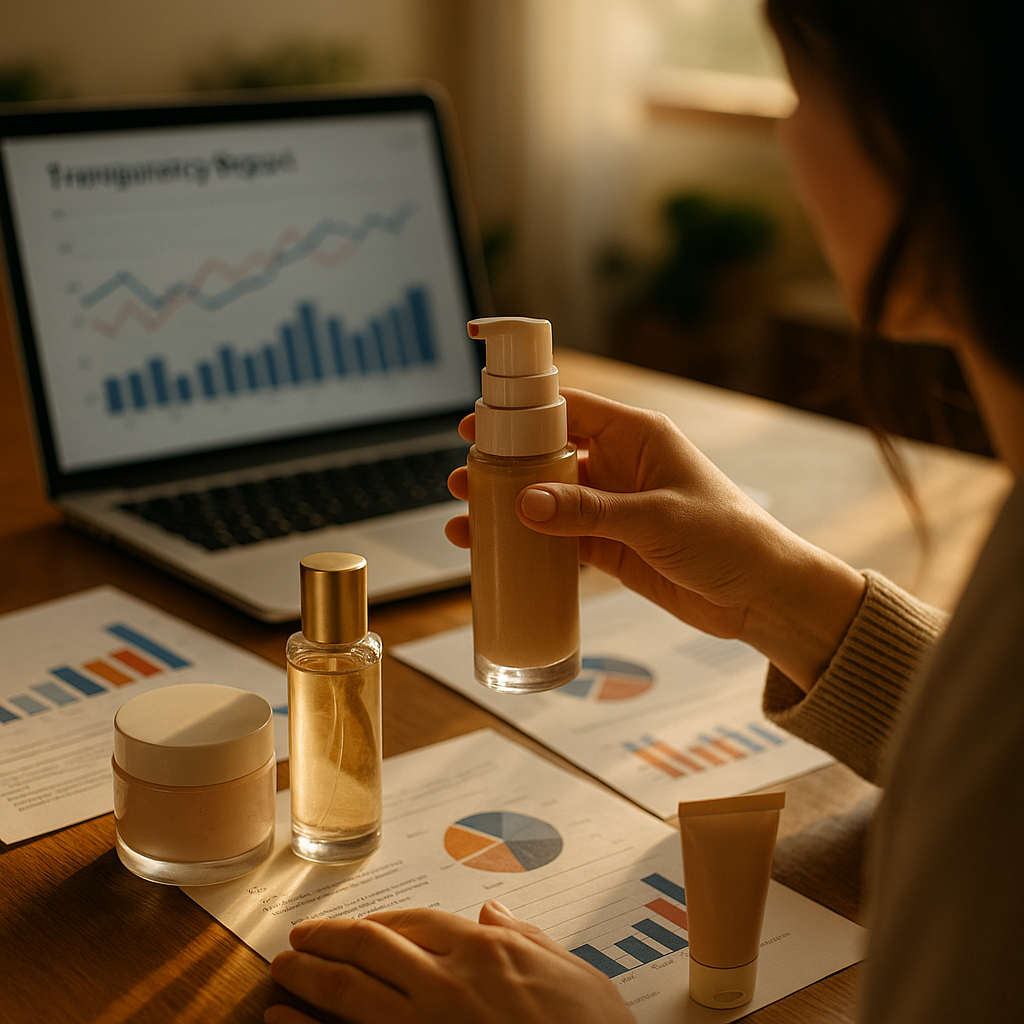
In 2025, shoppers scrutinize beauty prices like never before, comparing ingredient lists, sourcing claims, and value across dozens of tabs. This case study on radical price transparency shows how one mid-sized beauty brand turned that scrutiny into momentum by publishing real costs, margins, and supplier details. The results surprised competitors, improved conversion, and reduced returns—so what exactly changed?
Radical price transparency in beauty: the brand, the market, and the problem
Brand snapshot: This case study follows a direct-to-consumer skincare brand we’ll call Luminance Lab, a mid-sized business with a focused catalog (12 core SKUs) and strong repeat purchase potential. The company operated in a market where shoppers increasingly distrust “premium” pricing that lacks evidence, especially for everyday essentials like cleansers, moisturizers, and sunscreens.
The tension: Luminance Lab faced two conflicting realities:
- Its formulas were genuinely expensive to make (clinical-grade actives, tested packaging compatibility, rigorous stability work).
- Its price looked arbitrary online next to cheaper alternatives that promised similar benefits with louder marketing.
The symptoms: Customer support tickets and pre-purchase chats repeatedly asked the same questions: “Why is this $48?” “What makes it better than the $19 option?” “Are you just marking it up?” Those questions correlated with three measurable issues:
- Lower add-to-cart rate on product pages for hero SKUs.
- Higher bounce rate from paid search traffic that arrived price-sensitive.
- Post-purchase regret and avoidable returns when customers felt “sold” rather than informed.
The strategic decision: Instead of responding with more branding and discounts, Luminance Lab chose to make its pricing logic explicit—publicly and permanently—accepting that transparency could repel some shoppers while strengthening trust with the rest.
Price breakdown page strategy: what the brand revealed (and how)
What “radical” meant in practice: Luminance Lab didn’t publish vague statements like “we price fairly.” It introduced a Price Breakdown module on every product page plus a detailed explainer hub. Each SKU included a clear line-item cost structure, updated quarterly, with notes on what changed and why.
Each product page showed:
- COGS (cost of goods sold): formula inputs (actives, base ingredients), manufacturing, filling, packaging components.
- Quality and compliance: stability testing, preservative challenge testing, micro testing, and documentation costs.
- Operations: warehousing, pick/pack, payment processing, customer support.
- Customer acquisition: blended marketing costs per order (with an explanation that this varies by channel).
- Profit: a stated target margin range and why the brand needs it (product development, team, buffer for recalls, sustainability investments).
How they avoided the usual pitfalls:
- They used ranges where needed (e.g., “$3.10–$3.60” for certain actives) and explained volatility drivers such as supplier MOQ changes and batch yields.
- They defined every term in plain language so shoppers didn’t need an MBA to interpret margins.
- They separated facts from claims: “This is what it costs” vs. “This is what it does.” Performance claims stayed tied to test methods and ingredient concentrations.
- They disclosed constraints (e.g., what they could not publish due to supplier NDAs) and described the checks they used instead, such as third-party lab certificates and audits.
Why it worked for beauty specifically: Beauty shoppers often pay for invisible value—formulation stability, texture work, preservative systems, packaging compatibility. The price breakdown made invisible work visible, changing the conversation from “markup” to “engineering choices.”
Consumer trust signals: how transparency improved conversion and loyalty
The trust mechanism: Radical transparency is not persuasive because it’s “nice.” It is persuasive because it reduces uncertainty at the moment of purchase. Luminance Lab designed its transparency to answer follow-up questions inside the shopping flow, not in a hard-to-find manifesto.
On-page trust signals they added alongside costs:
- Proof of performance: concise summaries of in-house and third-party testing (method, sample size when available, endpoints measured), plus ingredient concentrations for key actives where safe and compliant to disclose.
- Sourcing explanations: why a certain supplier was chosen (purity specs, documentation, batch consistency), not just “ethically sourced.”
- Texture and tolerance notes: what skin types might experience, common irritation triggers, and how to patch-test—reducing regret-driven returns.
Customer behavior changes observed over two quarters: The brand saw fewer “Why is it so expensive?” tickets and more “Help me choose” questions. That shift matters: the first question challenges legitimacy; the second invites guidance and increases purchase intent.
Practical outcome: Luminance Lab reported higher product-page engagement (more scrolling and more interactions with the breakdown module), which correlated with improved conversion on its highest-priced items. Just as important, repeat customers began referencing the breakdown in reviews, using the brand’s own cost language to justify value.
What readers usually ask here: “Won’t transparency make people demand lower prices?” It can—if the breakdown exposes fluff. In this case, the breakdown demonstrated where cost truly sat (testing, actives, manufacturing discipline) and framed profit as a necessity for continuity, not a secret.
Beauty brand margins and profitability: what changed internally
Transparency wasn’t only a marketing move: Publishing cost structure forced internal discipline. Teams had to agree on definitions, track changes, and explain them clearly. That accountability improved profitability without relying on price increases.
Three operational upgrades followed:
- Cost governance: Finance and operations created a single source of truth for SKU-level costs, updated on a fixed cadence. This reduced internal debates and improved forecasting.
- Supplier negotiations: With cost drivers publicly summarized, procurement focused on the few inputs that materially moved price (actives and packaging). They renegotiated MOQs and explored alternative components that preserved performance.
- Packaging rationalization: The brand discovered certain “premium cues” (secondary cartons, inserts) added cost but didn’t change repurchase intent. Removing or simplifying them reduced COGS while strengthening the sustainability narrative—without greenwashing.
Margin clarity improved decision-making: Instead of across-the-board discounting during promotions, Luminance Lab used transparency to steer customers to bundles where shipping and fulfillment costs were more efficient. This protected margins while still offering value.
Key leadership lesson: Radical price transparency works best when the business can defend its margin as the fuel for reliable quality, safety, and service. If a brand cannot explain how profit supports customer outcomes, the tactic backfires.
Ethical marketing in skincare: managing risk, compliance, and backlash
Transparency introduces new risks: When you publish numbers, you invite scrutiny—from consumers, competitors, and regulators. Luminance Lab treated transparency as a compliance-adjacent practice, not a creative campaign.
How they managed common risks:
- Competitive sensitivity: They avoided naming specific suppliers or providing batch-level pricing that would expose contracts. They disclosed categories and standards instead (e.g., “pharmaceutical-grade supplier with full traceability documentation”).
- Claims compliance: They separated cost data from efficacy claims and ensured any performance language tied to substantiation. They also avoided implying that higher cost automatically means better results.
- Data accuracy: Each breakdown included “last updated” dates and a plain-language methodology statement (what was included, what wasn’t, and how ranges were calculated).
- Backlash handling: They prepared a public Q&A and trained support staff to discuss margins calmly. When a social post accused the brand of “still profiting too much,” the response explained reinvestment priorities and invited readers to compare to industry norms without attacking competitors.
Why this is ethical marketing, not just PR: Ethical skincare marketing reduces information asymmetry. Luminance Lab didn’t claim perfection; it made it easier for customers to make informed choices—especially those with sensitive skin, limited budgets, or skepticism about premium positioning.
Direct-to-consumer beauty growth: the measurable results and the playbook
Results summary (reported by the brand across two quarters after rollout):
- Higher conversion on premium SKUs where price had been the primary objection.
- Lower return rate on products that added clearer “who it’s for” guidance next to the breakdown.
- Higher email and SMS opt-in rate from shoppers who engaged with the transparency hub, suggesting stronger intent and trust.
- More resilient full-price sales during promotional periods, because customers understood what discounts did to the business.
The core playbook for other beauty brands:
- Start with one hero product and publish a breakdown that is easy to verify internally. Expand only when you can maintain accuracy.
- Use ranges and drivers instead of fake precision. Explain what moves costs (actives, packaging, testing, MOQ, yields).
- Pair transparency with guidance: skin type fit, routine placement, irritation considerations, and how long a bottle lasts in real use.
- Show updates and don’t hide increases. Customers accept price changes more readily when they understand the cause.
- Measure the right metrics: conversion by SKU, return reasons, support ticket categories, review language, and repeat purchase timing.
What most founders ask next: “Should we reveal profit?” If your model depends on trust and repeat purchase, disclosing a profit range can strengthen credibility—provided you explain what the profit supports and you keep the breakdown consistent across products.
FAQs
What is radical price transparency in the beauty industry?
It’s the practice of publicly explaining how a beauty product’s price is built—often including ingredients, manufacturing, packaging, testing, logistics, marketing costs, and profit. “Radical” implies enough detail for customers to understand tradeoffs, not just a generic statement about fairness.
Will price transparency hurt a beauty brand’s competitive advantage?
Not if you disclose thoughtfully. Many brands share cost categories and standards without exposing supplier identities or contract pricing. The advantage often shifts from secrecy to credibility, product quality, and customer experience—areas competitors can’t copy overnight.
How detailed should a skincare price breakdown be?
Detailed enough to answer “Where does the money go?” without overwhelming the page. A good structure includes major line items, ranges when needed, and a short methodology note. Include update dates and keep definitions consistent across products.
Does radical price transparency increase conversions?
It can, especially for higher-priced items where shoppers hesitate due to uncertainty. Transparency works best when paired with clear product-fit guidance and substantiated performance information, reducing both purchase anxiety and post-purchase regret.
How do you handle price increases when you’re transparent?
Explain the driver (for example, a more stable packaging component, increased testing scope, or a verified increase in active ingredient costs), show what changed, and update the breakdown on a predictable cadence. Customers are more tolerant when changes are documented.
What metrics should brands track after implementing transparency?
Track product-page conversion rate, add-to-cart rate, returns by reason, support ticket topics, repeat purchase rate, review sentiment, and discount dependency. Also monitor time-on-page and interactions with the breakdown module to connect engagement with outcomes.
Radical price transparency helped Luminance Lab win by replacing vague premium positioning with evidence customers could evaluate. By publishing clear cost breakdowns, defining margins, and pairing numbers with product-fit guidance, the brand reduced skepticism and improved purchasing confidence. The takeaway for 2025: transparency is a growth lever when it’s accurate, maintained, and tied to real customer outcomes.
Top Influencer Marketing Agencies
The leading agencies shaping influencer marketing in 2026
Agencies ranked by campaign performance, client diversity, platform expertise, proven ROI, industry recognition, and client satisfaction. Assessed through verified case studies, reviews, and industry consultations.
Moburst

-
2

The Shelf
Boutique Beauty & Lifestyle Influencer AgencyA data-driven boutique agency specializing exclusively in beauty, wellness, and lifestyle influencer campaigns on Instagram and TikTok. Best for brands already focused on the beauty/personal care space that need curated, aesthetic-driven content.Clients: Pepsi, The Honest Company, Hims, Elf Cosmetics, Pure LeafVisit The Shelf → -
3

Audiencly
Niche Gaming & Esports Influencer AgencyA specialized agency focused exclusively on gaming and esports creators on YouTube, Twitch, and TikTok. Ideal if your campaign is 100% gaming-focused — from game launches to hardware and esports events.Clients: Epic Games, NordVPN, Ubisoft, Wargaming, Tencent GamesVisit Audiencly → -
4

Viral Nation
Global Influencer Marketing & Talent AgencyA dual talent management and marketing agency with proprietary brand safety tools and a global creator network spanning nano-influencers to celebrities across all major platforms.Clients: Meta, Activision Blizzard, Energizer, Aston Martin, WalmartVisit Viral Nation → -
5

The Influencer Marketing Factory
TikTok, Instagram & YouTube CampaignsA full-service agency with strong TikTok expertise, offering end-to-end campaign management from influencer discovery through performance reporting with a focus on platform-native content.Clients: Google, Snapchat, Universal Music, Bumble, YelpVisit TIMF → -
6

NeoReach
Enterprise Analytics & Influencer CampaignsAn enterprise-focused agency combining managed campaigns with a powerful self-service data platform for influencer search, audience analytics, and attribution modeling.Clients: Amazon, Airbnb, Netflix, Honda, The New York TimesVisit NeoReach → -
7

Ubiquitous
Creator-First Marketing PlatformA tech-driven platform combining self-service tools with managed campaign options, emphasizing speed and scalability for brands managing multiple influencer relationships.Clients: Lyft, Disney, Target, American Eagle, NetflixVisit Ubiquitous → -
8

Obviously
Scalable Enterprise Influencer CampaignsA tech-enabled agency built for high-volume campaigns, coordinating hundreds of creators simultaneously with end-to-end logistics, content rights management, and product seeding.Clients: Google, Ulta Beauty, Converse, AmazonVisit Obviously →