


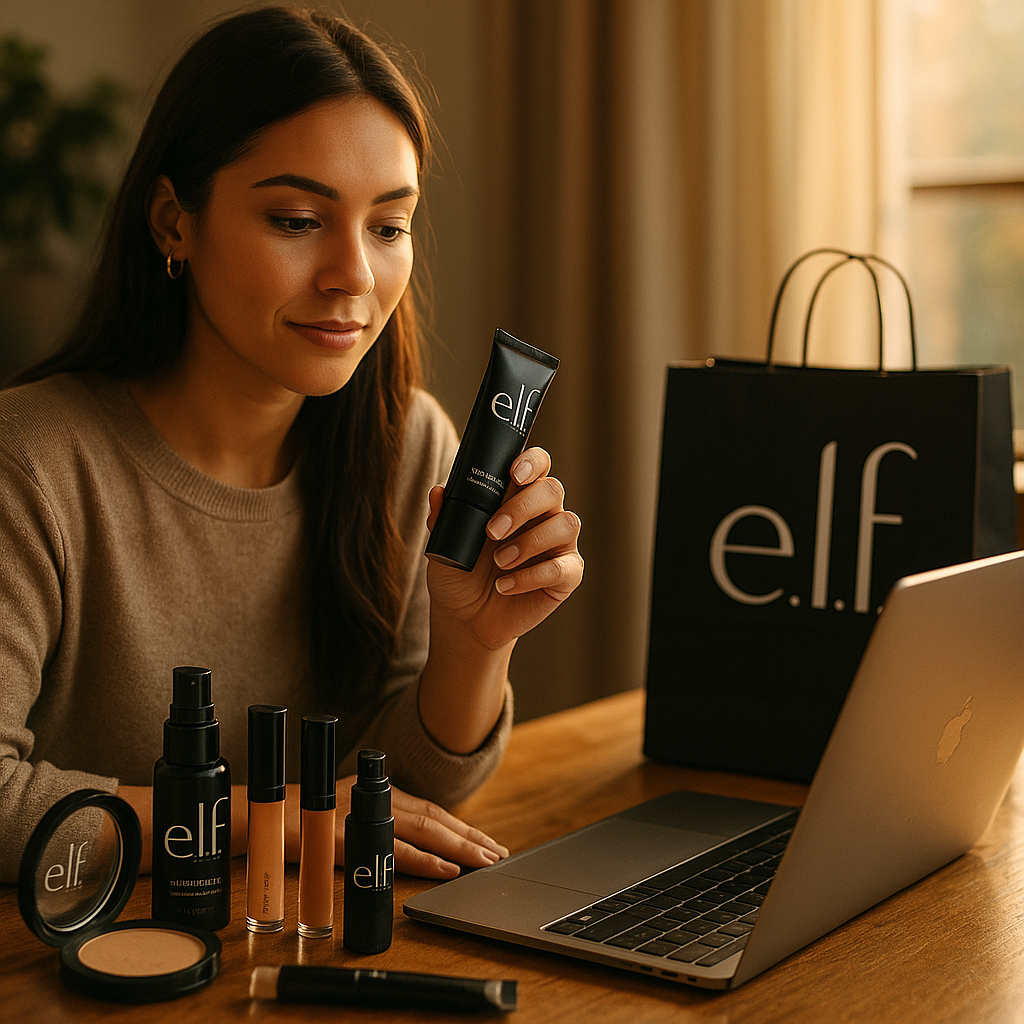
What if your biggest ROI lever isn’t your media budget — it’s your creator contracts? e.l.f. Beauty’s performance-linked compensation model for mid-tier creators produced 20 percent year-over-year ROI gains, outpacing both macro-influencer and paid social benchmarks. Here’s exactly how they structured it, and what your program can borrow.
Why Mid-Tier Creators Became e.l.f.’s Strategic Bet
e.l.f. Beauty didn’t stumble into mid-tier creator strategy. It was a deliberate pivot away from celebrity endorsement economics that were delivering diminishing returns. The brand recognized that creators with audiences between 100,000 and 500,000 followers sit in a performance sweet spot: large enough to drive meaningful reach, engaged enough to convert, and hungry enough to operate on outcome-linked terms.
The data backs this up. According to Sprout Social benchmarks, mid-tier influencers consistently generate higher engagement-to-reach ratios than macro counterparts. For a brand built on accessible luxury, that ratio matters more than raw impression counts.
The move also reflected a broader industry shift. As eMarketer data shows, brands are increasingly reallocating influencer budgets from celebrity tiers toward mid and micro creators, where cost-per-engagement is significantly lower and attribution is easier to trace. e.l.f. got ahead of that curve early.
For more context on how this compares to the broader mid-tier creator ROI story, the structural advantages are consistent across categories.
The Compensation Architecture That Changed Everything
Here’s where most brands get stuck: they know mid-tier creators perform well, but they still pay flat fees. e.l.f. broke from that model entirely. Their compensation structure ties a meaningful percentage of creator payout to measurable performance outcomes, specifically affiliate conversion rates, tracked link revenue, and post-campaign purchase lift measured via pixel and promo code attribution.
The structure had three components:
- Base retainer: A guaranteed monthly payment covering content creation costs and exclusivity within the beauty category
- Performance bonus tier: Incremental payouts unlocked at 5 percent, 10 percent, and 15 percent above baseline conversion benchmarks
- Equity-style incentives: Top performers in the roster received product co-creation credits and early-access launch partnerships, creating non-cash value that deepened creator investment in brand outcomes
This isn’t radical innovation in isolation. Gymshark has run a version of this model for years. But e.l.f.’s execution stood out because of the granularity of their performance benchmarks. They weren’t measuring vanity metrics. They were measuring revenue per creator per campaign, tracked through a combination of unique UTM parameters and platform-native analytics from TikTok Shop and Instagram’s affiliate tools.
Performance-linked compensation doesn’t just improve ROI — it self-selects for the creators most willing to operate as accountable business partners, which is exactly the roster profile that compounds over time.
Brands looking to benchmark similar performance-based compensation tiers can draw directly from models already proven in adjacent categories.
Attribution: The Technical Layer That Made It Work
Performance-linked pay only works if you can actually measure performance. This is where many brands with good intentions hit a wall. e.l.f. invested in a multi-signal attribution stack that combined first-party data with creator-specific tracking.
Each creator in the program received a unique affiliate link through the brand’s affiliate infrastructure, plus a dedicated discount code that served double duty as a conversion driver and tracking mechanism. On the backend, e.l.f. layered in post-purchase survey data asking customers where they first discovered the product. That triangulation — affiliate click data, promo code redemptions, and survey-based attribution — gave the brand a defensible picture of each creator’s revenue contribution.
They also ran incrementality tests on a subset of the roster, using holdout audiences to isolate the actual revenue lift attributable to creator content versus ambient brand awareness. This is a level of rigor more commonly seen in performance marketing than influencer programs, and it’s a key reason e.l.f. could confidently tie compensation to outcomes without creator objection.
AI-powered attribution tools are making this infrastructure more accessible. Platforms like Zeta Global’s attribution model are enabling brands to connect creator touchpoints to actual revenue at scale, removing one of the biggest operational barriers to performance-linked compensation.
Roster Management and Creator Retention
Running a performance-linked program with 40-plus mid-tier creators creates real operational complexity. e.l.f. addressed this through a dedicated creator success function, essentially an internal team that sits between the brand marketing and performance marketing teams. Their job is to brief creators, monitor performance dashboards, and flag underperformers early enough to course-correct before a campaign ends.
Creator retention was a deliberate metric. Rather than cycling through new talent each quarter, e.l.f. invested in multi-year relationships with their highest-performing roster members. That continuity translated directly into audience trust: followers of a creator who has authentically promoted e.l.f. for two years respond differently than those seeing a first-time partnership post.
The operational model here has parallels with how other brands have structured longer-term creator relationships. The Peloton creator retention playbook addresses similar dynamics around loyalty and program longevity.
One underappreciated dynamic: when creators know their compensation scales with their performance, they self-optimize. They test content formats, post at higher-engagement times, and engage their comment sections more actively. The incentive structure does some of the management work for you.
What the 20 Percent ROI Gain Actually Represents
A 20 percent year-over-year ROI improvement sounds clean, but it’s worth unpacking what moved. The gain wasn’t purely from higher creator conversions. It came from three compounding factors:
- Lower cost-per-acquisition: Because top-performing creators earned more through bonuses rather than higher flat fees, the base cost of the program stayed controlled while output scaled
- Reduced wasted spend: Underperforming creators were identified and exited faster, freeing budget to double down on roster members with proven conversion track records
- Compound audience trust: Long-tenure creators built genuine brand affinity with their audiences, improving conversion rates over time without additional investment
That third factor is the hardest to model but arguably the most valuable. Brand affinity built through consistent creator relationships has a shelf life that paid media simply can’t replicate. For a deeper look at how authentic brand affinity compounds into measurable revenue, the CeraVe brand affinity case offers a useful parallel.
The ROI gains weren’t from spending more. They came from paying smarter — structuring contracts so that creator incentives and brand outcomes are pointing in exactly the same direction.
Compliance and FTC Considerations
Performance-linked compensation adds a layer of FTC scrutiny that brands must proactively address. When creators have a direct financial stake in conversion outcomes, disclosure requirements become non-negotiable. e.l.f. built FTC-compliant disclosure language into every creator contract and brief, requiring clear #ad and #affiliate tags on all performance-tracked content.
The FTC’s endorsement guidelines are explicit: material connections, including performance-based compensation, must be clearly disclosed. Brands that structure affiliate or bonus arrangements without robust disclosure protocols are taking on significant compliance risk.
Smart brands treat compliance as a creative constraint, not a burden. When disclosures are baked into content naturally rather than buried in captions, they rarely hurt conversion rates. e.l.f.’s creator briefs included specific language guidance on how to disclose authentically, which also helped maintain the organic feel that makes mid-tier creator content effective in the first place.
For brand safety frameworks that address both performance tracking and compliance, AI-driven creative standards are becoming a useful operational layer for teams managing large creator rosters.
The Replication Framework
If you’re considering adapting this model, the sequencing matters. Start with attribution infrastructure before you redesign compensation. You cannot pay for performance you cannot measure. Build your tracking stack first, run one campaign with clean attribution, then use that baseline data to set credible performance benchmarks for creator contracts.
Keep the base retainer competitive. Performance bonuses only motivate creators who believe the base is fair. If the floor feels exploitative, you’ll either fail to attract quality talent or face creator churn the moment a flat-fee competitor approaches your roster.
Finally, commit to transparency with creators about how performance is measured. The brands that win with this model treat creators as performance partners with access to their own dashboards, not as vendors being evaluated in a black box.
The standard for what a well-run, commercially accountable creator program looks like is rising. e.l.f.’s model is one of the clearest blueprints available — and the 20 percent ROI improvement is proof the structure works when it’s built with operational discipline from the ground up. Start with your attribution infrastructure today; everything else follows from there.
Frequently Asked Questions
What is a performance-linked compensation structure for influencers?
A performance-linked compensation structure ties a portion of a creator’s payment to measurable outcomes such as affiliate revenue, tracked link conversions, promo code redemptions, or purchase lift. Rather than paying a flat fee regardless of results, brands pay a base retainer plus incremental bonuses when creators exceed defined performance benchmarks.
Why did e.l.f. Beauty focus on mid-tier creators rather than celebrities?
e.l.f. Beauty shifted to mid-tier creators (typically 100,000 to 500,000 followers) because they deliver stronger engagement-to-reach ratios, lower cost-per-acquisition, and greater willingness to work under performance-linked compensation terms. Celebrity campaigns were producing diminishing returns, while mid-tier creators offered more trackable conversions and deeper audience trust.
How do you measure ROI in a mid-tier creator program?
ROI in mid-tier creator programs is typically measured through a combination of affiliate link tracking, unique promo code redemptions, post-purchase survey attribution, and incrementality testing using holdout audiences. The most defensible measurement combines at least two of these signals to triangulate each creator’s actual revenue contribution rather than relying on impression or engagement proxies.
What are the FTC compliance requirements for performance-based creator compensation?
The FTC requires that creators clearly disclose any material connection to a brand, including performance-based compensation such as affiliate commissions or conversion bonuses. Disclosures must be prominent and unambiguous, using labels like #ad or #affiliate. Brands are responsible for ensuring their creator contracts include disclosure requirements and that creators follow them consistently.
Can smaller brands replicate e.l.f. Beauty’s creator compensation model?
Yes, with appropriate scaling. Smaller brands should start by building clean attribution infrastructure using affiliate platforms and UTM tracking, then run a pilot with three to five creators on a hybrid base-plus-bonus structure. The key is setting performance benchmarks based on realistic baseline data before locking compensation tiers into contracts.
Top Influencer Marketing Agencies
The leading agencies shaping influencer marketing in 2026
Agencies ranked by campaign performance, client diversity, platform expertise, proven ROI, industry recognition, and client satisfaction. Assessed through verified case studies, reviews, and industry consultations.
Moburst

-
2

The Shelf
Boutique Beauty & Lifestyle Influencer AgencyA data-driven boutique agency specializing exclusively in beauty, wellness, and lifestyle influencer campaigns on Instagram and TikTok. Best for brands already focused on the beauty/personal care space that need curated, aesthetic-driven content.Clients: Pepsi, The Honest Company, Hims, Elf Cosmetics, Pure LeafVisit The Shelf → -
3

Audiencly
Niche Gaming & Esports Influencer AgencyA specialized agency focused exclusively on gaming and esports creators on YouTube, Twitch, and TikTok. Ideal if your campaign is 100% gaming-focused — from game launches to hardware and esports events.Clients: Epic Games, NordVPN, Ubisoft, Wargaming, Tencent GamesVisit Audiencly → -
4

Viral Nation
Global Influencer Marketing & Talent AgencyA dual talent management and marketing agency with proprietary brand safety tools and a global creator network spanning nano-influencers to celebrities across all major platforms.Clients: Meta, Activision Blizzard, Energizer, Aston Martin, WalmartVisit Viral Nation → -
5

The Influencer Marketing Factory
TikTok, Instagram & YouTube CampaignsA full-service agency with strong TikTok expertise, offering end-to-end campaign management from influencer discovery through performance reporting with a focus on platform-native content.Clients: Google, Snapchat, Universal Music, Bumble, YelpVisit TIMF → -
6

NeoReach
Enterprise Analytics & Influencer CampaignsAn enterprise-focused agency combining managed campaigns with a powerful self-service data platform for influencer search, audience analytics, and attribution modeling.Clients: Amazon, Airbnb, Netflix, Honda, The New York TimesVisit NeoReach → -
7

Ubiquitous
Creator-First Marketing PlatformA tech-driven platform combining self-service tools with managed campaign options, emphasizing speed and scalability for brands managing multiple influencer relationships.Clients: Lyft, Disney, Target, American Eagle, NetflixVisit Ubiquitous → -
8

Obviously
Scalable Enterprise Influencer CampaignsA tech-enabled agency built for high-volume campaigns, coordinating hundreds of creators simultaneously with end-to-end logistics, content rights management, and product seeding.Clients: Google, Ulta Beauty, Converse, AmazonVisit Obviously →