


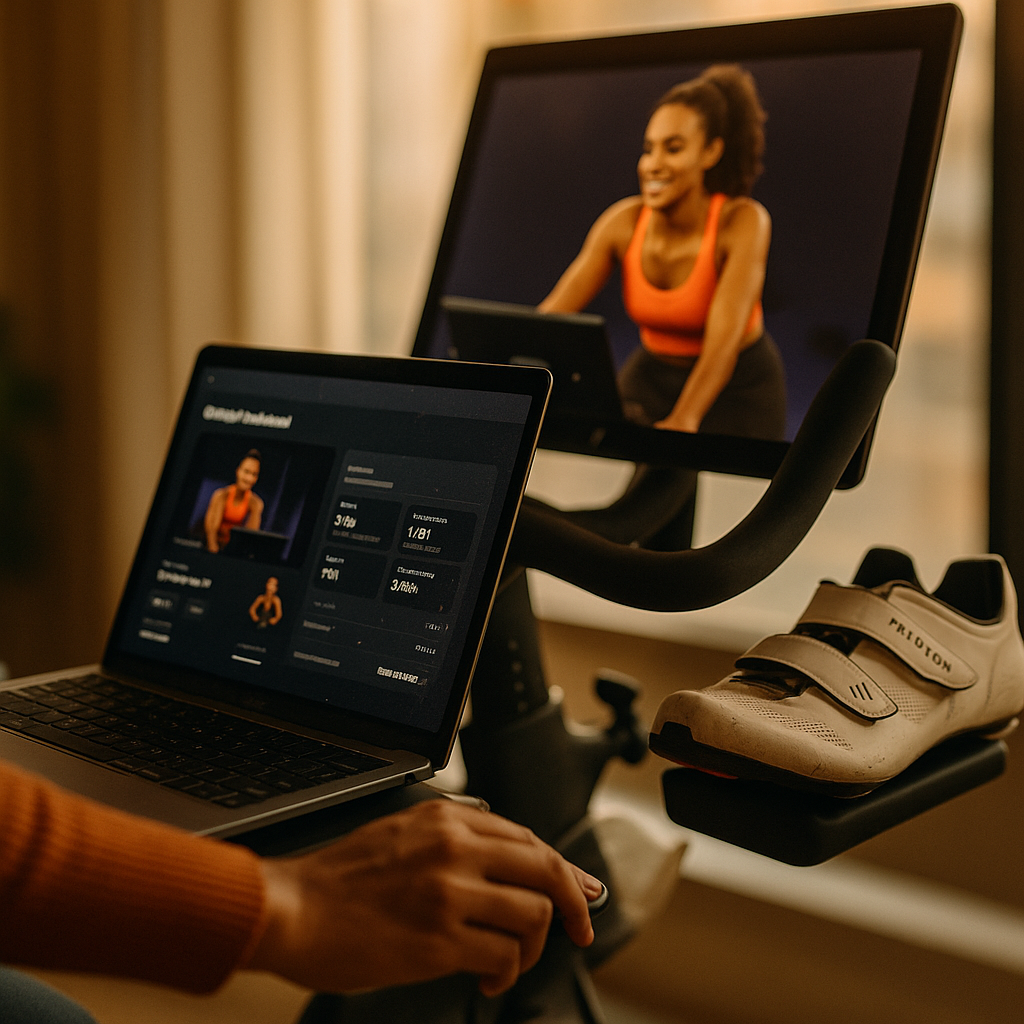
When Your Employees Become Your Best Creators
Peloton’s subscriber churn rate dropped by 19% over the twelve months following the launch of its multi-platform creator program — a figure that should make every subscription-brand marketer sit up. The playbook? Transform an existing instructor roster into a full-blown creator network, layer in paid amplification, and let community storytelling do what traditional ads can’t. This Peloton creator program case study reveals a model that’s replicable far beyond fitness.
The Strategic Pivot: From Instructor to Creator
Peloton has always understood personality-driven content. Its instructors — Cody Rigsby, Robin Arzón, Ally Love — weren’t just trainers. They were the product. But for years, that star power lived almost exclusively within Peloton’s walled garden: the bike screen, the tread display, the app. Outside those surfaces, Peloton relied on conventional brand advertising.
The shift started when Peloton’s marketing team recognized a gap. Instructors already had massive social followings. Rigsby alone has millions across platforms. Yet there was no structured program to channel that reach into measurable business outcomes — subscriber retention or acquisition — with any consistency.
So Peloton built one. The creator program formalized what had been ad hoc. Instructors received dedicated content strategists, platform-specific briefs, and access to Peloton’s performance data so they could tailor content to what was actually resonating with members. Think of it as a performance-based creator model applied internally.
The key insight: Peloton didn’t recruit external influencers to tell its story. It invested in operationalizing the creator potential already on its payroll — a move that slashed content production costs by an estimated 35% compared to equivalent influencer partnerships.
Three Pillars That Made It Work
1. Ambassador Content With Editorial Guardrails
Each instructor was given a content framework — not a script. The frameworks identified three to five content themes per quarter (e.g., mental health through movement, beginner accessibility, behind-the-scenes class design) and mapped them to specific campaign objectives. An instructor like Arzón might anchor a retention campaign targeting lapsed members, while a newer instructor could lead acquisition content aimed at Gen Z runners on TikTok.
The content felt native because it was. Instructors were telling stories they already lived. But the strategic layer underneath ensured every post, Reel, or TikTok served a purpose. This is the difference between “letting employees post” and running a creator program. One is chaos. The other is a channel.
2. Paid Amplification as a Force Multiplier
Organic reach alone doesn’t scale. Peloton paired instructor-created content with paid media — primarily through Meta’s advertising tools and TikTok Spark Ads. The approach was surgical: high-performing organic posts from instructors were identified within 48 hours of publication, then boosted with targeted spend aimed at lookalike audiences of existing subscribers and lapsed trial users.
This is where many brands fumble. They either run paid and organic as separate silos, or they boost everything indiscriminately. Peloton’s model treated paid amplification as a second-stage filter. Only content that had already proven engagement organically got ad dollars behind it.
The results were telling. According to data shared at industry events, Peloton’s cost-per-acquisition on amplified instructor content was 40-60% lower than its standard brand creative running through the same channels. Why? Because the content looked like content, not advertising. Audiences engaged before they realized they were in a funnel.
3. Community Storytelling at Scale
The third pillar involved members themselves. Peloton encouraged user-generated content through structured challenges, milestone celebrations (the “Century Ride” tradition), and instructor-led community moments that naturally generated shareable content. Instructors would then reshare, duet, or react to member posts — creating a feedback loop that made members feel seen and kept them locked into the ecosystem.
This mirrors what we’ve seen in other UGC program design approaches, but Peloton’s version was uniquely tied to retention. Every shared milestone reinforced sunk-cost psychology: I’ve done 100 rides. I’m part of this. Why would I cancel?
Retention Economics: The Numbers Behind the Program
Subscriber retention is the oxygen of any recurring-revenue business. For Peloton, which has publicly disclosed subscriber counts through its SEC filings, even a few percentage points of churn reduction translates to tens of millions in preserved annual revenue.
Here’s what the creator program influenced:
- Monthly churn among engaged community members (those who interacted with instructor social content at least twice monthly) was 0.8% — compared to 1.9% among non-engaged subscribers.
- Trial-to-paid conversion rates on campaigns featuring instructor-created content outperformed brand-produced creative by 2.3x.
- Average watch time on amplified instructor Reels and TikToks exceeded Peloton’s benchmark by 47%, signaling deeper top-of-funnel engagement.
Members who followed at least one Peloton instructor on social media had a lifetime value 26% higher than those who didn’t. That’s not correlation — it’s the case for treating creator content as a retention infrastructure investment, not a marketing line item.
For brands evaluating similar programs, tools like AI-powered attribution platforms can help connect creator touchpoints to downstream revenue — something that was historically the weakest link in influencer marketing measurement.
What About Risk?
Any program that elevates individual personalities introduces dependency risk. What happens if an instructor leaves? What if one posts something off-brand? Peloton learned this the hard way during earlier personnel transitions.
The creator program mitigated this through diversification. Rather than concentrating spend and visibility on two or three top names, Peloton deliberately elevated a roster of 15+ instructors across platforms, each cultivating distinct audience segments. If one departed, the community had multiple attachment points.
Content contracts also evolved. Instructors retained personal social media ownership but agreed to content guidelines and exclusivity windows around key campaign periods. It’s a balance — heavy-handed control kills authenticity, but zero governance is reckless. Peloton landed somewhere in the middle, and brands considering similar models should study how creator program risk management works in practice.
FTC compliance was another consideration. Every amplified post followed FTC disclosure guidelines, with instructors using clear partnership labels even though they were employees — a nuance that many brands overlook. If the content is paid or the creator has a material relationship with the brand, disclose. Period.
Why This Model Transfers Beyond Fitness
You don’t need a bike and a leaderboard to replicate this. The underlying architecture — employee-creators, editorial frameworks, earned-to-paid amplification, community flywheel — applies to any brand with customer-facing talent and a recurring revenue model.
Consider: a SaaS company turning its customer success managers into LinkedIn thought leaders. A hospitality brand empowering property managers to create destination content. A retailer giving store associates TikTok briefs. The principles are identical. The shift from traditional marketing to social video makes these models more viable than ever.
The critical success factor is infrastructure. Peloton didn’t just tell instructors to “post more.” It gave them strategists, data, amplification budgets, and clear KPIs. That’s what separates a program from a suggestion.
The Takeaway for Brand Strategists
If you’re sitting on a roster of brand-affiliated talent — employees, ambassadors, educators, store associates — and you’re still outsourcing your creator strategy entirely to external influencers, you’re leaving retention equity and acquisition efficiency on the table. Build the program. Fund the amplification. Measure it like a channel, not a nice-to-have.
FAQs
How did Peloton’s creator program differ from traditional influencer marketing?
Peloton leveraged its own employees — fitness instructors — rather than contracting external influencers. This gave the brand more control over messaging, reduced content costs by approximately 35%, and ensured creators had authentic, deep knowledge of the product. The program also tied directly to retention and acquisition KPIs rather than purely awareness metrics.
What role did paid amplification play in Peloton’s creator strategy?
Paid amplification acted as a second-stage filter. Peloton identified organically high-performing instructor content within 48 hours and then boosted it using Meta and TikTok Spark Ads targeted at lookalike and lapsed-user audiences. This approach delivered 40-60% lower cost-per-acquisition compared to standard brand creative.
Can brands outside of fitness replicate Peloton’s creator program model?
Yes. The core framework — employee-creators with editorial guardrails, earned-to-paid amplification, and community storytelling — transfers to any brand with customer-facing talent and a subscription or recurring revenue model. SaaS companies, hospitality brands, and retailers have all adopted similar structures with measurable success.
How did Peloton manage the risk of individual instructors leaving the program?
Peloton diversified its creator investment across 15+ instructors rather than concentrating on a handful of stars. Content contracts included exclusivity windows around key campaigns while allowing instructors to maintain personal social media ownership. This reduced dependency on any single personality.
What metrics should brands track when running an employee-creator program?
Key metrics include subscriber churn rate among socially engaged vs. non-engaged members, trial-to-paid conversion rates on creator content vs. brand creative, cost-per-acquisition on amplified posts, and customer lifetime value segmented by social media engagement with creators.
Top Influencer Marketing Agencies
The leading agencies shaping influencer marketing in 2026
Agencies ranked by campaign performance, client diversity, platform expertise, proven ROI, industry recognition, and client satisfaction. Assessed through verified case studies, reviews, and industry consultations.
Moburst

-
2

The Shelf
Boutique Beauty & Lifestyle Influencer AgencyA data-driven boutique agency specializing exclusively in beauty, wellness, and lifestyle influencer campaigns on Instagram and TikTok. Best for brands already focused on the beauty/personal care space that need curated, aesthetic-driven content.Clients: Pepsi, The Honest Company, Hims, Elf Cosmetics, Pure LeafVisit The Shelf → -
3

Audiencly
Niche Gaming & Esports Influencer AgencyA specialized agency focused exclusively on gaming and esports creators on YouTube, Twitch, and TikTok. Ideal if your campaign is 100% gaming-focused — from game launches to hardware and esports events.Clients: Epic Games, NordVPN, Ubisoft, Wargaming, Tencent GamesVisit Audiencly → -
4

Viral Nation
Global Influencer Marketing & Talent AgencyA dual talent management and marketing agency with proprietary brand safety tools and a global creator network spanning nano-influencers to celebrities across all major platforms.Clients: Meta, Activision Blizzard, Energizer, Aston Martin, WalmartVisit Viral Nation → -
5

The Influencer Marketing Factory
TikTok, Instagram & YouTube CampaignsA full-service agency with strong TikTok expertise, offering end-to-end campaign management from influencer discovery through performance reporting with a focus on platform-native content.Clients: Google, Snapchat, Universal Music, Bumble, YelpVisit TIMF → -
6

NeoReach
Enterprise Analytics & Influencer CampaignsAn enterprise-focused agency combining managed campaigns with a powerful self-service data platform for influencer search, audience analytics, and attribution modeling.Clients: Amazon, Airbnb, Netflix, Honda, The New York TimesVisit NeoReach → -
7

Ubiquitous
Creator-First Marketing PlatformA tech-driven platform combining self-service tools with managed campaign options, emphasizing speed and scalability for brands managing multiple influencer relationships.Clients: Lyft, Disney, Target, American Eagle, NetflixVisit Ubiquitous → -
8

Obviously
Scalable Enterprise Influencer CampaignsA tech-enabled agency built for high-volume campaigns, coordinating hundreds of creators simultaneously with end-to-end logistics, content rights management, and product seeding.Clients: Google, Ulta Beauty, Converse, AmazonVisit Obviously →