


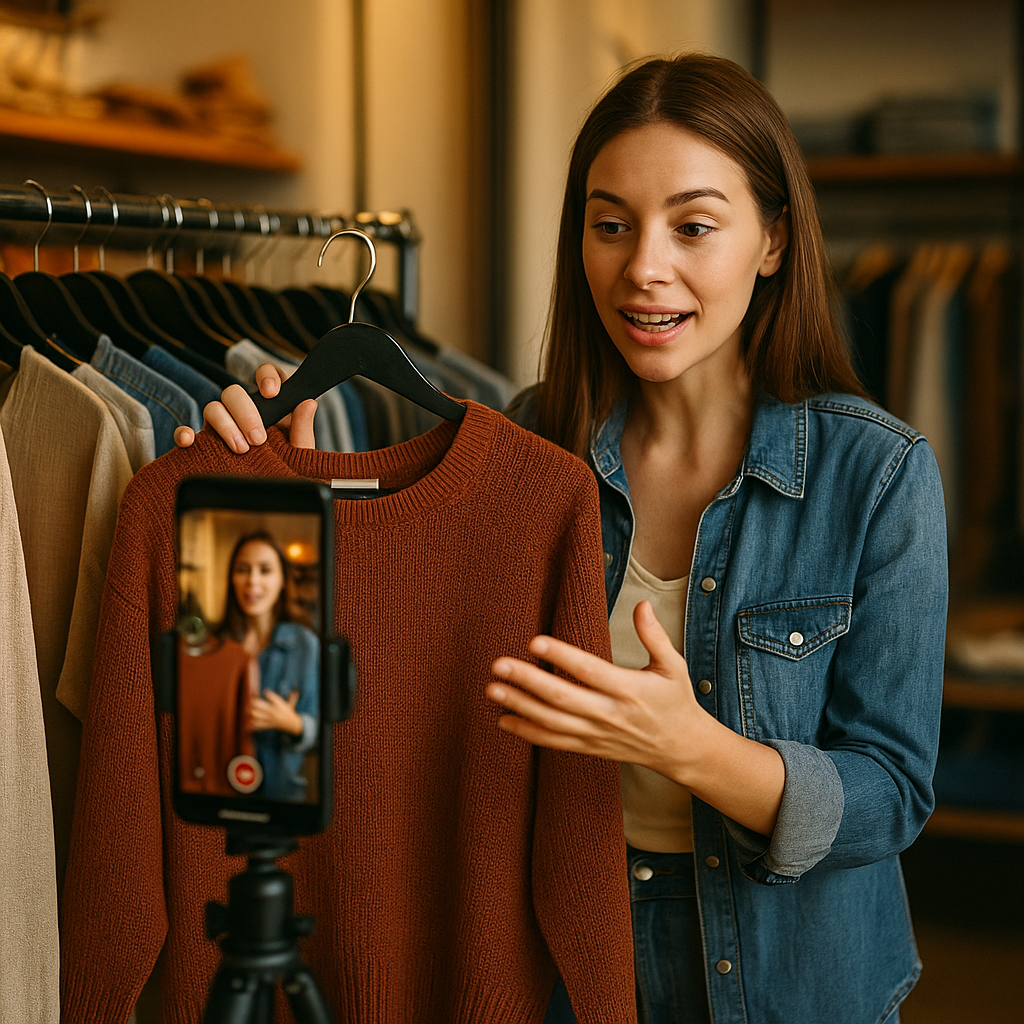
In 2026, many retailers still face the same challenge: traditional print delivers familiarity, but social video delivers attention, speed, and measurable growth. This case study on a retailer’s successful transition from print to social video shows how one brand reduced waste, improved engagement, and lifted sales by changing both content and culture. What made the shift actually work?
Retail marketing strategy: why the brand had to change
A mid-sized regional retailer with more than 80 physical locations had built its marketing around print circulars, direct mail, and in-store flyers. For years, that approach supported steady foot traffic. But customer behavior changed faster than the media plan did.
By early 2026, the retailer saw three clear warning signs:
- Print costs kept rising while response rates became less predictable.
- Younger shoppers rarely engaged with weekly mailers and instead discovered offers through short-form video and creator content.
- Campaign measurement was limited, making it difficult to connect spend with store visits, online purchases, or repeat customers.
The leadership team did not abandon print because it stopped working completely. They shifted because it no longer worked efficiently enough. That distinction matters. Strong retail marketing strategy starts with understanding whether a channel is underperforming or simply overused.
The internal audit revealed that the brand was spending most of its budget on asset production and distribution for print, yet learning very little from the output. Creative testing was slow. Offer changes took too long to deploy. Regional messaging required separate production cycles. Meanwhile, competitors were publishing product demos, staff explainers, customer reactions, and event recaps on social platforms every week.
This retailer recognized a practical truth: social video was not just another awareness channel. It was becoming the fastest way to test value propositions, localize promotions, and reach audiences at multiple stages of the buying journey.
Instead of asking, “How do we replace print?” the team asked a better question: “How do we rebuild our content system around what customers now watch, share, and act on?”
Social video marketing: building the transition plan
The retailer did not move its entire budget overnight. It created a structured 90-day transition plan designed to reduce risk and prove results before scaling.
The plan had five parts:
- Audience mapping: identify which customer segments were most likely to respond to short-form video, local event content, and product education.
- Channel prioritization: focus on the social platforms where the brand already had baseline engagement rather than trying to dominate every network at once.
- Content pillar development: replace static promotional messaging with repeatable video formats.
- Measurement setup: connect campaign data to store visits, site traffic, coupon redemption, and assisted conversions.
- Store-level enablement: train local managers and staff to contribute content without damaging brand consistency.
The first strategic decision was to treat social video as a performance channel and not just a branding exercise. That changed everything. Each video concept needed a purpose: drive awareness, generate product consideration, support a limited-time promotion, or increase store traffic.
The second decision was to stop repurposing print layouts into video. Many retail brands fail here. They take static flyer logic, animate it slightly, and call it digital transformation. This retailer instead built content specifically for motion-first platforms. That meant tighter openings, stronger visuals in the first two seconds, captions for sound-off viewing, clear calls to action, and a human presence on camera.
To maintain control, the team created a practical governance model. Corporate marketing owned brand guidelines, paid promotion, and campaign testing. Local stores supplied footage, staff appearances, and regional hooks such as weather, events, and community partnerships. This balance preserved trust while making content feel timely and relevant.
Video content strategy: the formats that replaced print circular thinking
The brand’s biggest breakthrough came when it stopped thinking in pages and started thinking in formats. Instead of producing one large weekly print piece, it launched several recurring video types that could be produced quickly and tested continuously.
The core video content strategy included:
- Weekly deal highlights: 15- to 20-second vertical videos featuring three to five top offers.
- Product-in-use demos: short clips showing how items looked, fit, solved a problem, or compared with alternatives.
- Store associate picks: staff recommendations that added credibility and a local voice.
- Seasonal shopping guides: curated videos tied to holidays, weather changes, school schedules, or local events.
- Customer question videos: simple explainers answering common buying questions that previously depended on in-store conversations.
- Community and event recaps: content that showed the retailer as active and relevant, not just promotional.
This mix worked because it mirrored how people actually consume video. Audiences do not want every post to feel like an ad. They want a blend of utility, personality, proof, and offers.
The creative team also established production rules based on real platform behavior:
- Lead with the product or payoff immediately.
- Keep most videos under 30 seconds unless the topic clearly requires more explanation.
- Use on-screen text to reinforce the message.
- Show real people whenever possible.
- Design for vertical viewing first.
- End with one simple action, not several competing asks.
Another smart move was content batching. The team scheduled monthly filming days in selected stores, capturing enough footage for multiple campaigns. This reduced production costs and prevented the “we need content tomorrow” scramble that often undermines quality.
To protect brand accuracy, they created editable templates for pricing, disclaimers, and promotional overlays. That allowed fast updates without rebuilding each asset from scratch.
As a result, the retailer went from a slow, print-centered production cycle to a modular content operation capable of publishing several relevant videos per week.
Omnichannel retail performance: the results after shifting budget
Once the retailer had enough data from test markets, it reallocated a significant portion of its print budget into paid and organic social video. The business impact was measurable across both digital and physical channels.
Within six months, the retailer reported improvements in several areas:
- Higher engagement rates on promotional content compared with static social posts derived from print assets.
- Lower creative waste because underperforming concepts could be paused or revised quickly.
- Faster campaign optimization thanks to near real-time feedback on watch time, click-through behavior, and conversion actions.
- Improved store visit lift in markets where localized video promotions ran alongside geo-targeted media support.
- Better online conversion support from product demo videos and offer-focused retargeting.
The most important outcome was not a vanity metric. It was better omnichannel retail performance. Customers who saw social video were more likely to arrive informed, redeem offers, and purchase with less hesitation. In e-commerce, the same videos reduced friction by answering practical questions before checkout.
The retailer also discovered that some categories benefited more than others. Products requiring demonstration or comparison performed especially well on video. Commodity items still sold best when paired with stronger price messaging. This insight helped the team adjust creative by category rather than forcing one style across the entire assortment.
Print did not disappear completely. The brand retained it in select high-value use cases, including specific regional audiences and key promotional periods. But print moved from being the default channel to being a supporting channel. Social video became the engine for testing, learning, and scaling.
This is a critical lesson for executives evaluating media shifts in 2026: the success of digital transformation should be measured by business outcomes, not by whether legacy channels were eliminated.
Customer engagement metrics: how the team measured what mattered
One reason the transition succeeded was disciplined measurement. The retailer avoided the common mistake of treating views as proof of impact. Instead, it built a reporting model around customer engagement metrics that aligned with business objectives.
The dashboard tracked performance across four levels:
- Attention metrics: impressions, watch rate, average watch time, hook retention, and completion rate.
- Engagement metrics: shares, saves, comments, profile visits, and click-through rates.
- Conversion metrics: coupon activations, product page visits, add-to-cart actions, and online purchases.
- Retail impact metrics: store visit lift, point-of-sale redemption, basket size trends, and repeat purchase behavior.
This layered approach helped the team answer follow-up questions that stakeholders always ask:
Did people actually watch? Hook retention and completion rate answered that.
Did they care enough to act? Clicks, saves, and offer redemptions answered that.
Did it influence revenue? Store and e-commerce conversion data answered that.
The team also ran structured tests. For example, it compared:
- Staff-led videos versus product-only edits
- Localized offers versus chain-wide promotions
- Educational hooks versus discount-first hooks
- Short 10-second versions versus 20- to 30-second versions
These tests produced insights that improved creative quality over time. In many cases, the best-performing videos were not the most polished. They were the clearest, fastest, and most useful. That aligns with what experienced marketers already know: audiences reward relevance more than production excess.
Because the retailer documented these learnings, the transition became repeatable. New stores and regional teams could apply proven frameworks rather than starting from zero.
Digital transformation in retail: lessons other brands can apply
This case study offers practical lessons for any retailer considering digital transformation in retail, especially those still heavily invested in print-led campaigns.
Lesson one: start with customer behavior, not channel loyalty. If target audiences discover products through video, the marketing system must reflect that reality.
Lesson two: do not force old creative habits into new platforms. Social video needs a native approach. Static promotional logic rarely translates well.
Lesson three: keep local relevance. Retail is still rooted in geography. National brand consistency matters, but local context often drives action.
Lesson four: train teams, not just tools. The retailer’s results improved because store managers, corporate marketers, merchandisers, and analysts all understood their role in the new model.
Lesson five: measure beyond views. A high-view video that does not influence traffic, conversion, or sales should not define the strategy.
Lesson six: transition, do not panic. The retailer preserved what still worked from print while shifting investment toward channels that offered better speed, flexibility, and insight.
For brands wondering about internal resistance, this retailer faced it too. Merchandising teams worried that social video would reduce message control. Store teams worried about time. Leadership worried about consistency. The solution was a clear operating model, easy-to-use templates, and proof from early pilot results. Once performance became visible, adoption accelerated.
The broader takeaway is simple: retail media transformation succeeds when content, operations, and measurement evolve together. Moving budget alone is not enough. The brand must also change how it creates, approves, distributes, and learns from content.
FAQs about a retailer’s transition from print to social video
Why are retailers moving from print to social video in 2026?
Retailers are following customer attention and seeking better measurement. Social video enables faster testing, more precise targeting, localized messaging, and clearer links to sales outcomes than print alone.
Should retailers stop using print completely?
Not necessarily. Print can still support specific audiences, regional campaigns, or peak seasonal periods. The stronger approach is to use print selectively and let social video handle agility, testing, and broader reach.
What types of social video work best for retail brands?
Short deal highlights, product demonstrations, staff recommendations, seasonal buying guides, and customer question videos tend to perform well because they combine utility with clear commercial intent.
How can retailers measure whether social video drives store sales?
They can connect social campaigns to geo-targeted store visit data, coupon redemption, loyalty activity, point-of-sale reporting, and matched market testing. These methods reveal whether video influences physical retail outcomes.
Is high production quality required for retail social video success?
No. Clarity, speed, relevance, and authenticity matter more. Well-structured videos featuring real products and real people often outperform highly polished content that feels detached from the shopping experience.
What is the biggest mistake retailers make when replacing print with video?
The biggest mistake is repackaging print assets into motion without changing the message structure. Social video needs a strong opening, native formatting, and one clear action for the viewer to take.
How long does it take to see results from a transition to social video?
Retailers can often gather meaningful engagement and creative testing data within weeks. Business impact such as store traffic and conversion gains usually becomes clearer after several campaign cycles and localized testing.
Who should own social video inside a retail organization?
The most effective model is shared ownership. Corporate marketing should lead strategy, standards, and measurement, while local teams contribute authentic store-level content and market-specific insights.
This case study shows that a successful shift from print to social video is not about chasing trends. It is about building a faster, more measurable, customer-focused retail marketing system. Retailers that win in 2026 will create native video, test constantly, empower local teams, and judge success by revenue impact, not just reach. The clear takeaway: evolve the operating model, and growth follows.
Top Influencer Marketing Agencies
The leading agencies shaping influencer marketing in 2026
Agencies ranked by campaign performance, client diversity, platform expertise, proven ROI, industry recognition, and client satisfaction. Assessed through verified case studies, reviews, and industry consultations.
Moburst

-
2

The Shelf
Boutique Beauty & Lifestyle Influencer AgencyA data-driven boutique agency specializing exclusively in beauty, wellness, and lifestyle influencer campaigns on Instagram and TikTok. Best for brands already focused on the beauty/personal care space that need curated, aesthetic-driven content.Clients: Pepsi, The Honest Company, Hims, Elf Cosmetics, Pure LeafVisit The Shelf → -
3

Audiencly
Niche Gaming & Esports Influencer AgencyA specialized agency focused exclusively on gaming and esports creators on YouTube, Twitch, and TikTok. Ideal if your campaign is 100% gaming-focused — from game launches to hardware and esports events.Clients: Epic Games, NordVPN, Ubisoft, Wargaming, Tencent GamesVisit Audiencly → -
4

Viral Nation
Global Influencer Marketing & Talent AgencyA dual talent management and marketing agency with proprietary brand safety tools and a global creator network spanning nano-influencers to celebrities across all major platforms.Clients: Meta, Activision Blizzard, Energizer, Aston Martin, WalmartVisit Viral Nation → -
5

The Influencer Marketing Factory
TikTok, Instagram & YouTube CampaignsA full-service agency with strong TikTok expertise, offering end-to-end campaign management from influencer discovery through performance reporting with a focus on platform-native content.Clients: Google, Snapchat, Universal Music, Bumble, YelpVisit TIMF → -
6

NeoReach
Enterprise Analytics & Influencer CampaignsAn enterprise-focused agency combining managed campaigns with a powerful self-service data platform for influencer search, audience analytics, and attribution modeling.Clients: Amazon, Airbnb, Netflix, Honda, The New York TimesVisit NeoReach → -
7

Ubiquitous
Creator-First Marketing PlatformA tech-driven platform combining self-service tools with managed campaign options, emphasizing speed and scalability for brands managing multiple influencer relationships.Clients: Lyft, Disney, Target, American Eagle, NetflixVisit Ubiquitous → -
8

Obviously
Scalable Enterprise Influencer CampaignsA tech-enabled agency built for high-volume campaigns, coordinating hundreds of creators simultaneously with end-to-end logistics, content rights management, and product seeding.Clients: Google, Ulta Beauty, Converse, AmazonVisit Obviously →