


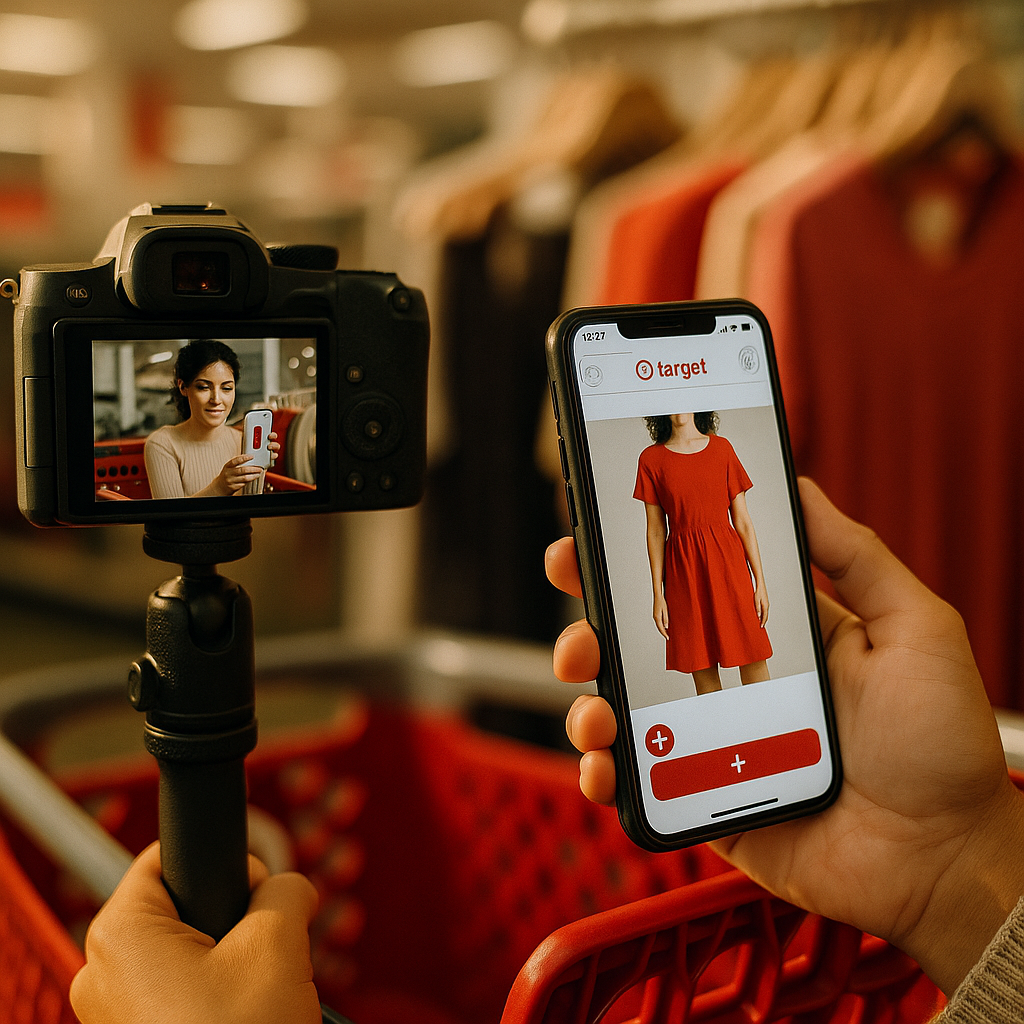
Two Programs. One Conversion Engine.
Retail brands running a single creator tier are leaving shoppable revenue on the table. Target’s dual-architecture approach—Club Target for community-scale creators and Target Ambassadors for higher-reach partners—generates compounding shoppable link conversion through a mechanic most retail strategists haven’t fully reverse-engineered: pairing commission incentives with weekly content challenges simultaneously, not alternately.
This isn’t a brand awareness play dressed up as performance marketing. It’s a deliberate structural decision with measurable downstream effects on TikTok Shop attribution and Instagram’s native link sticker funnel. Here’s what the architecture actually looks like—and why the incentive layering is the real strategic lever.
Understanding the Two-Tier Program Structure
Club Target functions as a broad-base affiliate community. Creators at this tier—typically micro and mid-tier with 10K–250K followers—access product gifting, early category drops, and a commission structure tied to shoppable link clicks and completed purchases. The barrier to entry is low by design. Target wants volume here: a wide array of lifestyle, home, beauty, and food creators posting regularly across formats.
Target Ambassadors operate at a different altitude. These are selected creators with demonstrated category authority—home organization, fashion, family, wellness—who receive dedicated account management, higher commission rates, and first-access to campaign briefs. Critically, Ambassadors are the ones anchoring the weekly challenges that Club Target members then activate around.
This structure borrows from tiered loyalty mechanics more commonly seen in SaaS referral programs than in retail creator ecosystems. The architecture creates a natural aspiration ladder: Club Target creators who perform well—measured by click-through on shoppable links and engagement on challenge posts—become eligible for Ambassador consideration. That upward mobility is itself a retention mechanism.
Target’s smartest structural move isn’t the commission rate—it’s making Ambassadors the challenge anchors that Club Target creators rally around. The incentive flows both upward and downward through the tier system simultaneously.
How the Weekly Challenge Mechanic Actually Works
Weekly challenges are distributed to Ambassadors with a defined creative brief: a theme, a product category, a format preference (Reel vs. TikTok video vs. carousel), and a call-to-action tied to a specific shoppable link or LTK (LikeToKnowIt) collection page. Ambassadors post first—typically mid-week—effectively seeding the challenge. Club Target members then respond within the same rolling weekly window, using a designated hashtag and linking through their individual affiliate-tracked URLs.
The sequencing matters. Ambassador posts carry enough reach to drive initial awareness. Club Target posts extend shelf life and algorithm surface area. By the time Target’s owned social channels amplify top-performing challenge posts, the shoppable link has accumulated multiple touchpoints across the purchase consideration journey.
On TikTok specifically, this architecture benefits from the platform’s discovery algorithm rewarding thematic content clusters. Multiple creators posting around the same product or theme within a compressed window creates what TikTok’s own creative team refers to as “topical momentum”—increased algorithmic distribution for content that appears to be trending organically. For brands wanting to understand the brief architecture behind this kind of creator activation, the mechanics of creator trend integration and brief timing are directly relevant.
Commission vs. Challenge Incentive: Why Both at Once?
The obvious question any retail strategist asks: why run commission and challenge incentives simultaneously? Don’t they dilute each other’s behavioral effect?
The data suggests the opposite. Commission structures create a sustained baseline posting cadence—creators have ongoing financial motivation to keep shoppable links live and discoverable. Challenge incentives create spikes: coordinated, thematic content bursts that drive outsized discovery and conversion events within a defined window. Neither mechanic alone produces both effects.
Commission-only programs tend to produce evergreen content that performs steadily but rarely trends. Challenge-only programs generate spikes that die without a sustained content ecosystem underneath them. Target’s dual approach uses challenges as ignition and commission as fuel.
According to eMarketer data on social commerce, shoppable content that combines creator credibility with time-limited incentive mechanics converts at meaningfully higher rates than either static product posts or purely commission-driven affiliate content. The behavioral explanation is straightforward: challenge posts signal social proof and timely relevance, while the commission link beneath them provides a frictionless path to purchase.
Compare this to how Gymshark’s performance-based compensation tiers operate—Gymshark also layers incentive types but applies the logic to fitness verticals with longer consideration cycles. Target’s challenge cadence is faster precisely because retail purchase decisions happen in hours, not days.
Shoppable Link Attribution: Where the Data Lives
Attribution is where most retail brand programs break down. Target’s architecture uses two primary tracking layers: LTK (formerly LikeToKnowIt) for Instagram-native shoppable posts, and TikTok Shop’s affiliate program for TikTok content. Each platform provides creator-level click and conversion data back to Target’s partner team, enabling week-over-week performance comparison across challenge participation.
What makes this operationally significant is that Target can isolate challenge-week performance against non-challenge-week baseline performance for the same cohort of creators. That delta—the lift attributable to the challenge mechanic itself—is the data point that justifies the additional operational cost of running weekly creative briefs at scale.
Early TikTok Shop case data shared via TikTok for Business indicates that retail brands using coordinated creator challenges alongside affiliate commission structures see significantly higher add-to-cart rates compared to affiliate-only activations. The challenge creates intent; the commission link closes the gap to conversion.
For brands running similar architectures, how retailers are shifting to social video for direct sales attribution provides useful benchmark context on what conversion lift looks like at the category level.
Risk Factors Retail Strategists Need to Price In
This model isn’t without operational complexity. Three risk areas deserve direct attention.
- FTC compliance at scale: With Club Target running potentially hundreds of creators per weekly challenge, disclosure compliance becomes a process problem, not a policy problem. Each shoppable post must carry proper #ad or #sponsored disclosures per FTC endorsement guidelines. Target manages this through onboarding requirements and automated link-tagging, but smaller brands replicating this architecture need robust creator compliance infrastructure before scaling.
- Content quality dilution: Broad-base programs invite inconsistent brand representation. Target mitigates this through Ambassador-led challenge seeding—the top-tier content sets a visual and tonal standard that Club members reference. Without that anchor, challenge quality can drift.
- Attribution window conflicts: LTK and TikTok Shop run different attribution windows. If a creator posts on both platforms in the same challenge week, conversions can be double-counted without a clean deduplication protocol. This is a real accounting problem for reporting accurate ROAS to leadership.
The organic-plus-paid amplification model addresses a related challenge—how to layer paid support on top of creator content without distorting organic attribution signals. Target’s paid amplification of top challenge posts introduces the same tension, and brands should resolve the attribution methodology before launching, not after.
Running dual incentive mechanics at scale is an operations challenge before it’s a creative one. Brands that get the attribution infrastructure right before launch will have cleaner data—and better budget justification—than those who retrofit tracking after the program is live.
What Retail Brand Strategists Can Extract From This Model
You don’t need Target’s vendor relationships or creator roster size to apply this architecture. The core principles are platform-agnostic and budget-scalable.
Start with a two-tier distinction—even if “Ambassador” means five creators and “community” means thirty. Define different commission rates and different content expectations for each tier. Then design weekly challenge briefs that Ambassadors activate first. Make the challenge theme product-specific enough to drive shoppable link clicks, but creatively loose enough that Club-tier creators can interpret it authentically for their own audiences.
Track the challenge-week lift separately from baseline affiliate performance. That’s the proof point your leadership team will ask for when you request budget to scale the program. If the challenge mechanic isn’t producing a measurable conversion lift over the commission baseline, the brief needs work—not the incentive structure.
For brands in earlier stages of creator program development, the Duolingo UGC program design blueprint and insights from Peloton’s creator retention model both offer structural templates worth studying alongside Target’s dual-tier approach—especially for brands where community aspiration, not just conversion, is part of the program’s value proposition.
The metric that ultimately validates the dual-architecture model isn’t engagement rate. It’s repeat shoppable link clicks from the same creator’s audience over multiple challenge cycles. That repeat behavior signals genuine purchase intent, not algorithmic accident.
Frequently Asked Questions
What is the difference between Club Target and Target Ambassadors?
Club Target is a broad-base affiliate creator community open to micro and mid-tier creators who post shoppable content in exchange for product gifting and commission on link-driven purchases. Target Ambassadors is a selective, higher-tier program for creators with demonstrated category authority who receive dedicated account management, elevated commission rates, and first access to campaign briefs. Ambassadors anchor weekly challenges that Club Target creators activate around.
How do weekly Instagram and TikTok challenges drive shoppable link conversion?
Weekly challenges create coordinated thematic content bursts across both platforms, driving algorithmic topical momentum and increasing the number of touchpoints a potential buyer encounters before purchase. Ambassadors post first to seed the theme; Club Target creators extend reach and shelf life. Each post links to an affiliate-tracked shoppable URL, so conversion events are attributable to specific creators and challenge weeks.
Why run commission and challenge incentives at the same time?
Commission-only programs produce steady but undramatic content output. Challenge-only programs generate spikes that fade without a sustained content ecosystem. Running both simultaneously uses challenges as ignition events—driving discovery and conversion spikes—while commission structure maintains a continuous baseline of shoppable content between challenge cycles. The combination produces compounding conversion effects that neither incentive achieves independently.
What attribution tools does this type of program rely on?
Target’s program primarily uses LTK (LikeToKnowIt) for Instagram shoppable attribution and TikTok Shop’s native affiliate program for TikTok content. Both platforms provide creator-level click and conversion data. Brands replicating this architecture need a deduplication protocol to avoid double-counting conversions when creators post on both platforms during the same challenge window.
What are the key compliance risks for a dual creator program at scale?
The primary compliance risk is FTC disclosure at volume—when hundreds of creators post challenge content in a single week, ensuring every post carries proper #ad or #sponsored disclosure becomes a process management challenge. Brands should establish automated link-tagging, creator onboarding agreements with explicit disclosure requirements, and regular compliance audits. Attribution window conflicts between platforms are a secondary risk that should be resolved in reporting methodology before program launch.
Can smaller retail brands replicate Target’s dual-architecture model?
Yes. The architecture scales down effectively. A functional version can operate with as few as five Ambassador-tier creators and thirty community-tier creators. The structural principles—tiered compensation, Ambassador-led challenge seeding, weekly brief cadence, and separate challenge-lift tracking against commission baseline—apply regardless of program size. The critical requirement is having distinct commission rates and content expectations for each tier from the outset.
Top Influencer Marketing Agencies
The leading agencies shaping influencer marketing in 2026
Agencies ranked by campaign performance, client diversity, platform expertise, proven ROI, industry recognition, and client satisfaction. Assessed through verified case studies, reviews, and industry consultations.
Moburst

-
2

The Shelf
Boutique Beauty & Lifestyle Influencer AgencyA data-driven boutique agency specializing exclusively in beauty, wellness, and lifestyle influencer campaigns on Instagram and TikTok. Best for brands already focused on the beauty/personal care space that need curated, aesthetic-driven content.Clients: Pepsi, The Honest Company, Hims, Elf Cosmetics, Pure LeafVisit The Shelf → -
3

Audiencly
Niche Gaming & Esports Influencer AgencyA specialized agency focused exclusively on gaming and esports creators on YouTube, Twitch, and TikTok. Ideal if your campaign is 100% gaming-focused — from game launches to hardware and esports events.Clients: Epic Games, NordVPN, Ubisoft, Wargaming, Tencent GamesVisit Audiencly → -
4

Viral Nation
Global Influencer Marketing & Talent AgencyA dual talent management and marketing agency with proprietary brand safety tools and a global creator network spanning nano-influencers to celebrities across all major platforms.Clients: Meta, Activision Blizzard, Energizer, Aston Martin, WalmartVisit Viral Nation → -
5

The Influencer Marketing Factory
TikTok, Instagram & YouTube CampaignsA full-service agency with strong TikTok expertise, offering end-to-end campaign management from influencer discovery through performance reporting with a focus on platform-native content.Clients: Google, Snapchat, Universal Music, Bumble, YelpVisit TIMF → -
6

NeoReach
Enterprise Analytics & Influencer CampaignsAn enterprise-focused agency combining managed campaigns with a powerful self-service data platform for influencer search, audience analytics, and attribution modeling.Clients: Amazon, Airbnb, Netflix, Honda, The New York TimesVisit NeoReach → -
7

Ubiquitous
Creator-First Marketing PlatformA tech-driven platform combining self-service tools with managed campaign options, emphasizing speed and scalability for brands managing multiple influencer relationships.Clients: Lyft, Disney, Target, American Eagle, NetflixVisit Ubiquitous → -
8

Obviously
Scalable Enterprise Influencer CampaignsA tech-enabled agency built for high-volume campaigns, coordinating hundreds of creators simultaneously with end-to-end logistics, content rights management, and product seeding.Clients: Google, Ulta Beauty, Converse, AmazonVisit Obviously →