


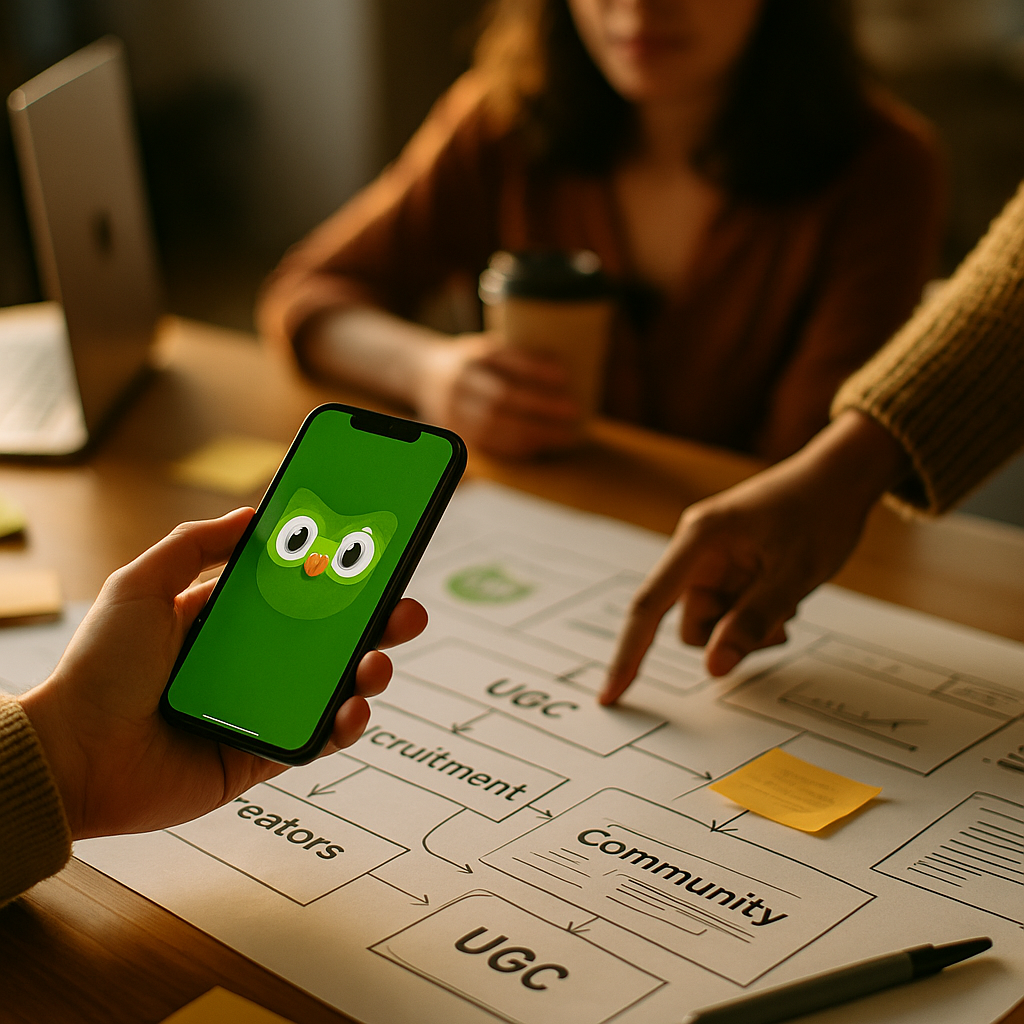
Everyone Loves Duolingo’s Content. Almost Nobody Has Reverse-Engineered the Machine Behind It.
Duolingo produces more branded social content per week than most Fortune 500 companies produce per quarter. According to Statista, the app surpassed 113 million monthly active users in late 2024, with organic social impressions growing at a rate that dwarfs its paid media spend. The secret? Duolingo’s creator army model—a structured UGC program design that blends paid creators, community challenges, and AI-assisted content routing into a single, scalable content engine. Everyone claps. Few can actually build it.
The Origin Story Wasn’t a Strategy. It Was an Accident That Got Formalized.
Let’s dispense with the myth. Duolingo didn’t sit in a boardroom and blueprint a “creator army.” The early TikTok virality around Duo the Owl was largely organic—community members riffing on the mascot’s passive-aggressive push notifications. What separated Duolingo from every other brand that stumbles into a meme moment was what happened next: they hired for it, built infrastructure around it, and systematized the chaos.
By mid-2023, the brand had transitioned from a two-person social team running on instinct to an internal content studio supported by a rotating roster of paid creators, each operating within defined content pillars. The humor stayed. The randomness didn’t.
This is the part most brand marketers miss. They see the output—the unhinged TikToks, the meme-literate Instagram Reels—and assume the process is equally unhinged. It’s not. The Duolingo creator army model runs on structured UGC program design with three distinct layers working in concert.
Three Layers: Paid Creators, Community Challenges, AI Routing
Layer 1: The Paid Creator Core. Duolingo maintains relationships with approximately 30-50 paid creators at any given time, segmented by platform expertise and content format. These aren’t mega-influencers. They’re mid-tier and micro creators—comedians, language learners, sketch performers—who understand the brand’s tonal guardrails. Compensation varies, but the model leans toward performance-based structures similar to what Gymshark’s compensation tiers pioneered: base rates plus engagement bonuses that incentivize reach without sacrificing brand safety.
Layer 2: Community Challenges. This is where volume scales beyond what any paid roster can produce. Duolingo runs recurring community challenges—streak-sharing campaigns, language-learning milestones, mascot-themed content prompts—that turn their 113 million users into a content farm. The brand seeds challenges through their paid creators, then amplifies the best community submissions through their owned channels. It’s a flywheel. Paid creators model the behavior. The community replicates it. The brand curates and redistributes.
Duolingo’s real competitive moat isn’t creative talent—it’s the operational infrastructure that connects paid creator output to community-generated volume to AI-powered distribution. Most brands invest in one layer and wonder why the engine stalls.
Layer 3: AI-Assisted Content Routing. This is the layer nobody talks about, and it’s arguably the most important. Duolingo uses machine learning models to score incoming UGC against performance benchmarks, brand safety thresholds, and platform-specific format requirements. Content that clears the threshold gets routed to the appropriate channel—TikTok, Reels, YouTube Shorts, or even repurposed for paid social—without a human manually triaging every piece. The brand’s engineering DNA makes this possible; most consumer brands would need third-party tooling from platforms like Sprout Social or enterprise-grade creator management platforms to approximate this capability.
For brands exploring how AI attribution can support influencer programs at scale, AI-driven attribution models offer a useful parallel framework.
Why Can’t Other Brands Just Copy This?
They try. They fail. Here’s why.
Problem 1: Organizational structure. Duolingo’s social and content teams report directly into product and growth, not into a siloed marketing department that needs five approvals to post a meme. Most brands can’t move at the speed required because their org chart won’t let them. When a trending audio hits TikTok, Duolingo can have creator-produced content live within hours. Most enterprise brands need a week just to get legal sign-off.
Problem 2: Brand voice clarity. Duolingo’s voice is unmistakable—chaotic, slightly menacing, deeply self-aware. That clarity makes creator briefing fast and quality control easy. If a piece of content sounds like Duo, it ships. If it doesn’t, it gets killed. Compare this to brands with vague tone guidelines like “fun but professional” or “playful yet authoritative.” Those guardrails produce mediocre content because creators can’t hit a target that doesn’t exist.
Problem 3: Technical investment. The AI routing layer isn’t optional—it’s what makes the whole thing scalable. Without automated content scoring and routing, you need an army of coordinators manually reviewing every submission. That doesn’t scale, and the cost structure collapses. Duolingo’s engineering team built proprietary tools. Most brands aren’t willing to make that investment, and the off-the-shelf alternatives still require significant configuration.
Problem 4: Community density. Duolingo has a built-in community of language learners who are already emotionally invested in the product. They want to make content about their streaks and their fear of the owl. Brands selling CPG products or financial services don’t have that same emotional substrate. The community challenge layer only works when the community exists and cares. Stanley’s tumbler phenomenon showed that micro-influencer seeding and scarcity can manufacture community energy, but sustaining it requires a fundamentally different operational commitment.
What a Realistic Replication Looks Like
If you’re a brand strategist reading this, the question isn’t “how do we become Duolingo?” It’s “which pieces of this model can we operationalize within our constraints?”
Start with the paid creator layer. Build a roster of 10-15 creators who genuinely understand your brand voice. Brief them tightly but give them format freedom. Pay for output volume, not just individual posts—this shifts the economics toward content-engine thinking rather than campaign-by-campaign negotiation.
Next, pilot community challenges in a single channel. Don’t try to run cross-platform UGC campaigns on day one. Pick TikTok or Instagram, design a challenge with a clear creative constraint (not an open brief—constraints drive creativity), and use your paid creators to seed participation. Measure submission volume, earned impressions, and content reuse rate. Those three metrics tell you whether the flywheel is spinning.
Then invest in content routing technology. You don’t need to build it from scratch. Tools from HubSpot and specialized creator management platforms can automate intake scoring and channel routing. The key is establishing clear scoring criteria: brand safety, production quality, format fit, and estimated engagement potential. Without these criteria codified, AI tools have nothing to optimize against.
The brands that will successfully replicate elements of Duolingo’s creator army in the next 18 months are the ones investing in operational infrastructure first and creative talent second. The talent pipeline matters, but it’s the plumbing that makes the content engine run.
Airbnb offers an instructive parallel. Their approach of turning local creators into booking drivers demonstrates that structured creator programs can directly impact revenue when the operational scaffolding supports it.
The Compliance Layer Nobody Wants to Discuss
Here’s where the conversation gets uncomfortable. Scaling UGC means scaling risk. Every community-submitted piece of content that Duolingo reposts carries implicit brand endorsement. The FTC’s disclosure guidelines require clear labeling when creators are compensated, and the line between “paid creator” and “enthusiastic community member who received free Duolingo Plus” gets blurry fast.
Duolingo manages this with automated disclosure tagging built into their content routing pipeline. When a piece of content originates from a paid creator, disclosure language gets appended before distribution. Community-sourced content that gets amplified through paid media triggers a separate compliance workflow. It’s not glamorous work. It’s essential work.
For brands operating in more regulated categories—finance, healthcare, alcohol—this compliance layer needs to be designed before the first creator is onboarded, not retrofitted after a legal scare. Managing viral misinformation risks is exponentially harder when content volume is high and routing is automated.
The Bottom Line for Brand Operators
Duolingo’s creator army model isn’t magic. It’s engineering applied to content marketing: defined inputs, automated processing, measured outputs. The reason most brands admire it but can’t replicate it is that they’re trying to copy the creative output without building the operational system that produces it. Stop benchmarking against Duolingo’s TikTok feed. Start benchmarking against their content operations infrastructure—the creator tiers, the community flywheel mechanics, the AI routing layer, and the compliance automation. That’s where the competitive advantage actually lives.
Your next step: Audit your current creator program against the three-layer model. Identify which layer is missing or weakest, and allocate your next quarter’s investment there—not toward more one-off influencer campaigns that die the week they launch.
Frequently Asked Questions
What is Duolingo’s creator army model?
Duolingo’s creator army model is a structured UGC program design that combines three layers: a paid creator roster producing brand-aligned content at volume, community challenges that turn millions of users into content contributors, and AI-assisted content routing that automates scoring, compliance tagging, and distribution across platforms. Together, these layers form a scalable content engine that produces consistent output without proportionally scaling headcount or budget.
How does AI-assisted content routing work in Duolingo’s UGC program?
Duolingo uses machine learning models to evaluate incoming user-generated and creator-produced content against criteria including brand safety, production quality, format fit for specific platforms, and predicted engagement. Content that meets defined thresholds is automatically routed to the appropriate channel—TikTok, Instagram Reels, YouTube Shorts, or paid social—with compliance disclosures appended when the content originates from compensated creators. This eliminates the need for manual triage of every content piece.
Why have most brands failed to replicate Duolingo’s content engine?
Most brands fail because they focus on copying Duolingo’s creative output—the viral humor and memes—without investing in the underlying operational infrastructure. Common barriers include slow approval processes from siloed organizational structures, vague brand voice guidelines that make creator briefing inconsistent, lack of investment in content routing technology, and absence of an emotionally engaged user community that naturally wants to create brand-related content.
How can brands start building a structured UGC program like Duolingo’s?
Start with a focused paid creator roster of 10-15 creators who deeply understand your brand voice, compensated for content volume rather than individual posts. Pilot community challenges on a single platform with clear creative constraints. Then invest in content routing technology—either proprietary or through platforms like HubSpot or Sprout Social—with codified scoring criteria for brand safety, quality, and engagement potential. Build the compliance layer from day one, especially in regulated industries.
What metrics should brands track when building a creator content engine?
Focus on three core metrics for the community challenge layer: submission volume (indicating flywheel momentum), earned impressions from amplified UGC, and content reuse rate (how often community content gets redistributed across owned and paid channels). For the paid creator layer, track cost per content asset, engagement rate by platform, and time from brief to publish. For the AI routing layer, measure routing accuracy, compliance tagging completeness, and the ratio of automated versus manually triaged content.
Top Influencer Marketing Agencies
The leading agencies shaping influencer marketing in 2026
Agencies ranked by campaign performance, client diversity, platform expertise, proven ROI, industry recognition, and client satisfaction. Assessed through verified case studies, reviews, and industry consultations.
Moburst

-
2

The Shelf
Boutique Beauty & Lifestyle Influencer AgencyA data-driven boutique agency specializing exclusively in beauty, wellness, and lifestyle influencer campaigns on Instagram and TikTok. Best for brands already focused on the beauty/personal care space that need curated, aesthetic-driven content.Clients: Pepsi, The Honest Company, Hims, Elf Cosmetics, Pure LeafVisit The Shelf → -
3

Audiencly
Niche Gaming & Esports Influencer AgencyA specialized agency focused exclusively on gaming and esports creators on YouTube, Twitch, and TikTok. Ideal if your campaign is 100% gaming-focused — from game launches to hardware and esports events.Clients: Epic Games, NordVPN, Ubisoft, Wargaming, Tencent GamesVisit Audiencly → -
4

Viral Nation
Global Influencer Marketing & Talent AgencyA dual talent management and marketing agency with proprietary brand safety tools and a global creator network spanning nano-influencers to celebrities across all major platforms.Clients: Meta, Activision Blizzard, Energizer, Aston Martin, WalmartVisit Viral Nation → -
5

The Influencer Marketing Factory
TikTok, Instagram & YouTube CampaignsA full-service agency with strong TikTok expertise, offering end-to-end campaign management from influencer discovery through performance reporting with a focus on platform-native content.Clients: Google, Snapchat, Universal Music, Bumble, YelpVisit TIMF → -
6

NeoReach
Enterprise Analytics & Influencer CampaignsAn enterprise-focused agency combining managed campaigns with a powerful self-service data platform for influencer search, audience analytics, and attribution modeling.Clients: Amazon, Airbnb, Netflix, Honda, The New York TimesVisit NeoReach → -
7

Ubiquitous
Creator-First Marketing PlatformA tech-driven platform combining self-service tools with managed campaign options, emphasizing speed and scalability for brands managing multiple influencer relationships.Clients: Lyft, Disney, Target, American Eagle, NetflixVisit Ubiquitous → -
8

Obviously
Scalable Enterprise Influencer CampaignsA tech-enabled agency built for high-volume campaigns, coordinating hundreds of creators simultaneously with end-to-end logistics, content rights management, and product seeding.Clients: Google, Ulta Beauty, Converse, AmazonVisit Obviously →