


Sixty-Three Percent of Paid Amplification Budgets Now Touch AI Bidding — But Who’s Actually Watching?
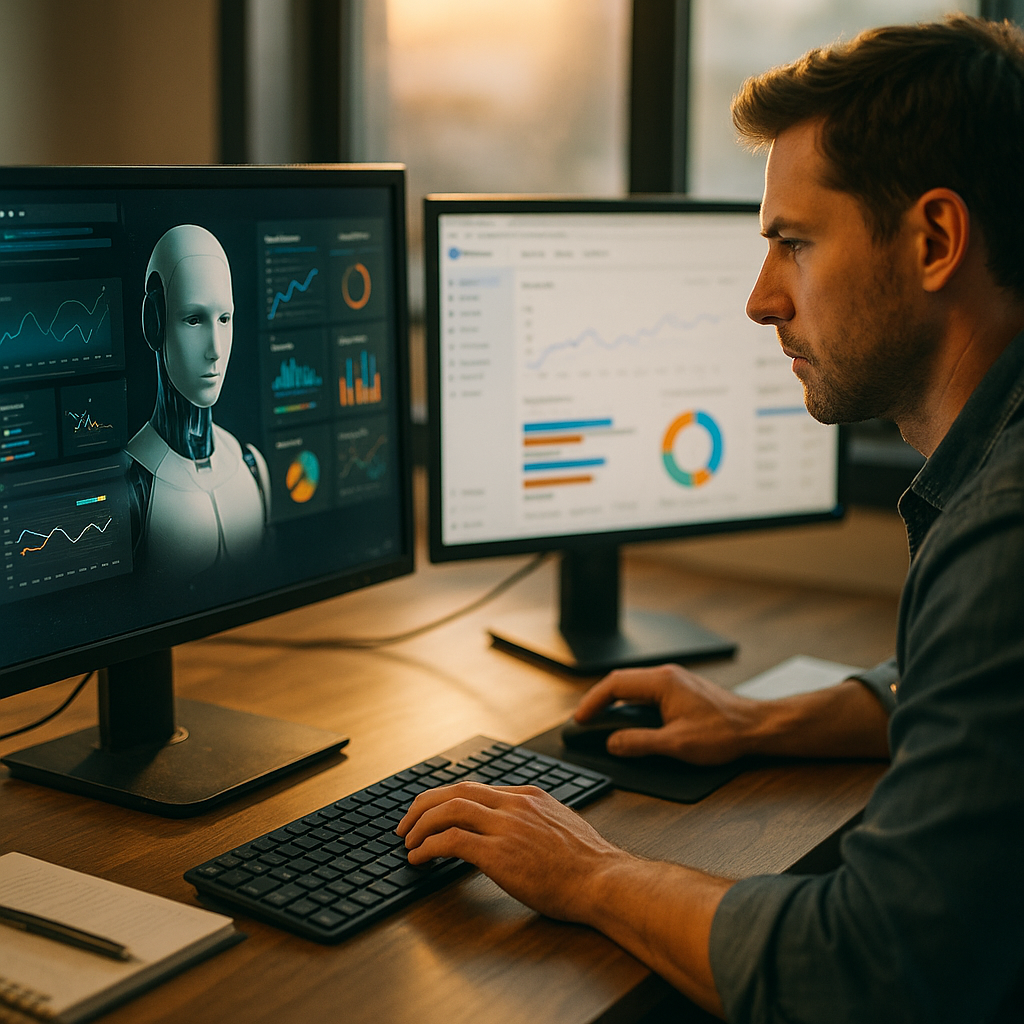
The Trade Desk’s Koa AI agent now manages bid decisions across more than $12 billion in annual media spend. For brands running influencer-adjacent paid amplification — boosting creator content through programmatic channels — that autonomy is a double-edged sword. The Trade Desk AI agent for media buying can compress optimization cycles from days to minutes. It can also burn through budget on placements that actively undermine a creator partnership. The question isn’t whether to use it. It’s knowing exactly when to let it run and when to pull the lever back to manual.
What “Influencer-Adjacent Paid Amplification” Actually Means
Let’s kill any ambiguity. Influencer-adjacent paid amplification refers to programmatic or paid social spend that extends the reach of creator-produced content beyond organic distribution. Think allowlisted creator posts running as paid ads, programmatic display using creator imagery, or CTV spots built from reformatted creator video. This is distinct from the creator’s own organic reach and from standard brand-produced paid media.
The nuance matters because the content carries the creator’s identity, voice, and audience expectations. An AI bidding agent optimizing purely for CPM efficiency doesn’t inherently understand brand-safety adjacency in the creator context. A beauty creator’s tutorial boosted into a programmatic pre-roll slot on a controversial news segment? Technically compliant. Strategically toxic.
The Evaluation Framework: Five Decision Gates
After working with programmatic teams across CPG, DTC, and financial services brands, a pattern emerges. Autonomous bidding excels in specific conditions and fails predictably in others. Here’s the framework, structured as five sequential decision gates.
Gate 1: Signal Density
The Trade Desk’s Koa agent performs best when it has abundant conversion signals to optimize against. If your influencer amplification campaign has clear, measurable downstream events — add-to-cart, app install, lead capture — and those events fire at sufficient volume (typically 50+ conversions per week per ad group), let the machine bid. It will find patterns in frequency, dayparting, and audience segments faster than any human trader.
But many influencer amplification objectives are upper-funnel: brand lift, consideration shift, earned media amplification. When the signal is sparse or proxy-based, Koa’s optimization becomes a sophisticated guessing game. In these scenarios, set manual bid floors and ceilings. Let the AI operate within guardrails, not in open water.
Gate 2: Content Sensitivity and Creator Brand Risk
This is where most brands get burned. Autonomous bidding agents optimize placement quality through probabilistic brand-safety scoring. The Trade Desk integrates with DoubleVerify, IAS, and Oracle’s contextual tools. That’s solid for standard brand campaigns.
Creator content adds a layer. The creator’s personal brand has its own risk profile, audience expectations, and contextual sensitivities that don’t map neatly to IAB category filters. A fitness creator’s content boosted adjacent to gambling ads may technically pass brand-safety checks but violate the implicit trust contract with their audience.
Rule of thumb: If the creator has contractual approval rights over where their content appears, human oversight on placement must override autonomous bidding. No exceptions. The reputational cost of a single bad placement outweighs weeks of marginal CPM optimization.
Gate 3: Budget Concentration vs. Distribution
Autonomous bidding shines when distributing spend across broad inventory pools. If you’re amplifying creator content across open web display, CTV, and audio simultaneously, Koa’s cross-channel optimization genuinely outperforms manual allocation. A recent eMarketer analysis found that AI-managed cross-channel campaigns achieved 22% better ROAS than manually allocated equivalents at similar spend levels.
The inverse is also true. When budget is concentrated — say, a $50K burst behind a single creator’s product launch video across a narrow set of premium CTV placements — the AI has limited room to optimize and may churn through inventory trying to learn. In concentrated-budget scenarios, pre-negotiate PMPs (private marketplace deals) manually and let the AI handle only bid-level execution within those deals.
Gate 4: Attribution Window Alignment
Here’s a subtle failure mode. The Trade Desk’s default attribution models may not align with how your team measures influencer program ROI. If your multi-touch attribution model weights first-touch creator interactions differently than Koa’s last-touch or algorithmic default, the AI will optimize toward its own definition of success — not yours.
Before enabling autonomous bidding, confirm that your attribution windows and models are synced. If they aren’t, you’ll get a dashboard that says the campaign is performing while your actual incrementality analysis tells a different story. This disconnect is the single most common source of AI-vs-human conflict in media buying teams.
Gate 5: Regulatory and Disclosure Compliance
Influencer content carries FTC disclosure requirements that extend into paid amplification. When creator content is boosted programmatically, the disclosure must remain visible and compliant in whatever format and placement the ad appears. An AI agent dynamically reformatting creative for different inventory sizes might crop or obscure required disclosures.
This isn’t hypothetical. It’s happened. Human QA on creative rendering across placement types is non-negotiable. The AI can bid; a human must verify that every creative variant maintains compliance.
When Autonomous Bidding Clearly Wins
Not every scenario requires a heavy hand. Here’s where brands should lean into The Trade Desk AI agent without hesitation:
- Retargeting audiences who engaged with organic creator content. Signal density is high, the audience is pre-qualified, and the AI’s bid optimization translates directly to efficiency gains. Brands running conversion-first creator strategies see the clearest lift here.
- Broad reach campaigns with standardized creator assets. When you’re running a single hero video across millions of impressions with straightforward KPIs (completed views, reach, frequency caps), let Koa optimize. The machine will beat manual pacing every time.
- Real-time dayparting and frequency optimization. Humans can’t adjust bids across thousands of line items every 15 minutes. The AI can. For always-on creator amplification programs, this alone justifies autonomous operation.
- Cross-channel budget reallocation. If your campaign spans CTV, display, native, and audio, the AI’s ability to shift spend toward the highest-performing channel in real time is genuinely superior to weekly manual rebalancing.
When to Pull the Override — No Debate
Some situations demand human control regardless of what the optimization dashboard says.
Creator crisis events. If a creator faces public controversy mid-campaign, the AI won’t know to pause. Your team must have kill-switch protocols that override automated bidding within hours, not days.
Sensitive product categories. Financial services, healthcare, alcohol, and cannabis-adjacent brands face regulatory scrutiny that AI brand-safety filters handle imperfectly. Layer human review on top.
New creator partnerships. The first campaign with any creator should be closely monitored to establish baseline performance data. Let the AI learn from human-supervised results before granting autonomy.
The brands getting the best results from The Trade Desk AI agent aren’t choosing between human and machine. They’re running a tiered oversight model — full autonomy for high-signal retargeting, supervised autonomy for mid-funnel amplification, and manual control for high-stakes creator launches.
Building Your Internal Evaluation Scorecard
Operationalizing this framework means giving your media buying team a repeatable decision tool. Score each campaign on the five gates above using a simple 1-3 scale (1 = autonomous, 2 = supervised, 3 = manual override). Average the score. Campaigns scoring below 1.5 can run fully autonomous. Between 1.5 and 2.5, implement supervised automation with weekly human review. Above 2.5, maintain manual bid management with AI-assisted recommendations only.
This scorecard should live inside your martech rationalization playbook alongside your other AI governance protocols. It’s a living document — update thresholds quarterly based on actual performance data.
One more operational detail: ensure your DSP team and your influencer team are actually talking. In too many organizations, paid media and creator partnerships operate as separate functions that share a Slack channel at best. The evaluation framework only works when both teams co-own the decision at each gate. If you’re also evaluating Google’s DV360 or other DSP AI tools for similar use cases, apply the same five gates — the logic is platform-agnostic even if the execution details differ.
Your Next Move
Audit your current influencer amplification campaigns against the five decision gates this week. Identify which campaigns are running on full autonomy that shouldn’t be — and which ones are over-managed by humans when the AI would demonstrably outperform. The ROI gap between those two corrections is where your next quarter’s efficiency gains live.
Frequently Asked Questions
What is The Trade Desk AI agent for media buying?
The Trade Desk AI agent, known as Koa, is an autonomous bidding system built into The Trade Desk’s demand-side platform. It uses machine learning to optimize bid prices, audience targeting, frequency, and cross-channel budget allocation in real time across programmatic display, CTV, audio, and native inventory. For influencer-adjacent paid amplification, it can manage the distribution of creator content across these channels without manual bid adjustments.
When should brands let AI handle influencer paid amplification bidding autonomously?
Brands should enable full autonomous bidding when campaigns have high conversion signal density (50+ weekly conversions per ad group), standardized creative assets, broad inventory targeting, and straightforward KPIs like completed views or retargeting conversions. Cross-channel always-on amplification programs and retargeting of users who engaged with organic creator content are ideal use cases for autonomous operation.
When should human oversight override The Trade Desk AI agent?
Human override is essential during creator crisis events, when creators have contractual placement approval rights, for sensitive or regulated product categories, during first-time creator partnerships, and whenever FTC disclosure compliance could be compromised by dynamic creative reformatting. Campaigns with sparse conversion signals or upper-funnel objectives also benefit from human-supervised guardrails rather than full autonomy.
How do attribution model mismatches affect AI bidding performance?
If The Trade Desk’s default attribution model differs from your brand’s multi-touch attribution framework, the AI will optimize toward outcomes your team doesn’t prioritize. This creates a disconnect where the DSP dashboard shows strong performance while your internal incrementality analysis reveals underperformance. Aligning attribution windows and models before enabling autonomous bidding prevents wasted spend and misleading reporting.
Can the five-gate evaluation framework apply to DSPs other than The Trade Desk?
Yes. The five decision gates — signal density, content sensitivity, budget concentration, attribution alignment, and regulatory compliance — are platform-agnostic. Whether you’re evaluating Google’s DV360, Amazon DSP, or any other programmatic platform with AI bidding capabilities, the same logic applies to determining when autonomous operation is safe and when human oversight is required.
Top Influencer Marketing Agencies
The leading agencies shaping influencer marketing in 2026
Agencies ranked by campaign performance, client diversity, platform expertise, proven ROI, industry recognition, and client satisfaction. Assessed through verified case studies, reviews, and industry consultations.
Moburst

-
2

The Shelf
Boutique Beauty & Lifestyle Influencer AgencyA data-driven boutique agency specializing exclusively in beauty, wellness, and lifestyle influencer campaigns on Instagram and TikTok. Best for brands already focused on the beauty/personal care space that need curated, aesthetic-driven content.Clients: Pepsi, The Honest Company, Hims, Elf Cosmetics, Pure LeafVisit The Shelf → -
3

Audiencly
Niche Gaming & Esports Influencer AgencyA specialized agency focused exclusively on gaming and esports creators on YouTube, Twitch, and TikTok. Ideal if your campaign is 100% gaming-focused — from game launches to hardware and esports events.Clients: Epic Games, NordVPN, Ubisoft, Wargaming, Tencent GamesVisit Audiencly → -
4

Viral Nation
Global Influencer Marketing & Talent AgencyA dual talent management and marketing agency with proprietary brand safety tools and a global creator network spanning nano-influencers to celebrities across all major platforms.Clients: Meta, Activision Blizzard, Energizer, Aston Martin, WalmartVisit Viral Nation → -
5

The Influencer Marketing Factory
TikTok, Instagram & YouTube CampaignsA full-service agency with strong TikTok expertise, offering end-to-end campaign management from influencer discovery through performance reporting with a focus on platform-native content.Clients: Google, Snapchat, Universal Music, Bumble, YelpVisit TIMF → -
6

NeoReach
Enterprise Analytics & Influencer CampaignsAn enterprise-focused agency combining managed campaigns with a powerful self-service data platform for influencer search, audience analytics, and attribution modeling.Clients: Amazon, Airbnb, Netflix, Honda, The New York TimesVisit NeoReach → -
7

Ubiquitous
Creator-First Marketing PlatformA tech-driven platform combining self-service tools with managed campaign options, emphasizing speed and scalability for brands managing multiple influencer relationships.Clients: Lyft, Disney, Target, American Eagle, NetflixVisit Ubiquitous → -
8

Obviously
Scalable Enterprise Influencer CampaignsA tech-enabled agency built for high-volume campaigns, coordinating hundreds of creators simultaneously with end-to-end logistics, content rights management, and product seeding.Clients: Google, Ulta Beauty, Converse, AmazonVisit Obviously →