


The 6x CTR Benchmark Just Became Table Stakes
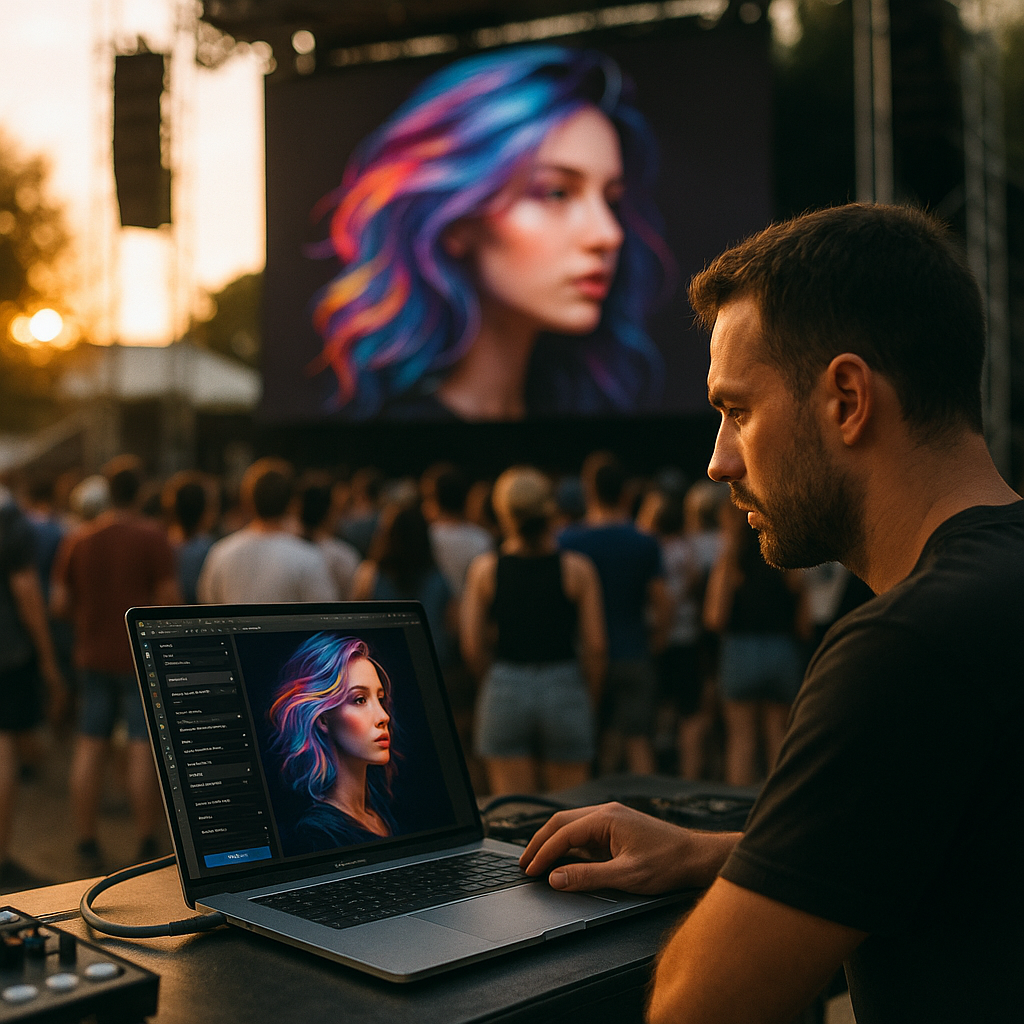
During the Super Bowl LVIII post-game window, three CPG brands running AI-generated real-time creative against live event moments hit click-through rates between 6.1x and 8.4x their category benchmarks on Meta and TikTok. That wasn’t a fluke. It was a signal. AI-enabled real-time creative generation at live events is no longer experimental — it’s resetting what “good” looks like in paid social performance, and brand teams still running pre-produced assets into event moments are already behind.
What’s Actually Happening: The Mechanics Behind the Spike
Let’s be specific about the workflow, because “AI creative” means different things to different teams.
The brands hitting these numbers aren’t just using generative AI to make ads faster. They’re running a closed-loop system that looks roughly like this:
- Event signal ingestion. Real-time APIs pull trending moments, sentiment shifts, and engagement spikes from platforms like X, TikTok, and Instagram during a live event — a concert, a game, a product launch.
- Prompt orchestration. An AI layer (typically built on models from OpenAI or Anthropic) translates those signals into creative briefs in seconds, not hours.
- Asset generation. Tools like Luma Dream Machine, Runway, or Adobe Firefly produce video and static variants — sometimes 20-30 per moment — in under four minutes.
- Automated deployment. Pre-approved brand guardrails allow assets to push directly into Meta Ads Manager or TikTok ad accounts via API, with human approval functioning as a kill switch rather than a gate.
- Real-time optimization. Performance data feeds back into the system within the first 90 seconds of delivery, triggering variant suppression or amplification.
The entire cycle — from cultural moment to live paid creative — compresses into seven to twelve minutes. Compare that to the 48-72 hour turnaround most brand teams currently operate within.
The CTR advantage isn’t about better creative. It’s about temporal relevance — reaching audiences while the emotional context of a live moment is still active in their feed behavior. That window is shrinking to under 20 minutes for peak engagement.
Nike, Pepsi, and Samsung have each publicly referenced variations of this approach in conference presentations this year. Smaller DTC brands like Hexclad and Ridge have been even more aggressive, treating every live-streamed creator event as a paid media trigger.
Why the Old Playbook Can’t Get You to 6x
Pre-produced event creative was designed for a world where platforms rewarded polish and media buys rewarded reach. Neither is true anymore.
TikTok’s ad platform now explicitly rewards content-native formats with lower CPMs. Meta’s Advantage+ system favors high-variant creative pools. Both platforms algorithmically penalize stale assets — creative fatigue sets in within hours during high-volume event periods, not days.
Here’s the math that should worry any brand strategist still relying on a pre-event creative sprint:
- Pre-produced event ads typically see 1.5-2.5x category CTR benchmarks — respectable, but plateauing.
- Real-time contextual creative consistently hits 4-6x, and the best operators are now clearing 6x as a floor.
- Cost-per-acquisition on real-time creative runs 30-45% lower due to higher relevance scores and lower auction costs during micro-windows competitors aren’t bidding into.
The brands achieving this understand something fundamental: the creative isn’t the product. Speed is the product. The creative is just the vehicle for temporal precision.
This aligns with what we’ve seen in AI video advertising costs — the technology is collapsing production timelines while simultaneously raising performance ceilings.
What Brand Teams Must Build: The Five Capabilities
Talking about this trend is easy. Operationalizing it requires five distinct capabilities that most marketing organizations don’t currently have.
1. An agentic creative pipeline. Not a single tool — a stack. You need signal detection, prompt engineering, asset generation, compliance review, and deployment automation working as an integrated system. This is where an agentic marketing stack becomes essential rather than aspirational. The brands winning are treating this like infrastructure, not a campaign tactic.
2. Pre-approved brand guardrails, not pre-approved creative. Legal and brand teams need to shift from approving individual assets to approving decision frameworks. Define the boundaries — color, tone, messaging pillars, prohibited claims, competitive references — and let AI operate within them. If your legal review process requires 24 hours per asset, you’ve already lost the window.
3. Human oversight as kill switch. This is critical and often misunderstood. The human oversight layer isn’t there to approve every asset before it goes live. It’s there to monitor output quality in real time and pull anything that violates guardrails. Think air traffic control, not customs inspection.
4. Creator-ready infrastructure. The highest-performing real-time creative doesn’t look like an ad. It looks like a creator reacting to a moment. Brands that have pre-negotiated usage rights with creator partners — allowing AI to remix and redeploy creator footage in real time — are seeing the strongest results. This requires a fundamentally different kind of creator brief. We’ve covered how AI content demands rewritten briefs, and the principle applies doubly here.
5. Attribution that tracks speed-to-moment. Standard attribution models don’t capture why real-time creative outperforms. You need to log the delta between event moment and creative deployment, then correlate that gap with performance. Revenue attribution systems must evolve to account for temporal context as a variable, not just audience or placement.
The Risk Conversation Nobody Wants to Have
Speed introduces risk. There’s no way around it.
When you compress creative development from days to minutes, you’re trading review depth for temporal relevance. Every brand team considering this approach needs to have an honest conversation about their risk tolerance.
The FTC’s evolving guidance on AI-generated advertising content adds another layer. Automated creative that makes implied claims, uses deepfake-adjacent techniques, or fails to disclose AI involvement can trigger regulatory scrutiny. Your guardrail system needs to encode compliance rules, not just brand guidelines.
The brands that will dominate speed-first advertising aren’t the ones with the fastest AI. They’re the ones with the most robust pre-approved guardrails — because guardrail quality is what determines how much autonomy you can safely give the system.
Practically, that means your legal team needs to become a product team. They need to define machine-readable rules, not review decks. This is a cultural shift as much as a technical one.
Who’s Already There — and Who’s Scrambling
Enterprise brands with dedicated performance creative teams — think Unilever, AB InBev, L’Oréal — have been building toward this since late last year. They have the budget, the data infrastructure, and the agency relationships to stand up these systems.
Mid-market brands are where the opportunity is most acute. A DTC brand spending $500K–$5M annually on paid social can realistically build a lightweight version of this stack using off-the-shelf tools. HubSpot’s reporting on creative performance benchmarks shows that brands adopting AI-assisted creative workflows are seeing 35-50% improvements in creative output volume with minimal team expansion.
The scramble is real among agencies. Traditional creative agencies aren’t built for seven-minute turnarounds. Performance agencies are closer, but most lack generative AI expertise. The gap is being filled by a new category of AI-native creative operations firms — and by in-house teams that refuse to wait for their agencies to catch up.
The Competitive Window Is Narrow
Right now, real-time AI creative at live events is a differentiator. Within 12-18 months, it will be standard practice among top-performing advertisers. The 6x CTR benchmark will compress as more brands flood event moments with AI-generated creative, increasing auction competition in those micro-windows.
First movers get cheaper CPAs and outsized CTR. Fast followers get parity. Everyone else gets left competing for attention with stale assets against opponents moving at machine speed.
The question isn’t whether to build this capability. It’s whether you build it now — while the performance arbitrage is still wide open — or later, when it costs more and delivers less.
Your next step: Audit your current event-to-deployment timeline for the last three live event campaigns. If it’s measured in days, start assembling the cross-functional team — creative, legal, media buying, data engineering — needed to compress it to minutes. That team is your competitive moat.
FAQs
What is AI-enabled real-time creative generation at live events?
It is a closed-loop system that uses AI to detect trending live event moments, automatically generate multiple ad creative variants, and deploy them into paid social platforms within minutes — capitalizing on the short window when audiences are most engaged with that moment.
Why does real-time creative outperform pre-produced event ads?
Real-time creative benefits from temporal relevance — reaching users while the emotional context of a live moment is still active in their feed behavior. Platforms like Meta and TikTok also reward content-native, high-variant creative pools with lower CPMs and better delivery, compounding the performance advantage.
What tools are brands using for real-time AI creative generation?
Leading brands combine signal detection APIs, large language models from OpenAI or Anthropic for prompt orchestration, visual generation tools like Luma Dream Machine, Runway, or Adobe Firefly, and automated deployment via platform ad APIs from Meta and TikTok.
How do brand teams manage compliance risk with automated creative?
Instead of approving individual assets, legal and brand teams pre-approve decision frameworks — machine-readable rules covering tone, claims, disclosures, and prohibited content. Human oversight functions as a real-time kill switch rather than a pre-deployment gate, allowing speed while maintaining brand safety.
What budget level is needed to implement real-time AI creative workflows?
Enterprise brands are building custom stacks, but mid-market brands spending between $500K and $5M annually on paid social can assemble lightweight versions using off-the-shelf generative AI tools and existing platform APIs, often without significant team expansion.
Top Influencer Marketing Agencies
The leading agencies shaping influencer marketing in 2026
Agencies ranked by campaign performance, client diversity, platform expertise, proven ROI, industry recognition, and client satisfaction. Assessed through verified case studies, reviews, and industry consultations.
Moburst

-
2

The Shelf
Boutique Beauty & Lifestyle Influencer AgencyA data-driven boutique agency specializing exclusively in beauty, wellness, and lifestyle influencer campaigns on Instagram and TikTok. Best for brands already focused on the beauty/personal care space that need curated, aesthetic-driven content.Clients: Pepsi, The Honest Company, Hims, Elf Cosmetics, Pure LeafVisit The Shelf → -
3

Audiencly
Niche Gaming & Esports Influencer AgencyA specialized agency focused exclusively on gaming and esports creators on YouTube, Twitch, and TikTok. Ideal if your campaign is 100% gaming-focused — from game launches to hardware and esports events.Clients: Epic Games, NordVPN, Ubisoft, Wargaming, Tencent GamesVisit Audiencly → -
4

Viral Nation
Global Influencer Marketing & Talent AgencyA dual talent management and marketing agency with proprietary brand safety tools and a global creator network spanning nano-influencers to celebrities across all major platforms.Clients: Meta, Activision Blizzard, Energizer, Aston Martin, WalmartVisit Viral Nation → -
5

The Influencer Marketing Factory
TikTok, Instagram & YouTube CampaignsA full-service agency with strong TikTok expertise, offering end-to-end campaign management from influencer discovery through performance reporting with a focus on platform-native content.Clients: Google, Snapchat, Universal Music, Bumble, YelpVisit TIMF → -
6

NeoReach
Enterprise Analytics & Influencer CampaignsAn enterprise-focused agency combining managed campaigns with a powerful self-service data platform for influencer search, audience analytics, and attribution modeling.Clients: Amazon, Airbnb, Netflix, Honda, The New York TimesVisit NeoReach → -
7

Ubiquitous
Creator-First Marketing PlatformA tech-driven platform combining self-service tools with managed campaign options, emphasizing speed and scalability for brands managing multiple influencer relationships.Clients: Lyft, Disney, Target, American Eagle, NetflixVisit Ubiquitous → -
8

Obviously
Scalable Enterprise Influencer CampaignsA tech-enabled agency built for high-volume campaigns, coordinating hundreds of creators simultaneously with end-to-end logistics, content rights management, and product seeding.Clients: Google, Ulta Beauty, Converse, AmazonVisit Obviously →