


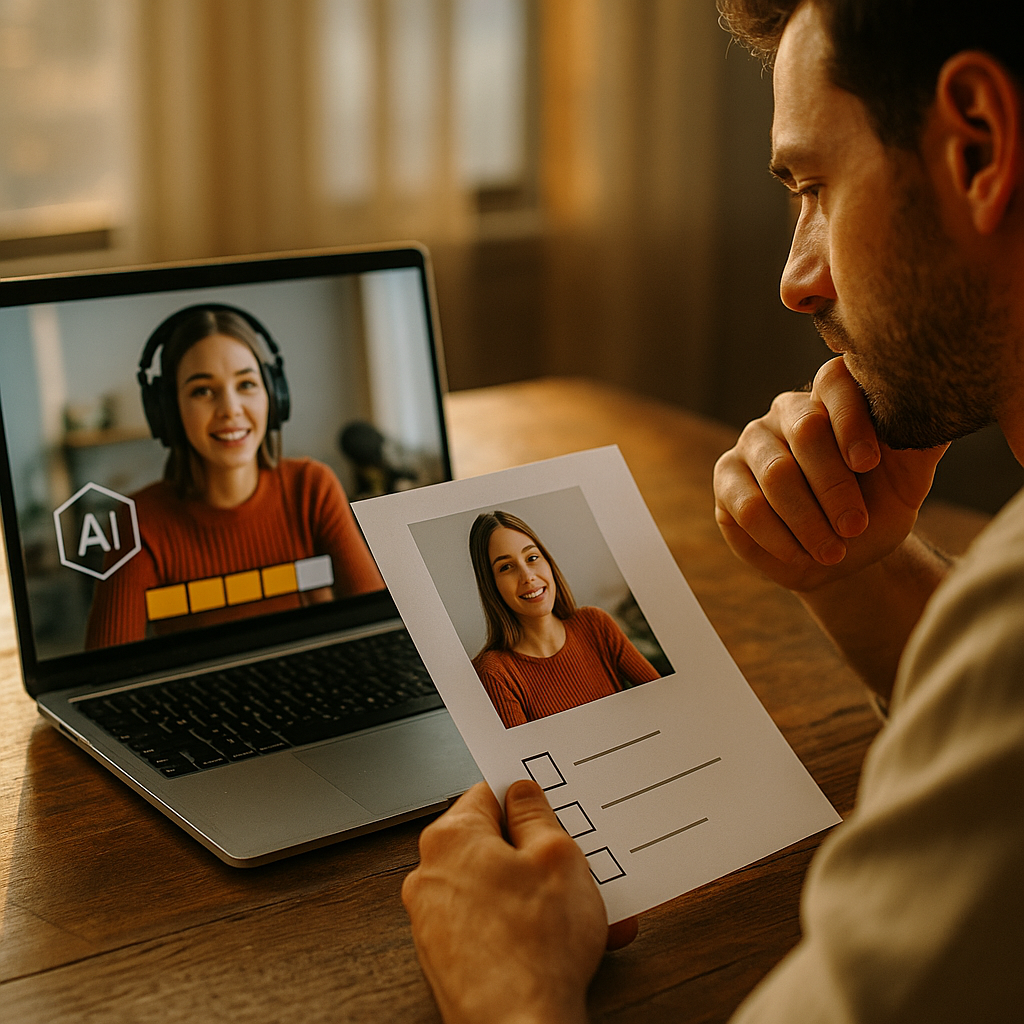
The Creator Economy’s Talent Layer Is Being Rebuilt by Machines—Mostly
Seventy-three percent of brand marketers now use AI-assisted tools somewhere in their creator selection workflow, according to Statista’s creator economy data. That number was 29% just two years ago. The creator economy talent layer—how brands find, evaluate, and activate creators—is undergoing its most dramatic shift since the rise of influencer platforms. Automated discovery engines, predictive conversion scoring, and synthetic persona testing are replacing gut-feel spreadsheets. But the story isn’t as simple as “AI wins.”
Automated Discovery: The End of Manual Shortlists
If you’ve ever spent a Thursday afternoon scrolling through Instagram profiles to build a creator shortlist, you already understand the problem. Manual discovery doesn’t scale. It’s biased toward who you already know, who your competitor just used, or who the algorithm served you last Tuesday.
AI-powered discovery platforms like CreatorIQ, Traackr, and newer entrants like Klear’s AI layer now ingest millions of creator profiles across TikTok, YouTube, Instagram, and LinkedIn simultaneously. They match on audience demographics, content themes, brand safety signals, engagement velocity, and even sentiment polarity of comments. The output? A ranked shortlist generated in minutes rather than days.
But here’s where it gets interesting. These systems aren’t just pattern-matching on follower counts anymore. The best ones build semantic maps of a creator’s content over time—tracking topical drift, aesthetic consistency, and audience overlap with your existing customer segments. One brand strategist at a mid-market DTC company told me their AI discovery tool surfaced a ceramics creator with 14,000 followers who drove more attributable revenue than a lifestyle creator with 900,000. The machine found her. A human never would have.
AI discovery doesn’t just widen the funnel—it redefines what the funnel looks like. Brands that still rely on manual shortlists are systematically missing high-converting creators who don’t fit legacy “influencer” archetypes.
The operational efficiency gains are real. Teams running micro-creator conversion programs report that AI discovery cuts sourcing time by 60-80%, freeing strategists to focus on relationship building and campaign architecture. That reallocation of human hours matters more than most ROI metrics capture.
Predictive Conversion Scoring: Beyond Vanity Metrics
Engagement rate was always a blunt instrument. A 4.2% engagement rate tells you people tap hearts. It says nothing about whether those people buy things.
Predictive conversion scoring changes the equation entirely. Platforms like impact.com and Aspire have built models that combine first-party brand data (purchase behavior, LTV segments, cart composition) with creator performance signals to generate a predicted conversion probability before a single post goes live. Some models now incorporate temporal signals too—predicting not just whether a creator’s audience will convert, but when in the consideration cycle they’re most likely to act.
This is the kind of capability that reshapes revenue attribution and roster decisions. When you can score creators on predicted ROAS rather than follower count, budget conversations with CFOs become dramatically easier.
A few caveats worth flagging:
- Model accuracy degrades with novelty. If a creator has never promoted your product category, the model is extrapolating, not predicting. Treat scores for category-new creators as directional, not definitive.
- Conversion scoring can create a monoculture problem. If you only activate creators the model scores highly, you systematically exclude emerging voices and unconventional content styles. Build exploration budgets into your roster.
- Data quality is everything. Garbage attribution data in, garbage conversion predictions out. Ensure your pixel/UTM/promo code infrastructure is airtight before trusting these scores at scale.
Synthetic Persona Testing: The Strangest—and Most Useful—New Capability
This one still makes people uncomfortable. And maybe it should.
Synthetic persona testing uses generative AI to simulate how specific audience segments will respond to a creator’s content before that content is published. Think of it as a focus group that doesn’t exist. The system generates synthetic personas based on psychographic and behavioral clusters drawn from your customer data, then models their likely reaction to draft content, creator voice, visual style, and messaging frames.
Several agencies are already piloting this with tools built on large language models from OpenAI and Anthropic. The early results are provocative: one CPG brand reported that synthetic persona testing flagged a tonal mismatch between a creator’s typical humor style and the brand’s target segment three weeks before launch—a mismatch that would have almost certainly tanked conversion rates.
Is this a crystal ball? No. Synthetic personas can’t replicate the chaotic, irrational ways real humans engage with content. But as a risk-reduction layer—a way to stress-test creative direction before committing six figures—it’s proving genuinely useful.
The governance implications here deserve attention. If you’re building synthetic personas from customer data, your legal and compliance teams need to be in the room. FTC guidelines and emerging state-level privacy laws have implications for how synthetic consumer models are constructed and used. This isn’t optional diligence. It’s table stakes.
So What Does “Talent” Even Mean Now?
When AI handles discovery, scoring, and pre-launch testing, the definition of creator “talent” shifts. The old framework—reach, engagement, aesthetic—is being replaced by something more granular: predicted commercial impact modeled across audience segments and purchase scenarios.
That sounds clean. Efficient. Maybe even inevitable.
It’s also incomplete.
Because here’s what the models can’t score: whether a creator’s audience trusts them in the specific way your brand needs. Whether their community norms align with your brand values in ways that won’t surface until the comments section gets interesting. Whether the creator’s personal evolution trajectory will complement or collide with your brand’s three-year positioning.
Cultural fit isn’t a data point. It’s a judgment call—and it remains irreplaceably human.
AI can tell you a creator will probably convert. Only a human strategist can tell you whether that creator’s cultural context makes the conversion sustainable—or a reputation risk.
Why Human Judgment About Cultural Fit Remains the Moat
Consider the brands that have partnered with anti-consumption creators. On paper—and in any AI scoring model—a de-influencing creator looks like a terrible brand partner. Negative sentiment, anti-purchase messaging, low predicted conversion probability. But for the right brand, in the right cultural moment, that partnership signals authenticity in a way no high-conversion beauty guru ever could.
A machine would have filtered that creator out in round one. A smart strategist kept them in.
This pattern repeats across categories. The silver influencer segment was similarly undervalued by early algorithmic models because the training data skewed young. Human strategists who understood the demographic shift spotted the opportunity. The AI caught up—but only after humans led.
Cultural fit assessment requires understanding context that doesn’t live in a dataset:
- How does a creator’s community react when they do sponsored content? With eye-rolls or genuine curiosity?
- Does the creator’s personal narrative arc align with your brand story, or create dissonance?
- What subcultures does the creator bridge, and are those subcultures ones your brand should authentically be adjacent to?
- How does the creator handle controversy? Check their comments, not their metrics.
These questions require cultural fluency, pattern recognition across social contexts, and the kind of taste-based judgment that human oversight layers are specifically designed to protect. No model, no matter how sophisticated, replaces a strategist who understands why a creator feels right or wrong for a brand.
The Operating Model That Actually Works
The winning framework isn’t AI or human judgment. It’s a deliberate sequencing of both.
- AI handles volume. Automated discovery generates a broad longlist of 50-200 potential creators matched on audience, content, and brand safety signals.
- Predictive scoring narrows the field. Conversion models rank by predicted commercial impact, trimming to 15-30 candidates.
- Synthetic persona testing stress-tests the top tier. Pre-launch simulations flag tonal mismatches and audience-message friction.
- Human strategists make the final call. Cultural fit, brand alignment, relationship potential, and reputational risk are assessed by people who understand the brand’s positioning in context.
This sequence preserves efficiency while protecting against the specific failure modes AI introduces: cultural blindness, historical bias in training data, and the inability to evaluate emergent social dynamics. Brands building their agentic marketing stacks should design this human-in-the-loop stage as a non-negotiable governance checkpoint, not an optional review.
The technology layer of creator marketing will keep accelerating. Models will get sharper. Discovery will get faster. But the brands that outperform won’t be the ones with the best algorithms—they’ll be the ones whose strategists know when to override them.
Your next step: Audit your current creator selection workflow. Map which stages are still manual that should be automated, and—critically—identify which human judgment checkpoints you’d lose at your peril. Build your process around that distinction.
FAQs
How does AI-powered creator discovery differ from traditional influencer search tools?
Traditional tools primarily filter on surface metrics like follower count, category tags, and engagement rate. AI-powered discovery platforms build semantic profiles of creators by analyzing content themes, audience behavioral patterns, sentiment signals, and temporal engagement data across multiple platforms simultaneously. This allows them to surface high-performing creators who don’t fit conventional influencer archetypes but demonstrate strong audience-brand alignment.
What is predictive conversion scoring for creators?
Predictive conversion scoring combines a brand’s first-party purchase data with creator-specific performance signals to estimate the probability that a creator’s audience will convert before a campaign launches. Unlike engagement rate, which measures passive interaction, conversion scoring models predict actual commercial outcomes like purchases, sign-ups, or app installs—giving brand strategists a more reliable basis for budget allocation.
Can synthetic persona testing replace real audience research?
No. Synthetic persona testing simulates how modeled audience segments might respond to creator content, but it cannot replicate the unpredictable, emotionally driven behavior of real consumers. It’s best used as a risk-reduction layer to flag potential tonal mismatches or messaging friction before campaign launch—not as a replacement for genuine audience insights, focus groups, or post-campaign analysis.
Why can’t AI fully assess creator-brand cultural fit?
Cultural fit depends on contextual understanding that exists outside structured datasets—community norms, subcultural fluency, audience trust dynamics, and how a creator navigates controversy. AI models excel at pattern recognition within quantifiable data but struggle to evaluate emergent social dynamics, narrative alignment, and the qualitative “feel” of a creator-brand pairing that experienced human strategists intuitively assess.
What’s the best way to integrate AI tools into an existing creator selection process?
Sequence AI and human judgment deliberately. Use automated discovery for broad candidate generation, predictive scoring to narrow the shortlist by commercial potential, and synthetic persona testing to stress-test top candidates. Reserve the final selection decision for human strategists who evaluate cultural fit, brand alignment, and reputational risk. This preserves efficiency while protecting against AI blind spots like historical bias and cultural insensitivity.
Top Influencer Marketing Agencies
The leading agencies shaping influencer marketing in 2026
Agencies ranked by campaign performance, client diversity, platform expertise, proven ROI, industry recognition, and client satisfaction. Assessed through verified case studies, reviews, and industry consultations.
Moburst

-
2

The Shelf
Boutique Beauty & Lifestyle Influencer AgencyA data-driven boutique agency specializing exclusively in beauty, wellness, and lifestyle influencer campaigns on Instagram and TikTok. Best for brands already focused on the beauty/personal care space that need curated, aesthetic-driven content.Clients: Pepsi, The Honest Company, Hims, Elf Cosmetics, Pure LeafVisit The Shelf → -
3

Audiencly
Niche Gaming & Esports Influencer AgencyA specialized agency focused exclusively on gaming and esports creators on YouTube, Twitch, and TikTok. Ideal if your campaign is 100% gaming-focused — from game launches to hardware and esports events.Clients: Epic Games, NordVPN, Ubisoft, Wargaming, Tencent GamesVisit Audiencly → -
4

Viral Nation
Global Influencer Marketing & Talent AgencyA dual talent management and marketing agency with proprietary brand safety tools and a global creator network spanning nano-influencers to celebrities across all major platforms.Clients: Meta, Activision Blizzard, Energizer, Aston Martin, WalmartVisit Viral Nation → -
5

The Influencer Marketing Factory
TikTok, Instagram & YouTube CampaignsA full-service agency with strong TikTok expertise, offering end-to-end campaign management from influencer discovery through performance reporting with a focus on platform-native content.Clients: Google, Snapchat, Universal Music, Bumble, YelpVisit TIMF → -
6

NeoReach
Enterprise Analytics & Influencer CampaignsAn enterprise-focused agency combining managed campaigns with a powerful self-service data platform for influencer search, audience analytics, and attribution modeling.Clients: Amazon, Airbnb, Netflix, Honda, The New York TimesVisit NeoReach → -
7

Ubiquitous
Creator-First Marketing PlatformA tech-driven platform combining self-service tools with managed campaign options, emphasizing speed and scalability for brands managing multiple influencer relationships.Clients: Lyft, Disney, Target, American Eagle, NetflixVisit Ubiquitous → -
8

Obviously
Scalable Enterprise Influencer CampaignsA tech-enabled agency built for high-volume campaigns, coordinating hundreds of creators simultaneously with end-to-end logistics, content rights management, and product seeding.Clients: Google, Ulta Beauty, Converse, AmazonVisit Obviously →