


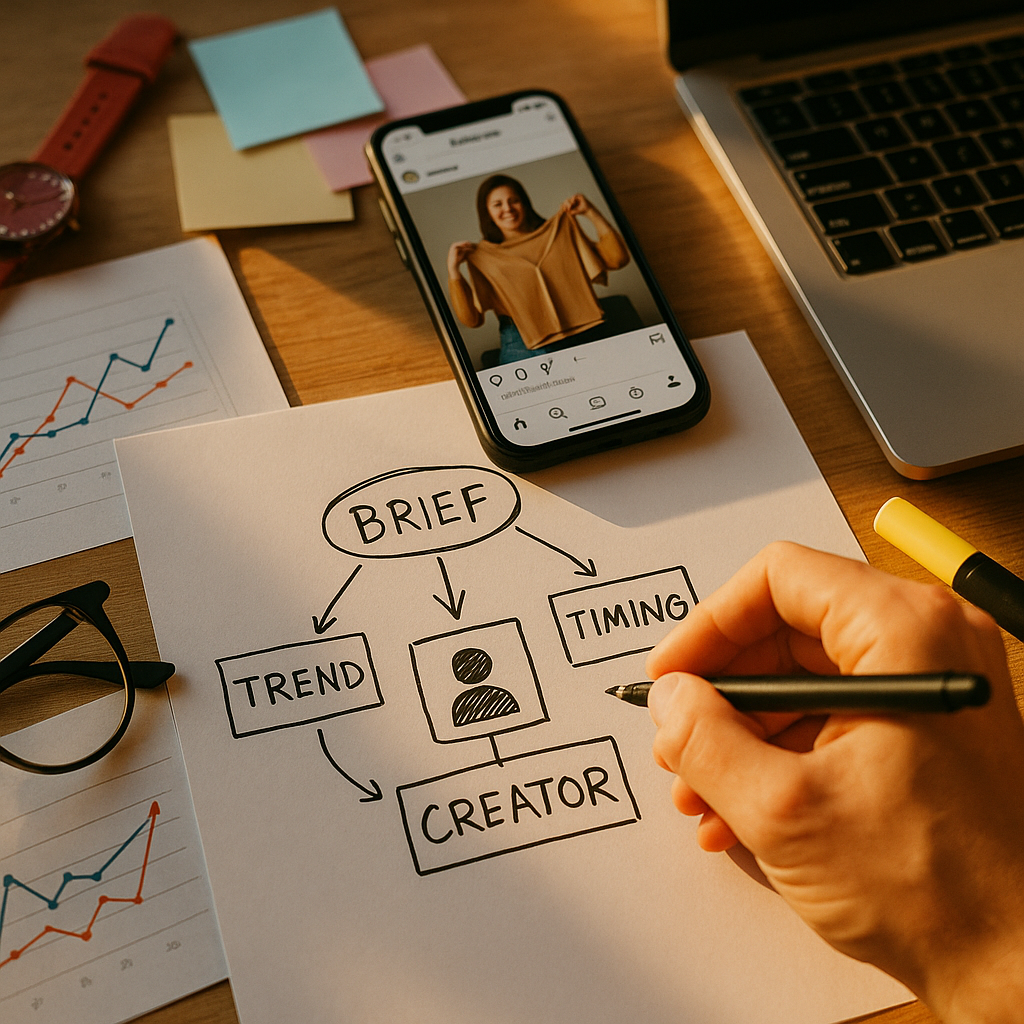
One Stat That Should Reframe How You Brief Creators
Of the 14,000+ branded creator campaigns launched in Q1, only 11% generated more than half their impressions organically, according to CreatorIQ’s quarterly index. The rest paid for virtually every eyeball. Three campaigns—from Thayer’s, Expedia, and Häagen-Dazs—illustrate exactly where that dividing line sits. This comparative analysis of creator trend integration breaks down the brief architecture, platform selection, and cultural timing decisions that made each outcome inevitable.
The Campaigns at a Glance
All three brands activated creator programs between January and March. All three targeted Gen Z and younger millennials. All three leaned into existing cultural trends rather than trying to manufacture new ones. The similarities end there.
- Thayer’s built a micro-creator campaign around the “skin cycling reset” trend that peaked on TikTok in early January, seeding product to 340 creators with follower counts between 8K and 45K.
- Expedia launched “Trip Flip,” a macro-influencer series on Instagram Reels and YouTube Shorts where creators swapped planned itineraries for algorithm-generated alternatives, tapping into the “chaos travel” trend.
- Häagen-Dazs partnered with 12 food and lifestyle creators for a “slow indulgence” series on TikTok, counter-programming against the fast-paced content that dominates the platform.
Same quarter. Same generation. Radically different results.
Brief Architecture: The Variable Nobody Benchmarks
Thayer’s won Q1. Not because they had the best product or the biggest budget—they didn’t—but because their brief was engineered for remixability.
The Thayer’s creative brief was 1.5 pages. It specified one mandatory element (the product had to appear in the creator’s actual skincare routine, not staged on a countertop), one banned element (no script or scripted dialogue), and one structural guardrail (video length between 45 and 90 seconds). Everything else—music, hook, format, tone—was the creator’s call.
Campaigns that specify fewer than five mandatory creative elements generate 3.2x more organic shares than those with ten or more, per CreatorIQ’s Q1 data. Thayer’s brief had exactly three.
Expedia’s brief told a different story. “Trip Flip” required creators to follow a specific narrative arc: reveal the original trip, show the algorithm “flipping” it, react on camera, then close with a branded tag. Four structural beats, plus mandated use of a branded audio clip and a specific hashtag. The brief ran five pages. Creators delivered polished content that looked, well, branded. Engagement rates hovered around 1.8%—respectable for paid, but nothing caught fire organically.
Häagen-Dazs fell somewhere in between. Their brief was conceptually interesting—”slow indulgence” as an aesthetic counter to doom-scrolling energy—but it imposed a mood board that constrained creators into a very specific visual register. Soft lighting. Slow motion. Jazz or ambient audio. The resulting content was beautiful, cohesive, and almost entirely ignored by the algorithm. Average view completion on TikTok sat at 38%, well below the 50%+ threshold where the platform’s recommendation engine typically kicks in.
The lesson isn’t “less brief is better.” It’s that brief architecture should optimize for the behavior you actually want. Thayer’s wanted organic sharing, so they built a brief that made sharing the creator’s idea—not the brand’s—feel natural. Expedia wanted controlled storytelling, and got exactly that, at the cost of virality. Similar dynamics played out in Duolingo’s UGC program design, where loose creative parameters consistently outperformed rigid ones.
Platform Selection: Where Good Instincts Beat “Go Where the Audience Is”
Thayer’s went TikTok-only. Obvious move for skincare? Maybe. But the decision was more nuanced than it appears. The “skin cycling reset” trend was native to TikTok—it originated there, the vocabulary lived there, and the audience expected to find it there. Placing that content on Instagram Reels would have been like telling an inside joke to a room full of strangers.
Expedia split across Instagram Reels and YouTube Shorts. On paper, smart diversification. In practice, it diluted the campaign’s cultural footprint. The “chaos travel” trend had traction on TikTok, where Expedia chose not to activate. Their reasoning, reportedly, was that Instagram and YouTube offered better attribution for travel bookings. Fair. But attribution doesn’t matter if the content never reaches beyond your paid audience. For brands weighing social video platform tradeoffs, Expedia’s case is instructive: optimizing for measurement infrastructure sometimes means de-optimizing for cultural reach.
Häagen-Dazs chose TikTok, but the platform punished them. Their slow, moody aesthetic ran headlong into TikTok’s algorithmic preference for high-energy, high-retention content. The brand’s counter-programming thesis was intellectually appealing—stand out by going slow—but the platform’s recommendation engine doesn’t reward contrarianism. It rewards watch time. And users scrolled past.
A smarter platform choice for Häagen-Dazs? Pinterest or even Instagram’s carousel format, where “aesthetic slowness” is a feature, not a bug. The brand essentially misread the room—or rather, the algorithm.
Cultural Timing: Early, Late, or Right on Time?
Timing is the variable that marketing teams discuss most and measure least.
Thayer’s activated the “skin cycling reset” trend in its second week of organic growth—early enough that creator content felt like discovery, not bandwagon-hopping, but late enough that there was an existing audience actively searching the topic. Their team used TikTok’s Creative Center trend data to identify the inflection point, which is a tactic more brands should steal.
Expedia was late. “Chaos travel” had peaked in December and was decelerating by mid-January when their campaign went live. The content felt like a brand discovering a trend that audiences had already metabolized. Engagement wasn’t terrible—it just wasn’t exceptional. And without organic lift, every impression carried a media cost. This matters: Statista’s influencer marketing data shows that CPMs for paid-only creator content have risen 22% year-over-year, making organic amplification not just desirable but economically necessary for campaigns at scale.
Häagen-Dazs tried to create a counter-trend rather than ride an existing one. “Slow indulgence” wasn’t a search term, a hashtag with momentum, or a behavior pattern the algorithm recognized. The brand was asking creators to build cultural context from scratch—a much heavier lift than amplifying something already in motion.
The highest-performing creator campaigns in Q1 activated trends between days 5 and 14 of organic growth. Before day 5, there’s not enough audience context. After day 14, you’re paying a lateness tax in reduced organic reach.
What Organic Amplification Actually Required
Pulling the three case studies together, the pattern is clear. Organic amplification in Q1 required the intersection of three conditions:
- A brief that ceded creative ownership. Thayer’s gave creators enough room to make the content feel like theirs. When audiences share a video, they’re sharing the creator’s perspective—not a brand message. Brief architecture must account for this.
- Platform-native trend alignment. The content had to live where the trend lived. Cross-posting a TikTok-native trend to Instagram doesn’t just lose context—it loses algorithmic momentum.
- Timing within the trend’s growth window. Not too early, not too late. The brands that earned organic impressions treated trend timing like a trading window, not a loose creative direction.
Thayer’s hit all three. Expedia hit one (controlled storytelling was platform-appropriate for Instagram, at least). Häagen-Dazs hit zero, despite having arguably the most creative concept of the three.
The cost differential was stark. Thayer’s effective CPM landed at $4.20, with 62% of total impressions coming organically. Expedia’s CPM ran $11.80. Häagen-Dazs exceeded $14. Same quarter, same target demo, wildly different efficiency. Brands like Starface have demonstrated similar efficiencies when brief design and timing align correctly.
So What Should You Actually Change?
If your brand is running creator campaigns this quarter, pressure-test three things before anything goes live: Is your brief under two pages with fewer than five mandatory elements? Is the trend you’re activating still in its growth phase on the specific platform you’ve chosen? And does your platform selection match where the trend lives, not just where your attribution model works best?
For teams building more sophisticated AI-powered attribution systems, the goal should be expanding measurement to trend-native platforms rather than constraining campaigns to legacy measurement infrastructure. The ROI gap between organically amplified and paid-only creator content is now too large to ignore.
Your Next Move
Audit your last three creator briefs against Thayer’s framework: count your mandatory elements, check whether you launched in the trend growth window, and verify your platform matched the trend’s origin. If you missed on two or more, you likely paid for impressions you could have earned—and you now know exactly where to intervene. The FTC’s updated disclosure guidelines still apply regardless of organic or paid distribution, so ensure compliance stays built into every brief revision.
Frequently Asked Questions
What is creator trend integration and why does it matter for brands?
Creator trend integration is the practice of aligning branded creator campaigns with existing cultural trends on social platforms. It matters because campaigns that successfully ride active trends earn significantly more organic impressions, reducing effective CPMs by 50-70% compared to campaigns that rely entirely on paid distribution.
How many mandatory creative elements should a creator brief include?
Data from Q1 campaigns suggests briefs with fewer than five mandatory creative elements generate roughly 3.2 times more organic shares than those with ten or more. The goal is to give creators enough structure for brand safety while preserving the creative ownership that drives authentic sharing behavior.
How do you identify the right timing window to activate a trend?
The highest-performing creator campaigns activate trends between days 5 and 14 of organic growth. Tools like TikTok’s Creative Center and third-party platforms such as CreatorIQ can help identify when a trend crosses from emerging to accelerating. Activating before day 5 risks insufficient audience context, while activating after day 14 typically results in reduced organic reach.
Should brands always choose TikTok for creator trend campaigns?
No. Platform selection should be determined by where the trend originated and where the audience expects to encounter it. A trend native to TikTok should be activated on TikTok. But trends rooted in visual aesthetics or slower-paced content may perform better on Pinterest or Instagram. Matching the platform to the trend’s cultural context is more important than defaulting to the platform with the largest user base.
How do you measure whether a creator campaign earned organic amplification?
Track the ratio of organic impressions to total impressions across all activated creator posts. Campaigns where more than 50% of impressions are organic indicate successful trend integration. Additionally, monitor secondary metrics like saves, shares, and stitch or duet activity, which signal that the content is being adopted by non-paid audiences.
Top Influencer Marketing Agencies
The leading agencies shaping influencer marketing in 2026
Agencies ranked by campaign performance, client diversity, platform expertise, proven ROI, industry recognition, and client satisfaction. Assessed through verified case studies, reviews, and industry consultations.
Moburst

-
2

The Shelf
Boutique Beauty & Lifestyle Influencer AgencyA data-driven boutique agency specializing exclusively in beauty, wellness, and lifestyle influencer campaigns on Instagram and TikTok. Best for brands already focused on the beauty/personal care space that need curated, aesthetic-driven content.Clients: Pepsi, The Honest Company, Hims, Elf Cosmetics, Pure LeafVisit The Shelf → -
3

Audiencly
Niche Gaming & Esports Influencer AgencyA specialized agency focused exclusively on gaming and esports creators on YouTube, Twitch, and TikTok. Ideal if your campaign is 100% gaming-focused — from game launches to hardware and esports events.Clients: Epic Games, NordVPN, Ubisoft, Wargaming, Tencent GamesVisit Audiencly → -
4

Viral Nation
Global Influencer Marketing & Talent AgencyA dual talent management and marketing agency with proprietary brand safety tools and a global creator network spanning nano-influencers to celebrities across all major platforms.Clients: Meta, Activision Blizzard, Energizer, Aston Martin, WalmartVisit Viral Nation → -
5

The Influencer Marketing Factory
TikTok, Instagram & YouTube CampaignsA full-service agency with strong TikTok expertise, offering end-to-end campaign management from influencer discovery through performance reporting with a focus on platform-native content.Clients: Google, Snapchat, Universal Music, Bumble, YelpVisit TIMF → -
6

NeoReach
Enterprise Analytics & Influencer CampaignsAn enterprise-focused agency combining managed campaigns with a powerful self-service data platform for influencer search, audience analytics, and attribution modeling.Clients: Amazon, Airbnb, Netflix, Honda, The New York TimesVisit NeoReach → -
7

Ubiquitous
Creator-First Marketing PlatformA tech-driven platform combining self-service tools with managed campaign options, emphasizing speed and scalability for brands managing multiple influencer relationships.Clients: Lyft, Disney, Target, American Eagle, NetflixVisit Ubiquitous → -
8

Obviously
Scalable Enterprise Influencer CampaignsA tech-enabled agency built for high-volume campaigns, coordinating hundreds of creators simultaneously with end-to-end logistics, content rights management, and product seeding.Clients: Google, Ulta Beauty, Converse, AmazonVisit Obviously →