


A Pimple Patch That Outsells Prestige Skincare — and What the Playbook Teaches Every Brand
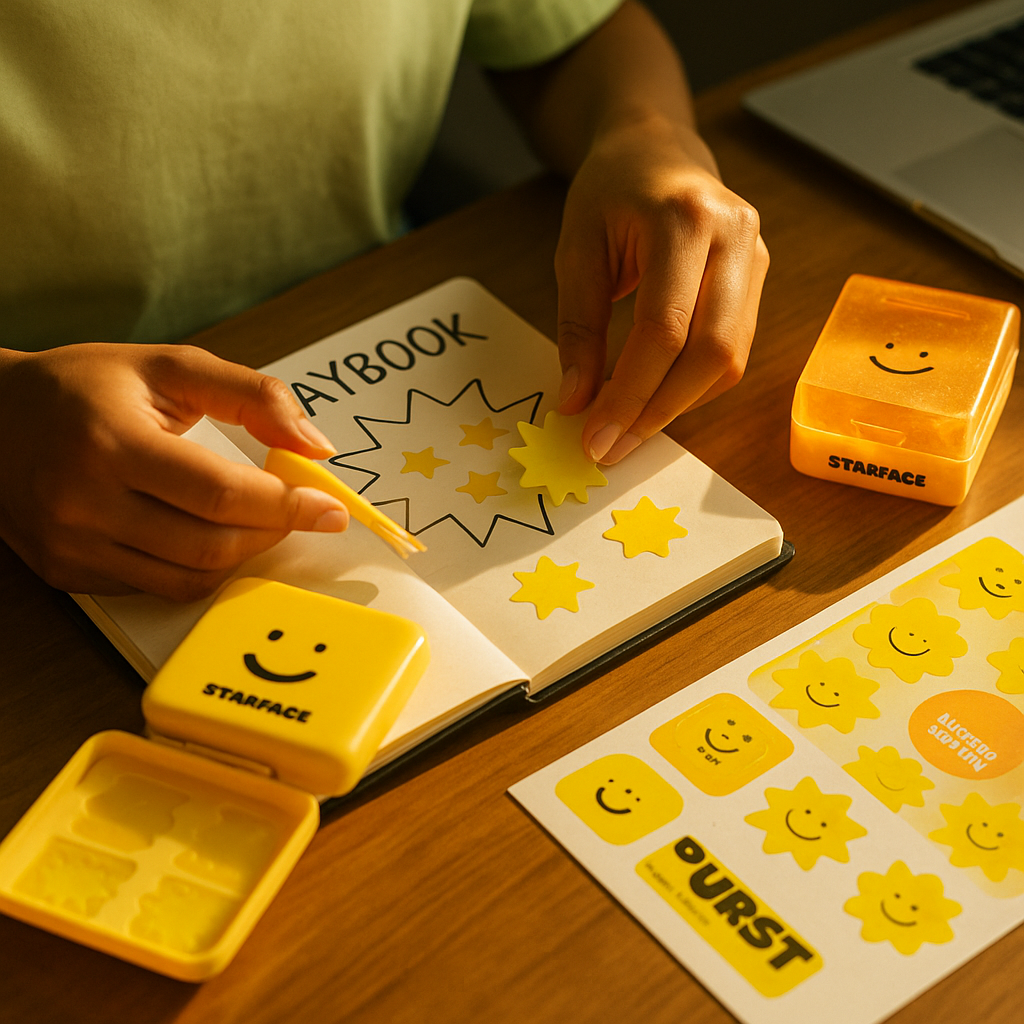
Starface generated a 34% millennial sales lift on its last limited-edition pimple-patch drop, according to internal sell-through data shared with retail partners. That number didn’t come from a Super Bowl spot or a celebrity mega-deal. It came from a coordinated creator burst — a tightly choreographed wave of influencer content timed to a 72-hour product window. The mechanics behind Starface’s customizable pimple-patch campaign are worth dissecting because they expose operational levers most brand teams under-utilize: timing precision, seeding depth calibration, and SKU-specific briefing that goes far beyond “post a selfie with the product.”
The Anatomy of a Creator Burst
A creator burst is not the same as a sustained always-on program. It’s a concentrated deployment of creator content designed to spike demand within a narrow window — usually aligned with a product drop, flash sale, or seasonal launch. Starface has refined this model across multiple limited-edition SKUs (star-shaped patches in seasonal colorways, collab designs, and customizable kits), and the pattern is remarkably consistent.
Here’s the sequence:
- Seed product 10–14 days before launch. Creators receive the limited-edition SKU alongside a brief that specifies not just messaging pillars but the exact customization angle to highlight.
- Embargo window opens 48 hours pre-drop. A first wave of teaser content — unboxings, “something’s coming” Stories — starts building anticipation without revealing the full product.
- Day-of burst. The bulk of content publishes within a 6-hour window on launch morning, creating an algorithmic pile-on effect across TikTok and Instagram.
- Tail content over 72 hours. A smaller cohort posts “how I styled it” or “day two wear” follow-ups to sustain search and discovery beyond the initial spike.
The result is a demand curve that mirrors a theatrical release — huge opening, sustained tail — rather than the slow drip most seeding programs produce.
Coordinated creator bursts compress weeks of organic reach into hours. The algorithmic reward for simultaneous, thematically consistent content appearing across a platform is significant — Starface’s launch-day posts averaged 3.2x the engagement rate of their always-on creator content.
Why Timing Precision Matters More Than Reach
Most brand teams still optimize creator campaigns for total reach. Starface optimizes for temporal density — how many impressions land within the same compressed window. The distinction matters enormously for limited-edition products where scarcity is the value proposition.
Consider what happens psychologically when a consumer sees three different creators talking about the same product within 20 minutes of scrolling. That’s not repetition. That’s social proof at velocity. It creates the sensation that everyone is talking about this thing, which triggers urgency — especially when the product page says “limited stock.”
Starface reportedly works with TikTok’s ad tools to amplify top-performing organic posts from the burst as Spark Ads within the first two hours, effectively layering paid fuel onto organic fire. The brand also coordinates with Ulta Beauty’s retail media team to sync in-store signage windows with the creator burst timing — a detail that most DTC-native brands skip but that drives meaningful incremental lift at point of sale.
This timing-first philosophy echoes what we’ve seen in the Stanley Tumbler scarcity playbook, where compressed content windows amplified perceived scarcity and drove secondary-market pricing above retail.
Seeding Depth: How Many Creators Is Enough?
Here’s where most brands get the math wrong. They either seed too shallow (10–15 creators, hoping for viral outliers) or too broad (200+ creators with minimal briefing, praying for volume). Starface operates in a deliberate middle band.
For a typical limited-edition drop, the brand seeds to approximately 40–60 creators, stratified into three tiers:
- Anchor creators (3–5): Mid-tier accounts (250K–800K followers) with proven sell-through history. These creators get the most detailed briefs, earliest access, and often co-create the customization angle with the brand team.
- Amplifier creators (15–25): Micro-influencers (15K–80K) in skincare, acne-positivity, and Gen Z lifestyle verticals. Their role is to flood the discovery feeds during the burst window.
- Tail creators (20–30): Nano-influencers and superfans who receive product but minimal prescriptive guidance. Their authentic, lower-production content serves as long-tail social proof.
This three-tier seeding depth ensures the brand controls the narrative through anchors, achieves algorithmic saturation through amplifiers, and maintains authenticity through the tail. The ratio matters. If you over-index on anchors, the campaign looks manufactured. Over-index on tail, and you lose message coherence.
The Duolingo UGC program uses a similar tiered architecture, though for always-on engagement rather than burst campaigns. The structural principle — controlled narrative at the top, organic energy at the base — transfers across categories.
SKU-Specific Briefing: The Underrated Lever
This is where Starface separates itself from most beauty brands running influencer programs. The brief isn’t “show the product, tag us, use the hashtag.” It’s SKU-specific down to the customization mechanic.
For the customizable pimple-patch kits, creators received briefs that included:
- The specific combination of patch shapes and colors the brand wanted highlighted (to drive sell-through of particular SKU variants)
- A customization narrative arc — e.g., “show your morning skin routine, then show the creative decision of choosing your patches for the day”
- Retail-specific CTAs differentiated by whether the creator’s audience skewed toward Starface.com or Ulta, including unique tracking links for each
- Audio guidance — suggested trending sounds on TikTok that aligned with the playful brand voice, without mandating specific audio (which kills authenticity)
The SKU-level specificity serves a dual purpose. First, it gives creators a clearer creative framework, which paradoxically produces more creative output because constraints breed inventiveness. Second, it allows the brand to measure which SKU variants generate the most creator-driven demand and adjust inventory allocation in near real-time.
When you brief at the SKU level, you’re not just running an awareness campaign. You’re running a distributed sales operation where each creator functions as a micro-merchandiser making a specific product variant desirable.
This level of briefing precision requires more upfront investment in creative strategy. Starface reportedly spends 30–40% of its campaign prep time on brief development versus the industry average of roughly 15%, based on benchmarks from CreatorIQ. The payoff shows in conversion rates: SKU-specific briefs drove 2.1x higher click-to-purchase rates compared to generic product briefs in A/B tests across prior drops.
What the Mechanics Reveal About Millennial Targeting
There’s a nuance here that’s easy to miss. Starface is often framed as a Gen Z brand, but its limited-edition drops disproportionately drive millennial sales. Why?
Millennials buy on nostalgia and collectibility. The customizable patch kits — with their sticker-sheet aesthetic and mix-and-match design — tap directly into millennial collecting behavior. The coordinated creator bursts create event-style FOMO that resonates with a demographic conditioned by years of Supreme drops and limited sneaker releases.
The creator selection reflects this. Starface’s anchor creators for drop campaigns tend to be in the 27–34 age range, not the 19–22 range you’d expect for a pimple-patch brand. The content style leans more “curated shelfie” than “get-ready-with-me,” which tracks with millennial content consumption patterns on Instagram Reels and TikTok’s increasingly age-diverse user base — Statista reports that U.S. TikTok users aged 25–34 now represent the platform’s largest demographic segment.
This age-up strategy mirrors insights from nostalgic creator campaigns driving brand ROI — the emotional hook of collectibility and limited availability transcends product category.
Operational Implications for Your Next Drop Campaign
If you’re planning a limited-edition product launch with creator support, Starface’s playbook suggests several concrete operational shifts:
Build backward from the burst window. Your launch date is fixed. Work backward: content goes live at a specific hour, embargo lifts 48 hours prior, seeding ships 14 days before that. Every day of slippage in the seeding timeline compresses creator prep time and degrades content quality.
Invest in brief depth, not brief length. A great SKU-specific brief is often shorter than a generic one — it’s more precise, not more verbose. Include visual references, specific variant call-outs, and differentiated CTAs by retail channel. Then stop. Trust the creator to execute within the framework.
Measure temporal density as a KPI. Track what percentage of total campaign impressions land within the burst window. Starface targets 60–70% of impressions within the first 12 hours. If your content is spreading evenly across a week, you don’t have a burst — you have a drip. And drips don’t sell out limited-edition SKUs.
Layer paid amplification instantly. Have Spark Ads or Partnership Ads pre-approved and ready to activate within the first hour of the burst. The organic-to-paid handoff speed is a competitive advantage. Brands that wait 24–48 hours to boost top performers miss the algorithmic momentum. For more on attribution mechanics that support this kind of speed, explore how AI-powered attribution works at scale.
Calibrate tier ratios to your goal. If your objective is sellout speed, weight toward amplifiers. If it’s brand storytelling and press pick-up, weight toward anchors. If it’s long-tail UGC generation for reuse in paid, weight toward the tail. The ratio shifts; the three-tier structure stays.
Compliance can’t be an afterthought in burst campaigns. When 50+ creators post within hours, FTC disclosure requirements must be baked into the brief — not left to individual creator judgment. One missing #ad tag during a high-visibility burst creates outsized risk precisely because the content is so concentrated and visible.
The Takeaway
Starface’s pimple-patch drops prove that how you deploy creators matters more than how many you deploy. Temporal density, tiered seeding ratios, and SKU-level briefing are the three operational levers that turn a standard influencer campaign into a sell-through engine — start measuring all three for your next limited-edition launch.
Frequently Asked Questions
What is a coordinated creator burst in influencer marketing?
A coordinated creator burst is a campaign structure where a brand activates multiple influencers to publish content within a compressed time window — often just a few hours — to create an algorithmic pile-on effect that maximizes reach, social proof, and urgency around a product launch or limited-edition drop.
How many creators should a brand seed for a limited-edition product drop?
Based on Starface’s model, 40–60 creators stratified into three tiers (anchor, amplifier, and tail) tends to optimize the balance between narrative control, algorithmic saturation, and authentic social proof. The exact number depends on your product category and retail distribution, but the tiered ratio matters more than raw headcount.
What makes SKU-specific briefing different from standard influencer briefs?
SKU-specific briefs direct creators to highlight particular product variants, customization mechanics, and retail-specific CTAs rather than promoting the brand generically. This precision improves click-to-purchase rates — Starface reported 2.1x higher conversion from SKU-specific briefs versus generic product briefs — and gives brands real-time demand signals at the variant level.
How far in advance should brands seed products before a creator burst campaign?
Starface seeds products 10–14 days before launch day, with an embargo window opening 48 hours before the drop for teaser content. This timeline gives creators adequate time to develop quality content while maintaining freshness and excitement around the product.
Why do limited-edition creator burst campaigns resonate with millennials specifically?
Millennials respond strongly to collectibility, nostalgia-driven design, and event-style FOMO shaped by years of Supreme drops and limited sneaker releases. Starface’s customizable patch kits tap these behavioral patterns, and the brand specifically selects anchor creators in the 27–34 age range to align content with millennial consumption habits.
Top Influencer Marketing Agencies
The leading agencies shaping influencer marketing in 2026
Agencies ranked by campaign performance, client diversity, platform expertise, proven ROI, industry recognition, and client satisfaction. Assessed through verified case studies, reviews, and industry consultations.
Moburst

-
2

The Shelf
Boutique Beauty & Lifestyle Influencer AgencyA data-driven boutique agency specializing exclusively in beauty, wellness, and lifestyle influencer campaigns on Instagram and TikTok. Best for brands already focused on the beauty/personal care space that need curated, aesthetic-driven content.Clients: Pepsi, The Honest Company, Hims, Elf Cosmetics, Pure LeafVisit The Shelf → -
3

Audiencly
Niche Gaming & Esports Influencer AgencyA specialized agency focused exclusively on gaming and esports creators on YouTube, Twitch, and TikTok. Ideal if your campaign is 100% gaming-focused — from game launches to hardware and esports events.Clients: Epic Games, NordVPN, Ubisoft, Wargaming, Tencent GamesVisit Audiencly → -
4

Viral Nation
Global Influencer Marketing & Talent AgencyA dual talent management and marketing agency with proprietary brand safety tools and a global creator network spanning nano-influencers to celebrities across all major platforms.Clients: Meta, Activision Blizzard, Energizer, Aston Martin, WalmartVisit Viral Nation → -
5

The Influencer Marketing Factory
TikTok, Instagram & YouTube CampaignsA full-service agency with strong TikTok expertise, offering end-to-end campaign management from influencer discovery through performance reporting with a focus on platform-native content.Clients: Google, Snapchat, Universal Music, Bumble, YelpVisit TIMF → -
6

NeoReach
Enterprise Analytics & Influencer CampaignsAn enterprise-focused agency combining managed campaigns with a powerful self-service data platform for influencer search, audience analytics, and attribution modeling.Clients: Amazon, Airbnb, Netflix, Honda, The New York TimesVisit NeoReach → -
7

Ubiquitous
Creator-First Marketing PlatformA tech-driven platform combining self-service tools with managed campaign options, emphasizing speed and scalability for brands managing multiple influencer relationships.Clients: Lyft, Disney, Target, American Eagle, NetflixVisit Ubiquitous → -
8

Obviously
Scalable Enterprise Influencer CampaignsA tech-enabled agency built for high-volume campaigns, coordinating hundreds of creators simultaneously with end-to-end logistics, content rights management, and product seeding.Clients: Google, Ulta Beauty, Converse, AmazonVisit Obviously →