


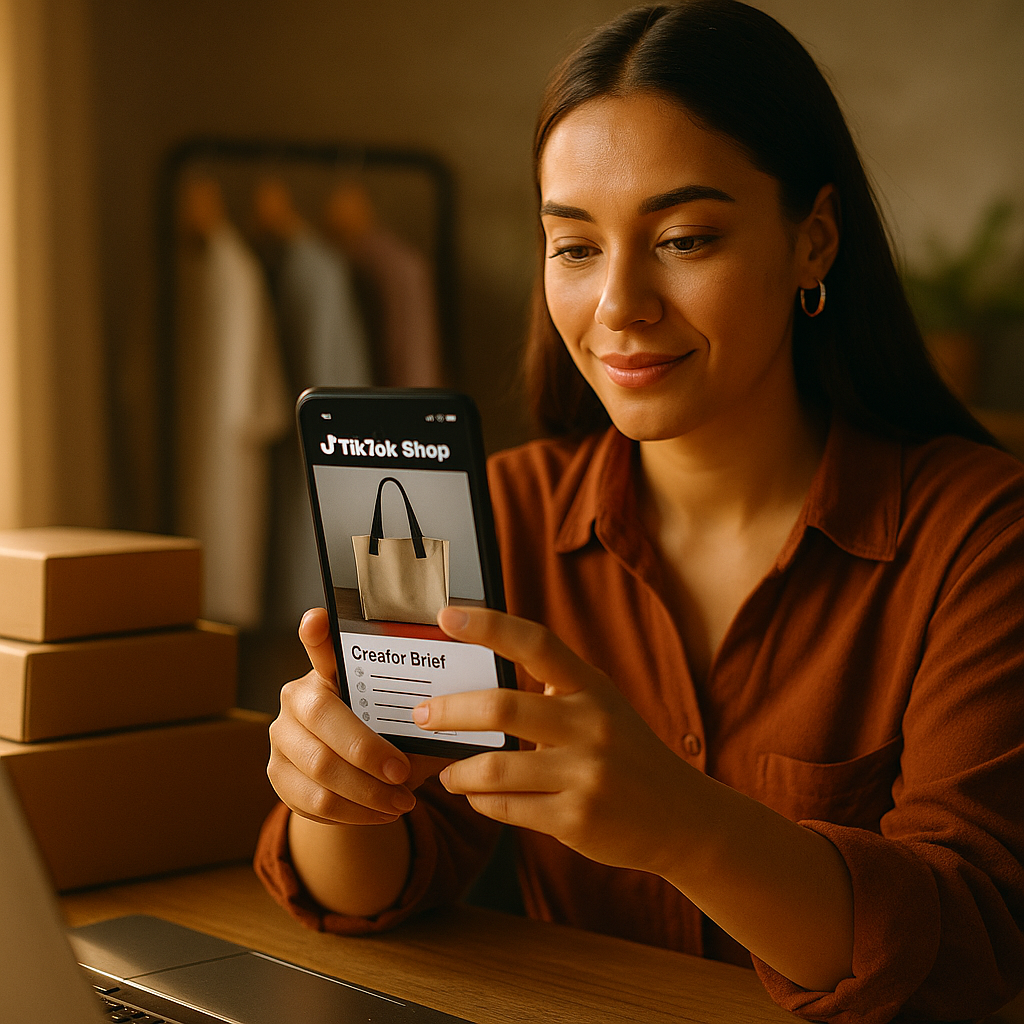
93 Percent Is Not an Awareness Number
Ipsos research confirms that TikTok reaches 93% of users during the consideration phase of a purchase decision — not after, not before, but during active product evaluation. That single finding should reshape how every brand writes a TikTok Shop creator brief from this point forward.
Most brands still treat TikTok like a top-of-funnel awareness channel. They brief creators to build vibe, generate reach, and hope attribution models catch the downstream conversion somewhere. That is a structural mismatch — and it is costing brands same-session revenue at enormous scale.
TikTok is not where your audience discovers they have a problem. It is where they are already solving it. Your creator brief needs to behave accordingly.
What “Consideration-Phase Reach” Actually Means Operationally
When Ipsos uses the term consideration-phase reach, they are describing users who are actively comparing options, reading reviews mentally, running price-to-value equations — and doing all of it on TikTok. The scroll is not passive. Users are using creator content as a substitute for the traditional research funnel: Google searches, review aggregators, retailer comparison pages.
This matters to brand strategists for one concrete reason: the purchase intent is already present when the video starts playing. The creator’s job — and therefore your brief’s job — is not to create that intent. It is to intercept, validate, and convert it before the session ends.
Same-session conversion is the operative metric. TikTok Shop data consistently shows that the highest-converting creator content closes within the same viewing session, not through retargeting 72 hours later. If your brief is designed for delayed conversion — click a link in bio, go to the website, complete checkout — you are working against the platform’s behavioral architecture.
The Brief Architecture That Closes In-Session
A consideration-phase brief looks structurally different from a standard influencer brief. Here is where most brand teams get it wrong: they write briefs that optimize for content quality and brand safety, not for the user’s cognitive state at the moment of viewing.
Redesign the brief around four components:
- Research validation hook (0–3 seconds): The opening line should mirror the mental question the shopper is already asking. Not “Here’s a product I love” — but “If you’ve been comparing X and Y, here’s what actually makes the difference.” This signals to the algorithm and the viewer simultaneously that this content is research-relevant.
- Objection elimination in the middle third: Brief creators to address the top two or three purchase blockers by name. Price relative to alternatives. Ingredient or material concerns. Sizing or compatibility questions. Viewers in the consideration phase have specific objections. Content that names and neutralizes those objections converts dramatically better than content that simply demonstrates product use.
- Social proof with specificity: Generic testimonials (“I love this product”) carry almost no weight with an active evaluator. Brief creators to cite specific details — how long they’ve used it, what they compared it against, what changed measurably after use. Specificity is the proxy for credibility when users can’t verify claims independently.
- A frictionless in-app path to checkout: Every creator brief should include an explicit instruction: direct viewers to the TikTok Shop product link in the video, not to an external site. This is non-negotiable for same-session conversion. External redirects introduce friction that kills 40–60% of purchase intent before checkout loads.
For a deeper look at how brief structure drives purchase velocity, the operational detail in briefs built for impulse purchases maps cleanly onto this consideration-intercept approach.
Creator Selection Is Part of Brief Design
A brief written for consideration-phase conversion will underperform in the hands of the wrong creator. This is not about follower count. It is about audience trust topology — the specific reason an audience trusts a creator’s recommendations.
Entertainment creators generate high reach and low purchase authority. They are useful for awareness campaigns. For consideration-intercept, you need creators whose audience follows them because they evaluate products carefully. This includes micro and mid-tier creators in beauty, wellness, home organization, consumer tech, and apparel — categories where followers explicitly use creator content as research input.
The brief should therefore specify not just content requirements but creator persona requirements: a demonstrated history of comparative content, an audience that asks purchasing questions in comments, and a content cadence that includes more than one video per product category. These signals indicate an audience that is already in research mode when they open the creator’s content.
The TikTok Shop commerce playbook from UK fashion brands offers useful benchmarks for creator tier selection in high-consideration categories.
Platform Mechanics Your Brief Must Respect
TikTok’s algorithm rewards content that generates saves and shares over pure watch time when it comes to consideration-phase distribution. Users in research mode save videos for later comparison. They share to group chats asking “should I buy this?” These signals push content into the feeds of users with similar purchase intent — which is the algorithmic flywheel your brief should be designed to trigger.
Brief creators to structure content so it is save-worthy: include at least one piece of specific, non-obvious information that makes the viewer feel they need to bookmark the video. A comparison metric, a lesser-known product detail, a use-case scenario that solves a specific problem. This is not about gimmicks. It is about information density that justifies the save behavior.
For context on how platform-level algorithm mechanics interact with paid partnership content, this breakdown of TikTok creator content covers the distribution mechanics in operational detail.
If your brief doesn’t mention saves as a success signal, you’re optimizing for the wrong behavior. Watch time gets you reach. Saves get you in front of buyers.
Compliance and Disclosure Without Killing Conversion
Paid partnership disclosures are mandatory — FTC guidelines require clear and conspicuous disclosure at the start of sponsored content, and TikTok’s own creator marketplace policies enforce this technically through the branded content toggle. The risk is that some brands use compliance as an excuse for overly scripted content that reads like an advertisement rather than a recommendation.
The solution is brief design, not less compliance. Disclosures should be placed in the first three seconds (which the FTC requires), but the framing immediately after should transition into authentic research-positioning language. “This is a paid partnership with [Brand] — and I’m sharing it because I’ve spent two months comparing it with the alternatives” accomplishes compliance without sacrificing the trust architecture that drives conversion.
For brands operating across multiple platforms and managing disclosure frameworks at scale, the structural approach to creator disclosure briefs on Instagram provides a transferable compliance model worth reviewing.
Measuring What Actually Matters
If your current TikTok creator program is measured primarily on views, CPM, and engagement rate, you do not have the data to optimize for consideration-phase conversion. The metrics that matter for this strategy are:
- Same-session TikTok Shop conversion rate — tracked through TikTok Shop’s native analytics, broken down by creator and video
- Save-to-purchase ratio — how many users who saved a video completed a purchase within 24 hours
- Product detail page visits from creator content — a leading indicator of consideration engagement before checkout
- Comment sentiment on purchase-intent signals — questions about sizing, price, and availability indicate active consideration
- Average order value from creator-attributed sessions — consideration-phase buyers who are convinced tend to buy more decisively
External measurement platforms like Sprout Social and EMARKETER both provide benchmark data for TikTok commerce attribution that can help brand teams set realistic conversion targets before a campaign launches. Ipsos research on purchase intent pathways is also worth pulling directly for internal stakeholder presentations — the 93% consideration-reach figure is primary data, not an extrapolation.
The brief-to-measurement feedback loop is where most programs leak performance. What you measure should directly reflect what your brief asks creators to do. If your brief prioritizes objection elimination and frictionless checkout, your measurement framework should track objection-related comment reduction over time and same-session conversion rate per creator. Everything else is vanity.
Brands scaling this approach across multiple categories can also benefit from budget allocation frameworks that account for platform-specific conversion velocity differences when distributing creator spend.
Start with one product, one creator tier, and a brief that explicitly instructs all four components outlined above. Measure same-session conversion at the video level. The gap between that number and your current program’s performance will tell you exactly how much the brief redesign is worth.
Frequently Asked Questions
What does the Ipsos 93% consideration-phase reach finding mean for brand strategy?
It means that the majority of TikTok users encountered by brand-sponsored creator content are already in an active product evaluation mindset — not passively browsing. For brand strategy, this shifts the primary objective of creator content from generating awareness to intercepting and converting existing purchase intent. Briefs should be redesigned to validate research, eliminate objections, and route viewers to in-app checkout within the same session.
How do you structure a TikTok creator brief specifically for same-session purchase conversion?
The brief should include four structural requirements: a research-validation hook in the first three seconds that mirrors the viewer’s existing question, an objection-elimination middle section addressing the top two or three purchase blockers, specific social proof rather than generic enthusiasm, and a direct path to the TikTok Shop product link rather than an external website. External redirects significantly reduce conversion completion rates.
Which creator tier performs best for consideration-phase conversion on TikTok?
Micro and mid-tier creators in product-evaluation-heavy categories — beauty, wellness, consumer tech, home, apparel — consistently outperform mega creators for consideration-phase conversion. The key variable is audience trust topology: followers who use the creator’s content as research input rather than entertainment. Look for creators with a history of comparative content and audiences that ask purchasing questions in comments.
What metrics should brands track to measure consideration-phase TikTok performance?
The primary metrics are same-session TikTok Shop conversion rate (by creator and video), save-to-purchase ratio within 24 hours, product detail page visits from creator-attributed traffic, comment sentiment indicating active purchase consideration, and average order value from creator-attributed sessions. Standard metrics like views and engagement rate are insufficient for evaluating consideration-intercept performance.
How should FTC disclosure requirements be handled without reducing conversion rates?
FTC guidelines require clear disclosure at the start of the content. The brief should instruct creators to place the disclosure in the first three seconds, then immediately transition into authentic research-positioning language that re-establishes credibility. Framing the disclosure alongside a demonstration of genuine product evaluation (“I compared this to three alternatives”) maintains compliance while preserving the trust architecture that drives purchase decisions.
Top Influencer Marketing Agencies
The leading agencies shaping influencer marketing in 2026
Agencies ranked by campaign performance, client diversity, platform expertise, proven ROI, industry recognition, and client satisfaction. Assessed through verified case studies, reviews, and industry consultations.
Moburst

-
2

The Shelf
Boutique Beauty & Lifestyle Influencer AgencyA data-driven boutique agency specializing exclusively in beauty, wellness, and lifestyle influencer campaigns on Instagram and TikTok. Best for brands already focused on the beauty/personal care space that need curated, aesthetic-driven content.Clients: Pepsi, The Honest Company, Hims, Elf Cosmetics, Pure LeafVisit The Shelf → -
3

Audiencly
Niche Gaming & Esports Influencer AgencyA specialized agency focused exclusively on gaming and esports creators on YouTube, Twitch, and TikTok. Ideal if your campaign is 100% gaming-focused — from game launches to hardware and esports events.Clients: Epic Games, NordVPN, Ubisoft, Wargaming, Tencent GamesVisit Audiencly → -
4

Viral Nation
Global Influencer Marketing & Talent AgencyA dual talent management and marketing agency with proprietary brand safety tools and a global creator network spanning nano-influencers to celebrities across all major platforms.Clients: Meta, Activision Blizzard, Energizer, Aston Martin, WalmartVisit Viral Nation → -
5

The Influencer Marketing Factory
TikTok, Instagram & YouTube CampaignsA full-service agency with strong TikTok expertise, offering end-to-end campaign management from influencer discovery through performance reporting with a focus on platform-native content.Clients: Google, Snapchat, Universal Music, Bumble, YelpVisit TIMF → -
6

NeoReach
Enterprise Analytics & Influencer CampaignsAn enterprise-focused agency combining managed campaigns with a powerful self-service data platform for influencer search, audience analytics, and attribution modeling.Clients: Amazon, Airbnb, Netflix, Honda, The New York TimesVisit NeoReach → -
7

Ubiquitous
Creator-First Marketing PlatformA tech-driven platform combining self-service tools with managed campaign options, emphasizing speed and scalability for brands managing multiple influencer relationships.Clients: Lyft, Disney, Target, American Eagle, NetflixVisit Ubiquitous → -
8

Obviously
Scalable Enterprise Influencer CampaignsA tech-enabled agency built for high-volume campaigns, coordinating hundreds of creators simultaneously with end-to-end logistics, content rights management, and product seeding.Clients: Google, Ulta Beauty, Converse, AmazonVisit Obviously →