


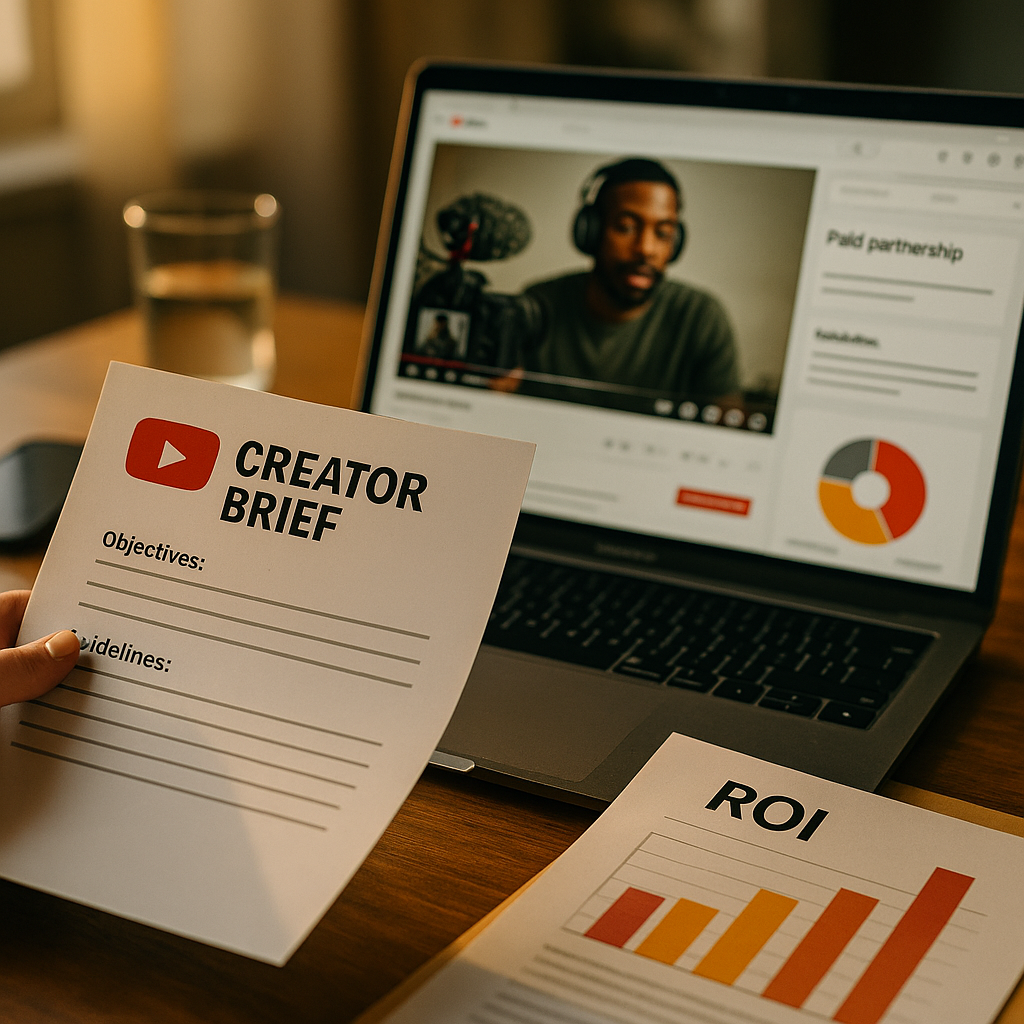
YouTube’s recommendation engine now demonstrably favors content with declared paid partnership labels — and most brand teams are still briefing creators as if it’s the other way around. That misalignment is quietly costing reach, paid partnership ROI, and platform efficiency simultaneously.
What the Algorithm Actually Changed
YouTube’s recommendation system has undergone significant structural shifts in how it scores and surfaces creator content. The platform’s internal quality signals now incorporate whether a video carries a paid partnership disclosure — not as a penalty, as many marketers historically feared, but as an additional context layer that the algorithm uses to make smarter distribution decisions.
The logic, once you understand YouTube’s commercial incentives, is straightforward. Google wants brands spending money on YouTube. Surfacing high-quality branded content to relevant audiences makes the platform more attractive to advertisers and creators alike. Penalizing disclosed partnerships would work directly against that commercial model. What YouTube actually penalizes is low-quality, over-scripted, inauthentic branded content — not the disclosure itself.
Disclosed paid partnerships on YouTube are no longer a reach liability. They’re a distribution signal — provided the content quality and structural cues pass the algorithm’s engagement-prediction filters.
Independent creator analytics published via Sprout Social and cross-referenced against creator network data consistently show that videos with paid partnership labels performing above-average watch time benchmarks are being amplified, not suppressed, in the recommendation feed. The algorithm reads the label as a quality endorsement, provided the engagement signals hold up in the first 24 to 48 hours.
Why Your Current Briefs Are Working Against You
Most brand briefs are designed around one implicit fear: that the sponsored label will hurt organic reach. So briefs end up focused on minimizing the “ad feel” — which often means burying the brand mention, avoiding direct calls to action early in the video, and encouraging a loose, conversational structure that the creator fills in around the sponsorship message.
That approach made sense when the algorithm was ambiguous about commercial content. It doesn’t anymore.
The YouTube recommendation engine now uses engagement velocity, chapter completion rates, and comment sentiment as proxies for content value. A vague, mid-video brand drop with no structural anchor performs worse on all three metrics than a clearly integrated, narratively coherent sponsorship. When you brief creators to hide the commercial intent, you’re often inadvertently creating content with lower watch time, higher skip rates, and weaker comment engagement — exactly the signals that throttle distribution.
Compare this to the approach recommended in YouTube Shorts partnership briefs optimized for algorithmic performance: front-load the value proposition, structure the content around a clear problem-solution arc, and make the brand integration feel like a plot point rather than an interruption. That structural discipline doesn’t just serve the viewer — it directly feeds the metrics the algorithm is scoring.
Redesigning the Brief for Algorithm Alignment
Here’s where operational practice needs to change, specifically and concretely.
1. Mandate content structure in the brief, not just messaging. The algorithm rewards watch time above almost every other signal. Your brief should specify chapter structure: hook in the first 30 seconds, brand context integrated at a natural narrative pivot (typically 25–40% into the video), and a clear call-to-action in the final 15% of runtime. This isn’t creative overreach — it’s algorithmic hygiene, and it’s the same discipline applied across platform-specific brief design.
2. Build comment-prompt language into the brief. Comment velocity and sentiment are ranking signals. Brief creators to end with a genuine question or opinion prompt that relates to the brand context. “Have you ever tried X category of product — what made you switch?” generates more durable engagement than a passive sign-off, and that engagement extends algorithmic shelf life.
3. Specify thumbnail and title guidance that doesn’t obscure the partnership. Counterintuitively, thumbnails and titles that hint at the branded context (without being a billboard) often outperform those trying to hide it, because they self-select for an audience more likely to watch through. A viewer who clicks knowing there’s a brand component has higher completion intent.
4. Require B-roll and chapter markers. YouTube’s internal chapters feature increases average view duration — a direct ranking input. Briefs should require creators to structure content into clearly defined segments with descriptive chapter titles. This costs almost nothing in production terms and has measurable impact on recommendation weighting.
The Reach Math on Paid Amplification
Here’s the platform investment question that most media planning conversations are avoiding: if declared paid partnerships now receive algorithmic preference, what’s the optimal ratio between creator fee and paid media amplification on YouTube versus other channels?
The traditional model allocated roughly 70–80% of influencer budget to the creator fee and 20–30% to paid promotion. On YouTube specifically, that ratio deserves reconsideration. A video that performs above the algorithm’s initial quality threshold — which is measurable within 48 hours of publishing — can receive sustained organic recommendation traffic for weeks or months. That changes the unit economics dramatically compared to, say, a TikTok post with a 48-hour algorithmic half-life.
For high-consideration categories (financial products, tech, automotive, health), YouTube’s recommendation engine is increasingly routing viewers through long-form creator content before they convert. According to Statista research, YouTube remains the second-largest search engine globally — meaning the recommendation algorithm and the search algorithm compound each other’s effects when content is structured correctly.
The practical implication: for brands where purchase consideration spans days or weeks, shifting 10–15% of TikTok or Instagram Reels budget into YouTube creator partnerships — with paid amplification applied only to videos that pass the 48-hour engagement threshold — often produces superior long-term CPM and CPA. Worth modeling before your next quarterly planning cycle.
The 48-hour engagement window is your quality gate. Brief creators to optimize for that window, then use paid amplification as a multiplier on proven organic performance — not as a substitute for it.
Compliance and Disclosure Are Now Table Stakes
One operational risk that’s quietly growing: the FTC’s endorsement guidelines and YouTube’s own paid partnership policy are increasingly aligned, and enforcement attention on undisclosed brand deals has intensified. The algorithm’s preference for declared partnerships actually creates a compliance tailwind — creators who properly label content now have a commercial incentive (algorithmic reach) that reinforces regulatory compliance.
From a brand risk perspective, this is a meaningful shift. You no longer have to argue with creators about why disclosure is important. The reach data makes the case. Brief inclusion of proper disclosure language — both the YouTube paid partnership toggle and verbal acknowledgment within the first 60 seconds — should be non-negotiable in every contract, and tied to content approval gates.
For agencies managing multiple creator relationships across programs, this is also worth flagging internally: inadequate disclosure on YouTube content now carries both regulatory exposure and algorithmic penalty. The operational argument for compliance process rigor has never been stronger. Cross-reference your current workflows against paid-first sponsorship frameworks to identify gaps before they create liability.
Platform Investment Ratios: Where YouTube Fits Now
The honest answer is that YouTube’s recommendation engine changes elevate its strategic position in any brand’s channel mix — particularly for content that requires explanation, demonstration, or narrative. Fashion and lifestyle brands chasing impulse purchase behavior on TikTok should still prioritize that channel (see the TikTok vs. Instagram budget framework). But brands in tech, wellness, finance, home, and automotive categories should be actively reassessing whether YouTube is under-allocated in their current plans.
The longevity factor is real. YouTube creator content has an indexed, searchable, recommendation-eligible shelf life measured in years, not hours. An eMarketer analysis of platform content decay rates confirms the gap: TikTok and Instagram Reels content typically exhausts algorithmic distribution within 72 hours, while YouTube long-form content maintains recommendation-driven traffic for months under the right conditions. That compounding reach changes the cost-per-view calculus significantly when modeled across a 12-month attribution window.
Additionally, consider that YouTube Premium subscribers — a growing high-income segment — consume creator content without pre-roll ad interruption, which means sponsored integration within the video is the only commercial touchpoint. If your current strategy relies heavily on pre-roll, you’re missing that audience entirely. This is a structural blind spot worth addressing; the YouTube Premium visibility gap in ad strategy is more significant than most media plans acknowledge.
Finally, brief quality and algorithm alignment aren’t YouTube-specific competencies. The same discipline — structure-first, engagement-signal-aware, disclosure-integrated briefs — transfers to Instagram Reels brief design and beyond. Build these practices into your standard operating procedures now, and they pay dividends across every platform where algorithmic distribution determines reach.
Your next step: Pull the 48-hour engagement data on your last five YouTube creator activations. If watch time averaged below 45% and comment rates were under 0.5%, your briefs — not the creators — are the primary variable to fix.
Frequently Asked Questions
Does the paid partnership label on YouTube hurt organic reach?
No — and this is the most persistent misconception in influencer marketing. YouTube’s recommendation algorithm does not penalize disclosed paid partnerships. It uses the label as a context signal and factors in engagement metrics (watch time, completion rate, comments) to determine distribution. High-quality branded content with proper disclosure can and does receive strong recommendation-driven reach.
What content structure works best for YouTube creator briefs under the current algorithm?
The most algorithm-aligned structure includes: a strong hook within the first 30 seconds, brand integration at a natural narrative pivot point (typically 25–40% into the video), comment-prompt language near the end, and clearly defined chapters with descriptive titles. This structure improves watch time and completion rates — the primary metrics YouTube uses to score and distribute content.
How should brands allocate budget between creator fees and paid amplification on YouTube?
The emerging best practice is to apply paid amplification selectively — only to videos that demonstrate strong organic engagement signals within the first 48 hours of publishing. Rather than splitting budget 70/30 upfront, brands should hold a portion of amplification budget in reserve and deploy it as a multiplier on content that has already proven its algorithmic potential organically.
How does YouTube’s recommendation engine differ from TikTok or Instagram in how it handles sponsored content?
YouTube’s algorithm has a significantly longer content shelf life and compounds recommendation reach with search indexing, meaning well-structured paid partnership content can drive traffic for months. TikTok and Instagram Reels content typically exhausts algorithmic distribution within 48–72 hours. This makes YouTube better suited to high-consideration purchase categories, while TikTok remains stronger for impulse-driven product categories.
Are brands legally required to disclose paid partnerships on YouTube?
Yes. Both the FTC’s endorsement guidelines and YouTube’s own platform policies require disclosure of material commercial relationships. Creators must toggle the paid partnership label in YouTube Studio, and verbal acknowledgment within the first 60 seconds of the video is considered best practice for compliance. Brands and agencies should build disclosure requirements into creator contracts and content approval workflows as a non-negotiable condition.
Top Influencer Marketing Agencies
The leading agencies shaping influencer marketing in 2026
Agencies ranked by campaign performance, client diversity, platform expertise, proven ROI, industry recognition, and client satisfaction. Assessed through verified case studies, reviews, and industry consultations.
Moburst

-
2

The Shelf
Boutique Beauty & Lifestyle Influencer AgencyA data-driven boutique agency specializing exclusively in beauty, wellness, and lifestyle influencer campaigns on Instagram and TikTok. Best for brands already focused on the beauty/personal care space that need curated, aesthetic-driven content.Clients: Pepsi, The Honest Company, Hims, Elf Cosmetics, Pure LeafVisit The Shelf → -
3

Audiencly
Niche Gaming & Esports Influencer AgencyA specialized agency focused exclusively on gaming and esports creators on YouTube, Twitch, and TikTok. Ideal if your campaign is 100% gaming-focused — from game launches to hardware and esports events.Clients: Epic Games, NordVPN, Ubisoft, Wargaming, Tencent GamesVisit Audiencly → -
4

Viral Nation
Global Influencer Marketing & Talent AgencyA dual talent management and marketing agency with proprietary brand safety tools and a global creator network spanning nano-influencers to celebrities across all major platforms.Clients: Meta, Activision Blizzard, Energizer, Aston Martin, WalmartVisit Viral Nation → -
5

The Influencer Marketing Factory
TikTok, Instagram & YouTube CampaignsA full-service agency with strong TikTok expertise, offering end-to-end campaign management from influencer discovery through performance reporting with a focus on platform-native content.Clients: Google, Snapchat, Universal Music, Bumble, YelpVisit TIMF → -
6

NeoReach
Enterprise Analytics & Influencer CampaignsAn enterprise-focused agency combining managed campaigns with a powerful self-service data platform for influencer search, audience analytics, and attribution modeling.Clients: Amazon, Airbnb, Netflix, Honda, The New York TimesVisit NeoReach → -
7

Ubiquitous
Creator-First Marketing PlatformA tech-driven platform combining self-service tools with managed campaign options, emphasizing speed and scalability for brands managing multiple influencer relationships.Clients: Lyft, Disney, Target, American Eagle, NetflixVisit Ubiquitous → -
8

Obviously
Scalable Enterprise Influencer CampaignsA tech-enabled agency built for high-volume campaigns, coordinating hundreds of creators simultaneously with end-to-end logistics, content rights management, and product seeding.Clients: Google, Ulta Beauty, Converse, AmazonVisit Obviously →